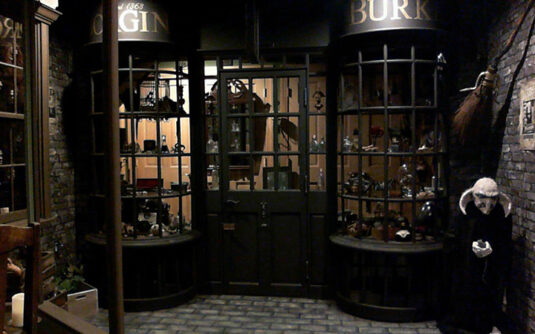
 In the mysterious land of…Rhode Island…is a house with dark secrets. Well, the basement has some dark secrets. Unless you’re shopping for Flesh-Eating Slug Repellent. In that case, you’re totally in the right place!
Welcome to the home of the Adams family, where Art major Corinne and her building contractor husband have recreated a fully functional Knockturn Alley. Here, witches and wizards can shop to their heart’s delight.
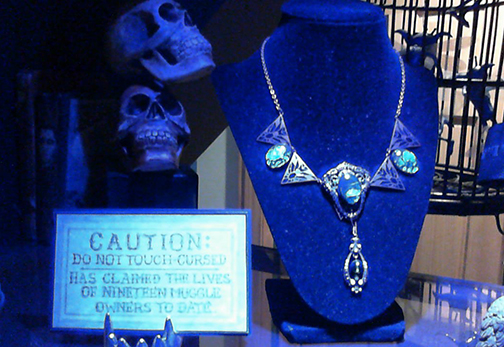
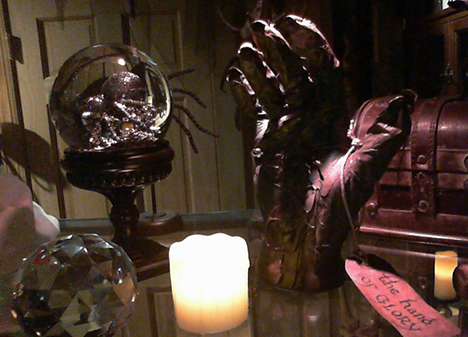
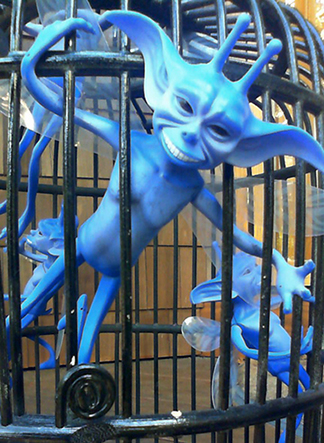
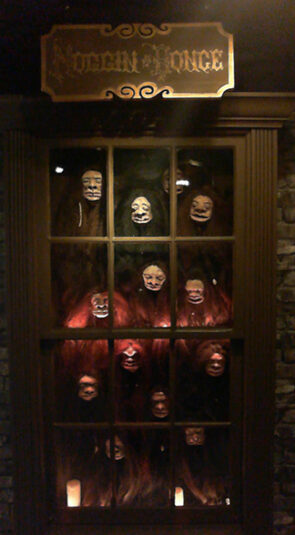
A huge Potter fan, the idea for Knockturn Alley was sparked by a trip to Universal Orlando. Corinne and her husband were already doing elaborate Halloween displays, but the trip inspired the creation of Borgin and Burkes. When the set got too large to haul outdoors in October, the couple cleaned out their basement and the construction continued in earnest. Currently up to five shops (2 for browsing, 3 for display), magically-minded shoppers can see self-stirring cauldrons, Kreacher the house elf, Cornish Pixies, books, bones, potions, and cursed objects, all whilst shrouded in fog.
When is Knockturn Alley open to visitors?
Since Knockturn Alley is in my house, my basement, it is only open to the neighborhood on Halloween night. If you know me or are writing a story about the alley then I can have a private tour arranged.
What proved the biggest challenge to recreate so far?
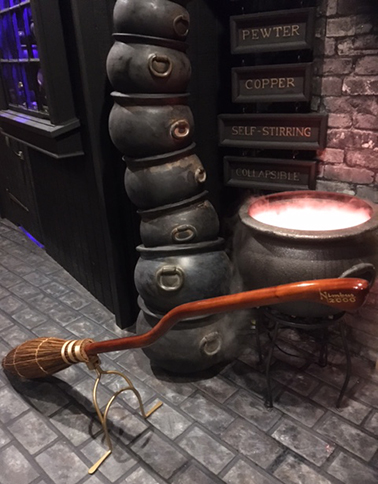
The biggest challenge, believe it or not, was the stacked cauldrons. They are plastic Halloween cauldrons and we had to hunt for the right sizes, paint them to look rusty and then sand them to look like old iron. When it came time to stack and glue them it took a bit of engineering until we got it right. My son also designed and made the self-stirring cauldron and he had a few setbacks. But now it works perfectly…well, it’s a magical cauldron after all!
What is one of the most surprising things on your set?
The biggest surprise, if someone notices it, is the sub-basement in the bottom windows of Borgin and Burkes. (A “reflection” makes you think you’re looking down into the below ground level cellar window well-bottles, books, rats, candles etc. are all actually upside down-you’re looking into a mirror image–shhh, don’t tell!)
How many hours of construction and fabrication do you estimate you’ve put in?
The work time is 3 years of every spare minute we had and my husband and I both worked full time. Now it is an on-going project and we come up with little magical ways to tweak things and add new things for each Halloween.
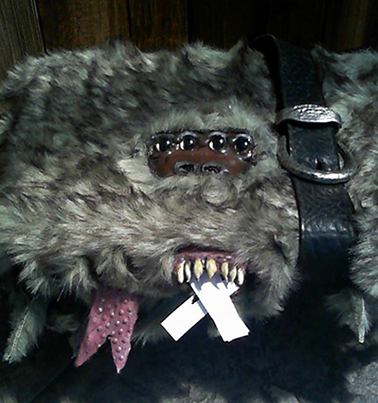 Tell us about your favorite object and why!
I have been asked before “what is my favorite thing” but I love everything! However my favorite shop is Borgin and Burkes (in the movie it just looks so creepy and fascinating!) and that was the first shop constructed for our Halloween display 7 years ago. Then the project just took off until we now have an alley of 5 buildings.
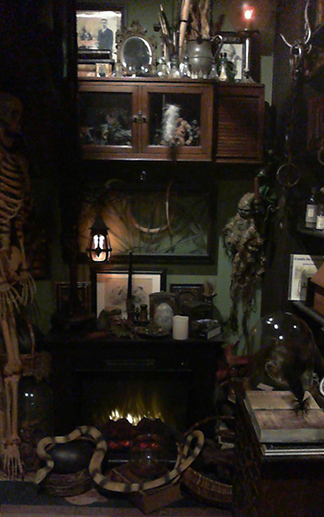
What are you building next?
The next thing to be built is a surprise because we like to surprise the neighborhood kids when they visit Halloween night! Last year’s new item was the Sirius Black “moving” poster that my son came up with and my husband built the rustic sign post to hold it!
What’s one of the best visitor reactions to your set?
I had a man from London visit one Halloween and the cool night air came into our open garage doors so the alley had a brisk feel and we have antique street lights with candle light flickering and fog and the whole atmosphere was right out of an 18th century London city street. He was so excited, he couldn’t believe he was in a basement! He was “dazzled” to use his words! My husband loved that because he built the buildings to look exactly like Universals.
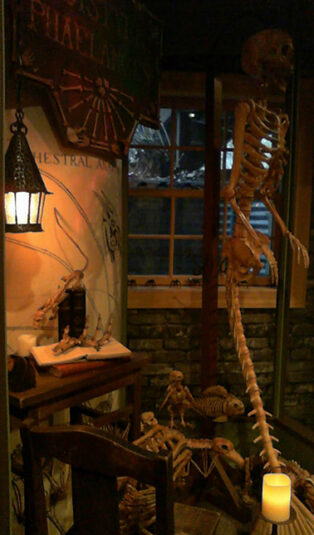
My own personal favorite reaction was a young girl who was an avid Potter fan. After taking the tour she said that this must be like reaching the top with a hobby one loves and she wished that someday she could have a display of a Potter destination in her home. She was quite right. I never thought I’d have this alley in my house. I love going down into this magical world and hanging out with friends or having a coffee with my husband and brainstorming about what we’ll do next! It’s really a Potter fans dream and I love sharing it with other fans.
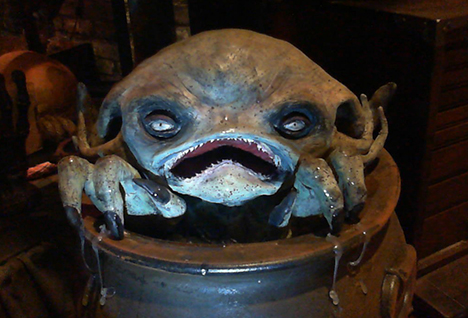
What house would the Sorting Hat put you in?
I think you must know what Hogwarts house I would be sorted into! I love spooky stuff and I love the nefarious Knockturn Alley! Hogwarts students are not permitted to go there let alone buy anything. Dodgy place…”You don’t want to get caught down there-they might think you’re up to no good!” So–Slytherin of course!
If you’d like to see video, please follow this link to a WPRI 12 News story!
Images courtesy of Corinne Adams. Questions about anything you see here? Corinne is happy to answer them! Please email her at: thevampirechronicles13@gmail.com
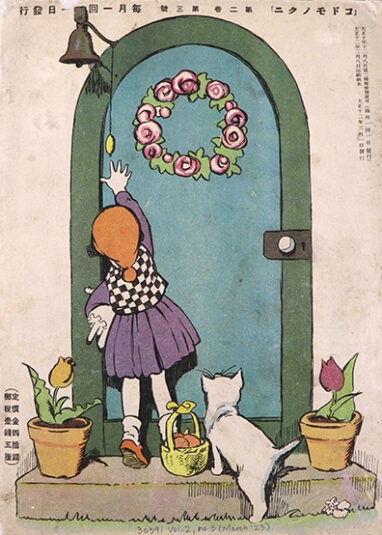 It’s time for the annual #ColorOurCollections, hosted by the New York Academy of Medicine! Each year libraries, archives, and cultural institutions around the world share free coloring sheets based on their collections.We’ve shared birds and alphabets, but this year we just wanted…CUTE ANIMALS. So we delved into our vaults for Kodomo no kuni (The Land of Children), a Japanese children’s magazine that was in circulation from 1922-1944. It did not disappoint!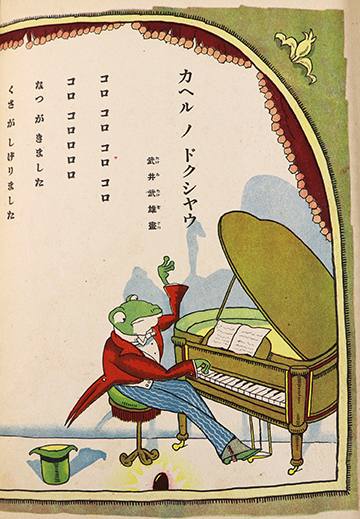
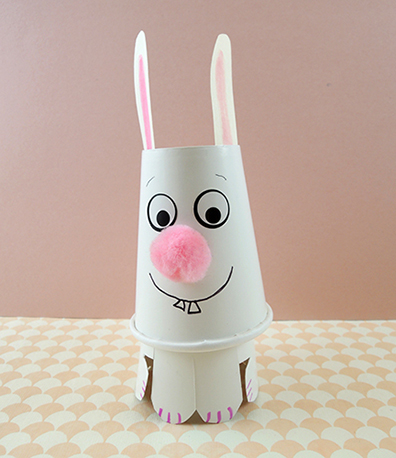
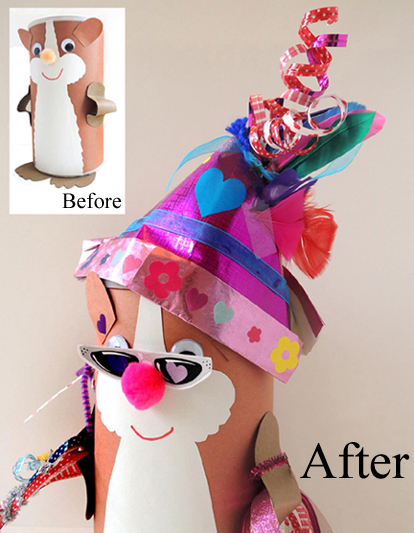 Perhaps you’d like to expand to entire household with this tiny dog house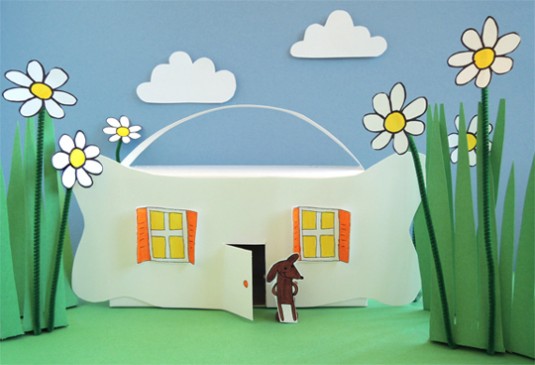
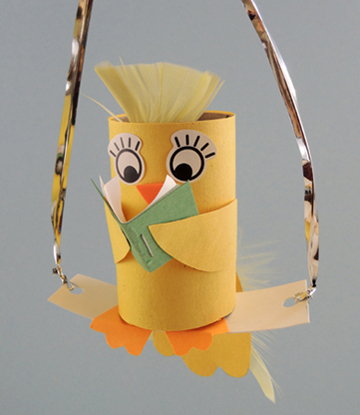 Even alligators can be cute (and this one is a chomping puppet!):
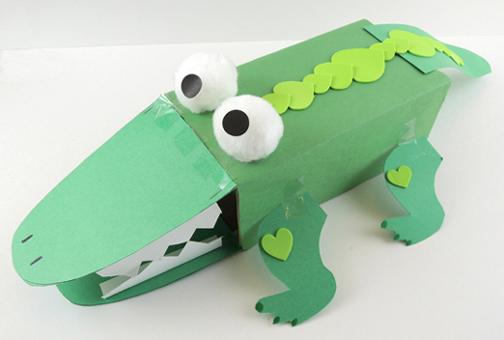 Or make up your own animal entirely!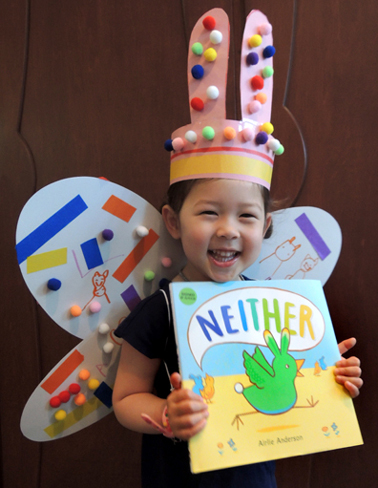
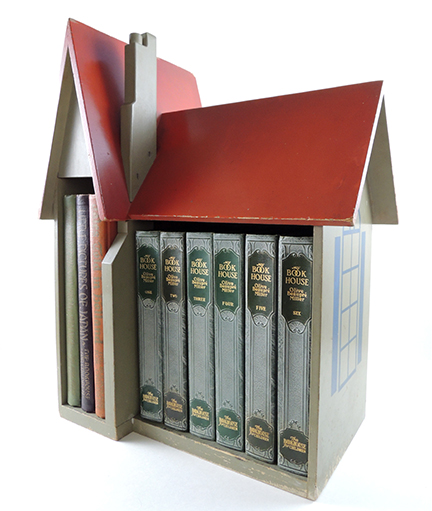
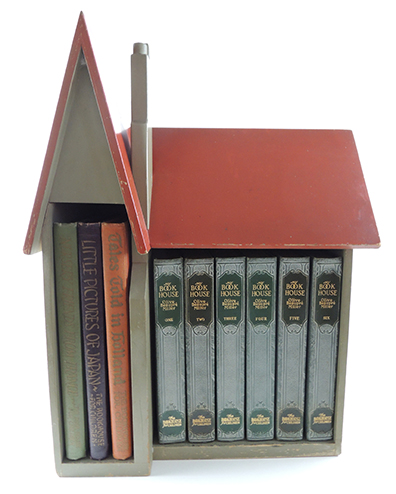 As you can see, this particular item houses nine books, and the quality of the illustration and print is remarkable. Just look at the end papers for Tales Told in Holland: