Beautiful to Behold

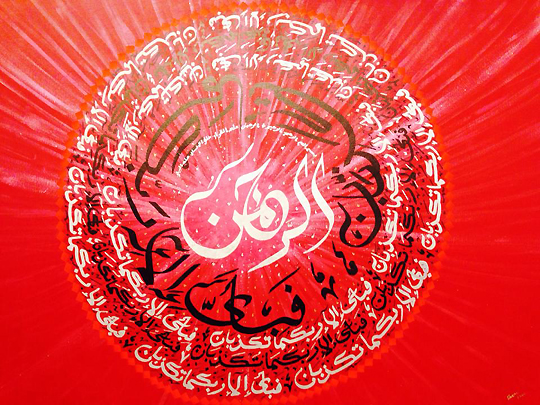
faraz kahnThis year, I invited Arabic calligrapher Faraz Khan to Cotsen Critix, our literary group for kids ages 9-12. Faraz is an immensely talented artist, with a mission to bring the beauty of the illustrated word to all. His hands-on workshop introduced the kids to the basics of Arabic calligraphy, provided a little bit of history, and finished with the creation of unique pieces for the group (including each child’s name!). The Cotsen Critix were completely entranced by this unique literary art form. Faraz also lectures to adults – you can see images from a recent workshop at the University of Oklahoma on his blog.

Please tell us a little about yourself!

I am a local resident artist and a teacher at the Arts Council of Princeton, New Jersey. I also work as an environmental specialist trying to protect and preserve wildlife habitats such as freshwater wetlands, streams corridors and riparian zones in the State of New Jersey. I love to hike and learn about the environment and ecosystems.
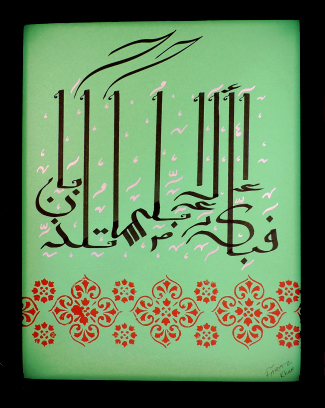
FarazKhanArt-fabiayyi-414x500Aside from the environmental field, art is my other passion. I paint and try to create work that is based on abstract design and Arabic calligraphy. I have taught calligraphy seminars at Princeton University and am excited about teaching a full 3 credit Arabic Calligraphy and History summer course at Rutgers University. I also plan to open an art studio in downtown Princeton to share and educate people about discovering different fields of Islamic art.
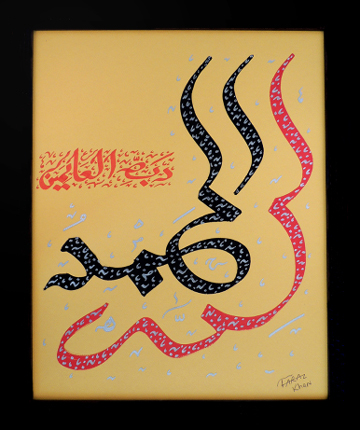
FarazkhanArt-alhamdo-ink-422x500What role does calligraphy play in the Arabic world?

Arabic calligraphy is a very fluid script that catches the viewers’ attention. There is a rich history of calligraphy development and artistic expressions in the Arab and Muslim world. Arabic calligraphy is used as a decoration in communication, sacred Quranic text, architecture, art installations, etc.

When did you first start learning calligraphy, and why did it intrigue you?

It was about five years ago when I wrote a paper for my liberal arts class – “How to Decipher 6 Standard Styles of Arabic Calligraphy.” When I would visit my Muslim friends and family, I would always find these beautiful calligraphy work hung on their walls. I would always ask to understand the meaning, name of calligrapher, style, place of origin. I learned that most people did not know the answers to my questions. Hence, when the chance came to study calligraphy I was really intrigued by the possibility of learning, practicing, and explaining it to others.
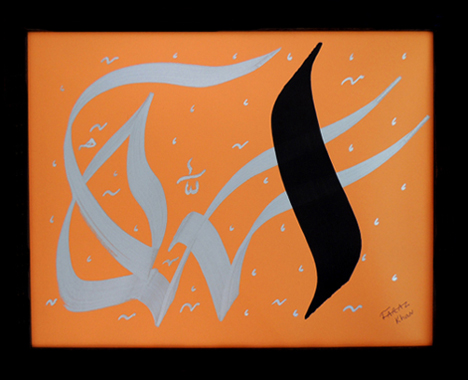
Farazkhanart-Allah-mod-592x500What tools and techniques do you use to create your art?

Traditional calligraphers would use a bamboo stick or reed pen dipped in ink to write calligraphy. Modern artists have taken this art to a whole new level with paint brushes, graffiti markers, flash light with the use of slow shutter speed camera techniques, and many other tools.
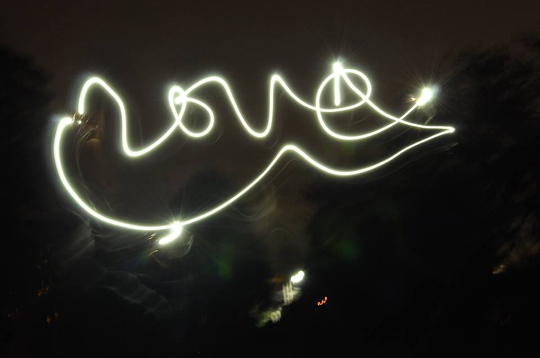
light calligraphy - loveWhat are the essential things you try to teach children in your calligraphy workshops?

Children are special. They have such amazing pure hearts and I always learn from their simple, fun approach to life. I myself have two amazing boys, Ziyad and Zayn and they are unbelievable amount of joy and happiness.

In my classes, I simply want children to develop a love for learning. Art is about connecting beauty inside our hearts, to the beauty in the world. I would like them to be on a mission to not only decorate their classrooms with beautiful artworks but to further develop beautiful speech, writing, personality to inspire us.
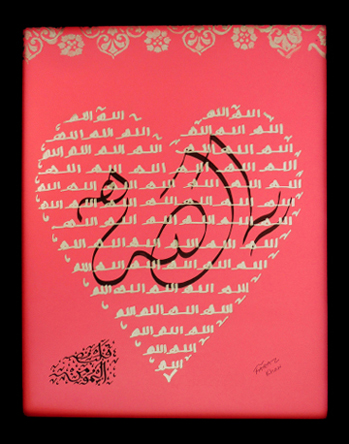
FarazKhanArt-heart-pink-398x500How have children reacted to your workshops and the artwork you were creating?

Children are amazing interpreters of art. I would draw the letter or a word in Arabic calligraphy and I can read an instant reaction on their faces. I love how imaginative children can be with Arabic calligraphy. When I do calligraphy some children find birds or ribbons or waves or a musical note in my artwork while I only intended to beautify Arabic calligraphy and not draw anything else.
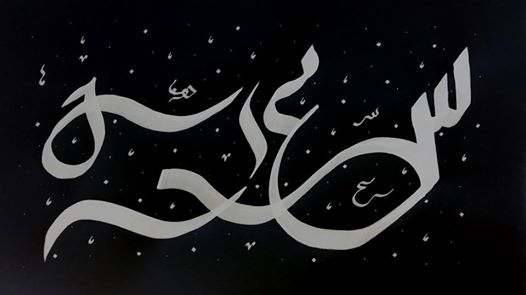
Faraz Khan Art Studio - happinessAre there other works of art that inspire you?

There are so many wonderful works of Western and Islamic art and it is hard for me to name one or two. However as an American Muslim, Muhamad Zakariya’s Eid Greetings US postal stamp has a special meaning to me. I am so proud to be part of a grassroots effort to create and educate people about Islamic art.
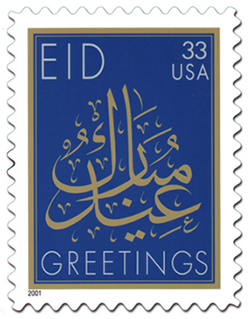
stamp

The Eid Stamp by Muhamad Zakariya. United States Postal Service, 2001

Name one thing about the art of calligraphy that surprised you.

Arabic calligraphy is written right to left but I knew that for a long time. However, last year one of my students told me that she was dyslexic and had a tough time reading and writing English until fourth or fifth grade. Once she was introduced to Arabic writing in elementary school, and while her class struggled, she picked up reading and writing Arabic within a week. It was amazing to hear how diversifying our curriculum and methodologies could impact the life of our citizens.
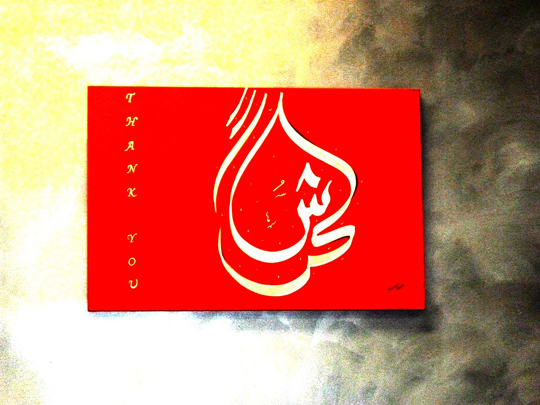
shukran @douglas


Works of art reproduced with permission of the artist.
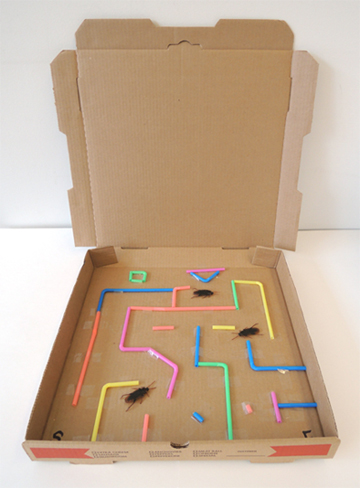
La Cucaracha

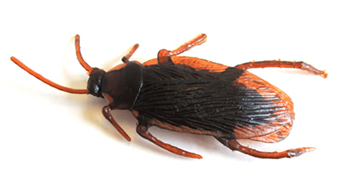
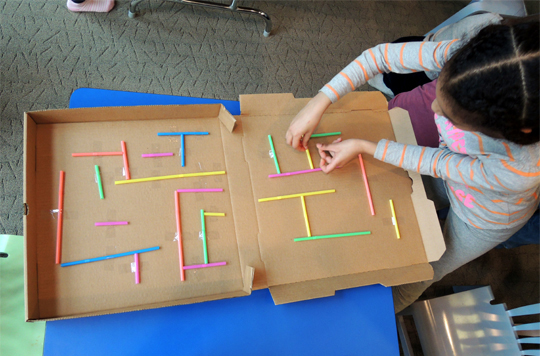
cockroach pizza boxDon’t panic! Those are FAKE cockroaches winding their way through a pizza box maze. The roaches crawl beautifully, thanks to a hidden magnet wand positioned underneath the box. This project is from To Be Continued, our story time for 6 to 8 year-olds. It was a big hit!

We read Measle and the Wrathmonk by Ian Ogilvy (Harper Collins, 2004). Young Measle Stubbs lives in a grim house on an abandoned street. His legal guardian, Basil Tramplebone, is a very strange man. He always wears black. His skin is ghostly pale. And oddly, whenever Basil goes outside, a raincloud follows him. But up in the attic of Basil’s horrible house is the world’s most amazing train set, and Measle desperately wants to play with it. He throws together a wild plan to get into the attic – and gets caught. While Measle certainly expects Basil to be angry, he doesn’t expect Basil to shrink him down to a half an inch and put him in the train set! Measle soon discovers he’s not the only victim trapped on the set. Can Measle and his gang put together a plan to defeat Basil?

I won’t give away too much, but there are some terrific giant cockroach chase scenes on the train table. For the project, I toyed with the idea of making a miniature train set obstacle course inside a box top. But then opted for something simpler and quicker to construct – a drinking straw maze. Building off a marble maze project I spotted on Pinterest (you can see it pinned to my board here), I decided to replace the marble with a magnetic plastic cockroach.

plastic cockroachYou’ll need:

  • 1 pizza box
  • 1 plastic roach (I purchased mine on Amazon – a set of 12 was $4.58)
  • 2 button magnets
  • 1 wine cork
  • Drinking straws
  • Scissors and tape for construction
  • Markers for decorating
  • Hot glue

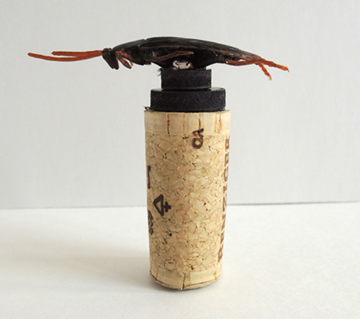
To make your magnet “wand,” hot glue a button magnet to the top of a wine cork, then hot glue a second button magnet to the bottom of the plastic cockroach.

cockroach magnet corkAfter some trial and error, we determined that using 2 different sized button magnets (0.5″ and 0.75″) worked best for our roaches and pizza boxes.

Slice Between, a local pizza shop, gave us a deal on 2 dozen pizza boxes (a copy paper box lid would work too, but I thought pizza boxes would be a better match for the creepy cockroaches). During the story time workshop kids cut, arranged, and taped drinking straws into maze configurations. Some kids expanded the maze to both sides of the box!

double box topTo navigate your cockroach through the maze, place the cockroach on top of the box. Hold your cork magnet wand against the underside of the box, directly underneath the cockroach. The two magnets will connect through the cardboard and you can mosey your cockroach through the maze!

Two hints for this project:

  1. When attaching the straws to the box, keep the tape as flat as possible. Bumps or raised bunches of tape might hinder your roach’s movement through the maze.
  2. When guiding your roach through the maze, move the cork wand slowly. If you go too fast, the magnets tend to break their connection.

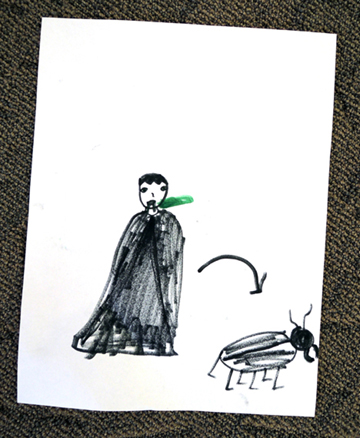
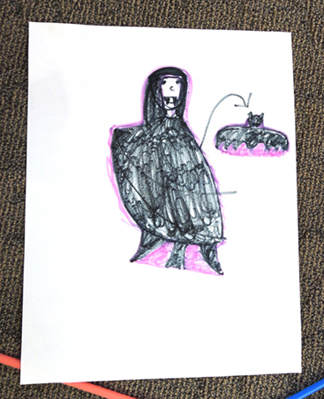
I had markers handy in case anyone wanted to decorate their boxes (or make “Start” and “Finish” lines for their mazes), but some kids used the markers to create some fan art. Here’s Basil, his stinky Wrathmonk breath, and an indication of what happens to him later in the book:

wrathmonk fan art 1And here’s yet another portrait of Basil, with a little hint about his ultimate fate:

wrathmonk fan art 2Measle and the Wrathmonk (and its sequels) are fantastic. They’re fun, scary, creative, and even though Wrathmonks are horribly evil, they’re terribly funny too. Ian Ogilvy was a well-known English actor before he became a children’s author, and it shows in his talent for dialogue, pace and characterizations. Measle and the Wrathmonk is delightful to read aloud and had the kids hooked right from the beginning. Honestly, you could hear a pin drop when I was reading certain sections of the story!

All Hail the Cab

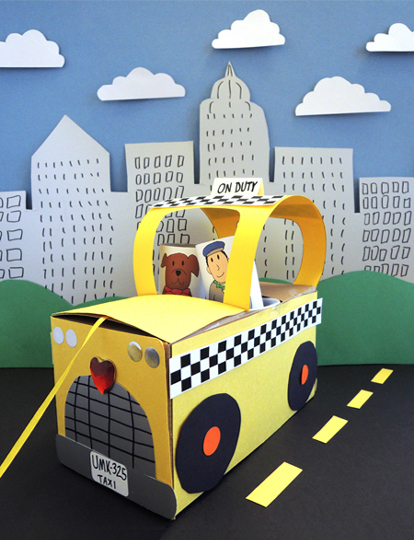
taxiNeed to catch a cab in NYC? No problem! We made some pull string taxi cabs and picked up some passengers in a noisy – and most definitely doggy – traffic jam!

We read The Adventures of Taxi Dog, written by Debra and Sal Barracca, and illustrated by Mark Buehner (Dial Books, 1990). A stray dog’s life is changed forever the day Jim the taxi driver adopts him. Instead of being alone and hungry, Maxi now proudly wears a red bandana and helps Jim with his fares. From Sadie the Broadway singer to a young couple expecting a new baby (any minute!), Maxi loves his new life in New York City!

You’ll need:

  • 1 box (mine was 4 ½” X 4 ½” x 9” – a large tissue box works too)
  • 2 plastic cups (mine were Walmart brand 5 oz clear plastic)
  • A 30″ piece of string or yarn
  • Yellow construction paper
  • 1 taxi parts template, printed on 8.5″ x 11″ white card stock
  • 4 black poster board circles (mine were 2.75″ in diameter)
  • 4 orange dot stickers
  • 1 taxi cab roof template, printed on 8.5″ x 11″ yellow card stock
  • 2 small strips of silver metallic poster board (approximately 1″ x 4.75″)
  • 1 rectangle of silver metallic poster board (approximately 2.5″ x 3.75″)
  • 4 silver metallic dot stickers
  • 4 red dot stickers
  • 1 large gemstone
  • 2 toilet paper tubes
  • 1 taxi driver and dog template, printed on 8.5″ x 11″ white paper
  • Scissors and tape for construction
  • Markers for decorating
  • Hot glue

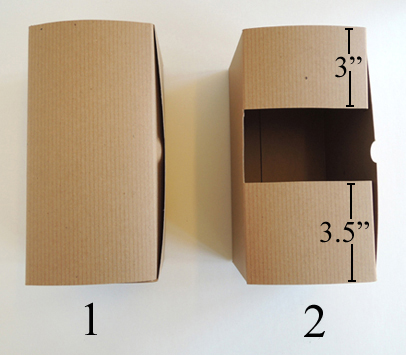
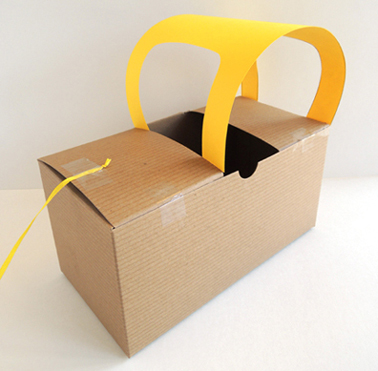
First, cut a rectangle out of the box’s lid (if you’re using a tissue box, flip it over and cut the rectangle out of the bottom of the box). It might be a little difficult to see in the image below, but my rectangle is cut slightly off center. There is approximately 3″ of space above the cut, and 3.5″ of space below the cut. The shorter, 3″ space will be the taxi’s “backseat,” and the longer, 3.5″ space is the taxi’s “hood.”

taxi box cutMy cut created a 2.5″ x 5″ rectangle, but your cut will vary according to the size of the plastic cups you’re using. You want the cups to rest snugly in the box. Later, these cups will become your taxi riders’ “seats.”

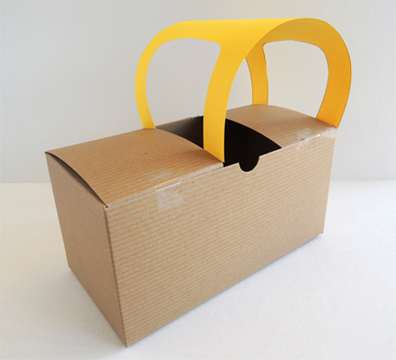
cup placement But DON’T tape the cups to the box just yet! Set the cups aside for a moment and cut the roof from the template. Tape the roof to the box like so:

roof attachmentYou’ll notice that the front legs of the roof get taped to the “dashboard” of the taxi, and the back legs of the roof get taped to the very back of the taxi box. Next, knot a 30″ piece of string on one end, and tape the knot to the top of the taxi’s hood.

pull string on taxiNow cover the hood, front, back and the sides of the taxi with yellow paper. Tape (or hot glue) the long and short checker strips from the template to the sides and roof of your taxi. Tape (or hot glue) the black poster board circles to the sides of the box for wheels, and add some orange dot sticker hubcaps. Now put the plastic cups back into the taxi, and secure them to the box with tape.

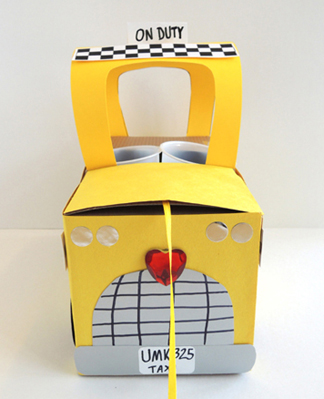
completed side of taxiOn to the front of the taxi! We used 4 metallic dot stickers to make double headlights, a strip of silver metallic poster board for a bumper, and a rectangle of a silver metallic poster board for the grill (I rounded the top of my grill and used marker to add grill lines). A large gemstone hot glued to the top of the grill adds a nice pop of color. The “On Duty” sign from the taxi parts template gets folded along its dotted line, then taped to the roof. Finally, I found some old white office file stickers in the art cabinet, which we turned into license plates (or you can use scraps of paper, and tape or glue them to the bumper).

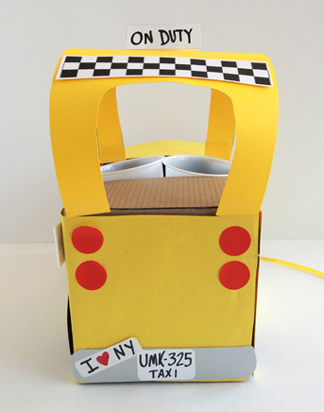
front of taxiTo the back of the taxi we added: 4 red dot sticker tail lights, a silver metallic poster board bumper, a license plate, and a fabulous “I ♥ NY” bumper sticker (also created out of old office file stickers).

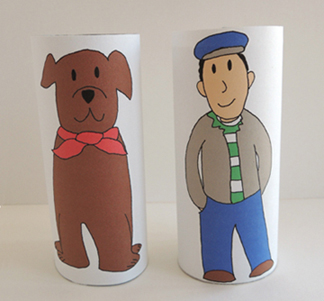
back of taxiThe final step is to color your driver and dog template pieces, and wrap each of them around a toilet paper tube. Drop them into the plastic cup seats.

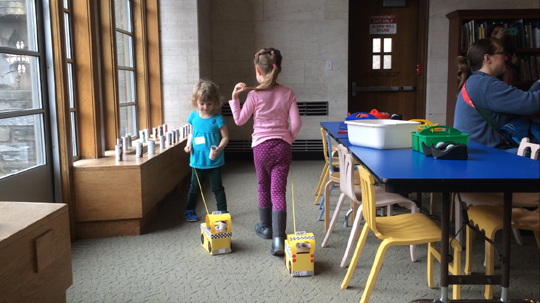
dog and driverWhen the taxis were finished, it was time for our “traffic jam” activity! First, I collected all the dogs and lined them up on a windowsill. When I shouted “GO!” the kids pulled their taxis over to the windowsill, found their dogs, popped them into their taxis, and zoomed away. It sounds simple, but we had a lot of kids at story time that day, resulting in a stupendous traffic jam.

As you can see, the fastest taxi arrived at the dogs first…

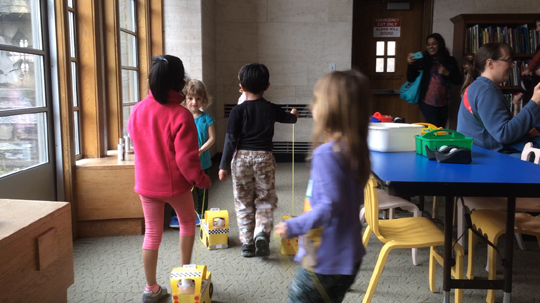
taxi pickup 1It was quickly followed by another taxi…

taxi pickup 2More taxis started to arrive…

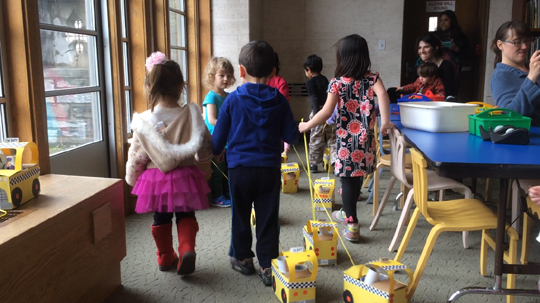
taxi pickup 3And more…

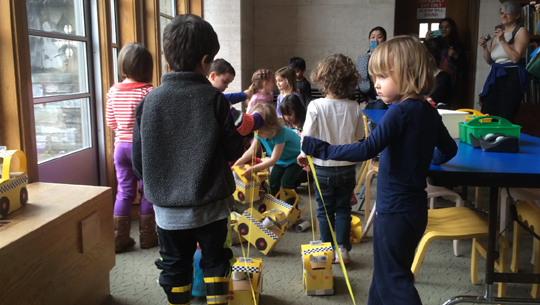
taxi pickup 4Pretty soon we had a full-on crazy NYC traffic jam!

taxi pickup finalI made a sound file that combined honking horns and barking dogs, looped it for 4 minutes, and burned it to CD. I played the CD during the activity, adding to the chaos and fun!