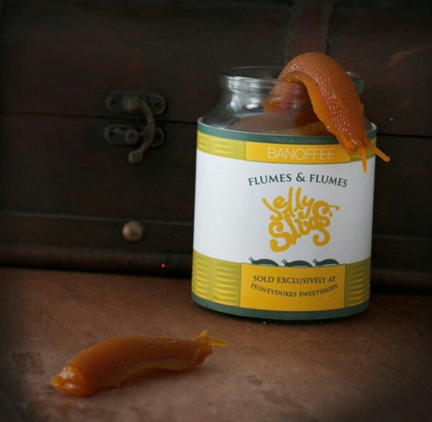
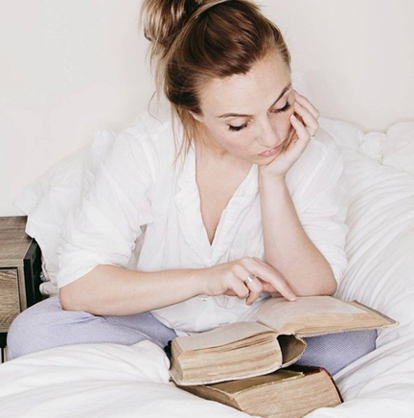
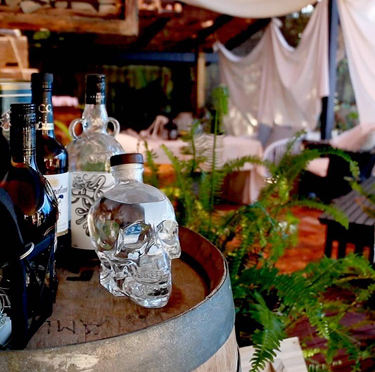
 By day, Bryton Taylor is a social media coordinator in Australia. But outside the office, she is a veritable genius of literary-themed recipes, parties, and crafts! She began blogging about her amazing creative work in 2008, and now readers can browse her extensive range of original recipes and party how-tos, including Harry Potter, The Hobbit, The Great Gatsby, Alice in Wonderland, and Peter Rabbit! Katie caught up with Bryt to chat about her adventures in bringing books to life…
Your website, In Literature, began when you shared the recipe and story about your second effort at making the Mad Hatter’s Unbirthday Cake. What changes did you make after the first attempt didn’t go so well? And was your Easter party a success despite the first cake sliding off its plate?
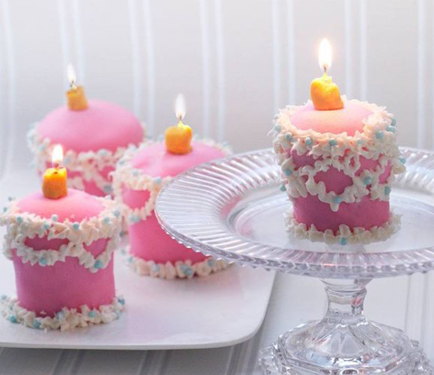
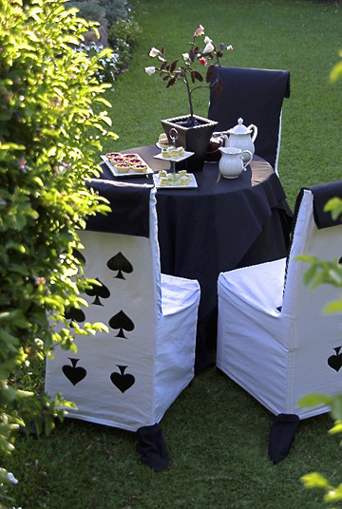
I used a doll cake pan for better structure when I attempted the Unbirthday Cake for the second time. And I’m happy to say the party was a success! The Mad Tea Party decorations made up for the fact that the cake had a few issues. Paper lanterns were strung up above the table, where a toy mouse popped out of a teapot. Large bowls were transformed into oversized teacups which doubled as Easter baskets. Caterpillar shoes stuck out of the vines, where ‘This Way’, ‘Down’, and ‘That Way’ signs set the tone for fantastical madness! It was a great day in the end.
Do you have a favorite genre of book when you are creating recipes or putting together a themed party?
I find I cover a variety of fiction genres – children’s, classics, young adult, fantasy, mystery. But my favourite books to cover tend to ones that we grew up with. It’s through these stories that we share nostalgic memories, triggering feelings of happiness. Creating recipes and parties around these books will hopefully give others a space to replay their memories, and possibly even make new memories.
For parents or grandparents, it can be a way of extending the experience of reading with their kids, of creating new shared memories. Recreating Marilla’s raspberry cordial from Anne of Green Gables, Turkish Delight from The Lion, the Witch and the Wardrobe, even the tomato sandwich from Harriet the Spy, is a trip down memory lane.
Break down your thought process when you are putting together a unique recipe from a fantasy or dystopian book, such as Elvish lembas bread from The Lord of the Rings or the Snookers and Snookers Birthday Cake from Dr. Seuss. How much research is involved when you are creating your recipes?
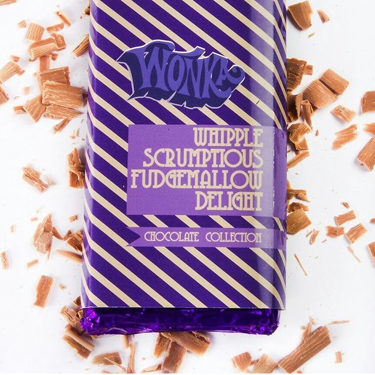
It’s so much fun taking an imaginary food description and bringing it to life. When I first started blogging, I gave my imagination free rein to visualize what the food might look like, how it would be presented, and so forth. I had a fabulous time conjuring up Wonka’s Marshmallow Pillow and Three-Course Dinner Gum!
Although creativity plays a key role, authenticity is equally important. I depend on research to develop a recipe that is as ‘real’ as possible for a food scene that we all share, particularly where personal memories are attached.
Above all else, I’m a literary food history detective. I look into what literary researchers have uncovered about the author’s inspiration and search within their descriptions for clues about the details. Old cookbooks are scoured along with food trends from either the author’s timeline or from where they drew inspiration. Once I have gathered all the pieces, I then add the essential magic ingredient – a dash of creativity to bring it to life.
What was your most challenging recipe to make or hardest craft to create?
The “Drink Me” potion from Alice in Wonderland was a challenge. The description goes, “it had, in fact, a sort of mixed flavour of cherry-tart, custard, pine-apple, roast turkey, toffy, and hot buttered toast.” My first attempt was a total flop. I discovered that capturing and combining hot roast turkey and hot buttered toast is not an easy feat! It’s still on my to-do list of remakes. I’m continually working through my list of challenging recipes. For example, I’m still on the hunt for the elusive recipe for pickled limes from Little Women.
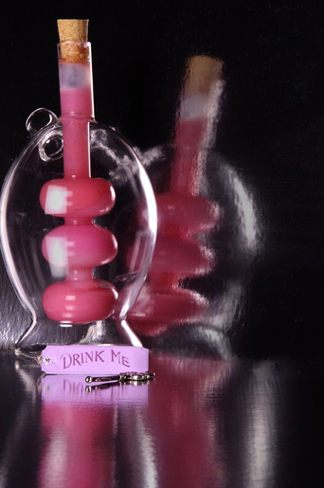
Alice in Wonderland “Drink Me” potion
What are your most popular posts?
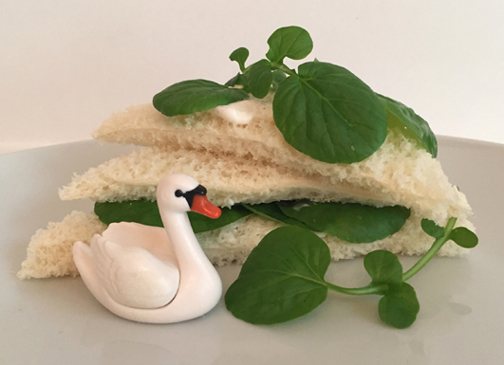
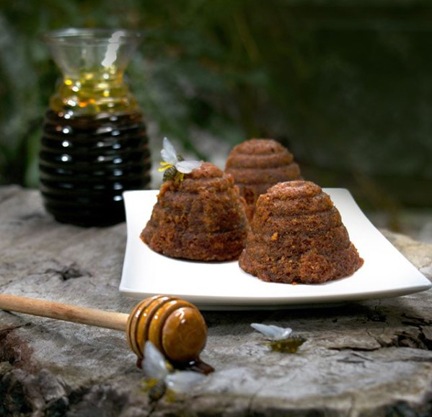
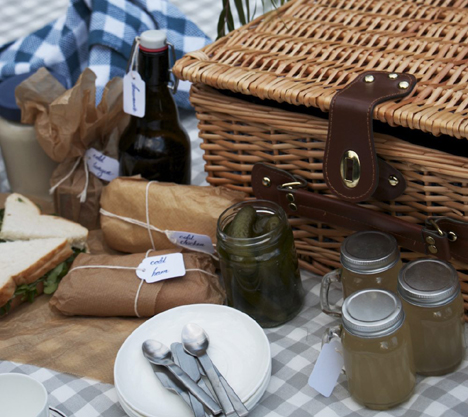
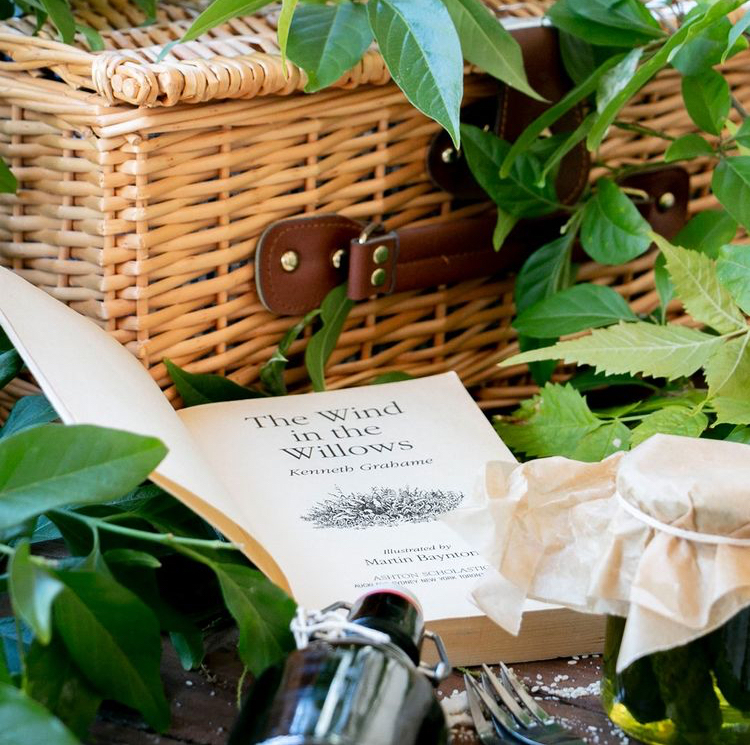
Harry Potter continues to be a favourite, as I’ve created a number of recipes over the years. My copycat recipe for pumpkin juice through to a simple bottle of liquid luck helps people as they start planning their parties. And there are many classics: Ratty’s picnic from Wind in the Willows, Paddington’s marmalade, through to my interpretation of pop cakes from The Magic Faraway Tree.
Where in the world has been your favorite literary location to visit? And where are you hoping to go once travel restrictions are lifted?
I loved visiting Sleepy Hollow, New York in October 2019 along with exploring Kipling’s Vermont and hope to revisit once our world has found some sense of normal again. The east coast of the United States is just brimming with literary locations!
How many titles do you currently have in your book collection?
It would take too long to count the number in my collection, but I can definitely say that I will always feel it’s not enough.
Can you share any details about a project you are currently working on?
After over a decade of blogging, I’m actually spending this year revisiting and rewriting old posts. However, I’ve got my eye on more Roald Dahl. I still have more rooms to explore in Wonka’s Chocolate Factory.
I have to ask…what Hogwarts House did the Sorting Hat place you in?
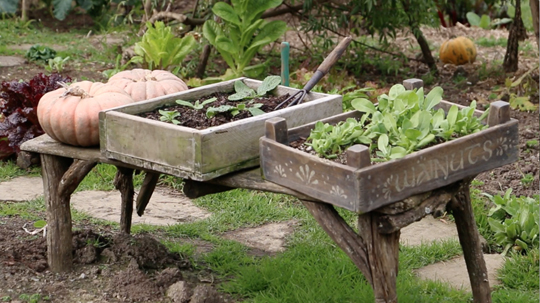
I’m proudly a Hufflepuff. I’m happy to say those Hufflepuff interests, of nature, animals and Herbology, also make me well suited to live a life in Hobbiton.
Images courtesy of Bryton Taylor
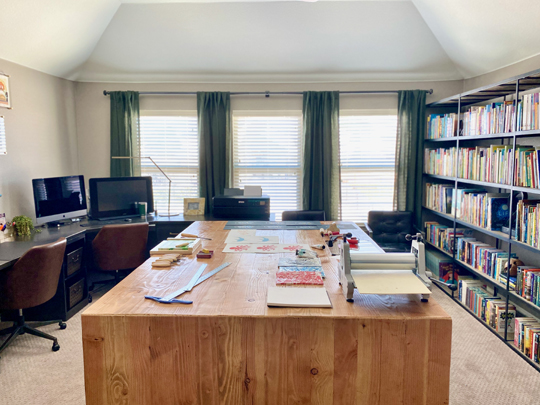
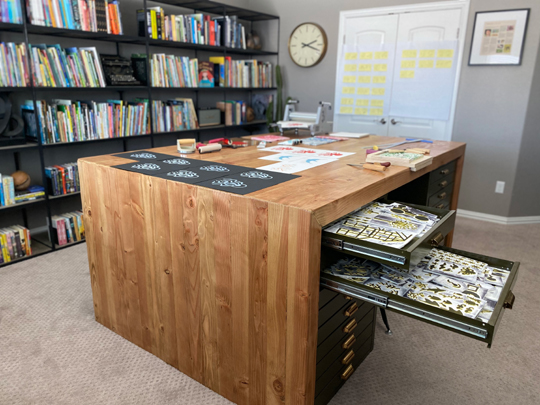 Photo 2: We keep our flat file storage under the bench. We use some of the drawers for storing supplies, but mainly, they store all the stamps and prints we make for every project we do.
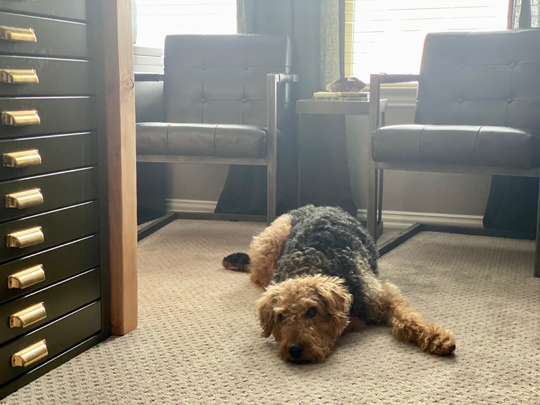 Photo 3: This is Whiskey. She’s our studio assistant. Her primary duty is to lie down right in the way so we’re constantly almost tripping as we move around the space. She keeps us on our toes.
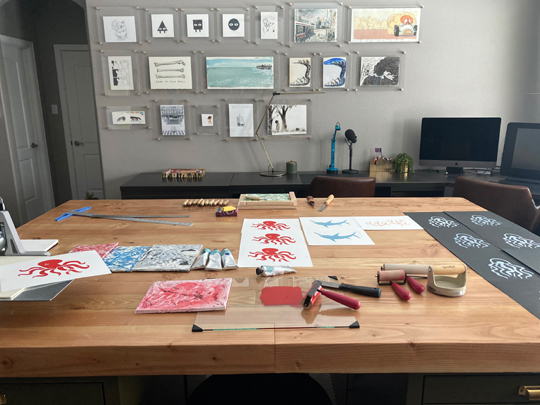 Photo 4: We like to be surrounded by the work of creators we admire, so on one wall Jarrett has a collection of original art from illustrator friends and favorites.
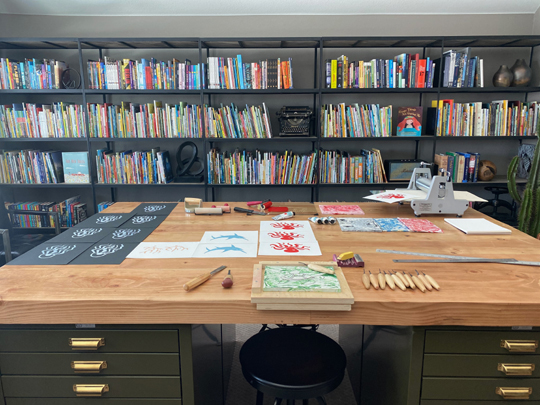 Photo 5: And then on the opposing wall, he has a library of books.
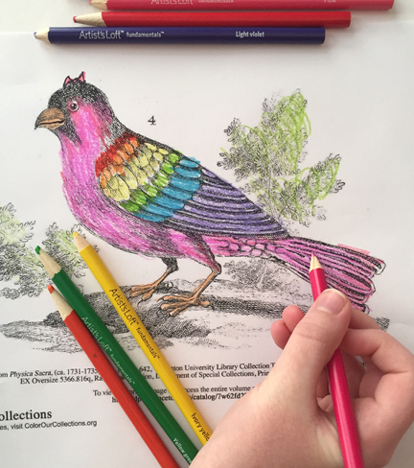 This week libraries, archives, and cultural institutions around the world are sharing free coloring sheets and books based on their amazing collections. Hosted by The New York Academy of Medicine, the