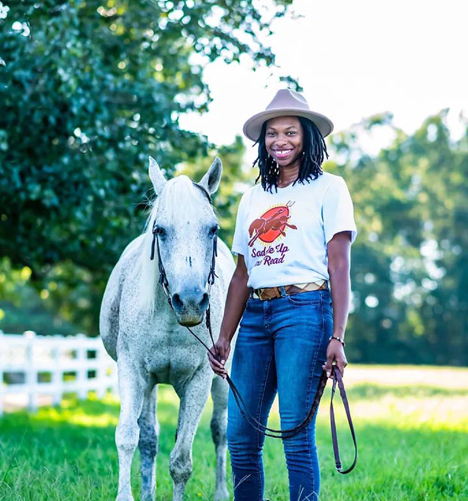
 In the beautiful fields of North Carolina, you will find some very well-read horses.
They are part of Saddle Up and Read, a non-profit organization founded by Caitlin Gooch. In 2017, Caitlin noticed the low literacy rates in North Carolina and how they disproportionately affected children of color. Concerned, she reached out to her local library and proposed an incentive. If kids checked out 3 or more books, they could spend a day at her father’s horse farm and share a book with an equine friend!
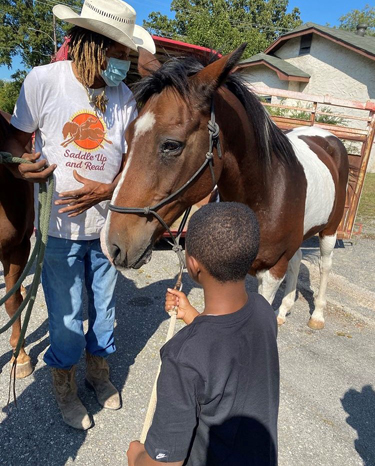
The response, of course, was unbridled enthusiasm. Caitlin’s idea bloomed into a full-scale operation that has earned national recognition as a program of excellence, both on the farm and in the community. Recently, I caught up with Caitlin to learn more about her amazing organization.
Can you take up through a typical day on your farm?
A day on the farm is never the same. My husband and I have four daughters so I plan things around what we can do. Typically I get myself and my children ready for the day. Once that is squared away, I’m either running errands like checking the mail, going to the bank, checking my emails or picking up books. At the farm I am not solely responsible for cleaning out stalls but I will if I need to. I wash water buckets, pick up trash, and check the water troughs in the pastures. Next, I spend time grooming my horses. Sometimes in their stall or out in the round pen. If I am expecting kids to visit, I lay out everything we need. Books, activities, tack and horse treats.
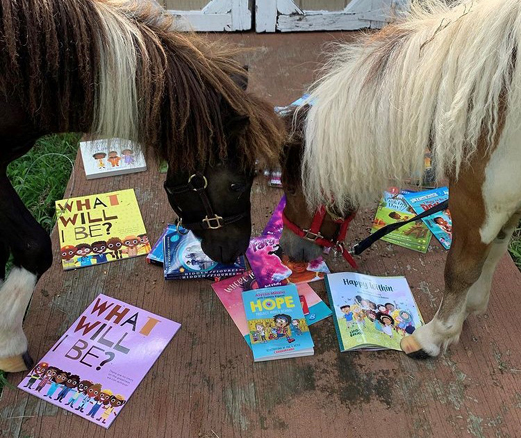
What came first, your connection to books? Or to horses?
Oh! This is a great question. Based on my memory alone (without asking my mom lol) I believe it was my connection to books. I was an early reader. Reading books was something I could do independently. Unlike with horses, kids have to be supervised. We have always had horses but I don’t really remember how often I was at the farm as a kid. I know when I was 6 years old I asked my dad if I could move my bed into the horse stall.
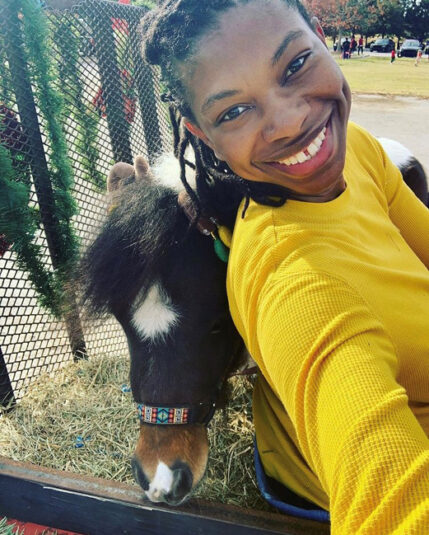
.What are the names of your horses and ponies?
I have 6 horses and 1 miniature horse. Their names are Barbee, Ardent, Ruth, Khaya, BLM Rare Doc Leo, Rainbow and my mini’s name is Man Man. My childhood horse, GOAT just passed away last year. I miss her so much. She was a huge part of Saddle Up and Read.
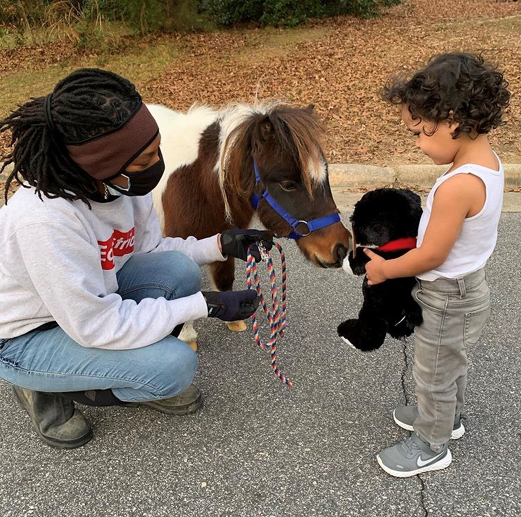
Tell us a little bit about the readers who come to your programs!
The sweetest and funniest kids you could ever meet! Most of the readers are of elementary age. More so 3rd to 5th grade. They love to lend a helping hand around the farm. As long as horses are involved, they are for it. We have a very diverse crowd of readers. Majority of the readers are Black and Hispanic, need encouragement to read or practice reading, or they love to read. The programs are open to all children but we do emphasize on children of color because statistically they have lower reading scores.
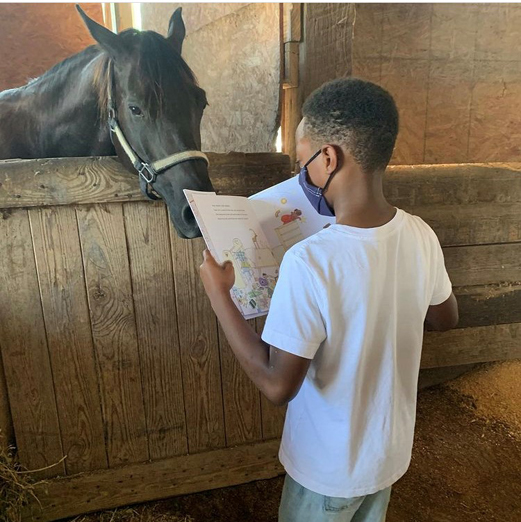
You are building a library of books featuring Black equestrians. What are your current favorites?
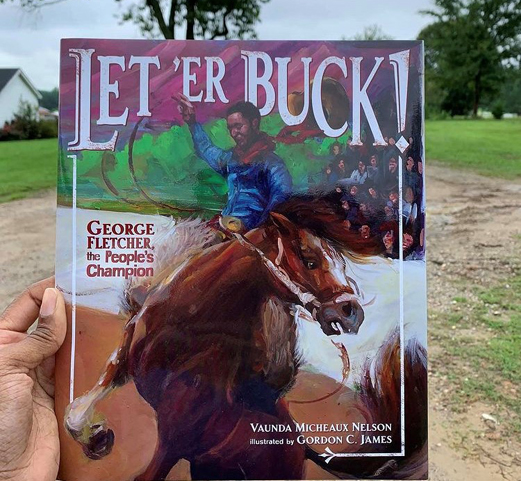
Yes I am! I started collecting these books around the same time I started Saddle Up and Read. Two of my favorites are Let Er’ Buck! George Fletcher the Peoples Champion and Black Cowboy Wild Horses. From my collection I have created a coloring book series called Color & Learn. The first volume is out now. It is titled Black Equestrian Coloring Book Volume 1: The Trail Blazers. It is available on my website and Amazon.
Can you tell us about one of your favorite moments in this program, big or small?
Wow, I have so many. I wish I had a running list of all the people to thank for supporting Saddle Up and Read. Not just the celebrities like Oprah, LeVar Burton and Soledad O’Brien, but everyone who has taken the time to show love. The power of social media has helped us get a truck, a horse trailer, over 2,000 books, and so many donations.
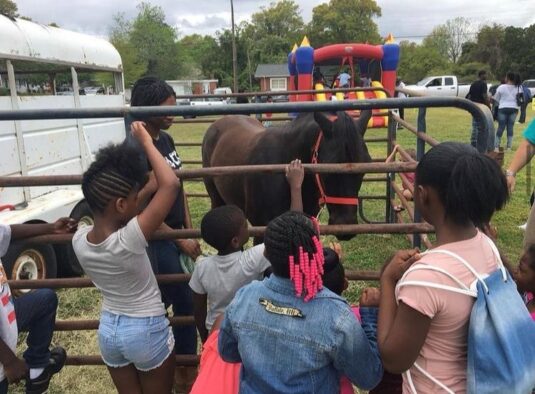 Picking a favorite moment is hard but I’ll say at the end of any event we have, there is always one child who doesn’t want to leave. Sometimes they are crying, “No, I want to stay here.” It makes me both happy and sad. Happy because it means they are having a great time. But sad because I wish they could stay as long as they need to LOL.
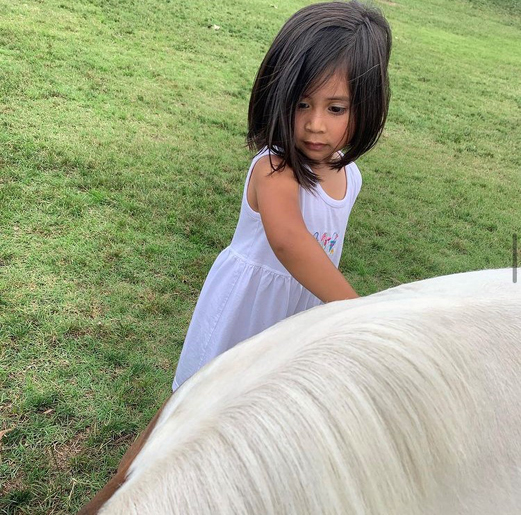
All images courtesy of Caitlin Gooch, Saddle Up and Read. And if you want to see some serious adorableness, check out their Instagram!
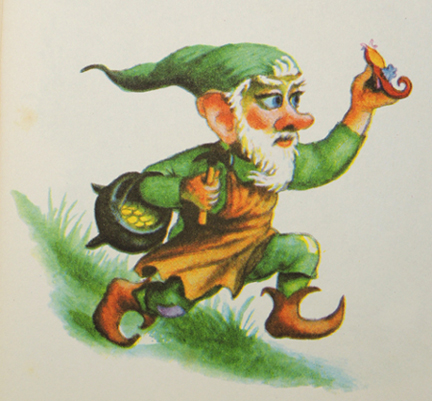 Saint Patrick’s Day has us thinking about leprechauns, so Katie and I delved into Cotsen’s special collections vaults to see what we could find! Happily, we discovered The Giant Golden Book of Elves and Fairies : with Assorted Pixies, Mermaids, Brownies, Witches, and Leprechauns (Golden Press, c1951). It’s a collections of stories and poems selected by Jane Werner, and illustrated by the famous Garth Williams.
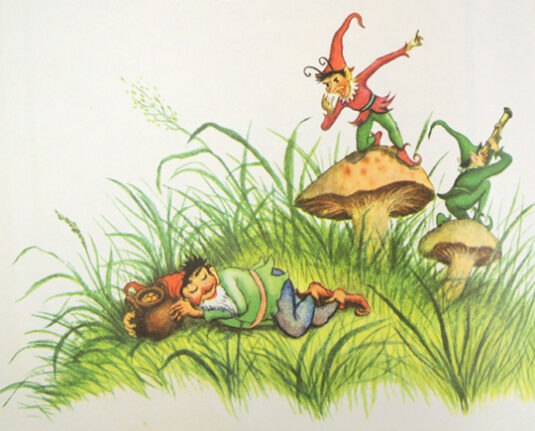 Garth Williams has a signature style that’s most often associated with his illustrations for Charlotte’s Web, Stuart Little, and the Little House series. The Giant Golden Book, however, is considerably more whimsical, teeming with mythical creatures and fanciful settings. And just look at these moody, evocative end papers:
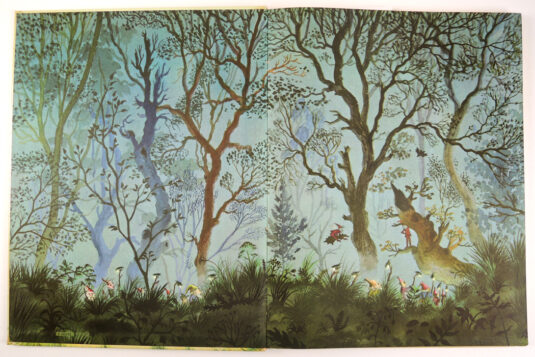 There is still quite a bit of adorableness, of course. One story featured a walnut carriage drawn by mice: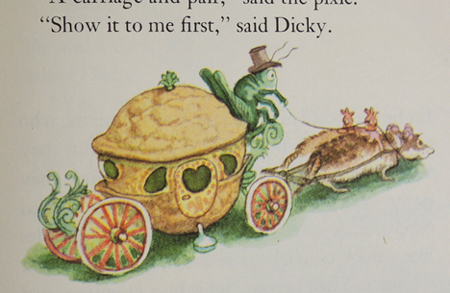
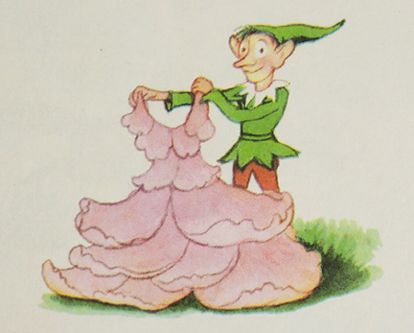
 And this amazing “little crinolined dress made of one hundred rose petals”…
 We’ll leave you with a charming leprechaun poem by Jane Werner herself: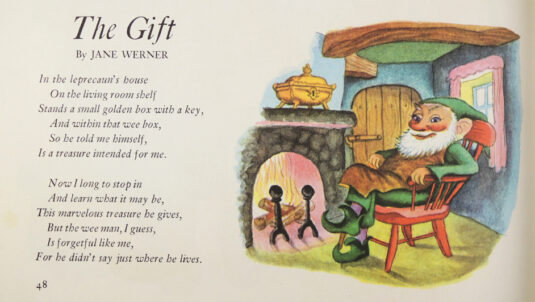
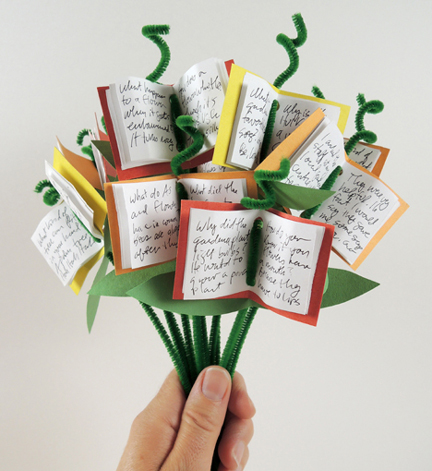 The countdown to spring has begun, and we wanted to usher in the flowers with this awesome bouquet project! With outdoor festivals in the future, this is a great little project to host at your library’s next special event, or just to brighten up your bookshelves at home.
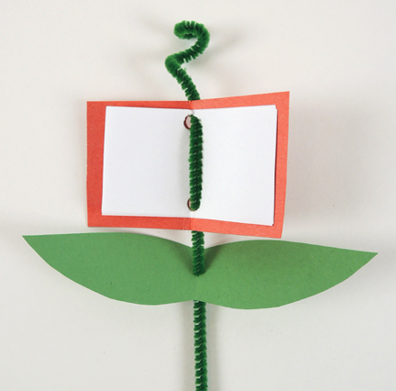
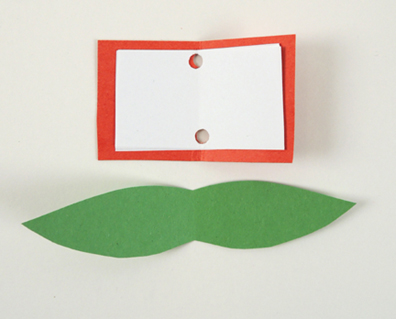 In the above photos you’ll also notice the book flower’s leaves. Those are a piece of green construction paper I folded and cut to create two matching sides. Punch a craft stem through the middle of the leaves, then thread the craft stem upwards through the bottom hole of the book, then downwards through the top hole. Extend the pipe cleaner stem 1-2″ from the top of the book, and curl the end with a pen or pencil.