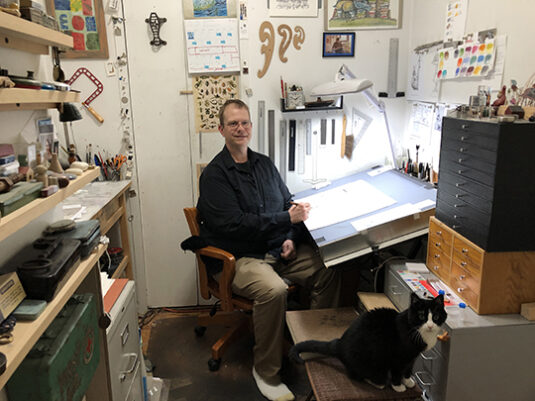
 In a very small studio in NYC, a magician creates vast worlds. Welcome to the studio of Steve Light, award-winning author and illustrator of numerous books, including Have You Seen My Dragon, SWAP!, Up Cat Down Cat, and blog favorite Zephyr Takes Flight (see the awesome project we did for it here!). Steve’s newest book is Road Trip: A Whiskers Hollow Adventure, but he’s hard at work on The Itsy Bitsy Spider, which is set to be released by Candlewick Press. Steve is often joined by studio assistant Madie the Cat.
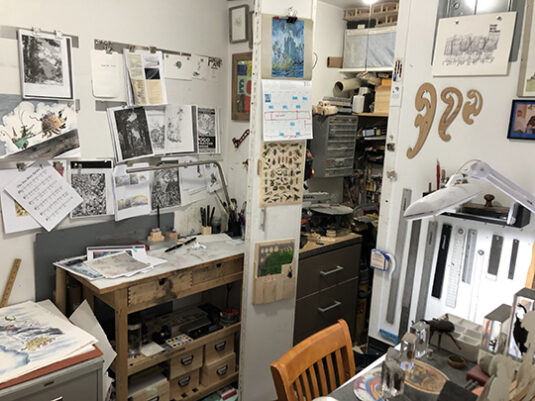
So, I live in Manhattan where space is limited. I live in a studio apartment with my wife and cat. My studio is in an alcove off the living room, my workshop with my tools is in a walk-in closet off the alcove. To get to my studio you walk “through” our bookcase! It’s like entering the world of books.
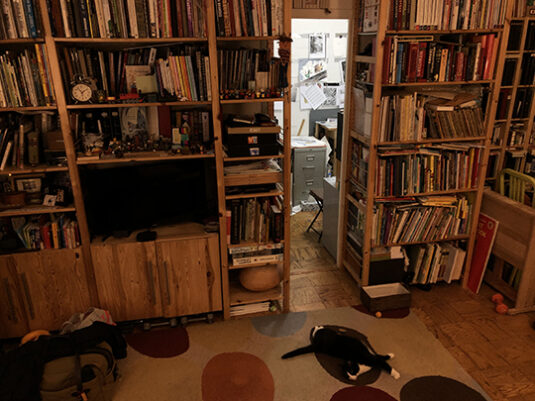
My studio has to be very well organized to be functional. As my friend Barbara McClintock said, “It is like a pilot’s cockpit, everything is within reach at any time!” It is small but very efficient. I have created 20 books in this space.
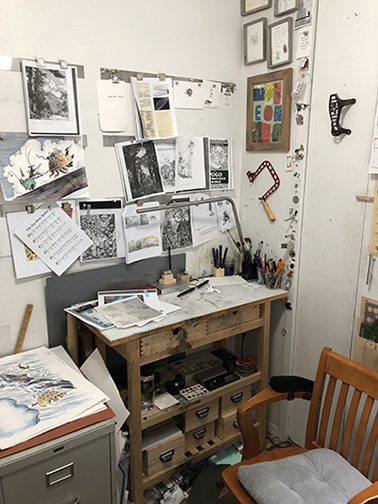
I have all my pens, inks, and materials in the assorted cabinets. My whole desk is a light table, this allows me to see my pencil drawings under my paper when inking the final illustrations. I also have an iPod to listen to music, not my phone so I’m not tempted to look at emails or other stuff. I usually wake up at 4am and make coffee and sit right down to work. Since my workspace is steps from my bed, I can keep that half awake relaxed mindset and set right to work. It is very peaceful.
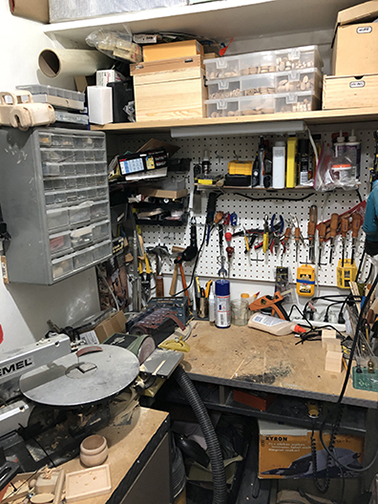
In the closet off the studio, I have all my tools. I love to make things out of wood and that’s what this space is for. I have a scroll saw, drill press, sander and many hand tools. I make sculptures, models, toys, and puppets!
I love living in New York City and love creating in my little space. I spend a lot of time sketching in museums and coffee shops. The city is endlessly inspirational to me.
Images courtesy of Steve Light
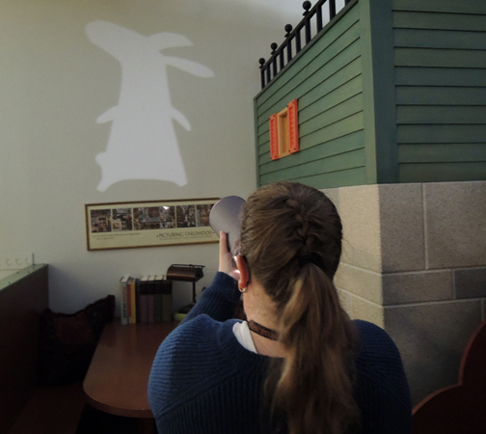
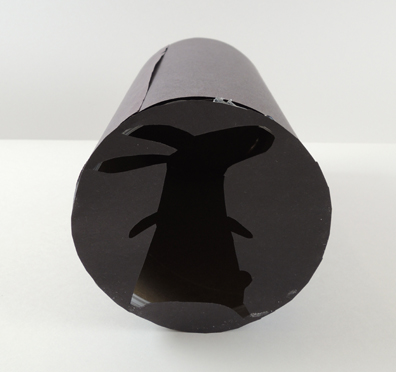
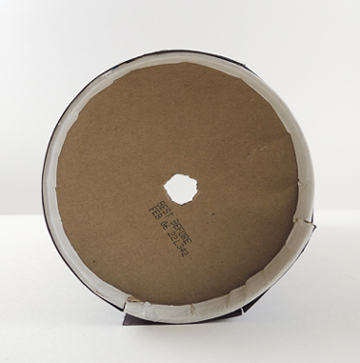 Find a darkened room, activate the flashlight on your cell phone, and place the light against the pinhole of the container. Point the image towards the wall and watch the magic happen! Move closer to the wall for a smaller projected image, and further away for a super large projected image.
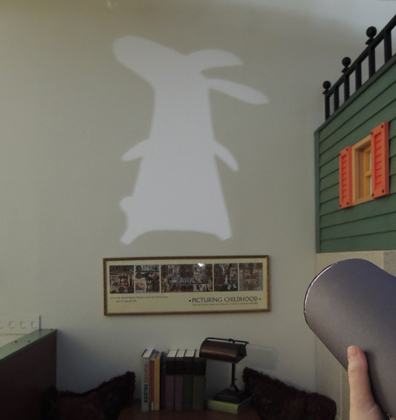 FYI: we discoverd that a cell phone flashlight definitely works best. We tried a regular flashlight and found it produced a blurrier, less definied image, as seen below.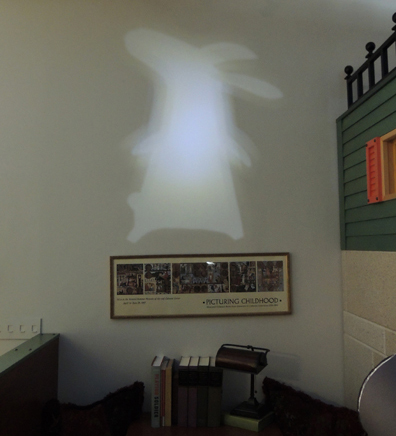
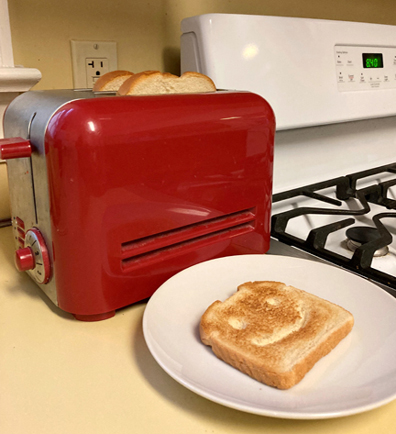
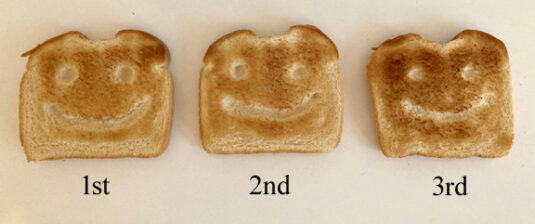 The answer is basically no. Above you can see 3 slices of toast cooked on the 1st, 2nd, and 3rd settings on my toaster. The design appears about the same. Or…maybe I did the experiment so I would have an excuse to eat three yummy slices of toast that morning? Hmmmmm. Totally not telling.