People might think rocks are totally boring and just sit there. But this book proves them all wrong! Turns out when it comes to eras, rocks win the time travel marathon, hands down! Why be sedentary when you can be…wait for it…sedimentary?
We read Old Rock (is not boring) by Deb Pilutti (G.P. Putnam’s Sons, 2020). Tall Pine, Spotted Beetle, and Hummingbird are convinced that Old Rock is boring. He doesn’t go anywhere, see anything, or do anything. But Old Rock explains how many millennia ago, he flew from a volcano, gazed at dinosaurs, rode a glacier, tumbled down a ridge, and watched a forest grow around him. It’s all about perspective!
You’ll need:
- 1 small tissue box
- 2 foam beads
- A short piece of bamboo skewer (ours was 5″)
- A 7″ paper plate
- One time travel wheel template, printed on 8.5″ x 11″ paper
- Tin foil
- 1 rock
- Box cutter, scissors, glue and tape for construction
- Markers for decorating
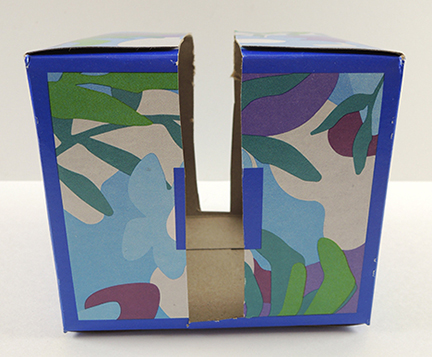
We loved the idea of time passing for Old Rock, so we created this simply time machine project! Begin by placing a small tissue box on its side. Use a box cutter to cut a 1″ wide space in the sides and top of the box (leave the bottom intact):
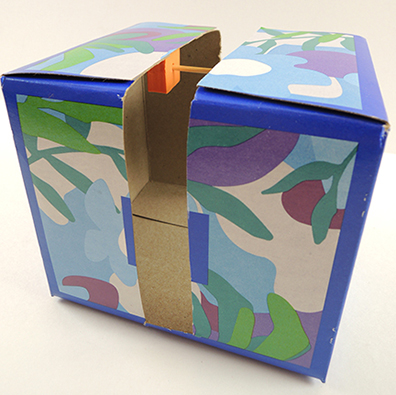
Next, glue a foam bead to the center top of the box. No foam bead handy? Use a small snippet of drinking straw instead. Repeat with a second bead on the opposite side of the box. The bamboo skewer should thread easily through them, creating an axle for your paper plate:
Now for your spinning time travel wheel! Cut the template from the paper and color. A special shout out summer intern, Malaysia for her volcano, dinosaur, and glacier artwork! You’ll notice the final panel on the template is blank. That’s where kids can draw their own homes.
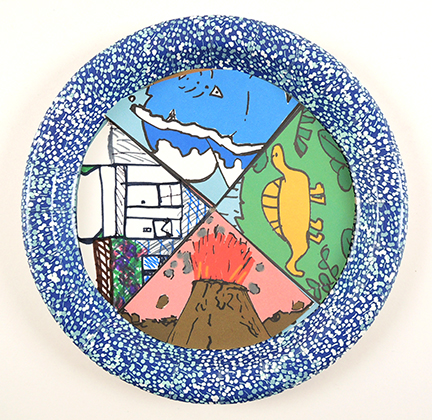 Use the bamboo skewer to poke a hole through the template and the paper plate. Thread the skewered plate through the foam beads to create your rotating time travel wheel like so:
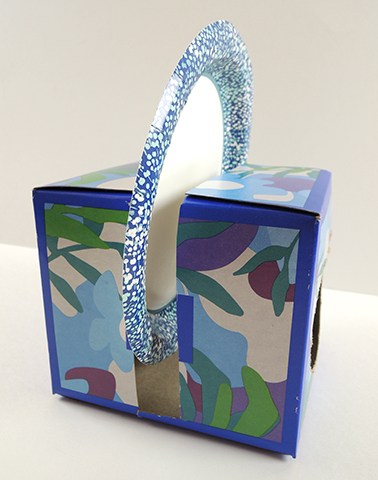 Decorate the outside of the box with tin foil (we offered embossed foil paper and sparkle stems as well). If you’d like the “Totally Rockin’ Time Machine” sign, here is the template. Make sure not to cover the open mouth of the tissue box open – that’s your time travel machine’s viewfinder. Finally…the rock!
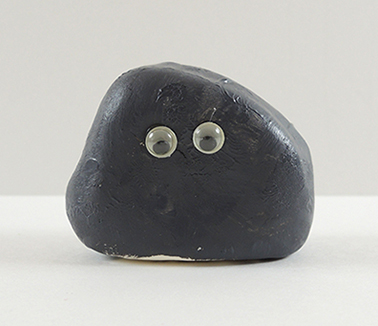
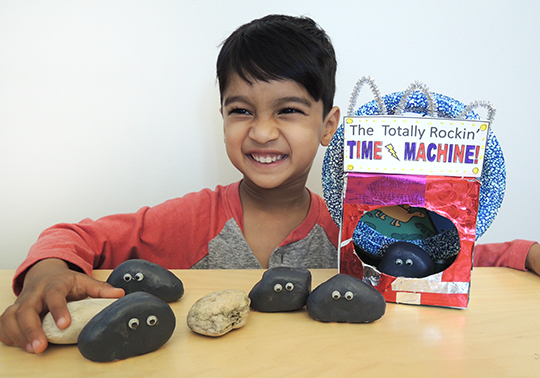
We didn’t have a supply of rocks handy, so we crafted these out of model magic. Just add grey craft paint and wiggle eyes and you have one very charismatic rock. Place the rock inside the time machine, spin the wheel, and watch the millennia fly by!
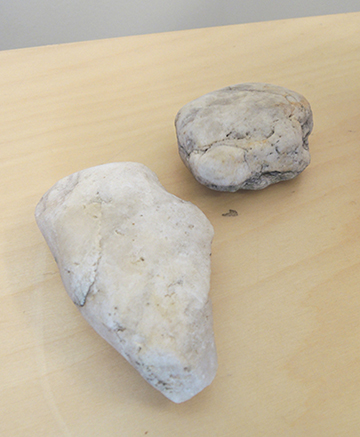
This book went over SO well at story time! It’s lovely, well-paced, and exciting. It’s no surprise it’s a multiple award-winner. The kids were absolutely riveted. But we were further delighted when, completely randomly, a youngster arrived with a couple rocks of his own! You can see them in the intro image, but we wanted to give his special rocks a portrait of their very own:
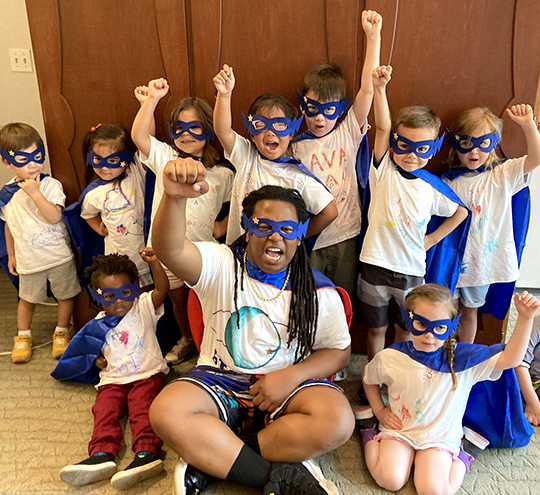 It’s a bird, it’s a plane, it’s SUPER BIG MAN! Jadon, our high school summer intern, put together one of the most fantastic story times our library has ever seen, complete with jumps, landings, super poses, villains, a kidnapped Miss Katie, and flowing capes!
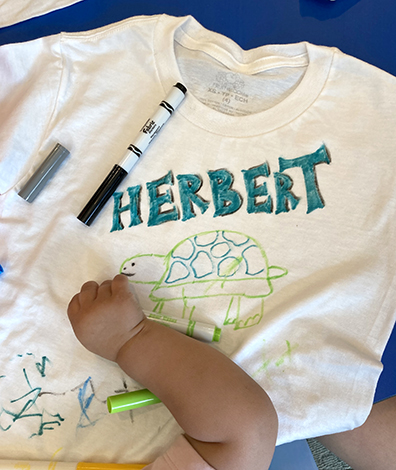 The superheros then received a shiny blue cape (a 20 pack on Amazon is $35). The capes were quite cute and fastened with Velcro. Fabric eye masks with elastic bands also came in the set, but we didn’t hand those out just yet. You had to earn the eye masks by completing all your super tasks!
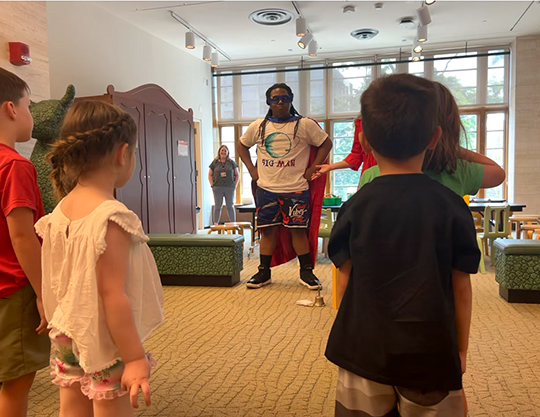 When everyone had their shirts and capes on, Jadon took them through some superhero poses. Then he moved the gang on to power jumps (leaping over a soft block):
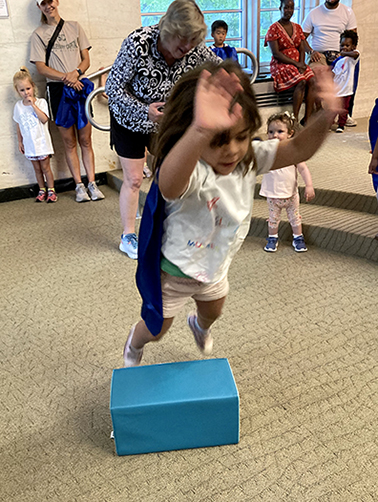 Next he demonstrated the classic superhero landing and invited the kids to try it too. We used a padded mat for safety. Just look at this perfect form!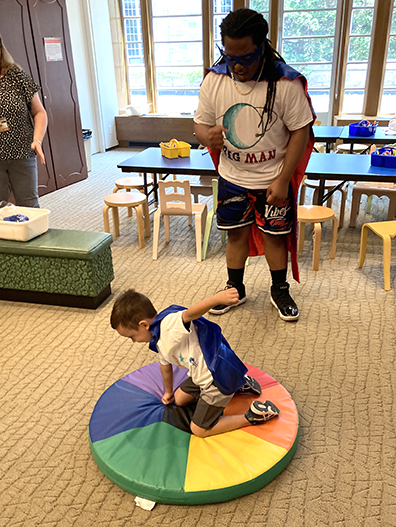
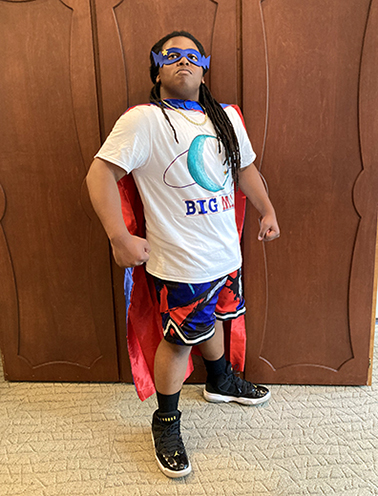 Tell us a little about yourself!
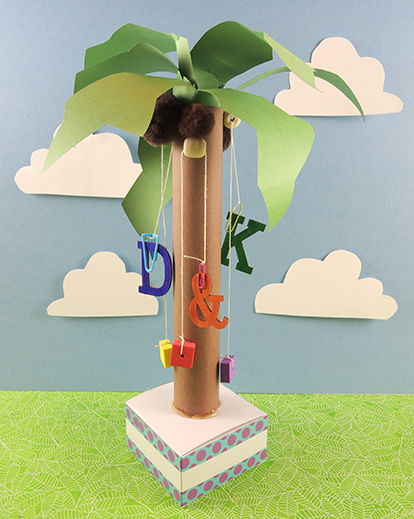 Climb little alphabet, climb! You know those letters, you know that coconut tree, and you know this beloved book. We added a simple dynamic pull string effect to an iconic classic, and the results were boom-tastic!
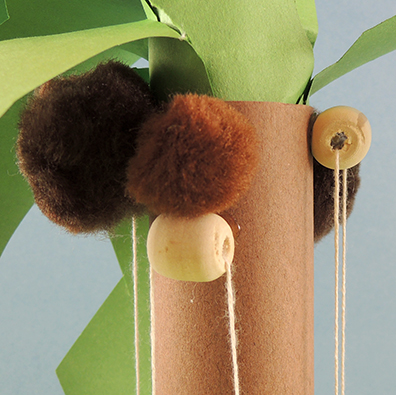 Tie one end of the string to a bead, and the other end to a small paperclip. Next, decorate your letters with markers. We used leftover wood letters from
 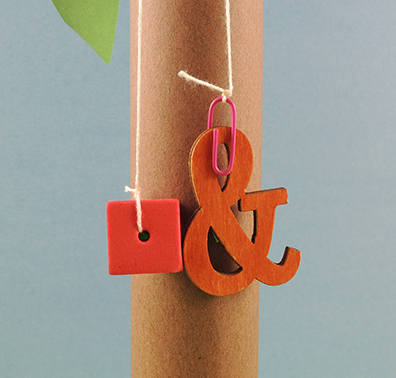 You might ask – why not just permanently tie the letter to the string? You could definitely do that. But we wanted the kids to have multiple interchangeable letters (conveniently stored in the box base of the tree). This way, they can follow along with the story, and send different letters up the tree as they’re mentioned in the story!