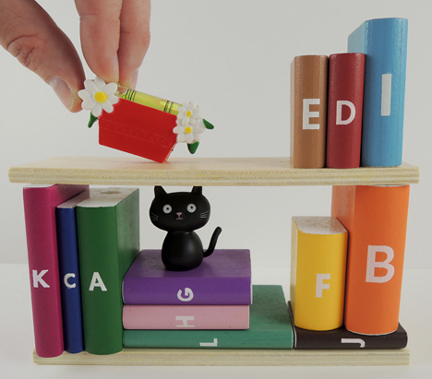
The objective? To arrange the books so that the top shelf is perfectly level. But you can only use certain books, in certain orientations, with a minimum of 2 books touching the top shelf at any time. Oh, and leave some room for a little black cat!
Today, I’m reviewing By The Book, a stacking puzzle for ages 8+ (Brainwright, $18). The game consists of 40 challenge cards, 12 wooden books, 2 wooden shelves, 1 plastic cat, and 1 balance level made to look like an adorable red flower pot.
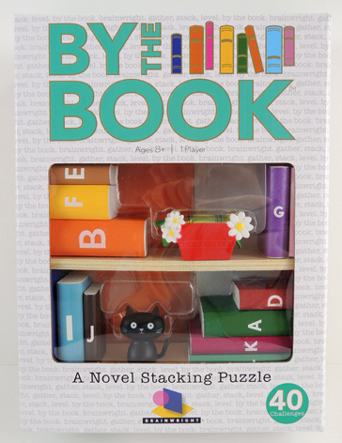 To play, select a challenge card (which are graded as beginner, intermediate, advanced, or expert). The face of the card tells you which books you can use, if they need to be placed horizontally or vertically, or if they can’t touch at all. Sometimes, the card will require the cat to be included on the shelf as well. The back side of the card has the solution. Here are a couple examples of card faces and solutions:
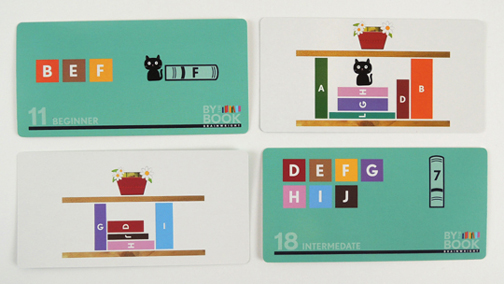 Once you’ve gathered all the relevant pieces, lay the bottom shelf on a level surface, then try configuring the books to the card’s specifications. Put the top shelf in place when you think you’re done, then place the balance level on top to see if your solution measures up. And remember – a minimum of 2 books much be touching the top shelf at any time.
If your solution passes the level test, flip the card over to see if matches the official solution (and the rules do mention there may be other ways to solve the challenge). Some of the solutions, however, are not what you expect! Look at this creative configuration!
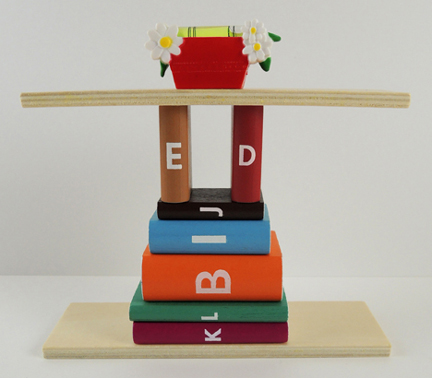
When playing this game, it’s important to work on a level surface. If your work table is tilted, you’ll never reach a solution. So use the level to make doubly sure you’re nice and even before you start playing.
So, what did our kid testers (ages 6, 8, and 10) think of By The Book? They loved it! The game requires analysis, trial & error, testing, and re-testing, but it’s very calm, non-competitive, and you can take as long as you like to reach the solution. By The Book is labeled as a 1 player game, but our kid testers found ways to collaborate. The cat adds a nice touch, and the kid tester found it very satisfying to put the level on the top shelf to see if their clever arranging worked!
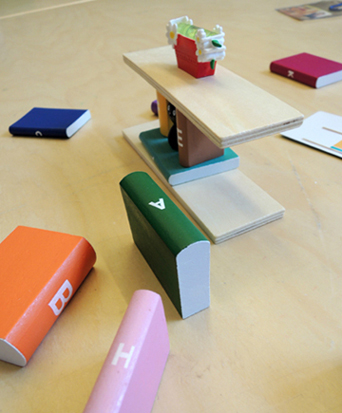
By The Book is the best (a “bestseller,” if you will). It’s fun, intelligent, works with a large age range of kids, and the pieces are really nice quality. This would be a terrific classroom chill-out activity, the perfect addition to library game nights, or an awesome gift from that super cool librarian aunt or uncle. Plus, it comes with a CAT! Five out of five stars.
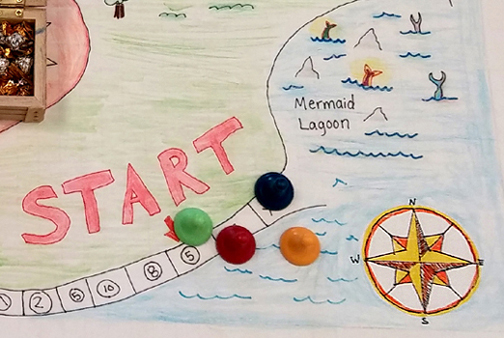 “Check this out!” Katie said to me one morning, holding up her phone. “My friend just posted this to her Instagram!” It was a board game, based on the book Hatchet, designed by Quinn Densmore, a 5th grader in New Mexico.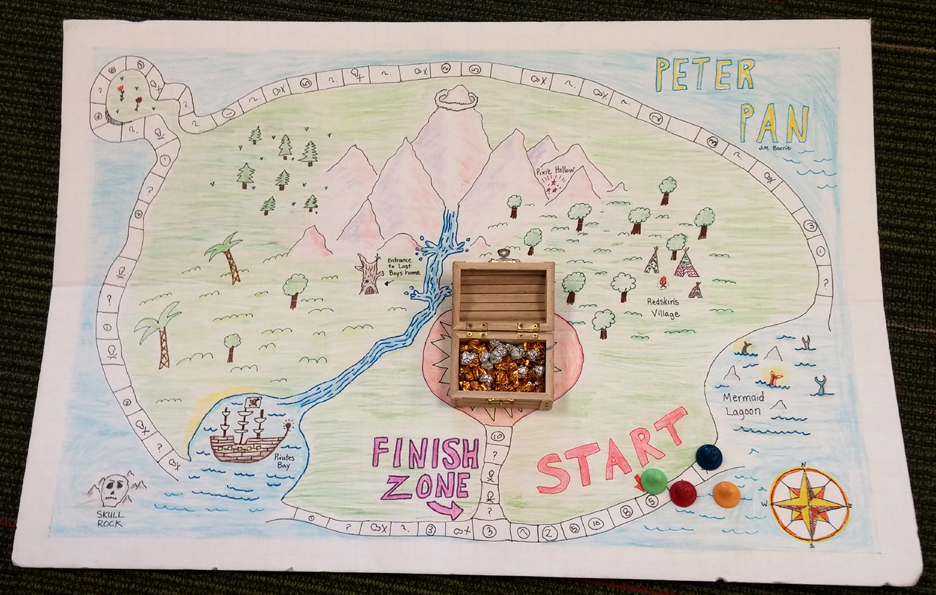
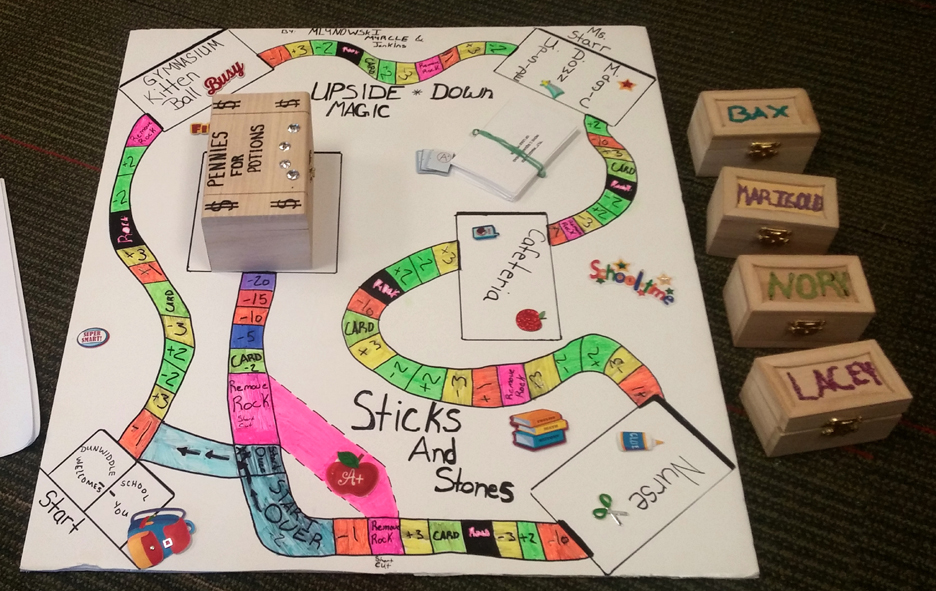 The goal of this game is to get rid of as many gems as you can before reaching the finish line (i.e. the “Pennies for Potions” square). No small feat considering that each player starts with 50 gems! As you travel the board, you can either gain or lose gems depending on the space you land on and the cards you draw.
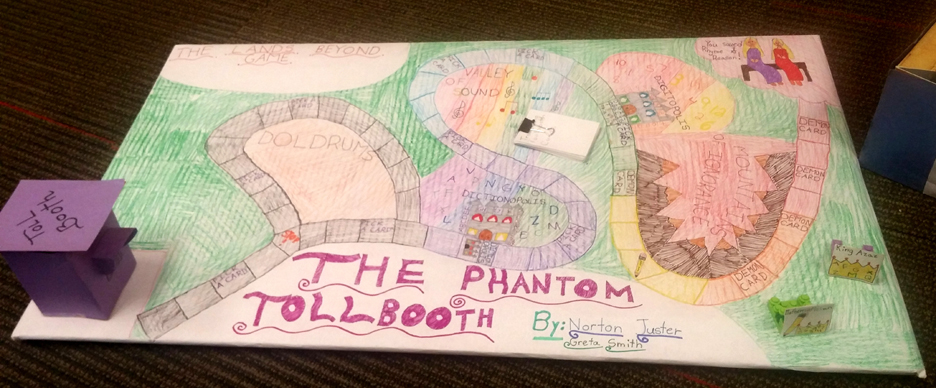 Based on The Phantom Tollbooth, players begin at the tollbooth but soon encounter the Doldrums. If you roll a 1,3, or 5, you get stuck on the Doldrums. If you roll a 2,4, or 6 you take another path. The game continues to move forward in this quirky fashion, and also includes directional cards that make you stop or allow you to roll again. Waiting at the finish line, of course, are Princesses Rhyme and Reason.
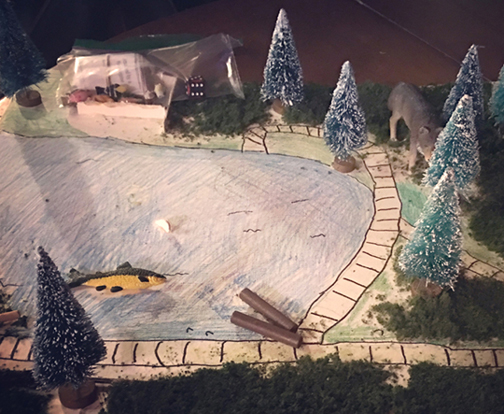 The object of this game is to get rescued from the wilderness. As you move around the board, you acquire different cards. If you get a fire card you are immune to 1 hypothermia card. If you get hit by a disaster, you must do what the card instructs (move back, lose a turn, etc.). If you get a rescue card, you are safe from the next attack card. Collect 5 rescue cards, and you win!
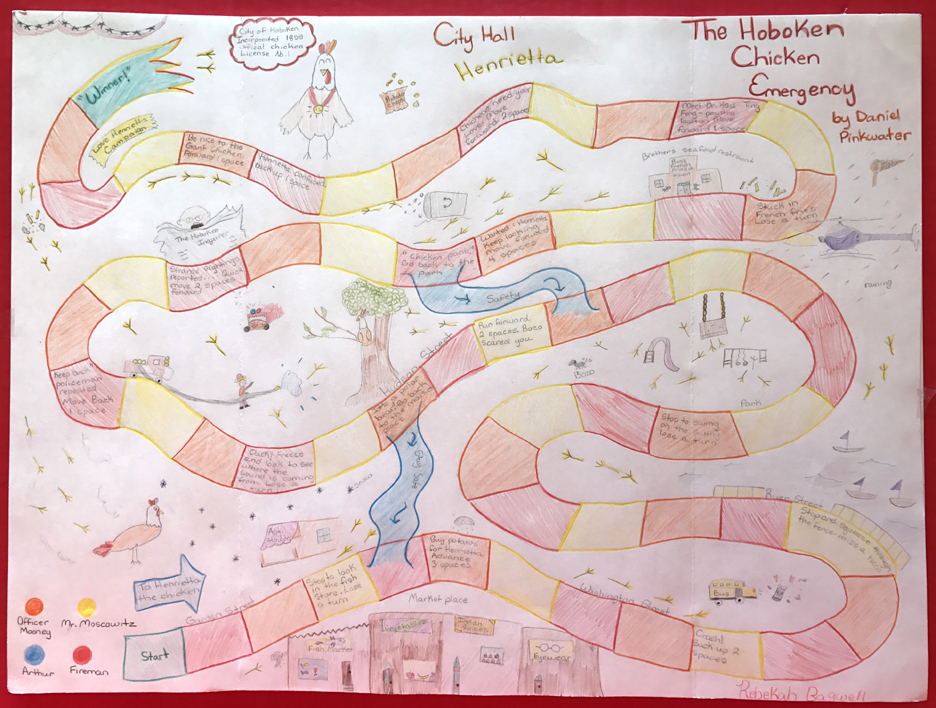 I’ve been a Daniel Pinkwater fan since I was 9, so I was thrilled to see this classic book turned into a game. Players race each other to Hokoben City Hall. Along the way, they must follow the directions on each space (if they land on a blank space, they just wait until their turn comes up again). The winner gets to take home a little Henrietta as a pet!
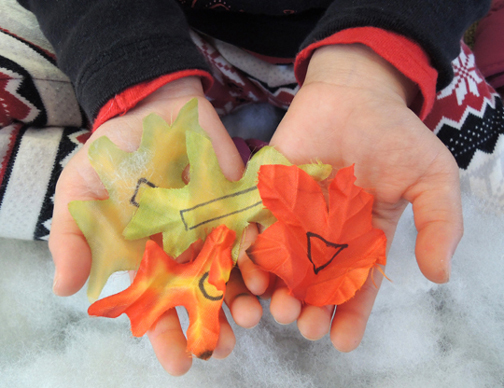 We’ve created plenty of matching games at story time, but what about an un-matching game? Search under the snow to find 4 leaves for your bird nest. But look carefully – no two leaves can be alike!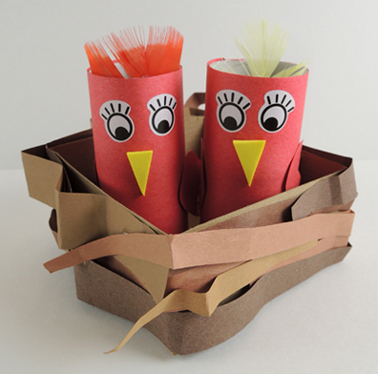
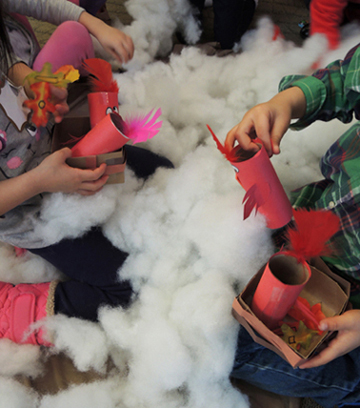
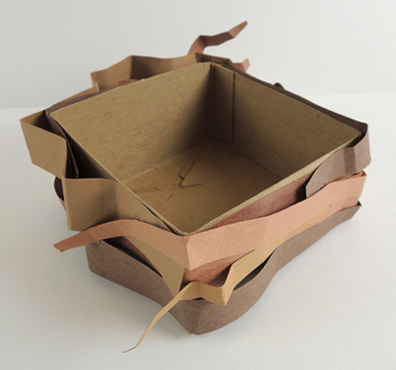
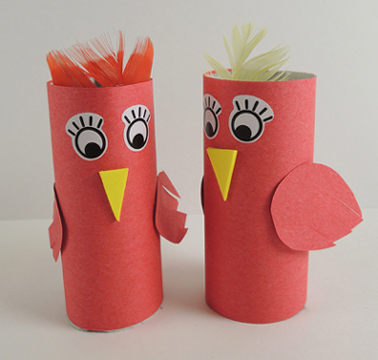 To make the nest, cut a box down to 2.5″ and then wrap it with strips of brown construction paper. We used
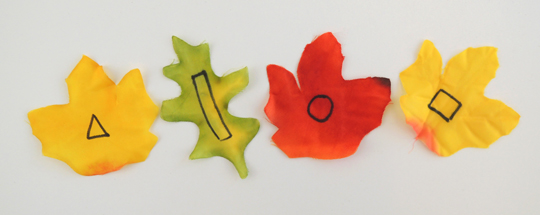
  Set the birds and nest aside for a moment, it’s time for the game! I had some “Fabric Fall Leaves” from Discount School Supply (a pack of 200 costs $6). Katie used a permanent marker to draw 24 sets of leaves. Each set consisted of 4 shapes – a triangle, a rectangle, a circle, and a square.
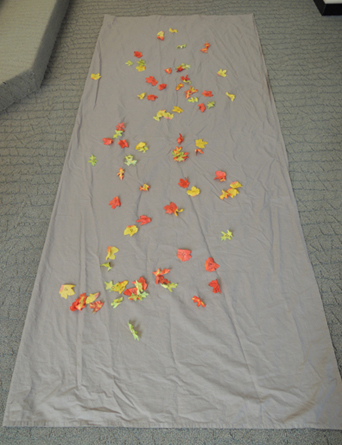
 We scattered all 96 leaves on top of a brown bed sheet…
 And heaped a ton of
 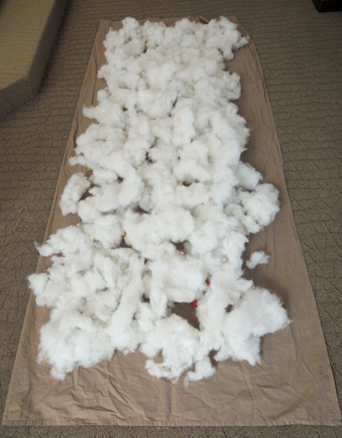 The story time kids dug into the snow to find a set of leaves, keeping in mind that the shapes on the leaves could NOT match! I did, however, post drawings of the shapes nearby, so they could remember which shapes they were looking for.