Flannel of the Future

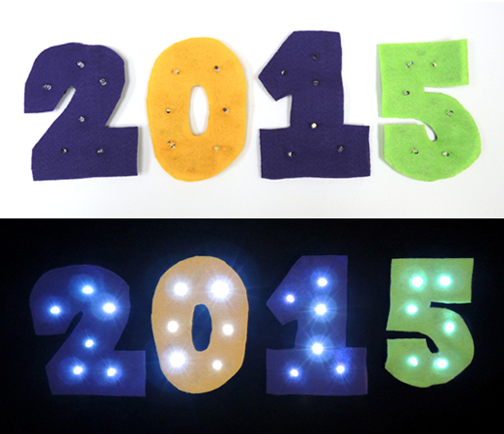
flannel board 2015Some of you may recall this post, in which I visited my friends at scienceSeeds and reported on all the cool science toys they are currently playing with. There was one toy, however, that I didn’t include because I wanted to do a special post on it later.

The time has come for that post.

Get ready to usher your story time flannel board into 2015…may I introduce…the brilliant…the amazing…the mesmerizing…conductive thread! Yes, this thread conducts electricity, which means that your flannel can be rigged with lights!

You’ll need:

  • 1-2 pieces of felt (i.e. flannel)
  • 1 sewing needle
  • A length of conductive thread
  • 1 coin cell battery holder
  • LEDs (3mm or 5mm size are recommended)
  • 1 coin cell battery
  • Scissors
  • Hot glue (optional)

The good news is that all the electrical components listed above will cost you less than $10. A 30 foot bobbin of the thread is $2.95, and the LEDs are between 20¢-50¢ each. A battery holder is about $1.95, and the coin cell batteries, which can be purchased just about any retail store, are between $1-3 dollars (the one you see in the image below is size CR 2032). scienceSeeds buys most of their supplies from SparkFun Electronics, an online company.
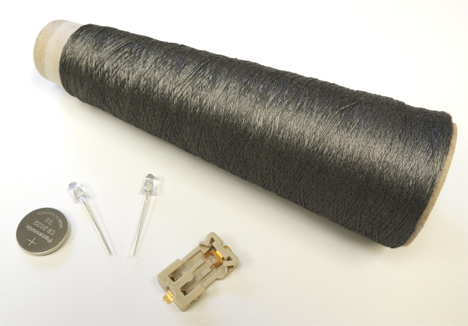
electrical suppliesSince we were using lots of LEDs, Lindsay, our scienceSeeds flannel artist, decided to do 2 layers of flannel. The black “background” layer held the thread and the batteries, and a colorful top layer hid the stitching. The results were colorful, tidy, and sturdy. Here’s what the back of our flannel numbers looks like:
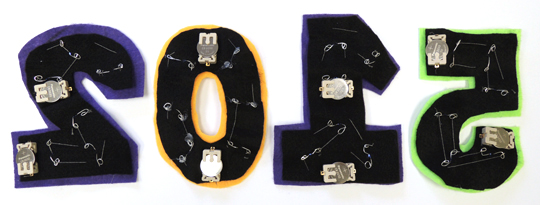
rigged upFirst, use the conductive thread to sew a coin cell battery holder to a piece of felt. It’s important that the battery holder is tightly connected to the felt. Lindsay recommends hot gluing the battery holder to the felt first, and then stitching the holder’s connections to the felt with the thread.

Next, push the legs of an LED through the felt. Curl the legs into circles using a small pair of scissors, jewelry pliers, or needle nose pliers.Then stitch the legs to the felt with the thread.
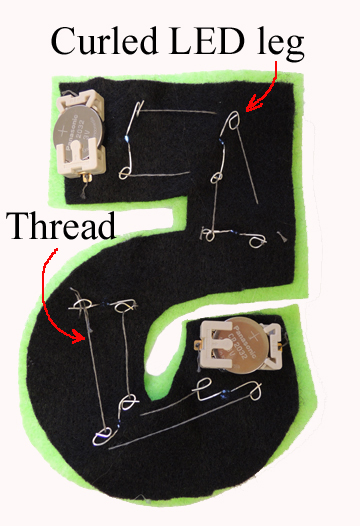
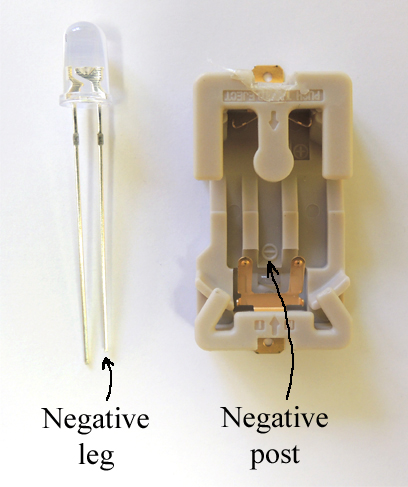
curled leg and threadBecause you’re making a circuit, it’s essential to connect negative to negative and positive to positive. Therefore, the same thread that is connected to the negative post of the battery holder needs to be connected to the negative LED leg. Likewise, the same thread that is connected to the positive post of the battery holder needs to be connected to the positive LED leg.

Worried you won’t be able to rig things up correctly? Worry no more. The battery holder’s negative post is clearly marked, and the negative leg of an LED is always the shorter of the two.
led leg and holderYou can just connect one LED, or you connect a train of them. One important thing to note: if you’re using just one LED, the battery tends to heat up (as opposed to multiple LEDs in a strand, which share the power load). If you’re using just one LED, you might consider adding a resistor (i.e. an electrical component that limits the flow of a current through a circuit). Many LEDs already come with resistors.

When everything is connected, slip a coin cell battery into the battery holder. Your LEDs will activate, and your flannel board will glow! We discovered that the weight of our LEDs, battery holders, and coin batteries made our flannel numbers drop off the flannel board (Viva Las Vegas!). But the problem was quickly solved with a bit of Velcro.
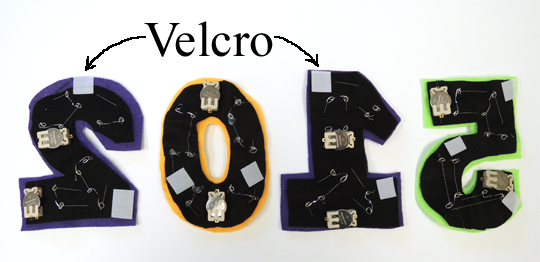
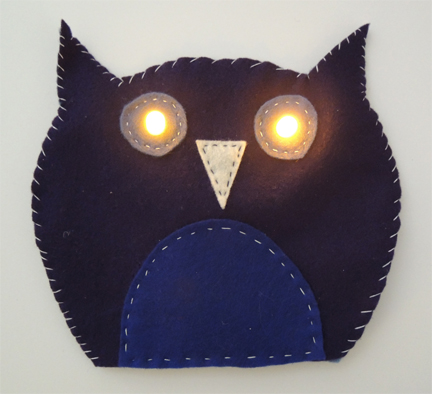
velcroYou could also move beyond flannel boards! Here are a few projects from the scienceSeeds workshop. A handsome owl puppet with glowing eyes…
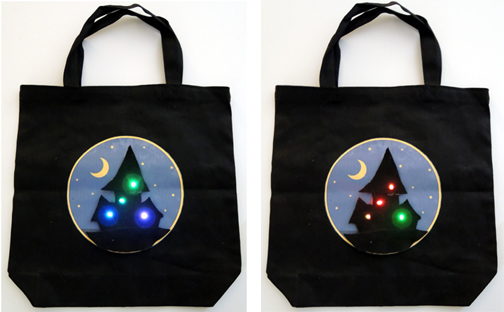
owlA Halloween treat bag with color-changing LEDs! Oooo!
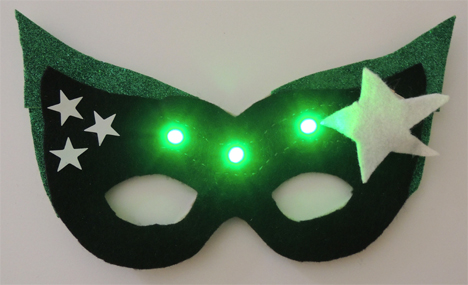
bagA truly marvelous super hero mask.

maskIn addition to conducting electricity, the thread can also be used decoratively. You can see it here, adding some silver highlights to the mask.

thread on maskOK…you have the tools and the know-how. Cue up Pachelbel’s Canon in D, go forth, and illuminate!


Many thanks to scienceSeeds for rigging up the fantastic 2015 flannel!
Creative Cookies

creative cookiesWhat could be better then stepping into a warm, fragrant kitchen and whipping up a tasty batch of cookies? Especially when the cookies magically appear in our one-of-a-kind story time oven!
cookie in ovenWe read Ginger Bear by Mini Grey (Knopf Books for Young Readers, 2004). Horace and his Mum make cookies, but the consumption of Horace’s ginger bear is continually delayed by trifling matters such as the cookie being too hot, the hour being too close to dinner, and Horace’s freshly brushed teeth. So Horace puts the cookie on his pillow for tomorrow. That night, Ginger Bear wakes up and marches to the kitchen. A few simple ingredients, some delicious toppings, and Ginger Bear creates a massive cookie circus! The revelers are having a grand time when they are intruded upon by Bongo the Dog, who really, really likes cookies. You can imagine what happens next. Ginger Bear just manages to get away, and realizes that he needs to find a safer place to live. The next morning, Horace awakes and Ginger Bear is gone. The clever cookie has found a new home in a pastry-shop window, where, as star of the elaborate displays, he will never be eaten!

You’ll need:

  • 4 rectangles of felt, any color (approximately 5.5″ x 8.5″)
  • 1 pencil
  • A selection of fabric tape (optional)
  • 1 cookie template, printed on 8.5″ x 11″ white card stock
  • A 6.75″ x 14.5″ piece of tagboard for cookies (brown poster board works too!)
  • Cookie decorating supplies (we used self-adhesive foam shapes, a selection of patterned tape, and dot stickers
  • A corrugated cardboard base (mine with 9.75″ x 13.75)
  • Tin foil to cover the cardboard base
  • 1 magic oven (more on this later!)
  • Scissors for construction
  • Markers for decorating
  • Hot glue

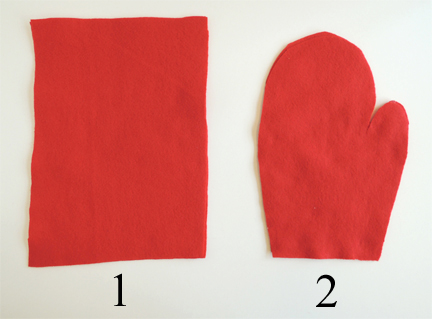
First, your oven mitts! Stack 2 rectangles of felt on top of one another, then place your hand on top of the stack (thumb out, fingers close together). Use a pencil to trace the outline of a mitt around your hand. You don’t want the mitts to be too snug, so make sure to leave plenty of room! Use scissors to cut your tracing from the stacked felt.

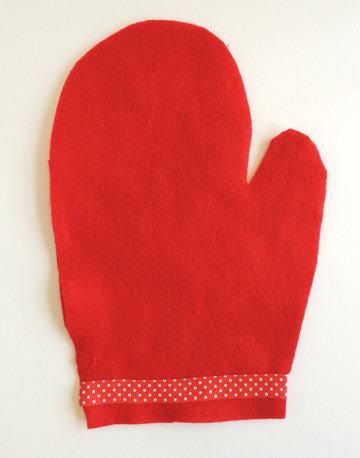
mitt step 1Now run a line of hot glue along the inside perimeter of the mitt (like you’re “stitching” the felt pieces together with hot glue). Make sure, of course, to leave the bottom of the mitt unglued so you can stick your hand in later. Next, attach a piece of fabric tape along the bottom of the mitt for decoration. Repeat the above steps with the second set of felt rectangles to make a second mitt.

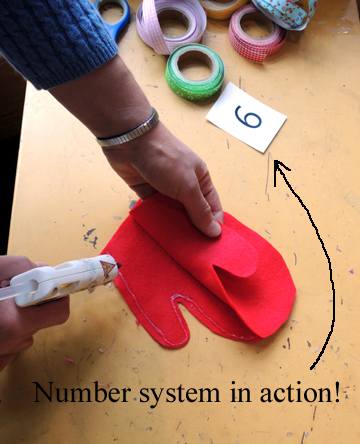
finished mittIf you are attempting this project with a large number of kids, I have a helpful hint to share. Gluing pairs of mitts for close to 20 kids takes some time. To avoid long waits at our hot glue stations, I devised a number system not unlike the “Now Serving” mechanism at delis or bakeries. First, everyone cut their mitts from felt. Then, we handed out a number card to each child, as well as the materials for the next phase of the project – tagboard cookies and decorating supplies.

During the cookie decorating, we called out numbers. When your number was “up,” you paused your decorating and brought your mitts to a hot glue station. We glued your mitts, let you choose from a selection of fabric tape, and then sent you back to your table to resume decorating. Then we called the next number. The system worked like a charm!

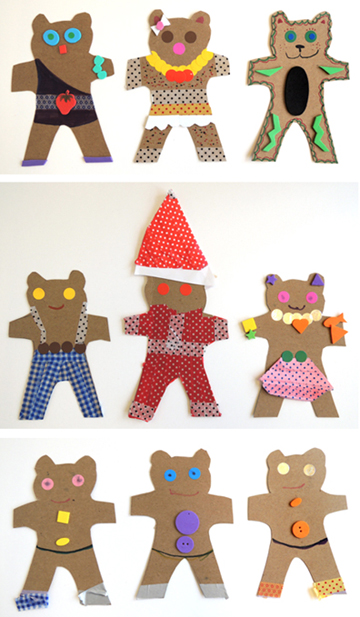
numberMaking the cookies is quite simple. Cut the cookie shape from the template, then trace its shape onto the rectangle of tagboard (or brown poster board). You could also use brown construction paper for your cookies, but it helps to use a material like tagboard or poster board to gives the cookies some thickness. We made 3 cookies per kid. We offered markers, self-adhesive foam shapes, patterned tape and dot stickers as cookie decoratives, but you can also just use markers.

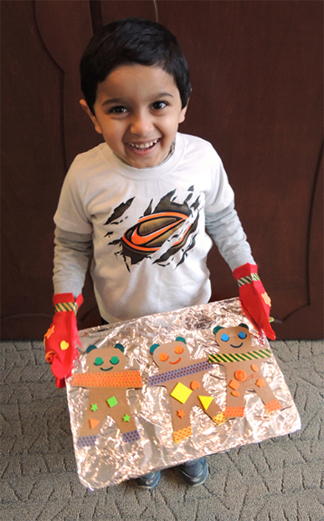
cookiesTo finish the project, wrap a corrugated cardboard base with tin foil to create a “baking tray.” Place the cookies on the tray, slip on your mitts, and you’re done!

You can stop here, or you can add a magic oven activity. We happened to have a big box and some cardboard scraps on hand (the scraps were left over from this project), so we made a magic oven.

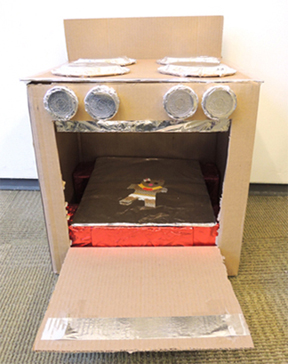
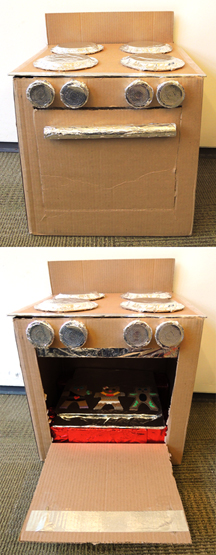
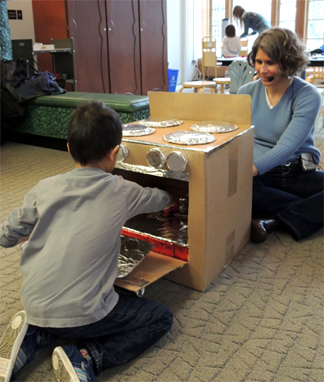
magic ovenOur box was 18.5″ wide x 18.75″ high x 16″ deep. I cut an oven door in the front, and then Katie added a cardboard shelf inside of the oven, a flat range on top (with 4 paper plate burners), and a splash guard on the back. She tricked it out with red cellophane “heat,” tin foil highlights, and beverage lid knobs faced with large silver embossed foil seals. The over door handle was a paper towel tube wrapped in foil and attached to the door with brass fasteners.

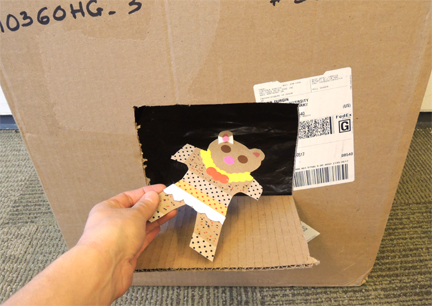
The “magic” part of the oven was a small door, cut in the back. This is where I would sneak the cookies in, making them appear magically on the shelf.

magic doorI borrowed a call bell from the library’s circulation desk to act as the oven’s “timer.” During the story time activity, kids wrote their names on the backs of their cookies, then piled the cookies in a big tub next to the oven. Then they sat in a semi-circle around the oven, wearing their mitts and holding their trays.

I would grab a cookie from the tub, silently read the name on the back, and sneak it into the oven. Then I would shout “Dan! Your cookie is ready!” and briskly ding the call bell. Dan would run forward, open the oven, hustle his cookie out, and run back to his place in the semi-circle. We kept going until all the cookies were claimed!

magic oven in use

Cinderella Story: Make a Princess Dress

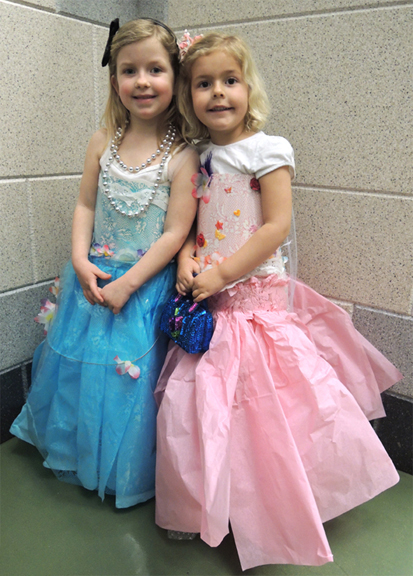
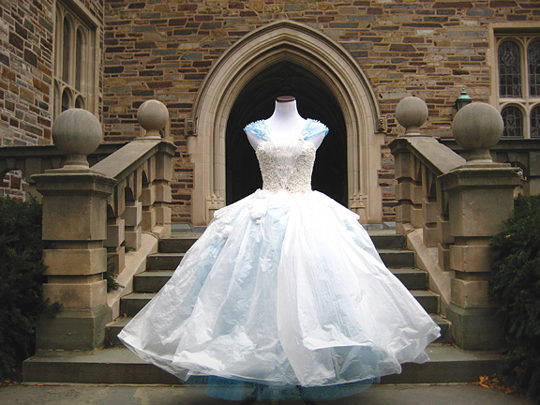
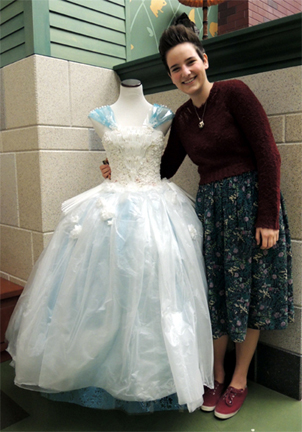
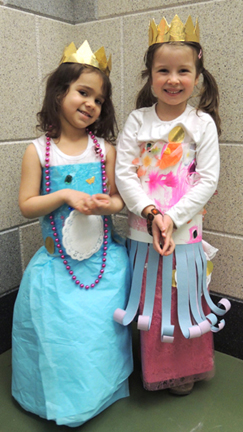
two princessesThis winter, I posted a sneak peek of a Cinderella dress created by local high school junior, Vicky Gebert. The dress was constructed of bubble wrap, trashcan liners, drinking straws, t-shirt bags, forks, blue cellophane lace, Styrofoam, and chicken wire. It looked utterly amazing.

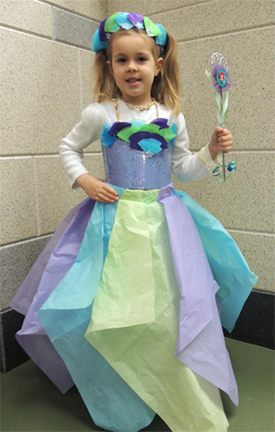
dress on stairsVicky’s dress was the centerpiece of a Cinderella Story: Make a Princess Dress program our library hosted last weekend. Kids were invited to channel their inner godmothers and create a dress out of art supplies (including supplies you might not immediately consider when planning a grand night out).

If you can’t wait to see some of the creative dresses, scroll past the instructions and let the fashion show begin. Otherwise, here are instructions for building your own princess dress!

For the dress base, you’ll need:

  • A 11″ x 28″ piece of poster board for the bodice
  • A 4″ x 28″ pieces of poster board for the skirt sash
  • 4′ piece of ribbon for the bodice
  • 2′ piece of ribbon for the skirt sash
  • 2, 20″ pieces of tulle ribbon for shoulder straps
  • Scissors
  • Hole punch

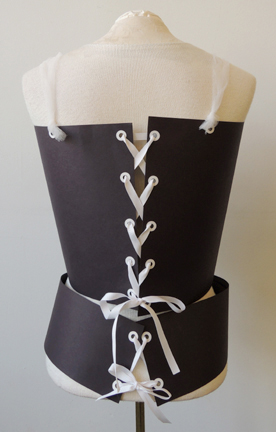
I used black poster board to make the example dress (it shows up better in photos), but for the actual program, the bodice and skirt sash were made of white poster board. Definitely use the thicker variety of poster board (i.e. 6-ply) because it’ll hold up to all the art supplies you’ll be adding later. I also used 3/8″ white ribbon. It was easier to lace that particular width of ribbon through the punched holes without tearing the poster board. The tulle ribbon I used was 3″ wide to allow easier threading as well.

The Nearly New Shop, a local thrift and consignment store, was kind enough to loan us a dress mannequin for the program. It really helped to have the dress base on display so grown-ups could see what the final product should look like.

OK, ready to get started? First, wrap the largest piece of poster board around your upper body until both ends almost touch behind your back. Trim with scissors if the bodice is too long, cuts into your armpits, or if you want to create an unusual neckline.

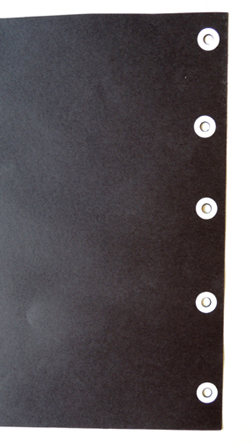
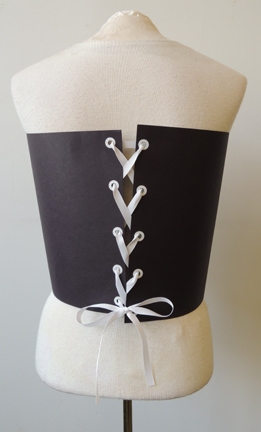
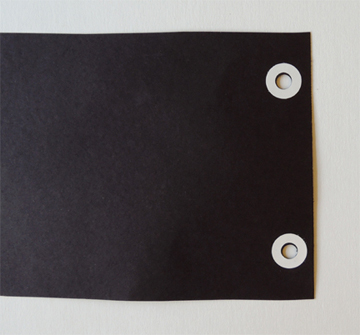
Use a hole punch to make 5 matching pairs of holes down the back of the bodice
(our holes are marked with white rings in the photo so you can see them better).

bodice-lacingStarting at the top of the bodice, lace the 4’ piece of ribbon through the holes. Tie
a bow at the bottom.

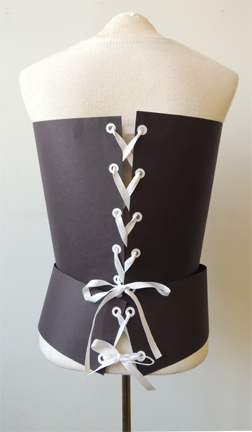
bodiceNext, wrap the smaller piece of poster board around your waist until both ends almost touch. Use the hole punch to create 2 pairs of holes.

skirt sash holesLace the 2’ piece of ribbon through the holes. Tie a bow.

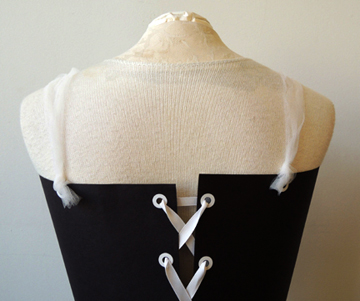
skirt sashLastly, your shoulder straps! Slip on the bodice and adjust it to the right height on your chest. Punch a hole in the front of your bodice, directly underneath your shoulder. Punch a matching hole in the back. Thread a 20″ piece of tulle ribbon through the hole in the front and knot securely. Pull the tulle ribbon over your shoulder and thread through the hole in the back. Knot tightly and cut off any excess. Repeat on the other side. The finished straps should look like this:

straps 2Your dress base is complete!

finishedNow that you know your dress fits, I recommend unlacing the bodice and the skirt sash and laying them flat for decorating. This is especially useful for the skirt sash. It’s easier to make a huge fluffy skirt on a flat surface than a curved surface.

Here are the art supplies we used at the program:

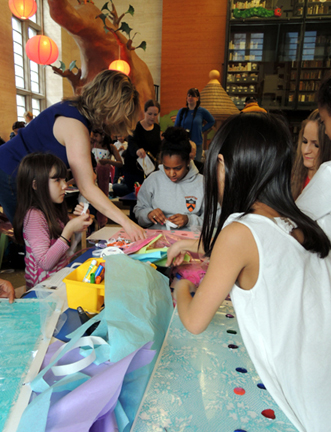
What can I say? We had a tremendous time! The kids not only made dresses, but matching crowns, wands, accessories, hairpieces, and jewelry. It was wonderful.

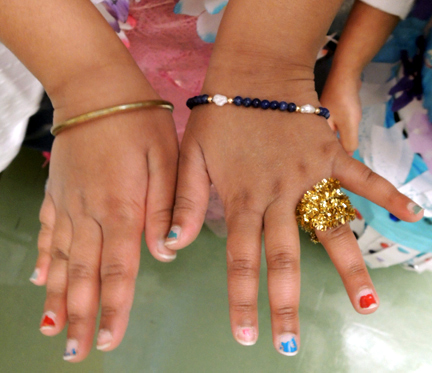
ringAnd here’s the inspiration for the program, artist Vicky Gebert! Vicky answered questions about her dress, crafted with kids, and generally lent her awesome creative magic to the program.

vickyWe were also joined by two Princeton University student groups – the Sustainable Fashion Initiative and the Stella Art Club. They were incredibly creative and incredibly sweet with the kids.

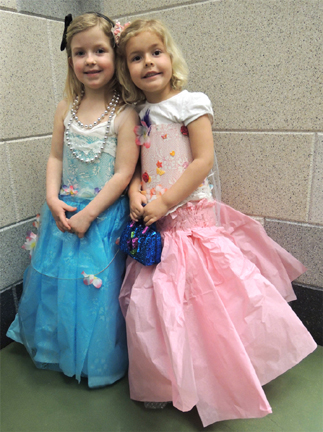
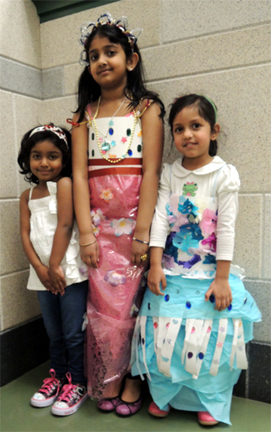
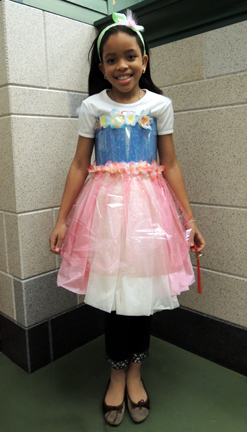
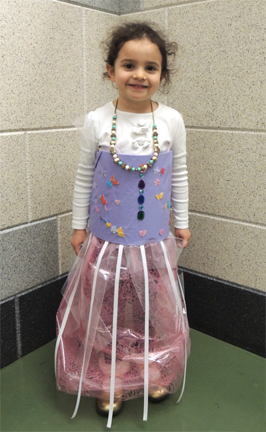
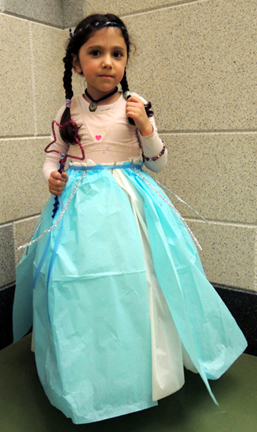
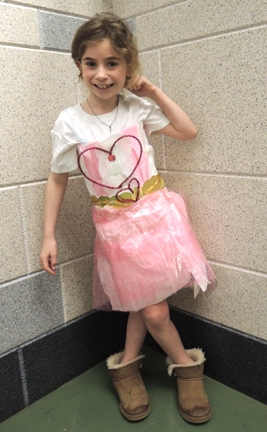
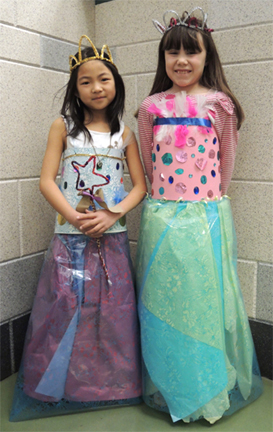
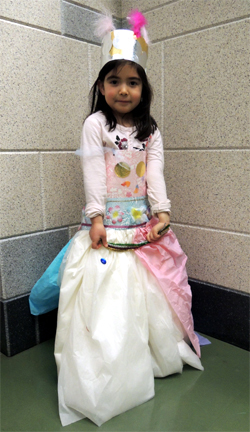
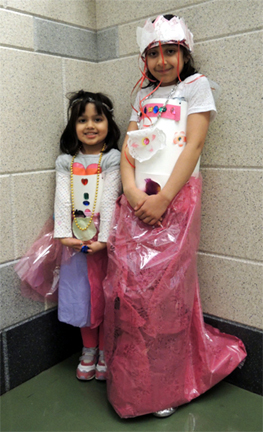
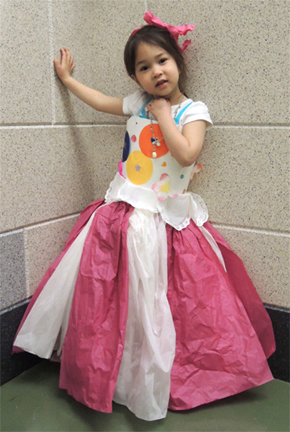
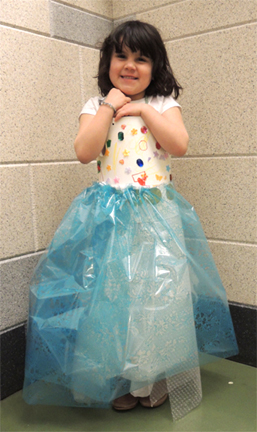
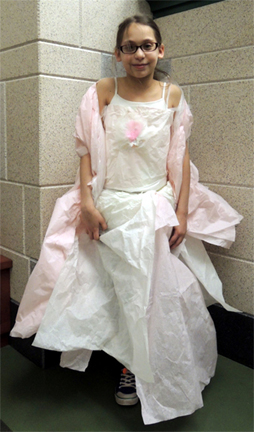
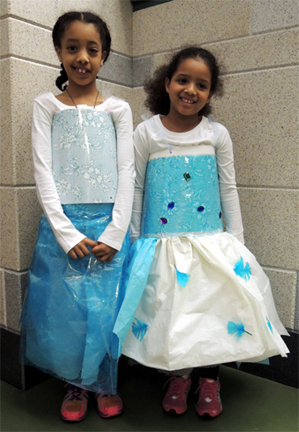
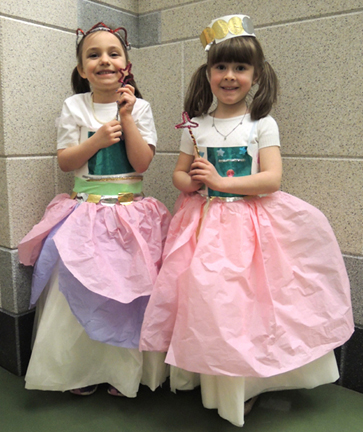
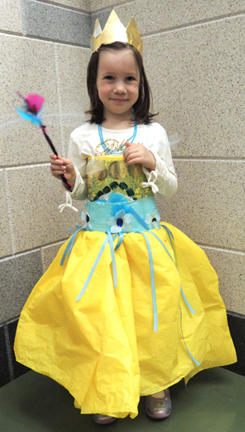
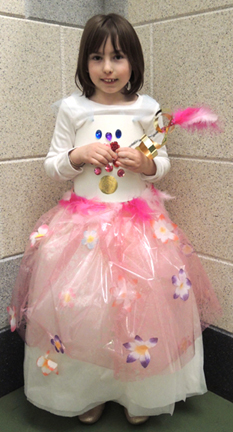
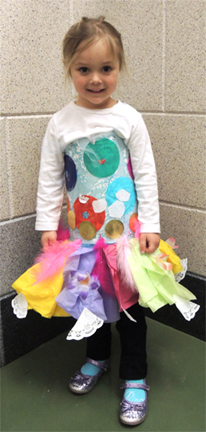
design 1 And now…some of those fantastic, fabulous, and fanciful dresses! Fanfare please…

dress 1dress 9 dress 12 dress 3dress 10 dress 2 dress 20dress 16 dress 19 dress 18 dress 17dress 13 dress 14 dress 11 dress 8 dress 7 dress 6dress 4 dress 5