 Announcing the winners of our annual 350 for 50 writing contest! This year, young writers were challenged to compose a short, 350-word story that included the sentence, “Each box had a story.” Winners from our four age categories enjoyed a $50 shopping spree on Amazon. Congratulations to all!
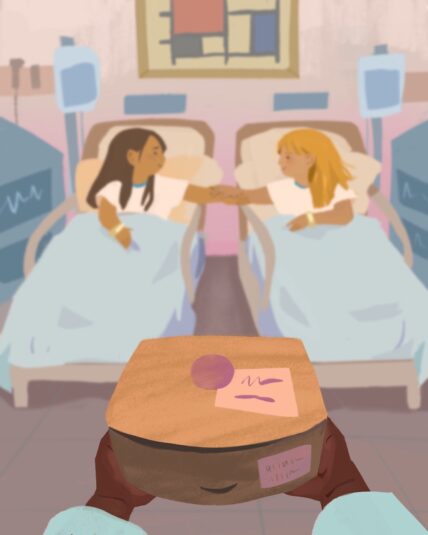
Illustrations by Aliisa Lee
THE STORY OF THE BOX
by Melody Yan, age 9, Hong Kong
 The lights flickered in the tightly crammed cargo ship. I rocked back and forth, bumping into other boxes. If you haven’t already guessed, I’m a box. I won’t bother to tell you anymore. It’ll just raise more and more questions. Anyways, the ship stopped. Then a person came in. He picked up boxes and put them on a cart. We got pushed to a bigger box, and they started putting other boxes inside the big box.
“Hey kid, what’s your story?!” asked the big box I was in.
“Huh?” I asked, confused.
“Each box has a story,” said the big box. “I myself am made from many boxes, although it was quite painful,” he said, thoughtfully. Other boxes around also told their stories.
“Well kid, we’ve told you our stories, tell us yours,” said the big box, which was called Alfredo.
“I…I don’t really have a story,” I stammered.
“What?!” shouted Alfredo. “You think about that! Each box has a story!”
And then somebody opened the box and lifted me and a small box out. I was glad for that. Anyways, the person carried us to a hospital. The guy carrying us walked over to a lady sitting at a desk that read: Receptionist. He said, “Delivery!” The lady smiled and said, “Welcome! This way please!” She led him into a hallway with doors that had signs. He left us in one and after a while somebody came and took us to a room where there were two beds with girls on them. One of the girls said, “Hailey, you don’t have to do this.”
“Sarah, you know I would do anything for you. You’re my BFF,” said Hailey.
“Yeah, but a kidney transplant!” said Sarah.
“It’s okay. It’s okay,” comforted Hailey.
A man with a white coat came and said, “You girls have surgery now.” He opened up me and the small box and took out two identical, blue stuffed bunnies. All of a sudden, I knew what Alfredo meant. And I can tell you, everything was worth it for that smile.
TWISTED SCIENCE
by Sofia Lachmann, age 11, California
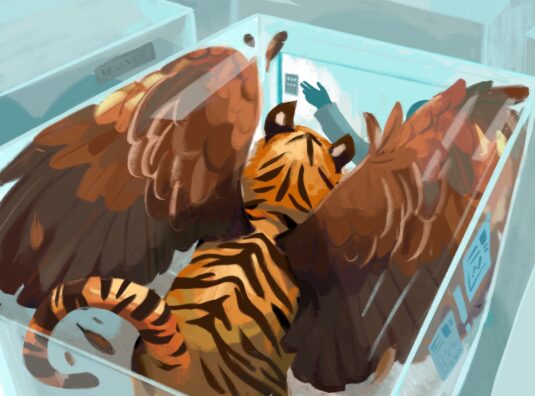
“G16! This is a G16 emergency!”
“What’s happening?” I yelled over the blaring loudspeaker as I ran. I was new to this company, and I still hadn’t been through all the training yet. What the heck does G16 mean?
“They’re bringing in a specimen that’s dangerous!” a man shouted.
I turned a corner and was left wandering empty halls alone. I wasn’t supposed to be here, but I was thrilled to be breaking the rules.
After a few minutes, I became uneasy. The hallways looked exactly the same: white walls, carpeted floors. There was no way I was going to be able to find my way back. Eventually though, I found a door labeled ‘DO NOT ENTER – RESTRICTED ACCESS ONLY’. I opened the door.
Inside was a balcony looking down to a huge lab. I peered over the ledge and almost fell off. This company wasn’t saving the lives of animals, they were experimenting on them! How could so many nice people be working for something so disgusting?
My thoughts were suddenly interrupted when another alarm blasted.
“777, there’s been a breach in the upper lab section. Report any suspects. 777.”
That was me, wasn’t it? I was the breach they were talking about. I heard voices and rushed, heavy footsteps coming and I ducked behind a crate, hoping they hadn’t seen me. 2 people walked passed, and I caught a bit of their conversation.
“…it was so sudden, I’m not sure if I locked the cage properly!”
When I was sure they were gone, I came out from hiding and ran to the stairs that led me to the labs down below.
The first of probably 8 or 9 glass boxes held a tiger with eagle wings. How did this mutant animal exist? Only when I got closer to the glass walls did I notice the labels. Each box had a story. A story about the animal inside. Medicines taken, surgeries performed. Scientists had made this poor creature.
I could feel my blood boiling under my skin, and I did something dangerous and impulsive.
I unlatched the lock.
THE PLAY
by Juha Lee, age 13, New Jersey
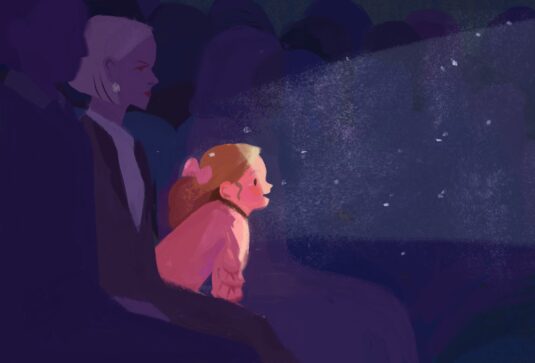
For months, Penny had excitedly awaited this day. Now, it was finally here. She stepped out of the car holding her mother’s hand. Walking toward the theater entrance, she giggled gleefully at the sight of the red carpet in the doorway. Penny strutted into the air-conditioned theater, pretending paparazzi and fans were cheering for her.
“Enough!” her mother snapped, dragging her by the elbow to the ticket window.
As her mother stood in line, Penny turned to people-watch. It was her favorite thing to do in public places; it was a fun way to pass time and it was relaxing, in a way. She smiled to herself as she imagined backstories for the strangers who passed by. This was another thing she liked to do in public places.
“Penny!” her mother hissed, gesturing for Penny to follow. “Come on! The play starts in 10 minutes!”
Eyes bright with anticipation, Penny babbled her excitement away as her mother led her down a hallway, around the corner, and into the auditorium. She was still rambling on when they sat down in their seats, asking her mother how she was staying so calm when all this was so exciting: oh, aren’t you excited, I am, this is my first play ever, oh I’m so thrilled.
“Hush now,” Penny’s mother said sternly, frowning at the way Penny was bouncing up and down in her seat. “And quit moving around so much, will you?”
Penny wasn’t the least bit dejected, and continued marveling at the huge, open space of the auditorium. Suddenly, the lights dimmed, and she let out a small squeak of surprise. Her mother shushed her again, but Penny was literally on the edge of her seat now, craning her neck to see the first actress walk onto the stage. As she opened her mouth to speak, Penny fell silent and leaned forward, eager to hear the first line: “Each box had a story.”
MAIDEN, MOTHER, CRONE
by Stuti Desai, age 15, New Jersey
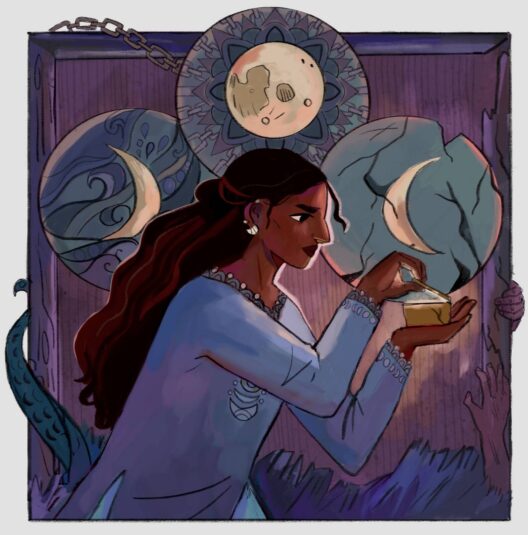
The meadow was empty except for you and your painstakingly gathered boxes: one, from the waters of the Kraken; another, from the camps of the Mahabharata War; and a third, found under Salem. Each box had a story.
You, dress flowing, hands bloodied, legs aching. You were not strong that you could shove galaxies apart to find your boxes, nor were you magic that you could summon history’s darkest secrets with a few words. But you were determined, and that was enough. But you followed the Triple Goddess, and that was enough.
The Kraken box, you charmed your way into. You lied your way onto a ship, stole scuba gear, and lied your way home. You found the box of the disappeared girl, clean washed oak, meant for holding jewelry. Maiden, alone.
The box from the Mahabharata, you won from distraught mothers of sons who did the right thing and mothers of sons who did wrong, all the same in the end. You heard them and held them, and they led you to your box, locked up metal, lest any other get their hands on it. You ran your hands across the mandala and wished them peace. Mother, forgotten.
The Salem book, you fought for. Not that it was difficult. The women were brittle-boned, malnourished. If not fight, what else could women with nothing to lose do? You pried the box from their unrelenting hands. It was fraying, on the verge of broken. Crone, scorned.
You opened two boxes. First, the maiden, so she could be free. Then, the mother, so she could find home.
You hesitated before the crone, before the violence that follows a woman’s life. Should women be entitled to suffer in silence, saved from becoming a spectacle? Without the crone’s story, women would hold all they were inside until their daughters learned to hurt the same way.
Stopping that cycle of hurt was enough for you. In the spirit of the crone, you kneeled and opened the box. What did it matter to you if the world suffered? The crone suffered, and no one had listened.
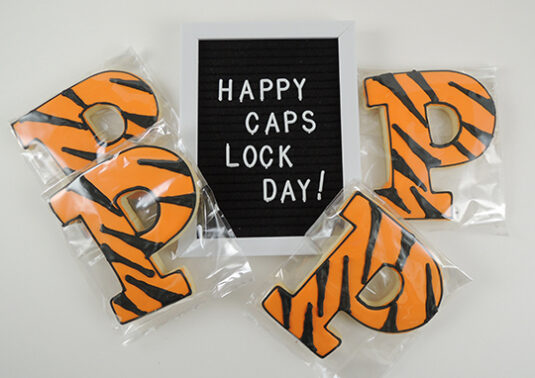 TODAY IS NATIONAL CAPS LOCKS DAY, AND WE ARE CELEBRATING IN STYLE!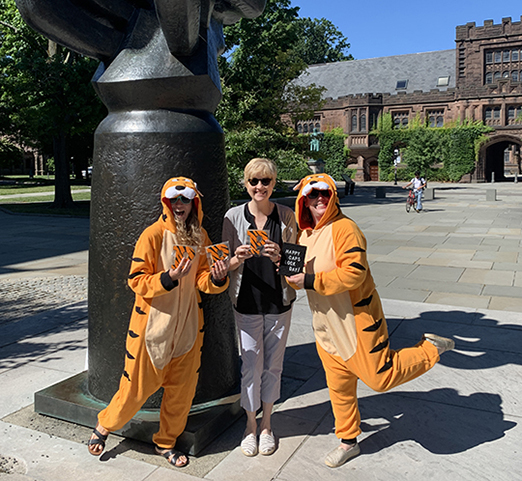
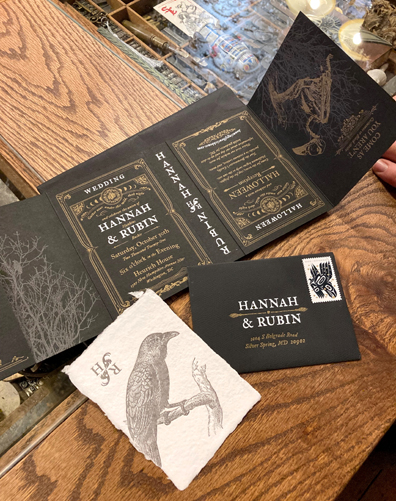
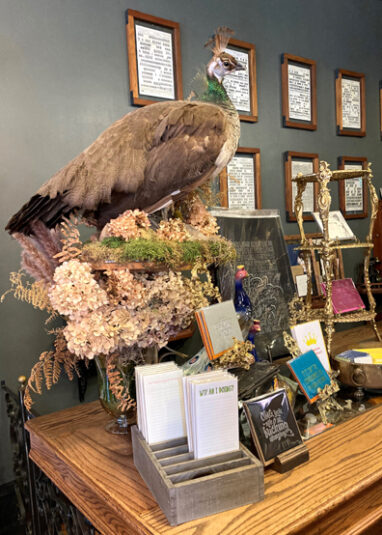
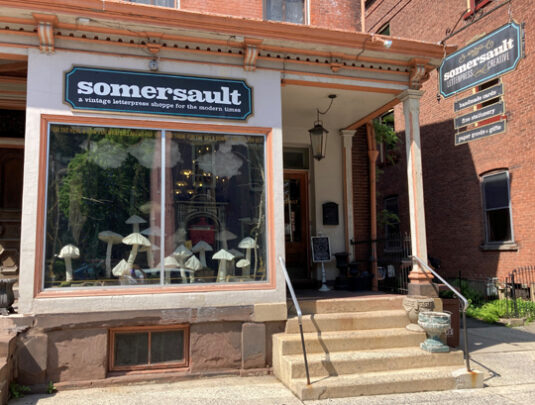 In the picturesque mountain town of Jim Thorpe, Pennsylvania, lies a gorgeous and amazing gem…Somersault, an independently-owned letterpress studio and card shop! From their vintage presses, to their gorgeous
 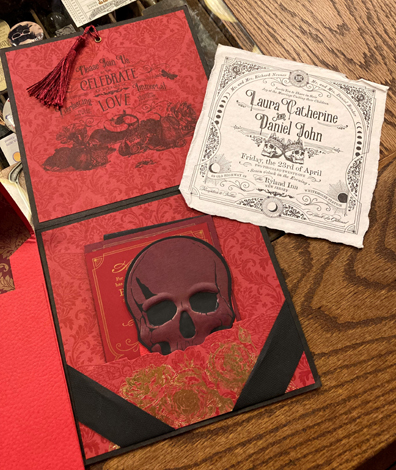 Owned and operated by Mitch Hanson and Amy Pienta (and adorably supervised by the Hammish, aka Hammie Noodle, seen below), what began as a side project in 2011 has bloomed into a multiple award-winning studio and retail venture.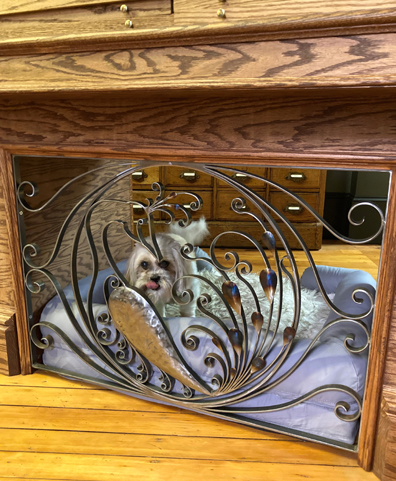
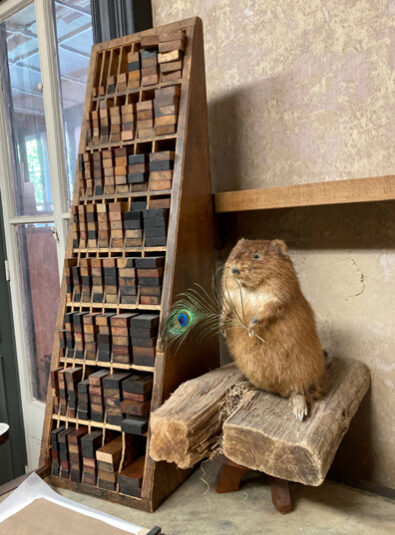
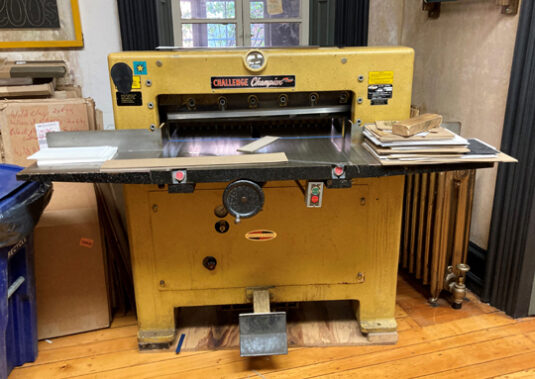
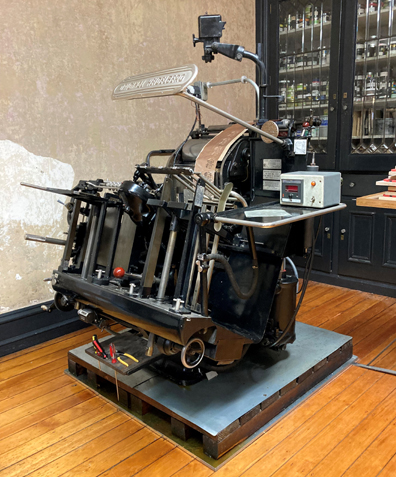
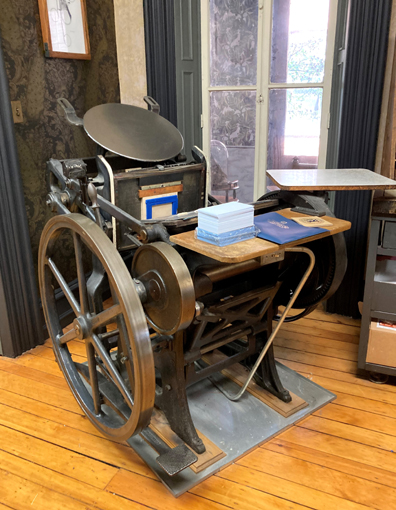 You have an incredibly interesting and unique space. Please tell us about one of your favorite objects in your store or studio!