Hello, World!

Everyone’s world feels a little smaller these days, and today’s simple project is a reminder of the blessings we have in the four walls around us, the family and friends by our sides, and the life that exists, beautifully, outside our windows.

We recommend The Hello, Goodbye Window, written by Norton Juster, and illustrated by Chris Rashka (Hyperion Books, 2005). Read here by Sankofa Read Aloud. A child fondly narrates Nanna and Poppy’s “Hello, Goodbye Window.” It might appear to be a regular kitchen window, but it’s so much more…it’s for waving hello, it’s a mirror, it’s for viewing stars, it’s for family to share, it’s for new discoveries, and it’s for special visitors who could come by at any minute. Maybe even the Queen of England…but more likely the Pizza Guy!

You’ll Need:

  • A window
  • A set of window crayons, or washable markers

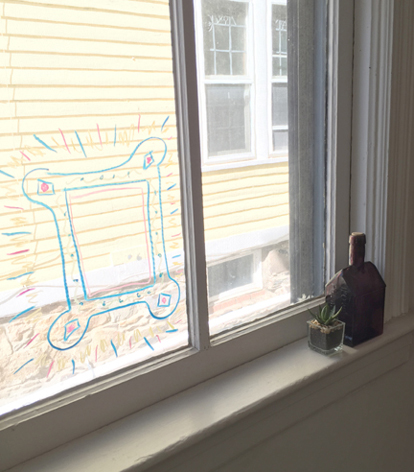
While the Hello, Goodbye Window in the story appears ordinary, this project jazzes things up a tad…I draw a special window frame to gaze out of! Specifically, I used these awesome Crayola window crayons, which can be purchased for around $5-$7 (I snagged my set at Michael’s Craft store with a 20% off coupon).
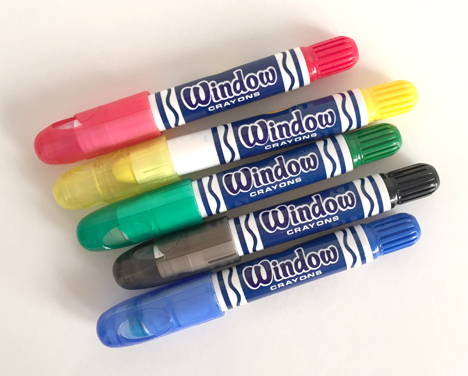
However, I also tested regular markers (Target’s washable brand for under $4) and they work on the glass too (and most importantly, cleaned right OFF with a standard glass cleaner, no problemo).

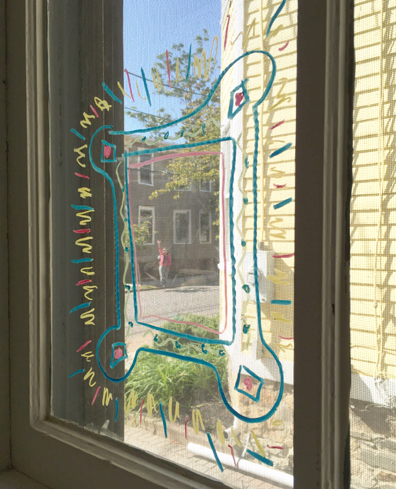
You can draw your window frame just about anywhere…in draw as many as you like! Draw one for each family member, draw one for the dog! Best, of all, if you line yourself up juuuuust right, you can step outside to create a lovely portrait for your delighted viewers.
Norton Juster is also the author of The Phantom Tollbooth. I had the honor of interviewing him in front of a live audience in 2016, and you can find the full interview here!
One Two Books

It’s a story line, an illustration exercise, and an optical illusion all wrapped into one simple project! “One Two Books” is an activity I like to do with kids during illustration and art programs. It’s quick, easy, and fun!

You’ll need:

  • 1 piece of paper
  • Markers and/or pens

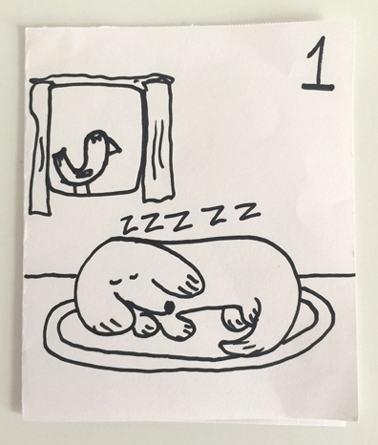
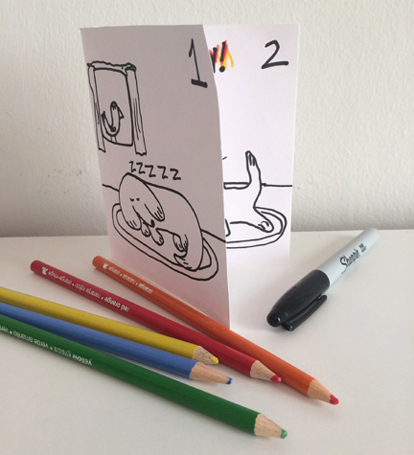
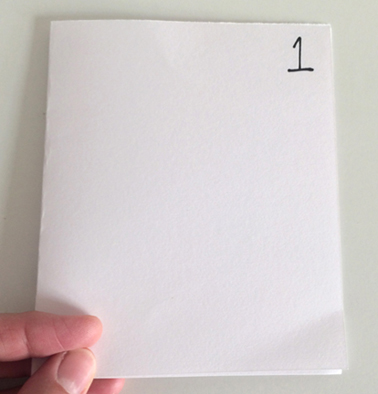
To begin, fold a piece of paper in half like a card (I use the heavier stock 9″ x 6″ paper from the inexpensive sketch books Target sells in their office supply section). Label the front of the card with a number 1:

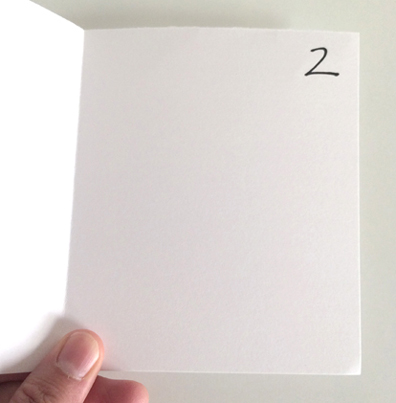
Then open the card and, in the exact same position in the interior, label it with a number 2:

Now decide the story you want to tell. One Two Books only have 2 pages, so I encourage kids to think about a simple action, reaction, or scenario. The younger the artist, the simpler it should be. So here we have a sleeping dog and a grumpy bird on a window sill…hmmm…

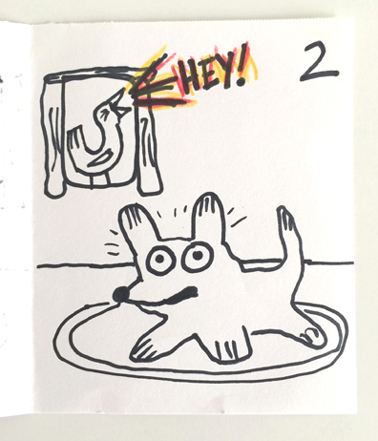
Flip open the card for the action…a shouting bird and a shocked, no longer sleeping dog!

One Two Books are a great way to think sequentially, but they are also a terrific way to teach you to think logically and visually. For example, in order for the image to work, the window, rug, and floor line need to occur in the same place on both pages. If color is used, it needs to be consistent between pages. Your characters need to be in somewhat similar orientations or the story won’t make sense. And for the older kids, I show how dialogue or emotive lines adds to the scene (example: the “zzzzz” for the dog on page 1, and its surprised reaction lines on page 2).

The books are also optical illusions! Flip them quickly open and shut to see your characters in motion. Here’s the bird dog story:


And here’s a goldfish story I did with another young illustrator…


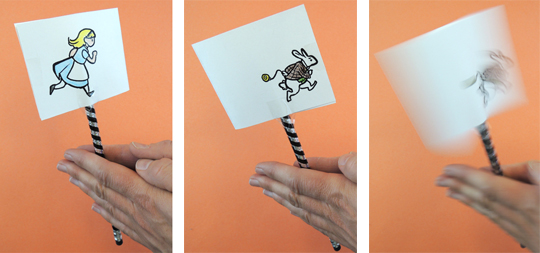
The visual action of One Two Books are similar to thaumatropes, which are fantastic optical toys from the Victorian era. Check out this post, which features our awesome Alice in Wonderland thaumatrope project, complete with instructions and printable templates!

thaumatrope demo

Unlike thaumatropes, however, One Two Books allow you more space to create. You can have several action sequences happening on the page at once, for example. Or more elaborate backgrounds. You can have dialogue between two characters as well.

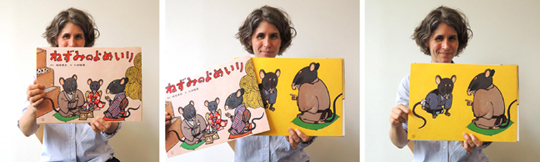
Another interesting storytelling form to try is kamishibai, which originated in Japan. You can find more information about its history and instructions on how to illustrate stories here.

just the cards

There’s also a Japanese version of thaumatropes called tachi-e puppets. You’ll find instructions for those here!

Protecting Our Most Precious Companions

protecting our companions

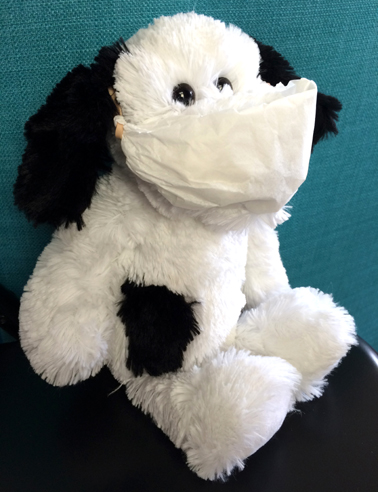
Today’s simple project is the result of a news photo I saw the other day…an exhausted-looking mother in NYC, pushing a heavily covered baby carriage. She was wearing a medical mask. Gripping tightly to her other hand was a little boy, also in a mask, toting a stuffed dog.

But the stuffed dog wasn’t wearing a mask. And my daughter has the exact same stuffed dog. Something in my heart just pulled.

So here’s how to use two common household items to make a mask for those most beloved companions. The ones your children reach to for comfort and reassurance. And hey, if you want to give Domino the Dog a quick cuddle yourself, you just go and do that.

You’ll need:

  • 1 flat bottom/basket style coffee filter
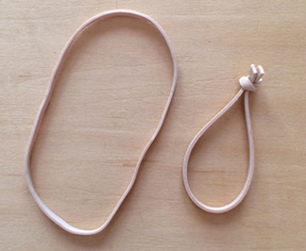
  • 2 rubber bands
  • Scissors

Apologies for the image quality…I’m shooting from my not-so-camera-ready home studio!

Stuffed animal heads, noses, and ears vary wildly, so you might have to cut the coffee filter down a bit. Same goes for the rubber bands! You can see how I shortened my rubber band below:

shorter rubber band

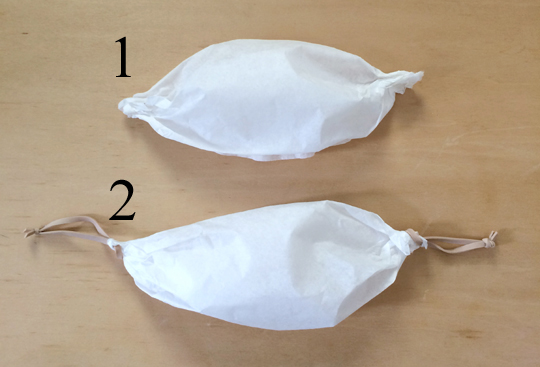
Flatten the coffee filter, then fold the top and bottom inwards like a burrito. The size of the folds will, of course, vary with the size of your stuffed animal’s head.

Now tightly bunch both ends of the folded coffee filter. Use scissors to snip a small hole in the bunching on each side (and aim a little ways in from the ends so the rubber bands don’t tear through). Finish by looping rubber bands through the holes.

Slide the mask over your stuffed animal’s nose and face, and the rubber bands behind its ears. Adjust as needed. Stay safe, little friend!