 Professor Flitwick is going to be thrilled, because this post is all about charms! When we learned that Malaysia, one of our awesome high school summer interns, was a huge Harry Potter fan, we just knew this kit was hers to test! Accio bracelet!
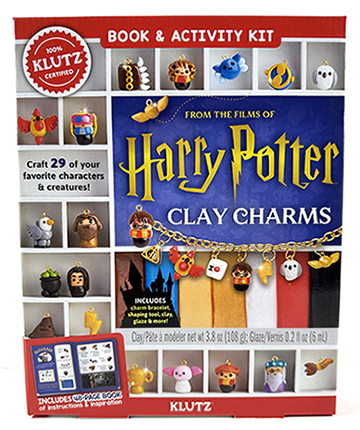
The “Harry Potter Clay Charms” kit by Klutz is intended for ages 8+ and retails for about $25. Contents include an instructional manual, 7 types of clay, a sculpting tool, a mini marker, a bracelet and hardware, a small bottle of glaze, and a paper display stand that looks like the Hogwarts Express.
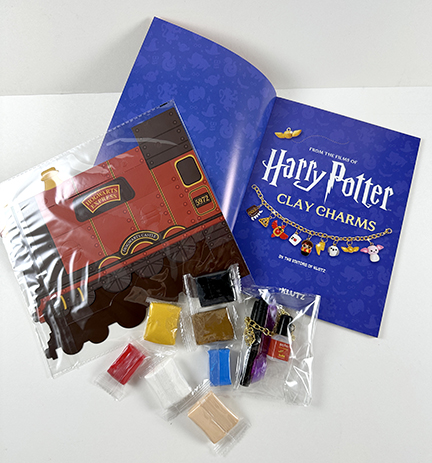
The instructional manual was particularly good, chock full of full color photos, ideas, and instructions for making up to 29 characters, objects, and creatures from the famous series. I will now turn the post over to Malaysia, and don’t miss the interview with her at the end of the post. Take it away, Malaysia!
Upon opening this kit, I was pleasantly surprised with the amount of materials and inspiration provided to make these charms! The booklet gave great tips on handling the clay, tips on making shapes, and even color mixing for certain shades. As for the clay itself, the quantity for each color ranges, with blue being the least, and black and gold having the most. I’d suggest letting the clay sit out for a few minutes at room temperature to soften it a bit before handling, but it wasn’t too hard to use.
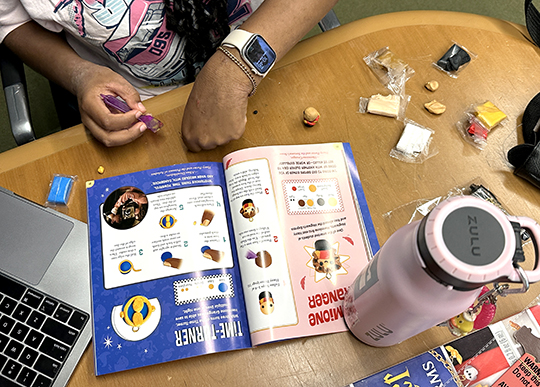
The first charm I tried my hand at was Hermione Granger, and after twenty minutes spent on her hair alone, I was regretting my decision. While she was the only human character I tried, I think it’s safe to assume the others would be of similar difficulty. There were a lot of components to the human characters, so save them for last – or first – depending on your level of patience.
Most of the other charms were fairly easy, and seem fit for the hands of someone 8 and above. Aside from the mandrake, the rest of the charms were quite simple and easy to make presentable, or resemble the photos from the book in some way. I’d recommend working with darker colors first, then progressing to the lighter ones, because once they mix…there’s no undoing it! Also, some of the coloring can rub off onto your workspace or your fingers.
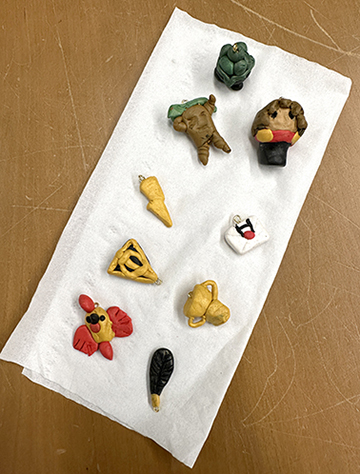
Back to the dreaded Mandrake: while adorable and misleadingly simple, it’s actually quite hard to get right! Turns out, it’s a bit of a challenge to make balls of clay look effortlessly perfect as this plant. I tried using the clay shaping tool provided with the kit for a bit of assistance, but I wasn’t too successful. By this point, there was a fair bit of clay stuck onto the blade, which was stubbornly difficult to remove. The other tools (marker, charm hoops, and glaze) were simple and easy to use. Dr. Dana cooked the charms in her oven, I glazed them, and then I attached them to the bracelet:
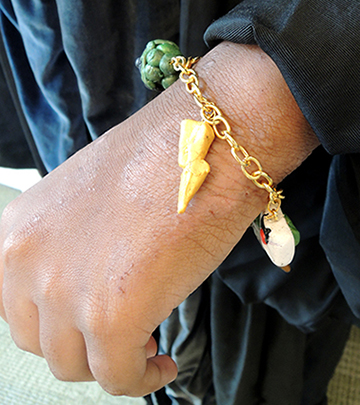
Overall, this charm kit has earned a ⅘ star rating in Muggle terms. It’s hard not to have fun trying to perfectly recreate these beloved icons in clay form, or even just to laugh at your mistakes! So, in wizarding terms, I’ll have to give this an E in their O.W.Ls for Exceeding Expectations!
We absolutely loved having Malaysia in the office this summer, laughing and talking about Potter. So naturally, I couldn’t let her go without asking a few Potter-related questions…

What House are you?
Slytherin, proudly.
What’s your favorite book in the series and why?
Half-Blood Prince. With Voldemort really coming back, it’s a bit funny (and relatable) to see Harry and the other students balancing their teenage lives while also trying to plan on defeating He-Who-Must-Not-Be-Named. On a smaller note, I think it’s one of the first times we see some vulnerability in the haughtier characters like Draco, which really just puts it into perspective that this magical, whimsical world we all love is going to take a darker turn.
Which character do you associate with the most and why?
It’s probably cliché, but Hermione Granger. I can be a bit of a know-it-all at times, even when it seemingly backfires. And even to this day, one of my worst fears is getting a bad grade…or worse, expelled.
Which charm in this kit speaks to you the most, and why?
I liked the Deathly Hallows charm the most, it’s an instantly recognizable sign of the Harry Potter universe, without being too elaborate or difficult.

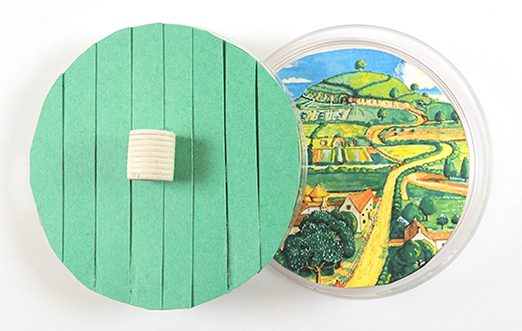 Bilbo Baggins’ birthday is September 22nd, and we’re throwing a huge bash that’s sure to be the talk of Hobbiton! We’ll share an extensive post about it soon, but today is a sneak peek at a craft project I designed for the big day….a petri dish hobbit door that doubles as a trinket box AND mini exhibit!
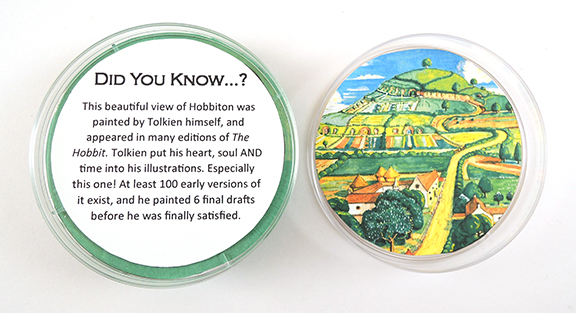 Your competed hobbit hole is now ready to house little treasures. Like…I don’t know…a RING??? Yesssss my preciousssssss.
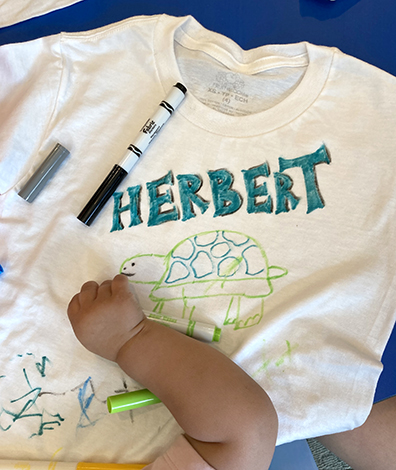
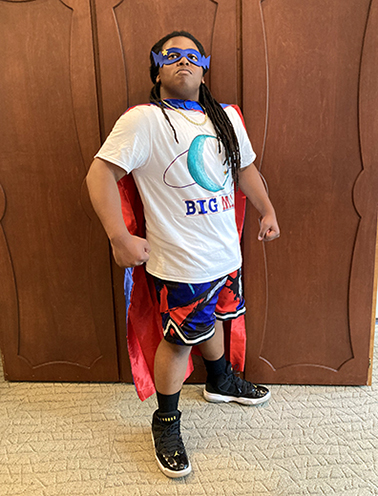
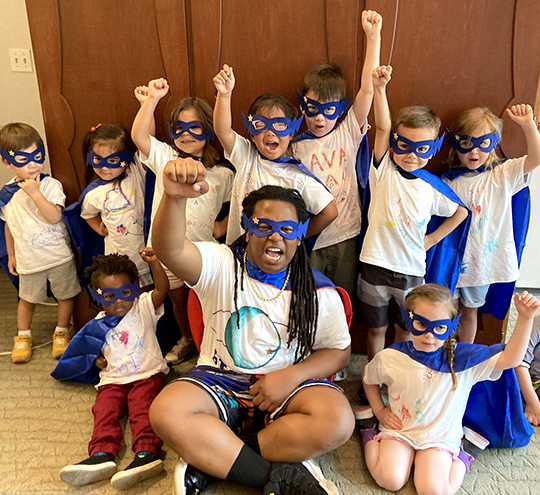 It’s a bird, it’s a plane, it’s SUPER BIG MAN! Jadon, our high school summer intern, put together one of the most fantastic story times our library has ever seen, complete with jumps, landings, super poses, villains, a kidnapped Miss Katie, and flowing capes!
 The superheros then received a shiny blue cape (a 20 pack on Amazon is $35). The capes were quite cute and fastened with Velcro. Fabric eye masks with elastic bands also came in the set, but we didn’t hand those out just yet. You had to earn the eye masks by completing all your super tasks!
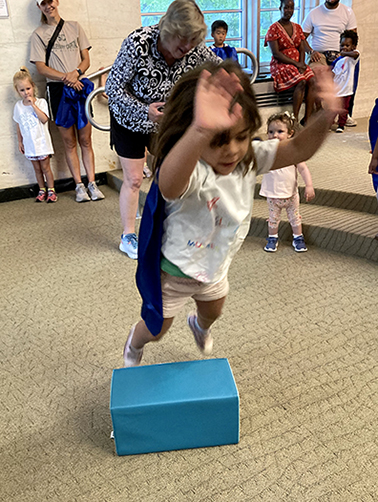
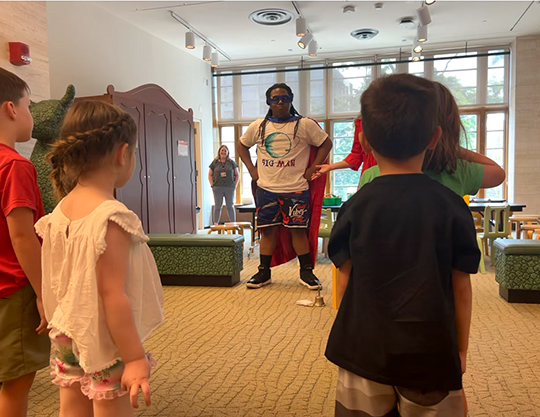 When everyone had their shirts and capes on, Jadon took them through some superhero poses. Then he moved the gang on to power jumps (leaping over a soft block):
 Next he demonstrated the classic superhero landing and invited the kids to try it too. We used a padded mat for safety. Just look at this perfect form!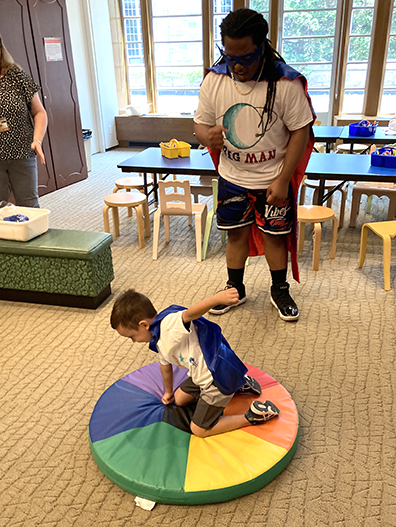
 Tell us a little about yourself!