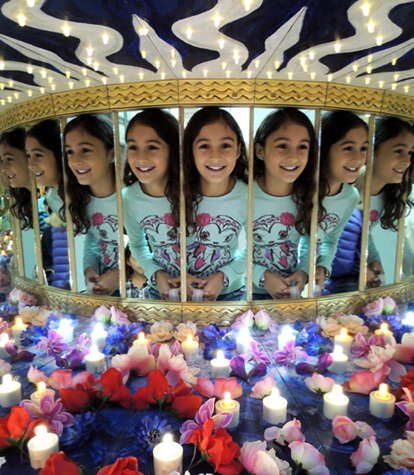
 Who knew infinity could be so beautiful? I’ve returned with Part II of the Digitopolis event post (Part I can be found here) and thought I would start it off with one of the stars of the show! The above image was taken inside an Infinity Box, one of multiple creations by Los Angeles-based artist, Matt Elson. Matt’s boxes have been exhibited at colleges, science centers, festivals, and museums. He generously loaned us two (titled Radiance, and You & Me Together) for our math event.
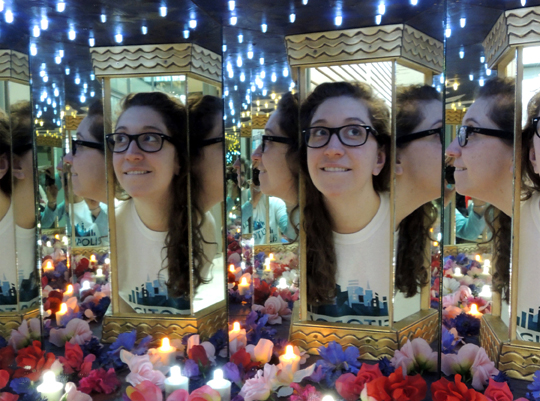
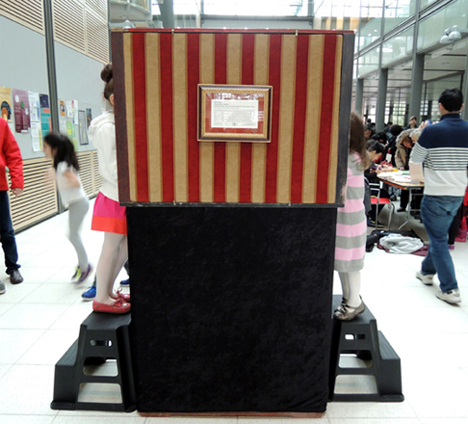 The boxes are designed to be infinite, interactive environments that play with your perception and inspire inquisitiveness and wonder. They were in constant use during the event, and there were lots of shrieks of amazement, enthusiastic explosions of “Cool!” and long, drawn out utterances of “Woooooow…”
 Digitopolis was not without its celebrities, including the King of Numbers himself. I speak, of course, of the Mathamagician.
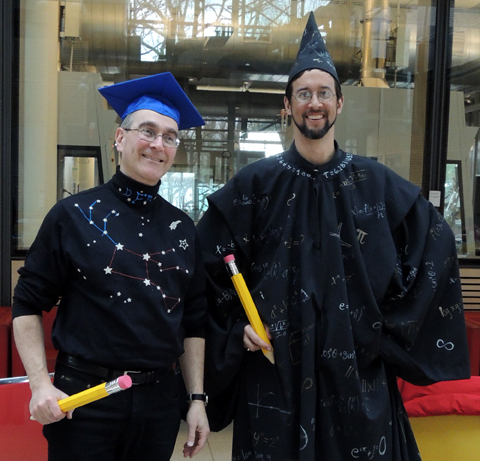 That’s real-life mathamagician Brent Ferguson on the right, grinning away under the pointy hat covered with equations. He’s math faculty at the Lawrenceville School, and in 2013, he was awarded the National Museum of Mathamatics’ Rosenthal Prize for innovation in math teaching. On the left is Dr. Dan Fishman, a high school math teacher, who, like Brent, has unbridled enthusiasm for all things math.
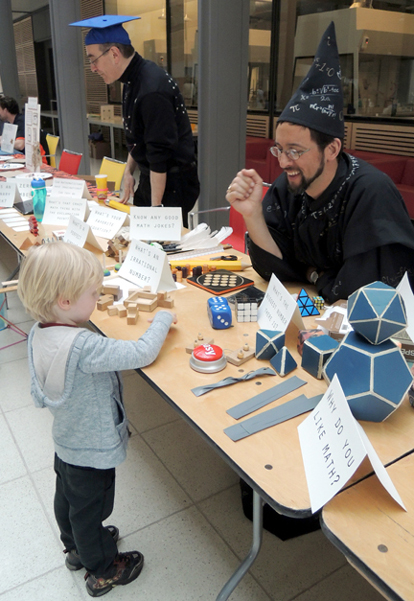
Together, Brent and Dan staffed the “Ask the Mathamagician” table. Kids could walk up and ask them any question they could possibly think of involving math. We had prompt cards on the table to get things started:
Why do you like math?
What’s an irrational number?
What’s the biggest number there is?
Why is math important?
Why does a negative times a negative equal a positive?
Is zero a number?
What’s a perfect number?
What’s that crazy math thing with the exclamation point?
What’s an imaginary number?
Know any good math jokes?
What’s your favorite equation?
Brent and Dan brought a whole bunch of math toys and puzzles with them. It was an irresistible treasure trove of numerical goodies.
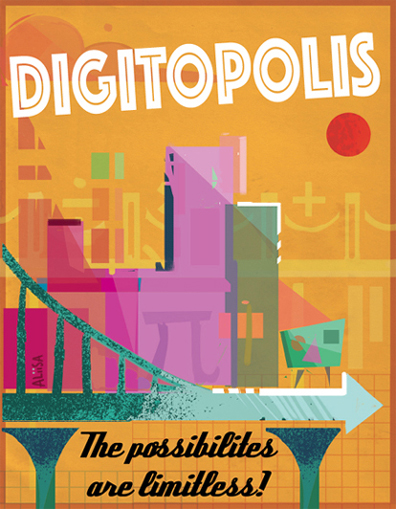
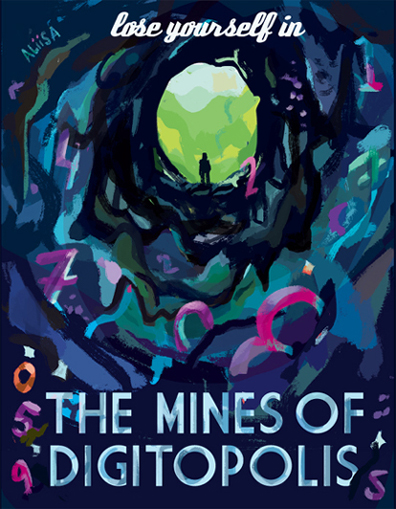
 Also at the Mathamagican’s table were three Digitopolis “tourism” posters for families to take home (the posters were inspired by this fantastic NASA concept). The first two posters are by Princeton University senior, Aliisa Lee. The third poster is by freshman Demi Zhang.
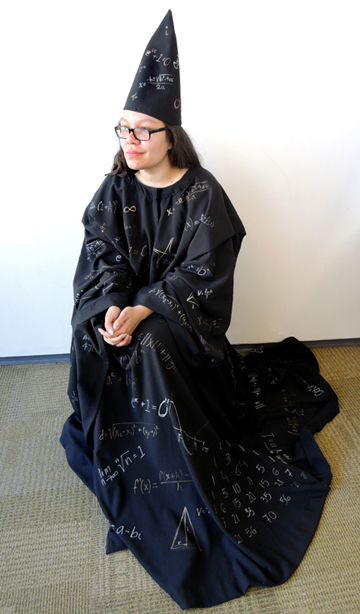
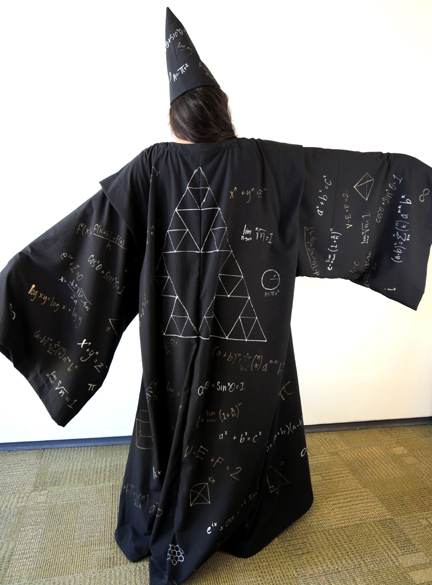
 A quick word about the Mathamagician’s costume. The robes and hat were made by freshman James Jared, who ingeniously modified this Jedi robe. Then Casandra used silver and gold metallic fabric markers to draw real, honest-to-goodness math equations on them. We snapped a couple shots so you can get the full effect!
 The Mathamagician wasn’t the only celebrity in Digitopolis that day. Does this gentleman look familiar to you?
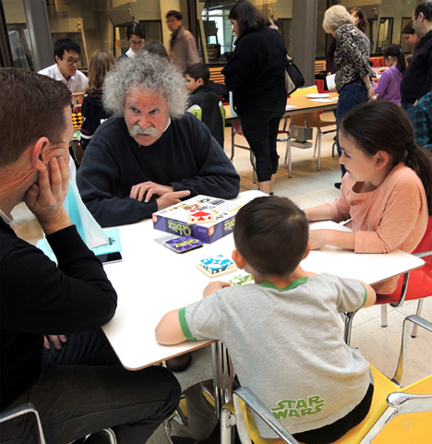
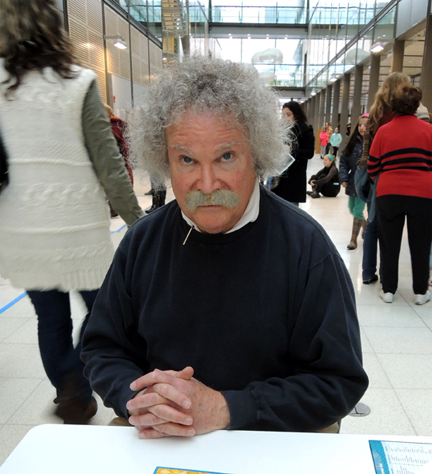 Yup, it’s Albert Einstein. Or rather, professional reenactor Bill Agress playing Albert Einstein. Mr. Einstein circulated the event floor, chatted with kids, answered questions about his life and work, tried an activity or two, and posed for pictures. And yes – he wasn’t wearing any socks.
In addition to being one of world’s most famous theoretical physicists (and no slouch at mathematics either), did you know that Einstein was a resident of Princeton? He emigrated here in 1933 to join the faculty of at the newly-created Institute for Advanced Study.
The Historical Society of Princeton put together a terrific mini-exhibit on Einstein in Princeton (my favorite is that photo of him wearing the fuzzy slippers). Families were invited to take home a map of notable Einstein haunts around town as well.
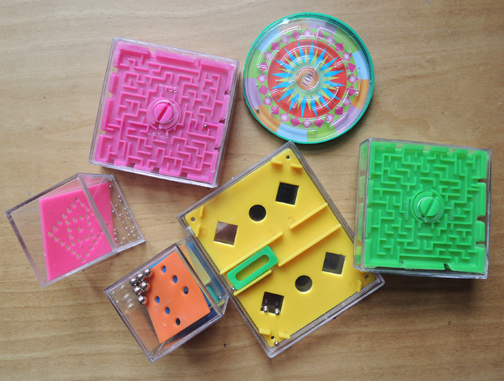
 They also whipped up an Einstein quiz for kids to try (the answers, by the way are B, A, B, C, B, C). The prize was a cool little puzzle. I found some terrific ones at Oriental Trading Company (the ones below are from the “Mind Teaser Game Assortment”).
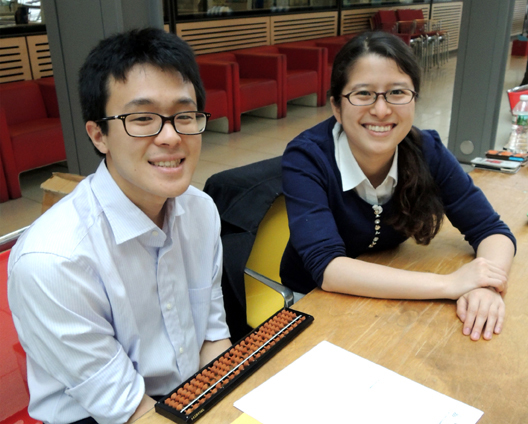
 Elsewhere in Digitopolis, another math wizard was hard at work. This is Emile Oshima, a junior at Princeton and master of the Japanese abacus. Next to him is senior Rei Mastsuura.
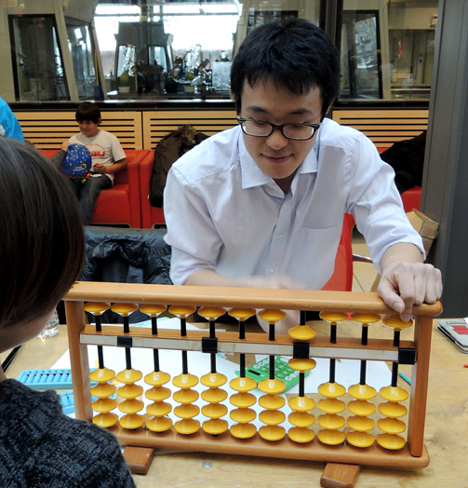
 In addition to having Emile and Rei teaching kids how to use an abacus, Emile raced kids (and parents!) armed with electronic calculators to see who could reach the product of 3 x 3 multiplication problems faster. Emile always won. He was lightning fast!
 Meanwhile, at another event table, another calculator was keeping kids busy. But this calculator was rather…odd.
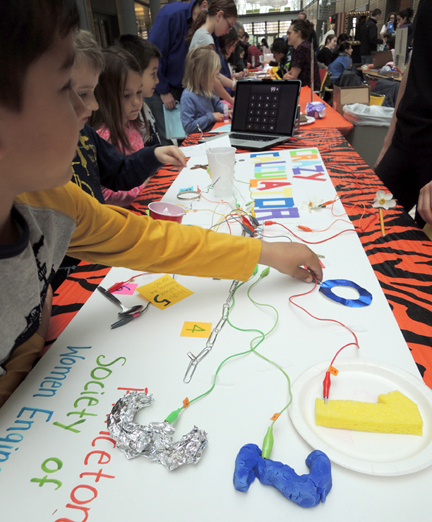
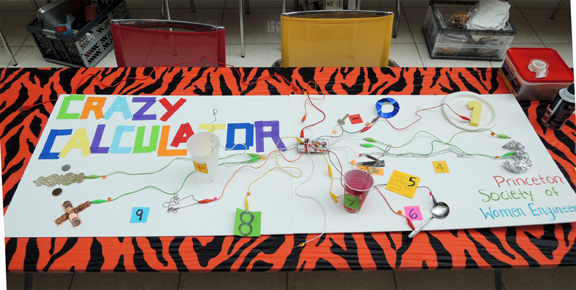 The “Crazy Calculator” was designed by the Princeton Society of Women Engineers using 2 Makey Makey sets. Have you seen Makey Makey? It’s pretty awesome. Each set consists of wired alligator clips, a small central board, and computer software.
Attach the alligator clip to anything that conducts electricity, and you can do all sorts of crazy things. Turn bananas into a keyboard, or use Play-doe like a video game controller. The Women Engineers used all sorts of things to build their calculator – tin foil, wet sponges, water, metal objects, shaving cream, flowers, even high fives!
 Interspersed with the other event tables were five “Pop Up History” activities that tied together math and history. These tables were designed to be simple, stand-alone, and un-staffed.
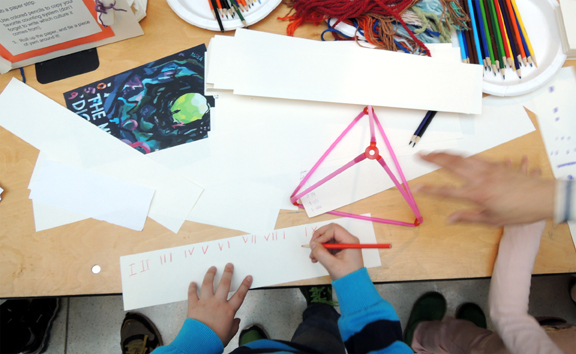
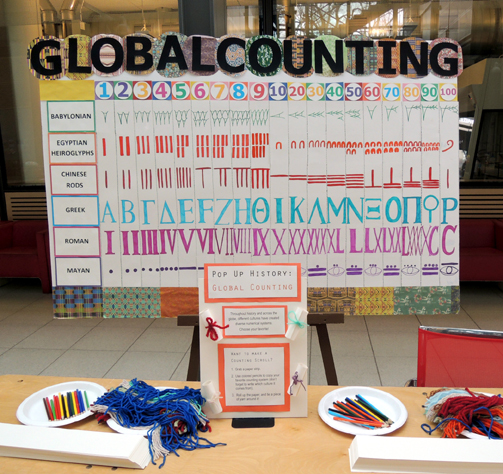 At “Global Counting,” kids could see diverse numerical systems on a big display board (the book Go Figure: A Totally Cool Book About Numbers (DK, 2005) was very helpful in this regard). Then, kids copied their favorite number system on a 3.5″ x 17″ strip of paper, and used yarn to turn it into a little scroll.
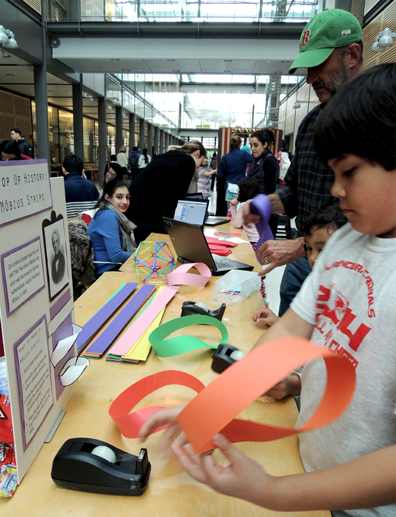
 At another table were Möbius strips, a must-have for any hands-on math event. Discovered in 1858 by German mathematician August Ferdinand Möbius, the strip demonstrates how a piece of paper can have only one side! All it takes is a 2.5″ x 28″ piece of poster board, tape, and some instructions.
 Another hands-on math must-have? Tangram puzzles. Originating in China, tangram puzzles were first introduced to Europe in the 19th century. There are plenty of inexpensive tabletop tangrams out there, but we decided to splurge on some giant foam floor size versions (thinner ones purchased from SimplyFun, chunkier ones from Fat Brain Toys). Later, these were donated to a local non-profit family shelter.
 The fourth Pop Up History table was called “Tally Hides.” Some American Indian tribes kept track of important things by making tally marks on animal hides and tree bark. Definitely a cool way to count!
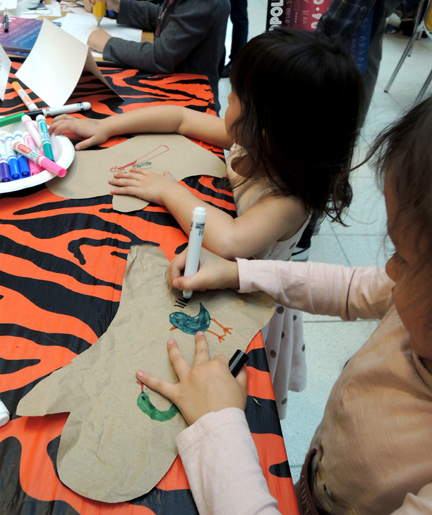
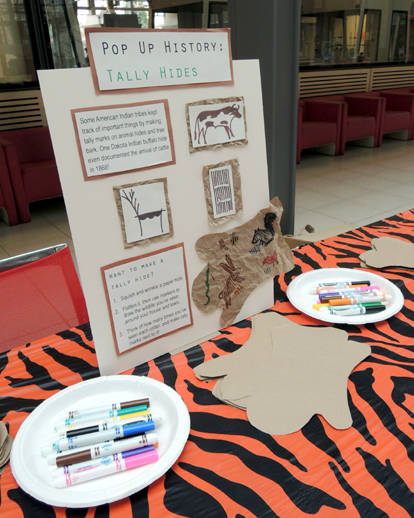 Before the event, we cut 9″ x 12″ pieces of brown paper into the shape of a hide. During the event, kids wrinkled the paper, flattened it out, and used markers to draw the wildlife they’ve seen around their homes and town. Then, they estimated how many times they’d seen each critter, and made a tally mark next to it. The project is originally from The Secret Life of Math (Williamson Books, 2005).
 The final history table was called “Tile Tessellations.” Decorating surfaces with tiles spans many cultures, and many centuries. But did you know that the geometry in Early Islamic art was so intricate, it was unrivaled for over 500 years?
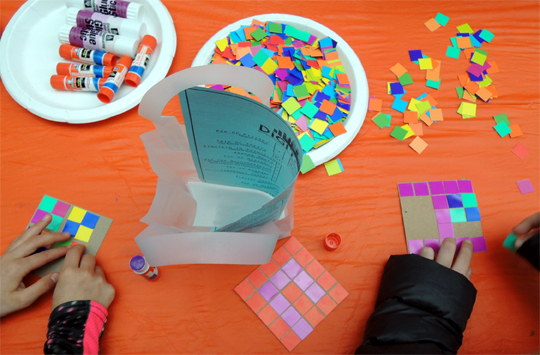
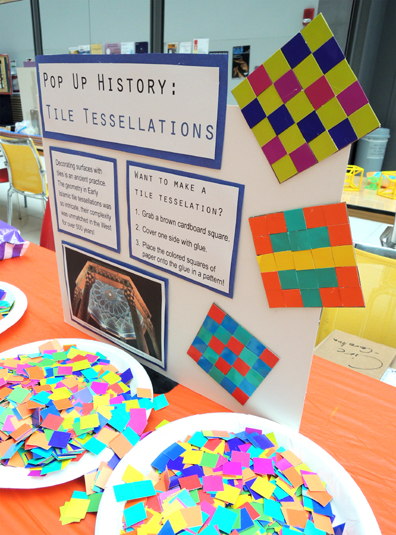 Kids put their tiling and tessellating skills to work by gluing 3/4″ paper tiles to a 6″ x 6″ square of tagboard. This project was really bright and beautiful.
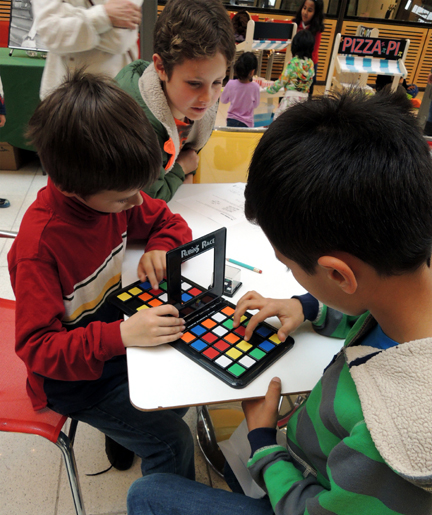
 That’s it for history – how about some games? JaZams, our local family-owned toy store hosted a event area called “The Game is Afoot.” JaZams chose 8 math games for various age ranges, and set each of them up on a series of tables. Kids could drop by to play the waaaaay popular Rubik’s Race…
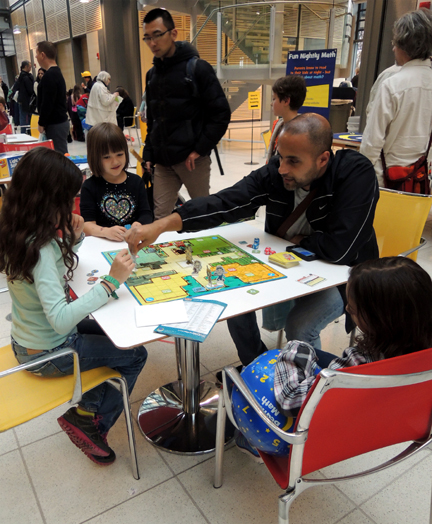
 Or entire families could take a break and play Number Ninjas.
 Heck, maybe you could even beat Einstein at Qbitz! After the event, the games were donated to a local non-profit family shelter.
 For the musically adventurous, there was “Musical Fractions,” an activity composed by senior Matt Smith and freshman Demi Zhang. Kids used percussion instruments (assorted floor drums, wood blocks, maracas, a wooden fish, claves, and sand blocks) to learn how to play, and recognize, wholes, halves, quarters, and eighths. They also learned about musical structure and patterns.
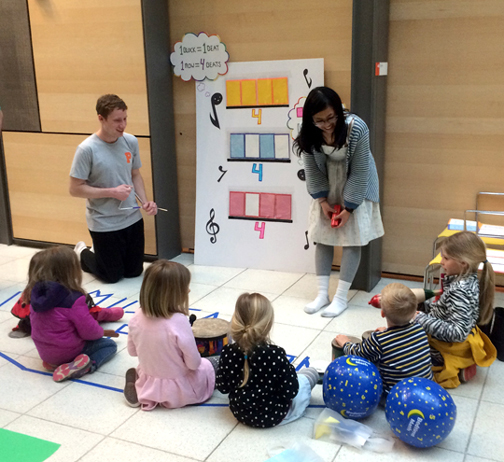 Each instructional session ranged between 10 to 15 minutes. I wasn’t able to catch an entire one, but I did manage to grab a few seconds of this one. Just listen to those fractions!
I have one last thing to share with you. Team Digitopolis in their awesome event t-shirts.
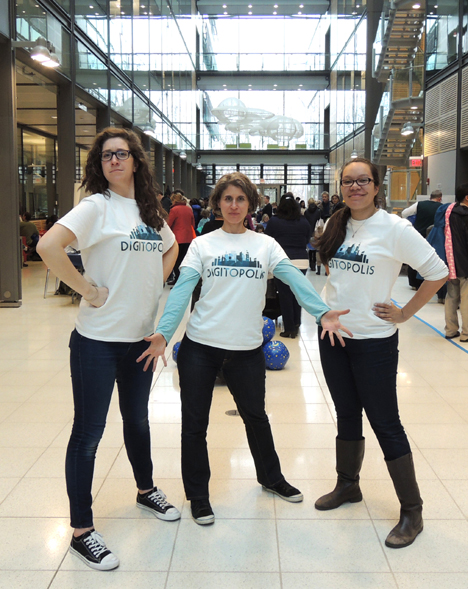 At big events like this, my staff and I wear costumes so that people can find us quickly in the crowds (helloooo Victorian Steampunk spelunker). For Digitopolis, however, I decided to go with t-shirts, and asked student artist Aliisa Lee to design them. Here’s a closer look at her beautiful cityscape!
 On the backs were our favorite numbers. Let’s hear it for 9, 2, and 11! Woot woot!
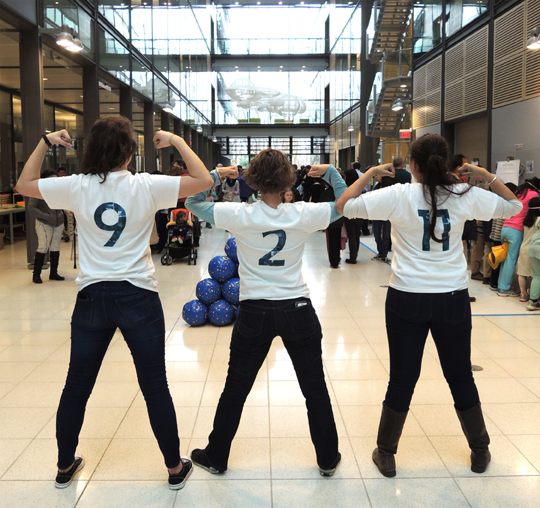 I’d like to send a million, trillion, zillion, googolplex thanks to everyone who made this event possible, and who generously gave their time to make math fun, approachable, unusual and fun. An extra shout out to the Princeton University students, and the student athletes who volunteered so energetically and enthusiastically! Thank you so much, everyone!
 We’ve all wanted to jump into books. Who doesn’t, for example, want to go to Diagon Alley and hit the shops? Join Hazel for stories in the Honeycomb? Explore Babilonium with Candy Quackenbush? Or sail the skies with Matt Cruise on the Aurora? Part of my job at the
  But before I get started on all the details, I’d like to introduce our event collaborator,
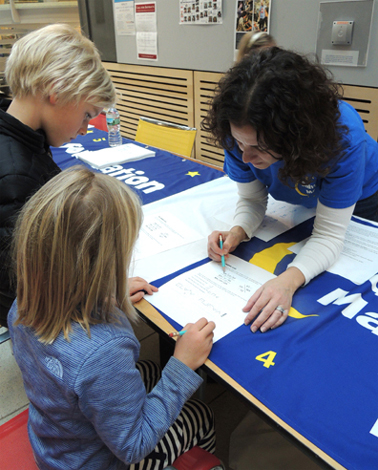
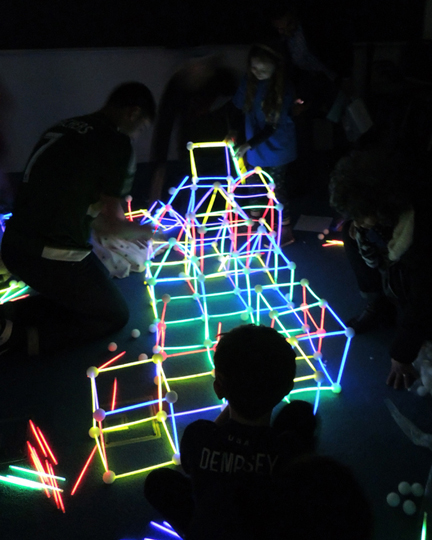
 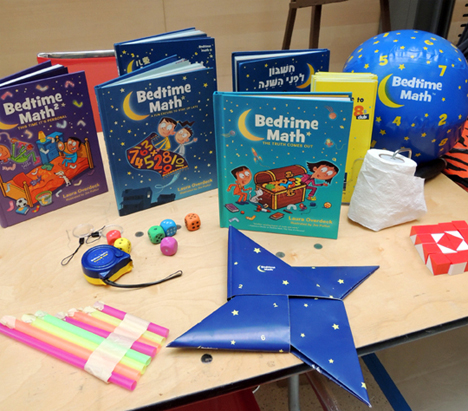 Bedtime Math brought 3 fantastic activities to the event: Spy Training, Beach Ball Party, and Glow-in-the-Dark Geometry. Here’s Spy Training, which was all about codes and ciphers…
 And here’s Beach Ball Party, which involved counting, stacking, and chasing beach balls determined to make a break for it.
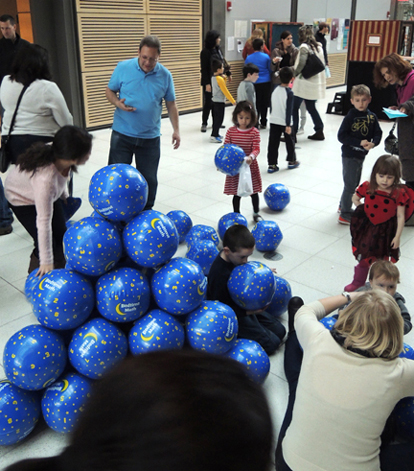 It also involved Ellen Williams (who you last spotted being pelted with marshmallows in
  Some kids decided to use the original plastic connectors that came with the bracelets to make unique geometric creations. Here’s one of my favorites. A series of loops that, when spun, becomes a sphere!
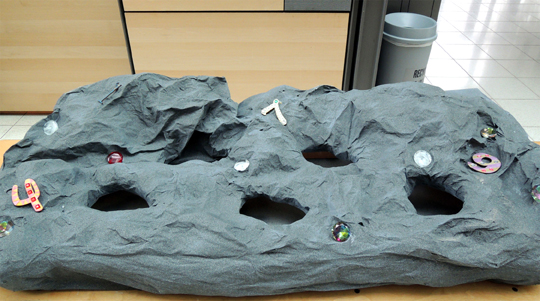 The mines were stocked with an assortment of wooden numbers. I used 4″ numbers I found online at Woodcrafter. If you’d like a cheaper option, I recommend printing paper numbers on card stock.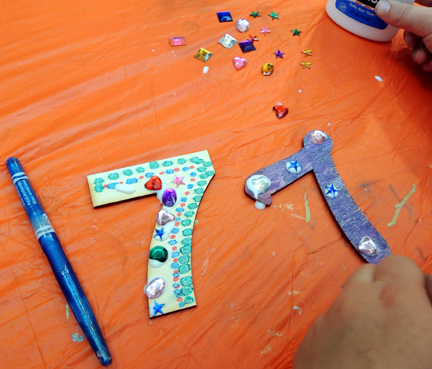
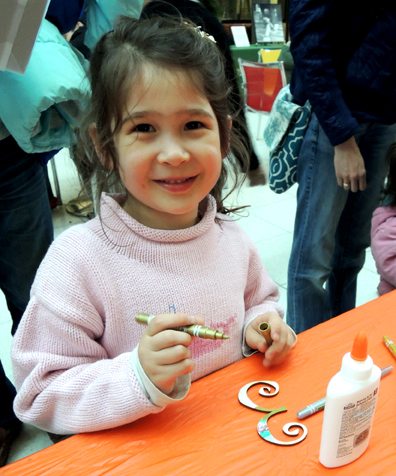
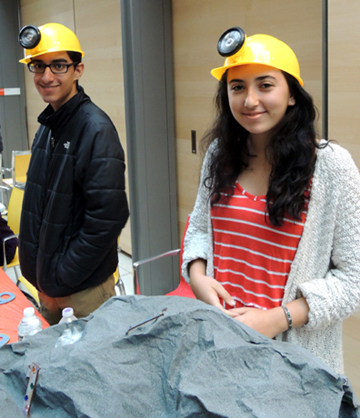
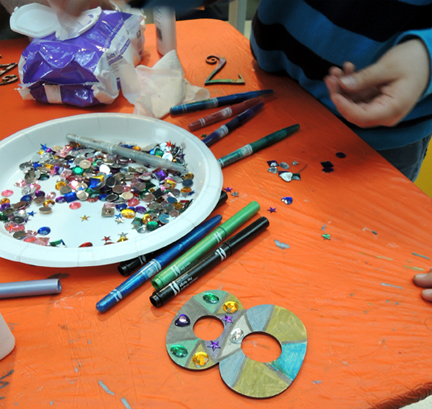 The mines were staffed by high school volunteers from the Arts Council, who were suitably decked out in miner helmets.
 Elsewhere in Digitopolis was the “Fibonacci Forest,” hosted by the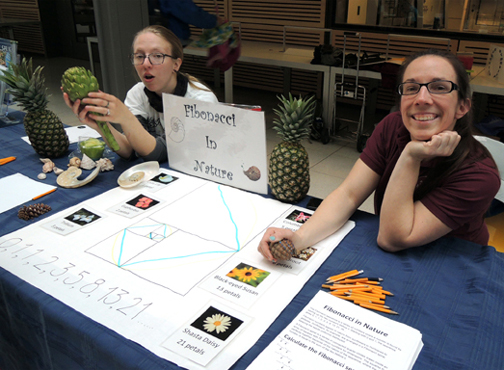
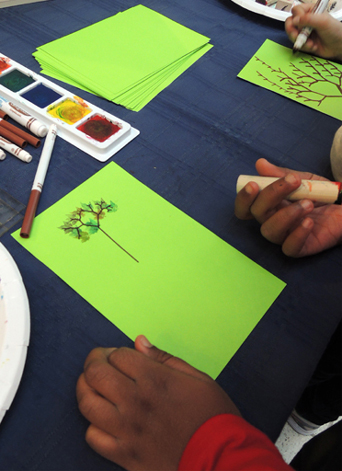
 The Watershed also did a cool fractal tree project. It involved a half-sheet of green paper, brown markers, and rulers (here are the
 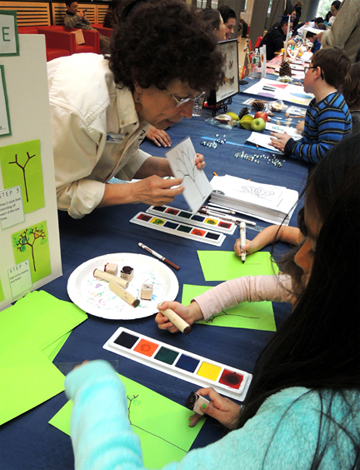 We decorated the finished fractal trees with bird and leaf stamps, but you can also just use markers or color pencils.
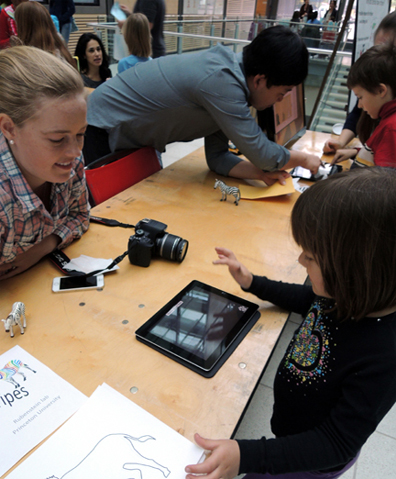
 And speaking of wildlife, how about some zebra math? We were delighted to be joined by Princeton University Professor
 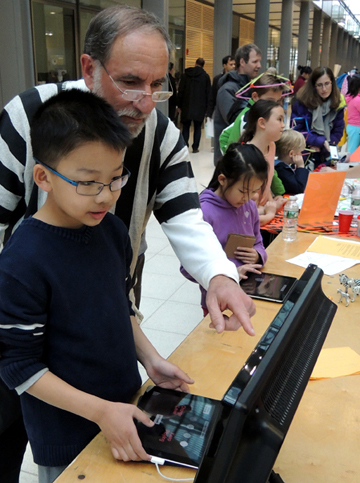 Some researchers believe that zebra stripes exist to confuse predators. So Dan and his constituents developed “Dazzle Confusion,” an iPad game in which kids “become the lion” and tried to tap black, white, or striped moving targets to determine which one is most difficult to hit.
 At the end of the game, the program tabulated the kids’ results and displayed them on a large screen. As the event progressed, the results continued to accrue. This lead to conversations about data collection, measurement, central tendencies, and averages.
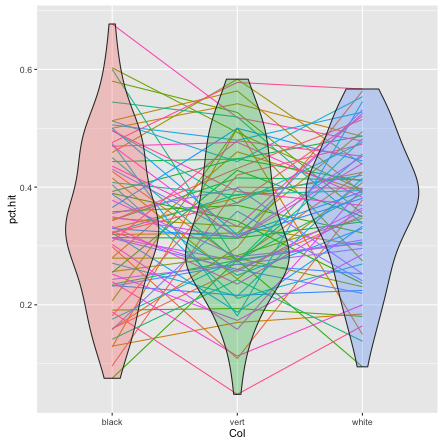 It’s worth noting that although there was much variation on kids’ “strikes” on the targets, there was a strong trend (p < .08) showing that the striped targets were hardest to hit! How’s that for some real world math?
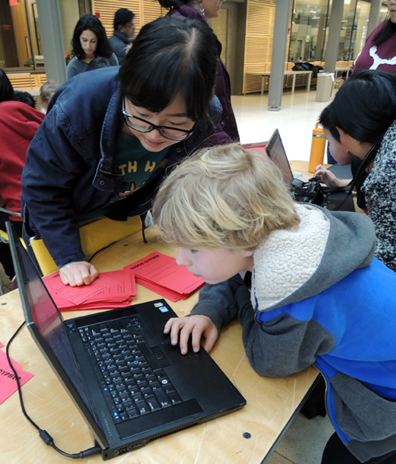 Here’s a screen shot of the game, which was created by sophmore Lucy Lin. If you’d like to test drive the game yourself, here’s the
 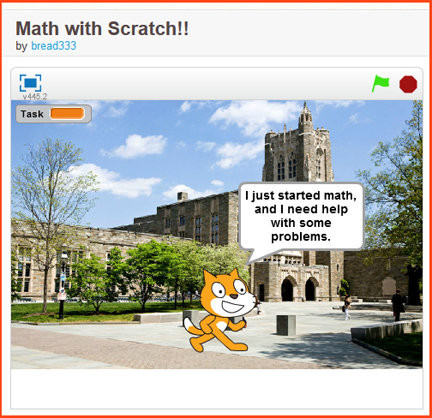 The game was cool, but even cooler was the fact that there was another laptop running tandem to the gaming laptops that showed all the algorithms behind the Scratch program. And volunteers were on hand to answer any and all questions about computing. They also had a couple of encryption puzzles for kids to crack.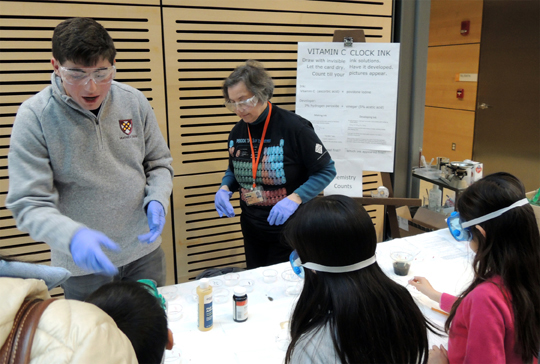
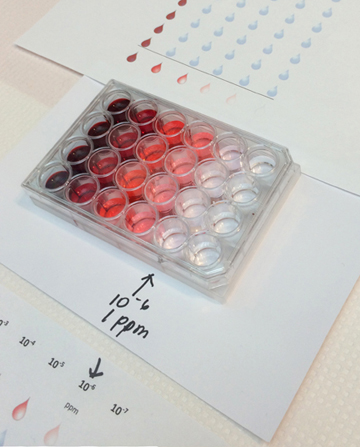
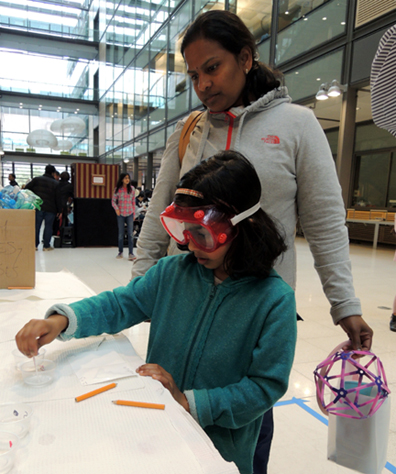 For those who prefer their math undiluted, the Princeton University Mathematics Club came out en force to host a “Playful Problems” table. Here, kids found a plethora of logic puzzles, word problems, visual puzzles, calculator tricks, the works!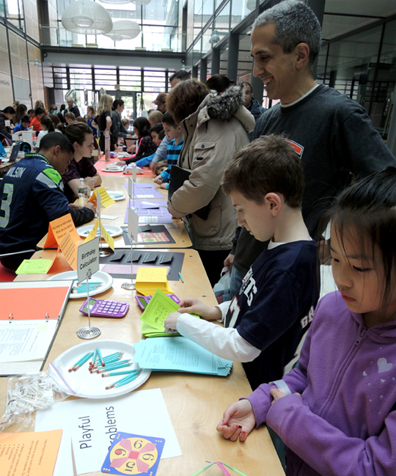
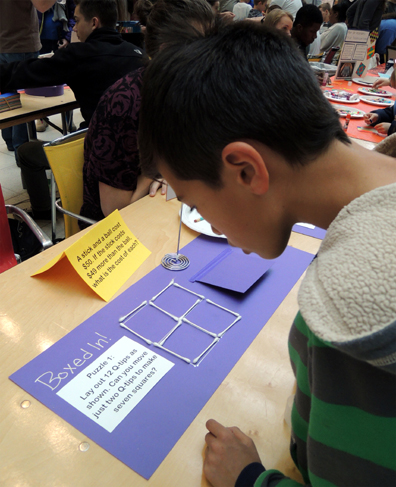 There were 12 different activities for children ages 4-10. The activities ranged from easy to moderately difficult. Here’s an example of our simplest puzzle, which was created by Casandra Monroe (whom you first met
 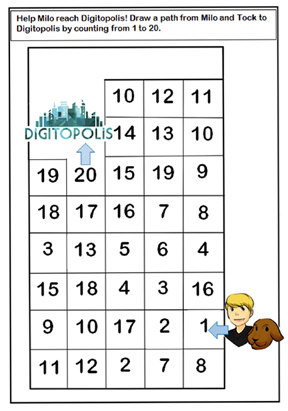 Below is a list of what we offered at the event table. In addition to using Google to find some of these puzzles, Math Wizardry for Kids (Barron’s, 1995) and How to be a Math Genius (DK Children, 2012) were terrific resources.
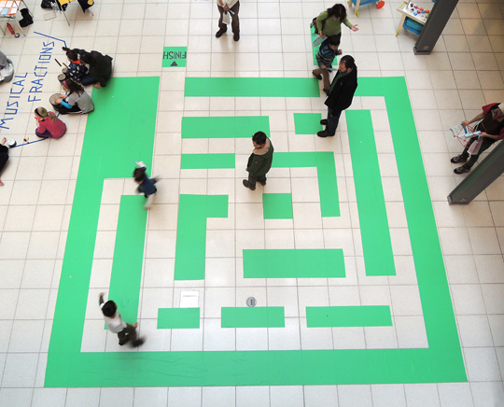 By the way, did you notice the cute play cart parked in the upper right corner of the above image? That’s one of our “Trio of Treats.”
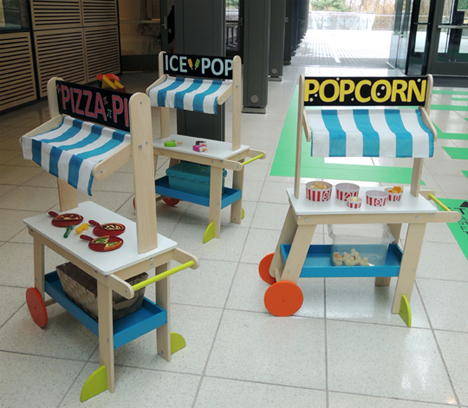 I always try to include something for the littlest patrons, so I bought 3 adorable food carts and stocked them with math play sets. The food carts are by KidKraft (Sweet & Sunny Lemonade Stand) and the play sets are by Learning Resources. We used Piece-A-Pizza Fractions, Number Pops, and Count ‘Em Up Popcorn.
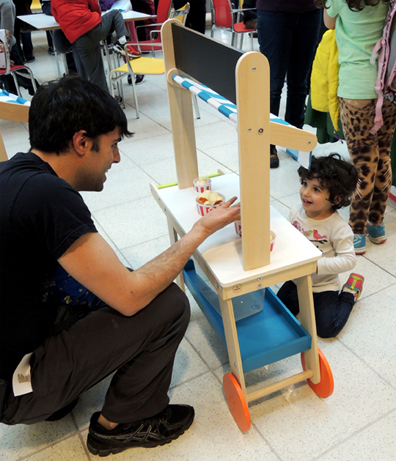 One of the most popular event tables, however, was “Visit the 4th Dimension.” It was hosted by
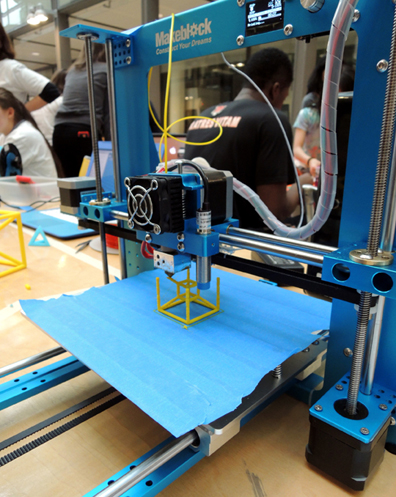
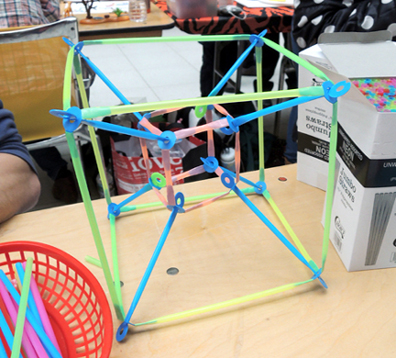
 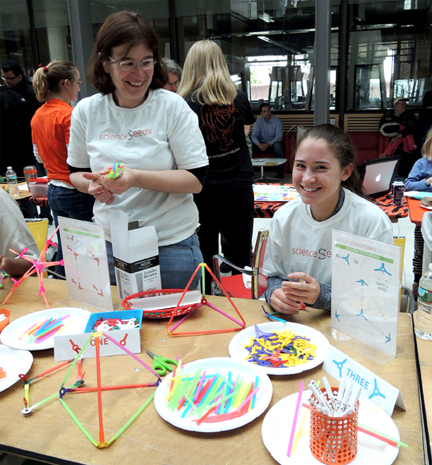 At the event table, kids learned about the different dimensions (1st is a line, 2nd is a square, 3rd is a cube, 4th is a tesseract). ScienceSeeds brought their 3D printers to the event and made models. You can see a tesseract in progress below. Awesome.
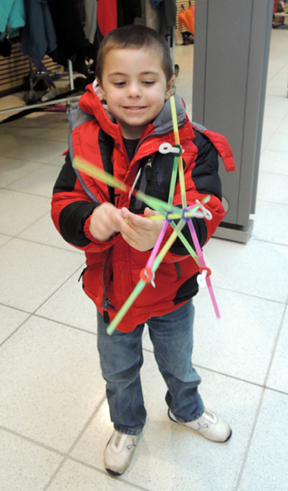
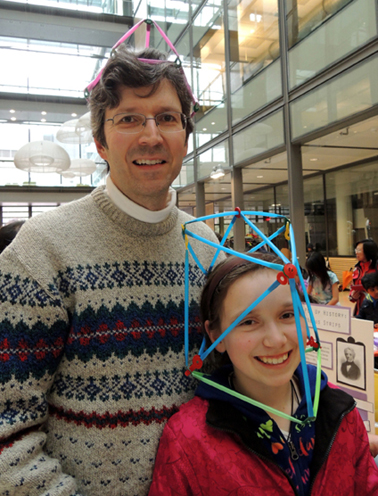
 Kids could also make 3D models of their own using drinking straws and plastic connectors. You can buy the plastic connectors online (from Strawbees). However, scienceSeeds has a die cut machine and was able to purchase the die cuts (from Accucut) and make their own connectors from plastic sheets (from Grafix).
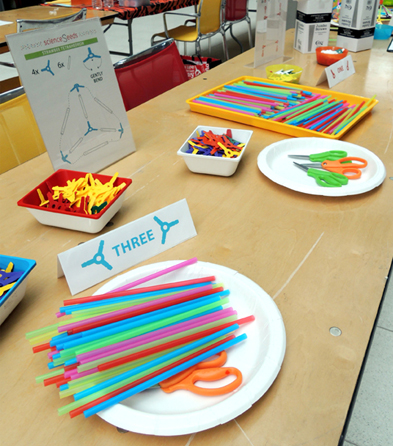 Like I said, their table was hopping – they estimate they went through at least 3,500 straws!
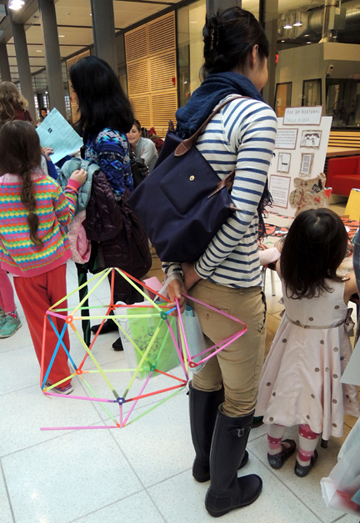
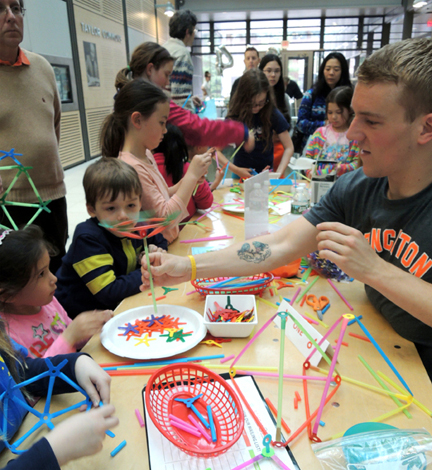 The thing I liked most about the project is that there was no limit to the shape, size, or intended use of the 3D models.
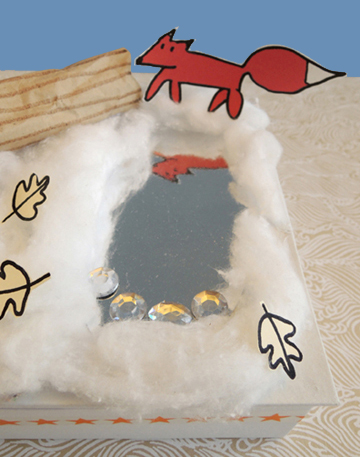
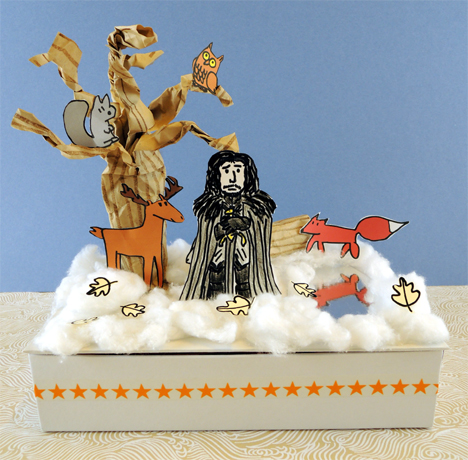
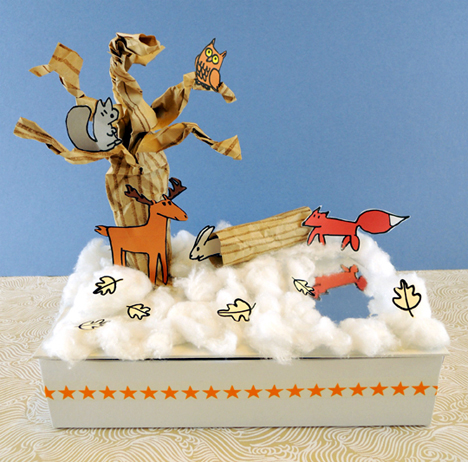 It’s a diorama, a keepsake box, a mini exhibit, AND a lesson in ecology! Open the lid of this winter landscape and you’ll find the creatures that hibernate, burrow underground, and tunnel underneath the snow, complete with an information card!
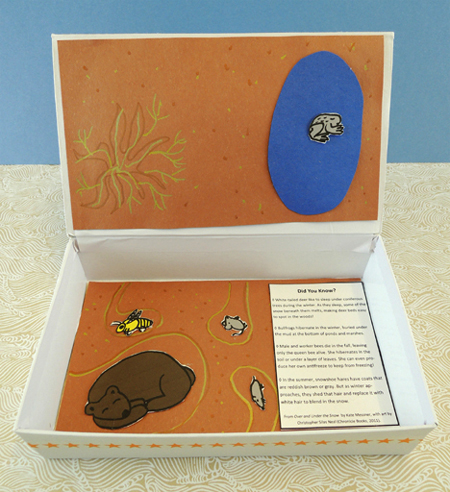 We read Over and Under the Snow, written by Kate Messner, and illustrated by Christopher Silas Neal (Chronicle Books, 2011). A father and child ski over the deep snow in the woods. Even though it’s a world of white, signs of life are everywhere – squirrel, owl, deer, snowshoe hare, and fox. But under the snow is yet another world. Shrews and voles run in tunnels. Bullfrogs burrow in the mud, bears hibernate, and a queen bee sleeps, waiting for the first signs of spring. The book ends with the child in a cozy bed, dreaming of nature. An absolutely beautiful book, with gorgeous, bold illustrations set against snowy white.
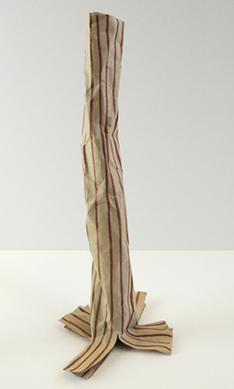
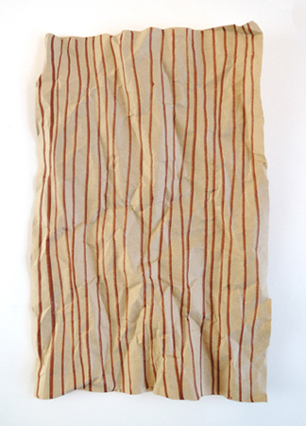 Roll the paper into a tube and secure it with tape. Cut 4 tabs in the bottom of the tube (each tab should be about 1.5″ long). Fold the tabs outwards. Later, you’ll use these tabs to attach the tree to the box lid:
 Cut 5-6 tabs in the opposite end of the tube (these tabs are much longer, about 5″). Fold them out gently, then twist them to create the branches of your tree.
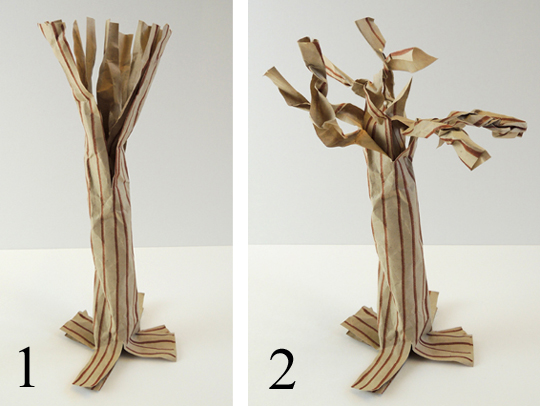 Hot glue (or tape) the tree to the lid of the box. If you’d like to add a log to your landscape, use a brown marker to draw horizontal lines on a 3.75″ x 4.5″ rectangle of brown wrapping paper. Crinkle the paper, then roll the paper into a tube and secure it with tape. The final length of the log should be 3.75″. Set the finished log aside for a moment.
 Your winter landscape is complete! Well, maybe not quite complete…
 Bet you a