Creative Cookies

creative cookiesWhat could be better then stepping into a warm, fragrant kitchen and whipping up a tasty batch of cookies? Especially when the cookies magically appear in our one-of-a-kind story time oven!

cookie in ovenWe read Ginger Bear by Mini Grey (Knopf Books for Young Readers, 2004). Horace and his Mum make cookies, but the consumption of Horace’s ginger bear is continually delayed by trifling matters such as the cookie being too hot, the hour being too close to dinner, and Horace’s freshly brushed teeth. So Horace puts the cookie on his pillow for tomorrow. That night, Ginger Bear wakes up and marches to the kitchen. A few simple ingredients, some delicious toppings, and Ginger Bear creates a massive cookie circus! The revelers are having a grand time when they are intruded upon by Bongo the Dog, who really, really likes cookies. You can imagine what happens next. Ginger Bear just manages to get away, and realizes that he needs to find a safer place to live. The next morning, Horace awakes and Ginger Bear is gone. The clever cookie has found a new home in a pastry-shop window, where, as star of the elaborate displays, he will never be eaten!

You’ll need:

  • 4 rectangles of felt, any color (approximately 5.5″ x 8.5″)
  • 1 pencil
  • A selection of fabric tape (optional)
  • 1 cookie template, printed on 8.5″ x 11″ white card stock
  • A 6.75″ x 14.5″ piece of tagboard for cookies (brown poster board works too!)
  • Cookie decorating supplies (we used self-adhesive foam shapes, a selection of patterned tape, and dot stickers
  • A corrugated cardboard base (mine with 9.75″ x 13.75)
  • Tin foil to cover the cardboard base
  • 1 magic oven (more on this later!)
  • Scissors for construction
  • Markers for decorating
  • Hot glue

First, your oven mitts! Stack 2 rectangles of felt on top of one another, then place your hand on top of the stack (thumb out, fingers close together). Use a pencil to trace the outline of a mitt around your hand. You don’t want the mitts to be too snug, so make sure to leave plenty of room! Use scissors to cut your tracing from the stacked felt.

mitt step 1Now run a line of hot glue along the inside perimeter of the mitt (like you’re “stitching” the felt pieces together with hot glue). Make sure, of course, to leave the bottom of the mitt unglued so you can stick your hand in later. Next, attach a piece of fabric tape along the bottom of the mitt for decoration. Repeat the above steps with the second set of felt rectangles to make a second mitt.

finished mittIf you are attempting this project with a large number of kids, I have a helpful hint to share. Gluing pairs of mitts for close to 20 kids takes some time. To avoid long waits at our hot glue stations, I devised a number system not unlike the “Now Serving” mechanism at delis or bakeries. First, everyone cut their mitts from felt. Then, we handed out a number card to each child, as well as the materials for the next phase of the project – tagboard cookies and decorating supplies.

During the cookie decorating, we called out numbers. When your number was “up,” you paused your decorating and brought your mitts to a hot glue station. We glued your mitts, let you choose from a selection of fabric tape, and then sent you back to your table to resume decorating. Then we called the next number. The system worked like a charm!

numberMaking the cookies is quite simple. Cut the cookie shape from the template, then trace its shape onto the rectangle of tagboard (or brown poster board). You could also use brown construction paper for your cookies, but it helps to use a material like tagboard or poster board to gives the cookies some thickness. We made 3 cookies per kid. We offered markers, self-adhesive foam shapes, patterned tape and dot stickers as cookie decoratives, but you can also just use markers.

cookiesTo finish the project, wrap a corrugated cardboard base with tin foil to create a “baking tray.” Place the cookies on the tray, slip on your mitts, and you’re done!

You can stop here, or you can add a magic oven activity. We happened to have a big box and some cardboard scraps on hand (the scraps were left over from this project), so we made a magic oven.

magic ovenOur box was 18.5″ wide x 18.75″ high x 16″ deep. I cut an oven door in the front, and then Katie added a cardboard shelf inside of the oven, a flat range on top (with 4 paper plate burners), and a splash guard on the back. She tricked it out with red cellophane “heat,” tin foil highlights, and beverage lid knobs faced with large silver embossed foil seals. The over door handle was a paper towel tube wrapped in foil and attached to the door with brass fasteners.

The “magic” part of the oven was a small door, cut in the back. This is where I would sneak the cookies in, making them appear magically on the shelf.

magic doorI borrowed a call bell from the library’s circulation desk to act as the oven’s “timer.” During the story time activity, kids wrote their names on the backs of their cookies, then piled the cookies in a big tub next to the oven. Then they sat in a semi-circle around the oven, wearing their mitts and holding their trays.

I would grab a cookie from the tub, silently read the name on the back, and sneak it into the oven. Then I would shout “Dan! Your cookie is ready!” and briskly ding the call bell. Dan would run forward, open the oven, hustle his cookie out, and run back to his place in the semi-circle. We kept going until all the cookies were claimed!

magic oven in use

Phantastical Phoenix

fantastical phoenixThe legendary bird of fire, wisdom, and regeneration is once again transformed…into an awesome box puppet with moveable head!

We read The Girl Who Drew a Phoenix by Demi (Margaret K. McElderry Books, 2008). Feng Huang finds a phoenix feather and captivated by the phoenix’s power. She decides to use her artistic abilities to create the perfect phoenix drawing, and capture some of the power of the phoenix. But her drawings are clumsy, and her friends laugh at her. The Queen Phoenix, seeing Feng Huang in need, flies to earth and allows Feng Huang to practice drawing her. But the drawings still don’t look right. The Queen then sends Feng Huang on a mission to learn from the phoenixes of Wisdom, Clear Sight, Equality, Generosity, and Right Judgement. When her journey is complete, Feng Huang is able to draw a phoenix so amazing, it soars into the sky, carrying the artist and her friends on its back.

You’ll need:

  • 2 rectangles of red felt (approximately 4.75″ x 11″)
  • 1 phoenix eye template, printed on 8.5″ x 11″ white card stock
  • A small square of yellow or gold metallic poster board (approximately 2.5″ x 2.75″)
  • 3 red and/or gold sparkle stems
  • Red masking tape
  • 1 small feather in red
  • 1 triangle of red felt (approximately 2.25″ tall)
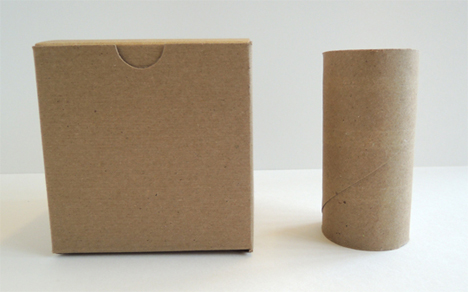
  • 1 box (mine was 4 ½” X 4 ½” x 6” – a tissue box works as well!)
  • Red construction paper
  • Phoenix decorating supplies (we used red construction paper, sparkle stems, red pipe cleaners, cellophane, large gold embossed foil seals, small red feathers, red & gold embossed foil paper, gold wrapping paper, textured gold paper strips, and gold & red curling ribbon)
  • A large rectangle of red cellophane (approximately 9.5″ x 20″)
  • 2 pieces of red crepe paper streamer (approximately 18″)
  • 2 strips of yellow poster board for legs (approximately, 1.5″ x 9″)
  • Scissors, tape, stapler, and glue stick for construction
  • Markers for decorating
  • Hot glue

The phoenix puppet consists of 2 parts: 1) A sock puppet head; and 2) A box body that conceals the puppeteer’s arm. We’ll start with the head. Stack 2 rectangles of felt on top of one another and round one end of the stack. The rounded end will eventually be your phoenix’s head.

phoenix fabricAfter some debate about sewing vs. hot glue, we decided to sew the 2 felt pieces together. Lacking a sewing machine, we hand stitched, using double thread. Katie used a running stitch, I went with a classic whip stitch. It took a looooong time (like, 6 hours!). But in the end, when you turned the sewn heads right-side out, they looked great and held up to quite a bit of pummeling. However, if I was to do this project again, I would purchase pairs of red socks instead.

sewn phoenix headTo make your phoenix’s crest, bunch the bottoms of 3 sparkle stems together. Wrap red masking tape around the bunch, then use the barrel of a marker to give the free ends of the sparkle stems a little curl. Cut a pair of eyes from the template, and a beak from the yellow (or gold metallic) poster board. Then hot glue the crest, eyes, and beak to the top of the head.

head step 1Hot glue a red feather onto the masking tape to cover it, then hot glue a small triangle of felt over the bottom of the feather to complete the look.

crest coverage Set the head aside for a moment – it’s time for the body! I used a 4 ½” X 4 ½” x 6” box, but you can cut down a large tissue box to those dimensions as well. Cut square openings in the ends of the box. Make sure to keep these openings fairly wide. If they are too narrow, they’ll rub against your arm while you’re manipulating your puppet. If you’re using a cut-down tissue box, leave the largest opening for your arm to slip through (the the narrower opening for the bird’s neck and chest).

holes in boxUse red construction paper to cover 2 sides of the box – the top of the box, and the side that faces outwards (i.e. towards your “audience”).

paper on boxNext, cut a tail and a wing out of construction paper. You only need one wing (which will eventually go on the side that faces your “audience”).  I cut my wing from 5.75″ x 10.5″ rectangle of red construction paper, and gave it a pointy shape.

wingThe tail was cut from a 3.65″ x 13″ rectangle of construction paper. Like the wing, I gave it a slightly pointy look.

tailI recommend decorating the wing and tail before you attach them to the box (because it’s much easier for kids to decorate an object that’s flat on the table). For decorating the wing, tail, and front & back of the box, we offered red construction paper, red and gold sparkle stems, red pipe cleaners, cellophane, small red feathers, red and gold embossed foil paper, gold wrapping paper, textured gold paper strips, and gold and red curling ribbon, and large gold embossed foil seals. In addition to these items, each tail had a big piece of red cellophane and 2 red crepe paper streamers.

To simulate feathers on the phoenix’s chest, I used this crazy fluffy yarn from Michael’s Craft store. I gave each kid a 3 foot piece and told them to wind it around and around the neck opening of their boxes (and secure it with glue or tape). It looked great!

fluffy yarnWhen you’re done decorating, attach the wing and tail to the body with hot glue. The tail needs to attach above the rear end opening! That way, the tail will hide your arm when it’s inside the puppet.

tail attachmentThe final step – phoenix legs! Cut toe shapes out of the bottom of 2 yellow poster board strips. Tab the bottom of each strip to create a foot, then tab the other end of the strip and hot glue it the bottom of the box. Done!

To operate your puppet, slide your arm through the openings in the box. The slide the phoenix head onto your hand. Tuck the end of the head into the box. The head doesn’t attach to the body (so later, if you want to discard the body and simply use the head like a sock puppet, you can). Wrap your free arm around the bottom of the box so it looks like you’re cradling your phoenix in your arms. Or, you can just carry your phoenix around like this adorable little guy did!

phoenix friend

Messing With Monet

messing with monetAh, Monet. The play of light, of shadow, a moment of time captured, suspended, like a ripe fruit for the viewer to feast upon. What must it be like to create such artwork? Well, now you can find out!

master kitzThis is a snazzy little art kit by a company called Master Kitz. Using the provided materials (templates, paint, roller brushes, stencils, pastels, etc.) kids can recreate works by Van Gogh, Klimt, Hokusai, Matisse, and others. When I spotted their “Water Lilies by Claude Monet” kit discounted on Amazon for less than $20, I couldn’t resist. Now all I needed was a kid to test the kit.

kid testerEnter Hope, Pop Goes the Page’s official kid-tester! Last year, Hope was a member of Cotsen Critix, our children’s literary group. She’s a smart and savvy writer with a great sense of humor. In other words, the perfect person to test a product and write about it. So, what did Hope think of this kit? Below is her complete report!


This kit had really cool packaging! The kit includes includes soft pastels (blue, green, violet, light blue, white, pink, red, yellow, and aqua), two pieces of artist’s paper, stencils (a green lily pad stencil and a yellow flower stencil), two “shadow makers” (i.e. plastic yellow lily pads), instructions (the instructions were two sided and were a beautiful fold out poster that included valuable information about Monet), and a “shammy”(i.e. a piece of cloth). The stencils and paper were rolled up inside the box, so they were understandably bent. However, all of the other materials were in great condition.

suppliesThe directions recommend taping a piece of newspaper to the table you are working on and doing the project over the newspaper. LISTEN TO THE DIRECTIONS!!! This project is incredibly messy, and you should wear an artists’ smock or an old t-shirt to protect your clothes! To get started on the project, you tape a piece of the provided artists’ paper on the table (masking tape works best because it won’t rip the paper as easily as regular scotch tape, but you should test it on an inconspicuous place first). However, doing this leaves the places the tape covered uncolored, so at the end of the project, you should smudge the pastels to cover the blank spots.

cornerIt’s not made clear in the directions, but to follow “artsy etiquette,” make sure you have the rough side of the paper facing down (it doesn’t make a significant amount of difference whether or not you use the rough side or the smooth side of the paper, but it’s proper to use the smooth side).

After taking these preliminary cautionary steps, it’s time to begin your masterpiece! First you slide the lily pad stencil underneath the paper. Taking a colored pastel (blue, violet, or light blue works best, because you’re coloring the water) out of the box, rub the pastel all over the paper until an impression of the lily pads is visible. You can use several colors (same pastel(s) as above) to give your art a truly “Monet” effect. Using the “shammy,” gently rub over the whole paper, blending the pastels (this step justifies how messy the kit is! POOF! Dust everywhere!).

water stepRemoving the lily pads out from underneath your “canvas,” tape it on top of the paper so it lines up with the outlines you just made. Use green, yellow, white – or anything you like to shade in the shapes. To make the job go faster, use your finger to blend the pastels (by this point my fingers were all brownish). But be careful! When I was testing this kit, the sharp parts of the stencils pricked me! OUCH!

almost doneWhen you are finished making the lily pads, you carefully (SLOWLY!) take the stencil off the paper. Be sure not to jerk! If you do, the pastel dust will spray EVERYWHERE!

Time to take out the flower stencil! Using the same method of shading in, choose a few places to put flowers. You can be creative with this step, but it’s not necessary to do at all. Now it’s time to draw some reeds! Just draw a few green wisps in the desired section. I found that drawing the reeds in the darkest area of the water made the reeds show up the best.

Shadow making time! The “shadow makers” are the two plastic lily pad shapes I mentioned. Theoretically, you place them over the identical lily pad on your sheet, and trace around the front part, then smudge it down for a shadow effect. However, since there are only two shadow makers, it’s pointless to give shadows to two lily pads. I used the two shadow makers provided, but then I improvised, carefully traced around the lily pads (without a shadow maker) and smudged the pastel down to create a shadow.

shadingThe step above is technically the last step, but I recommend this additional step (which is not mentioned in the instructions). To seal in the prodigious amount of dust caused by the project (remember, it’s not cool when dust is flying everywhere! Especially colored dust!), Dr. Dana rushed out to CVS to buy some cheap hairspray as sealant. The hairspray (Aqua Net, to be exact) was “unscented” but was still really smelly! We attempted to use it outside, but due to some wind we used the library’s restroom. The effort was successful, and the pastels stayed on!

The box of this kit recommends itself for “Ages 4-104,” but I strongly disagree. This project is better suited for ages 9-104! Although, for you 104 year-olds out there: this project may take a toll on your back!

finishedI found this kit easy to use, quick to complete (30 minutes), and fun to do! It was SUPER messy, and sometimes the instructions were unclear, but all in all, I’d rate this project 4 out of 5 stars.


Claude Monet, Water Lilies and Japanese Bridge, 1899. Oil on canvas. From the Collection of William Church Osborn, Class of 1883, trustee of Princeton University (1914-1951), president of the Metropolitan Museum of Art (1941-1947); given by his family. Courtesy of the Princeton University Art Museum.