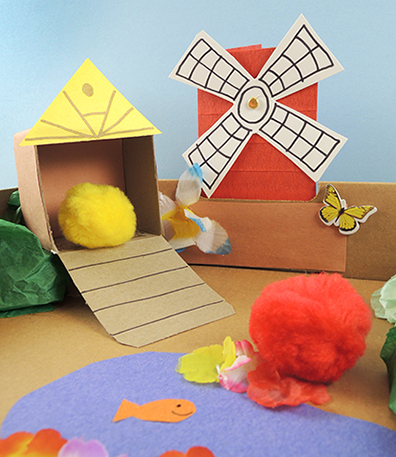
 It’s a merry chase! Use your motor skills to navigate a yellow pom-pom hen around the barnyard. But beware the red pom-pom fox, who’s also on a roll!
We read Rosie’s Walk by Pat Hutchins (Aladdin, 1971 read here by Miss Gray Educates). Rosie the Hen decided to take a little stroll around the farm, not realizing that she’s being followed by a hungry fox. Fortunately for Rosie, the Fox’s luck is horrible. He runs into misfortune after misfortune in pursuit of his chicken lunch. Happily, Rosie makes it back to her coop, none the wiser. The wordless sight gags on each page had our kids chuckling!
This book also gets a gold star rating from Katie. It was her son’s FAVORITE as a kid!
You’ll need:
- 1 large box top (like a copy paper box lid)
- 1 paper towel tube
- 1 small box
- 1 paper cup
- Construction paper
- 2 large pom-poms
- Scissors, glue, and tape for construction
- Markers for decorating
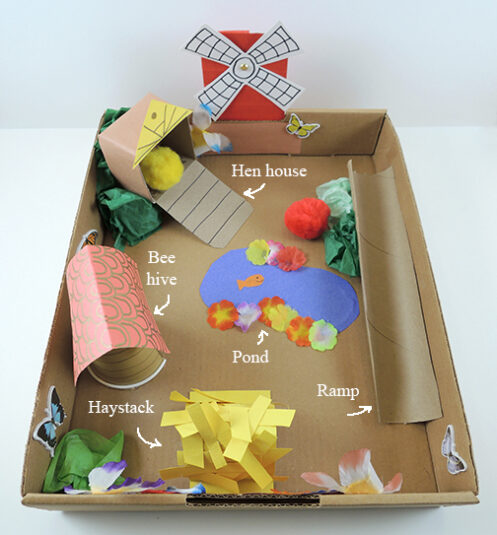 As you can see in the above photo, we used a copy paper box lid as the base of our barnyard. Then we glued a number of elements in place. The bee hive was a paper cup with an arched door. The haystack was a construction paper tunnel. The ramp was a paper towel tube, cut in half length-wise and elevated with a snippet of the remaining tube. The hen house was a small box with the lid positioned as a ramp, also elevated with a snippet of paper towel tube. We added a pond, fabric flowers, and tissue paper shrubs as well.
With all the obstacles complete, drop two jumbo pom-poms into the box lid. We thought about decorating these like a fox and hen, but they rolled much easier as simple poms.
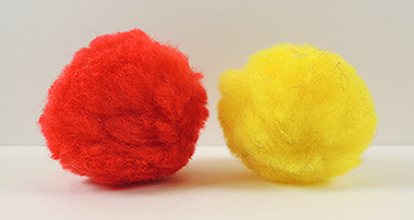
With your poms in place, commence the chase! Tip and jiggle the box lid to make the fox and hen race around the barnyard, ducking into buildings and rolling up ramps.
 You’ll need:
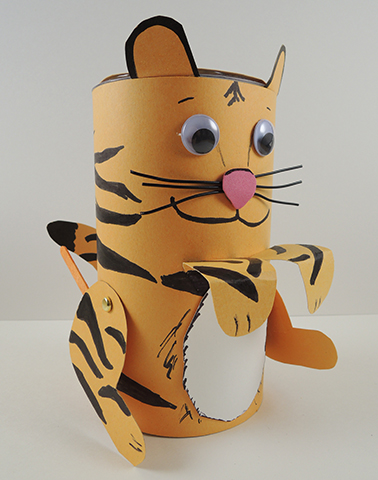
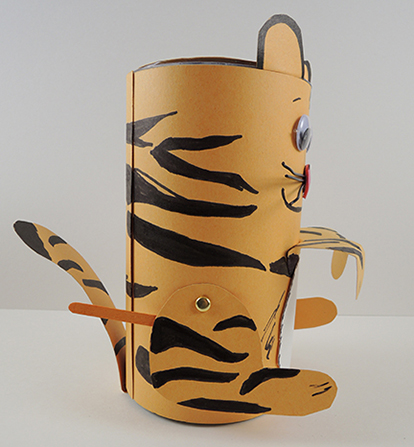 Use a box cutter to make small slices in the oatmeal container, then attach the tiger’s back legs to the body using brass fasteners. Next, attach two, 3″ long craft sticks to the legs, leaving plenty of room for you to grasp the sticks. To operate, move the sticks up and down while gently sliding the oatmeal container forward, and you have yourself a splendid tiptoeing tiger!