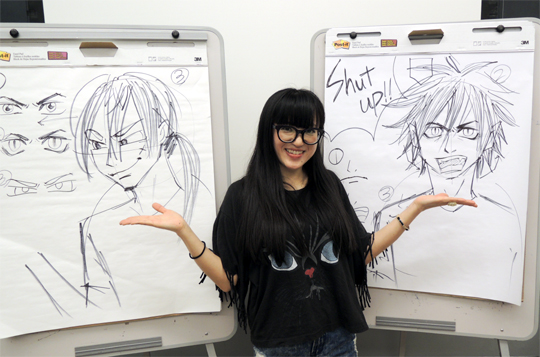
Misako Rocks!

misako rocks Manga fans, sharpen your pencils! We were delighted to host Misako Takashima (popularly known as Misako Rocks!) at an intensive drawing workshop for 10-14 year-olds. Check out our interview with Misako at the end of the post!
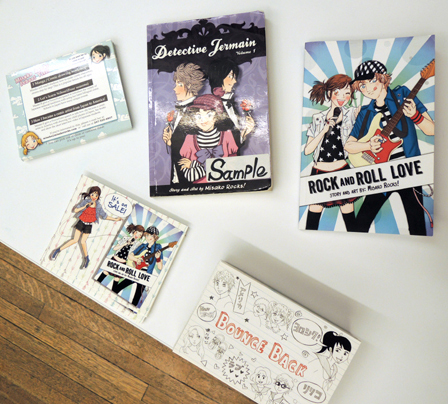
misako's workThe workshop primarily focused on character development, as well as a little history on Japanese culture and manga. After a hilarious PowerPoint presentation about growing up in Japan and coming to America, Misako jumped right in to the art. Wielding a variety of markers, she demonstrated how to structure faces and make mouths, eyes, and even hair expressive.
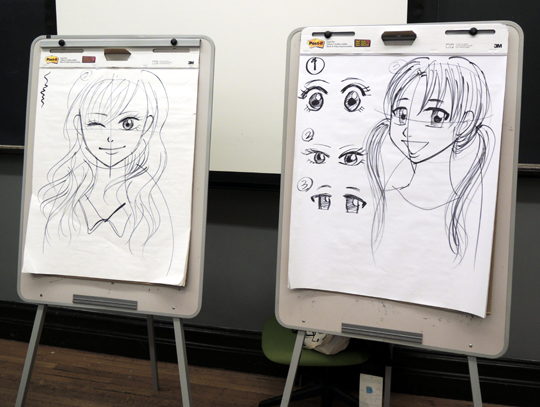
easelsThe kids were loaded up with paper and pencils so they could sketch along with Misako.
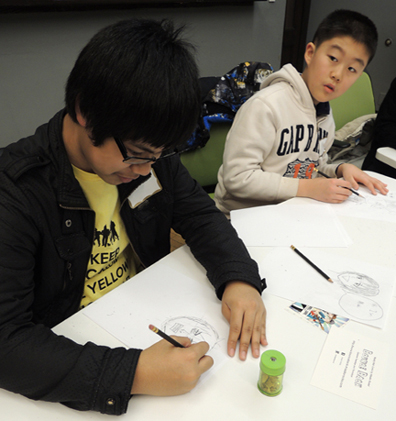
kids working 2My favorite part, however, was when Misako would circulate among the young artists, commenting on their work, making suggestions, and giving mini-lessons to help improve their drawings.
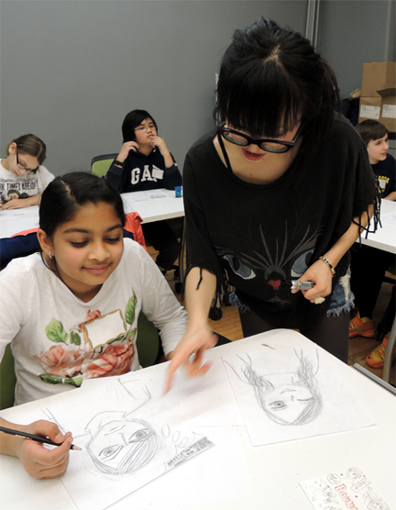
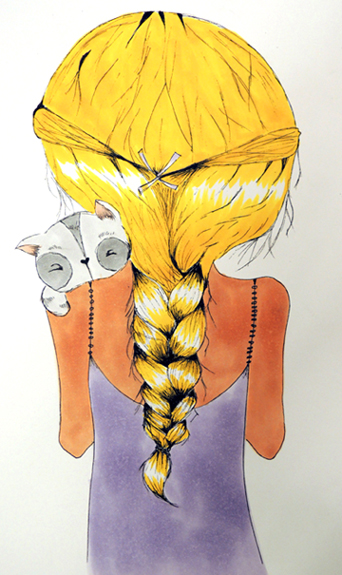
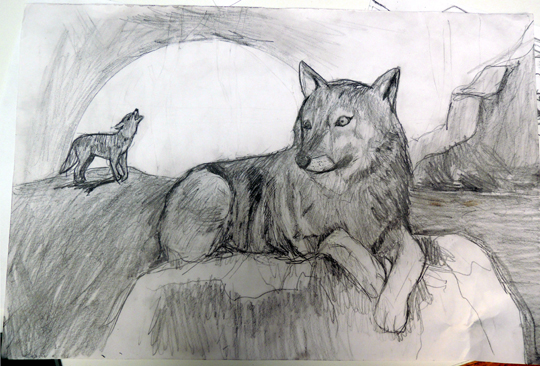
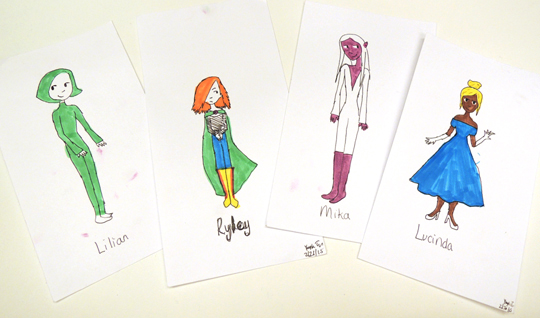
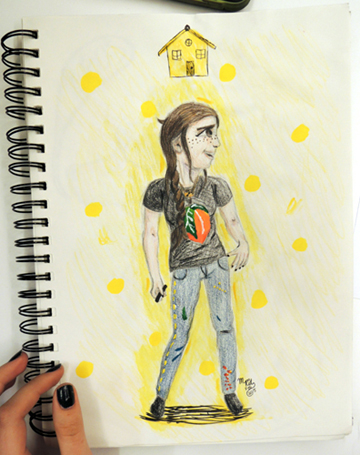
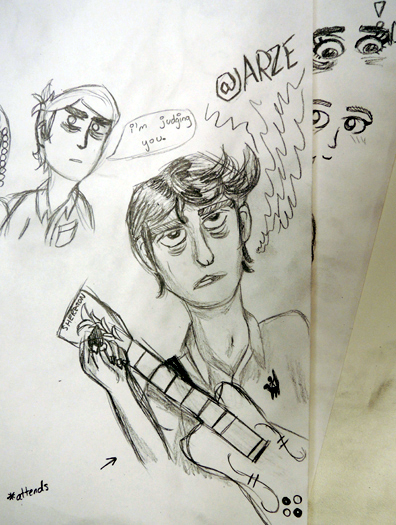
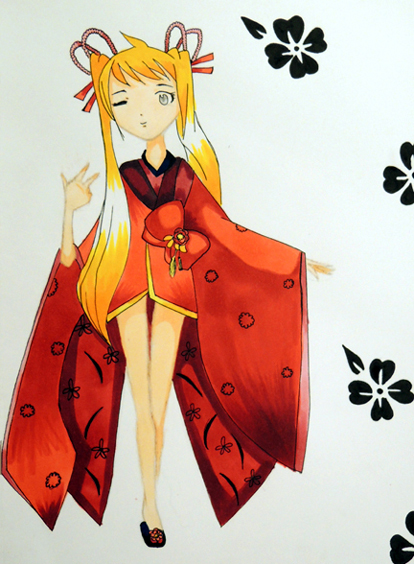
kids working 3Another fabulous thing about the workshop? The kids’ art! In addition to some spur-of-the-moment sketches, many of them brought their portfolios with them. Here are just a few…
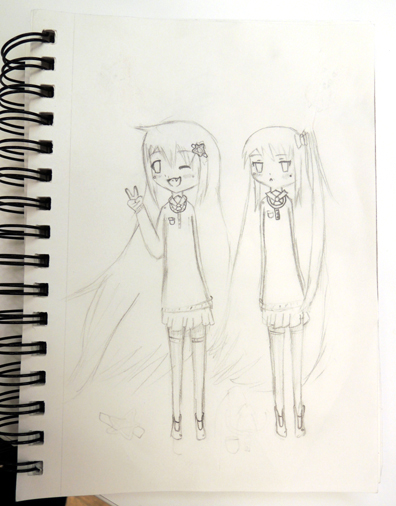
manga twinsblonde braidwolvescharactersyellow houseposterguitarred girl


In addition to publishing her own work, Misako has been featured in magazines and newspapers, including Elle Girl and the New York Times. The BBC and TV Asahi featured her in a documentary about her comic book life, and her Instagram flows with photos, sketches, and artistic exuberance.
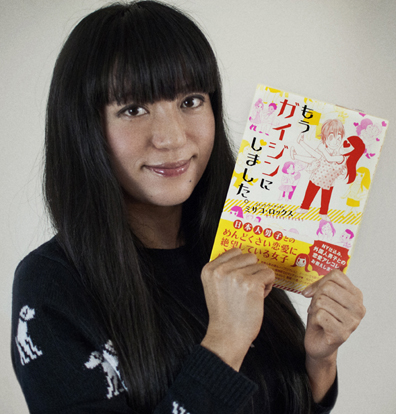
misakoWhen did you first start drawing manga, and why did it intrigue you?

I started drawing when I was 8 or 9 just like any girls copied their favorite characters. But professionally I started drawing in 2004. It was my first dream that I wanted to become a puppeteer in Broadway (to work for Lion King musical!), but I gave up on myself.
Then I noticed that Japanese pop culture (anime and manga) was getting pretty popular around that time. I thought that I had to switch my career when this was pretty trendy! That’s how I started making my story and drawing.

Describe the steps you take to draw a single page in one of your books.

First I roughly draw panels and add lines to the characters. At this time I don’t draw backgrounds. Then I start polishing each page: 1 draw with blue pencil. 2 draw with calligraphy brush. I draw background separately. Scan everything and color with Photoshop.

What’s more difficult for you…writing the story, or drawing the art?

Writing the story is more difficult for me, because English is my second language. I am still learning! My study will never stop! But I do have so many ideas, so I don’t have any problems to come up with a theme!

Name some other artists you love!
Yukari Ichijo is my favorite manga artist, Klimt, and Charles Burns, the graphic novel artist of Black Hole. Art Spiegleman, the graphic novel artist of Maus might be my No1!

What’s one of the most unusual things you’ve received from a fan?

A photo of her tattoo…she used my illustration!!! I was blown away by it.

What’s your advice for young artists who want to draw manga?

In order to make stories, I always advise them to go outside and have fun! Because those days really help them to create interesting and exciting stories. Also give yourself 1 min sketch practice. I sat on a bench in a park to draw people sit in front of me for one minute! I kept doing a lot to develop my drawing skill.

What are you working on now?

I am working on my weekly web comic: BOUNCE BACK. The theme is a school bully, racism, friendship, finding identity etc, etc. But it has a fantasy character, so it’s still entertaining! I bet readers will feel related to my characters Lilico and Paige.

Also I am working on Japanese manga comic too. I go to Japan often to be on TV and radio show to talk about my projects. Sometimes I visit schools to give a motivational speech. This is very exciting!


Artist photo courtesy of Misako Takashima. 
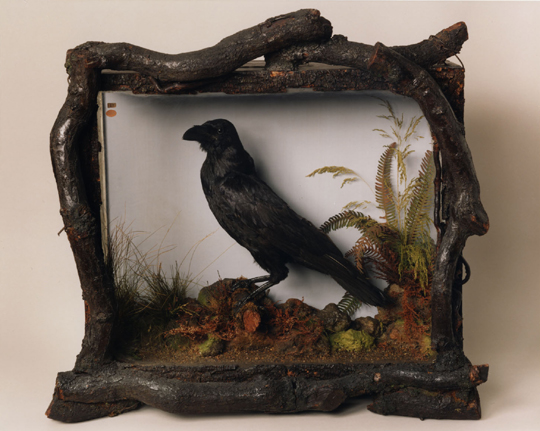
Quoth the Raven

quoth the ravenThis a not just a raven. It’s THE raven. The raven believed to have inspired Edgar Allan Poe to write his famous poem. If that isn’t enough of a distinction, this same raven (his name is Grip) was once the the beloved pet of Charles Dickens. After Grip died, Dickens had him stuffed and it’s reported that he arranged the foliage in the display box himself. Grip was a minor character in Dickens’ book, Barnaby Ridge. Poe, who was working as a reviewer in Philadelphia, read the book and remarked that the raven’s “…croakings might have been prophetically heard in the course of the drama.” Four years later, he published “The Raven.”

Grip the raven is just one of the treasures in the Rare Book Department at the Free Library of Philadelphia. I spent a happy afternoon there, learning about the history of the book and enjoying a massive cheese steak, both provided compliments of Joe Shemtov, Rare Books Librarian. Ready for a little history lesson?

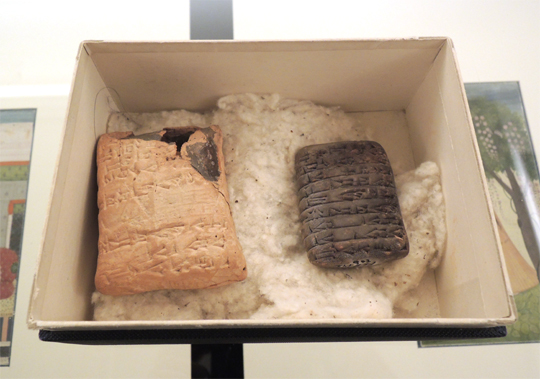
envelope and tabletFirst, Joe brought out this Sumerian clay tablet and envelope (ca 2000 B.C.E). That’s the envelope on the left, and the tablet on the right. The envelope is, of course, clay, and was cracked open in order to gain access to the tablet. Interestingly, the tablet is a contract for a delivery of lard with a penalty clause. All business, those Sumerians.

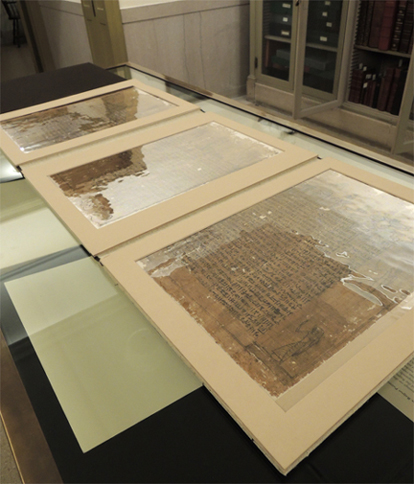
papyrusNext, we move to a papyrus manuscript from Ancient Egypt (ca. 700 B.C.E.). The image above is a section from a Book of the Dead, which the wealthier Egyptians were privy to. Interesting fact – while the scribes were producing these, they would leave blank spaces for the names of the book’s future owners. The manuscript is written in Hieratic, a cursive writing system that allowed scribes to write more quickly than with hieroglyphs.

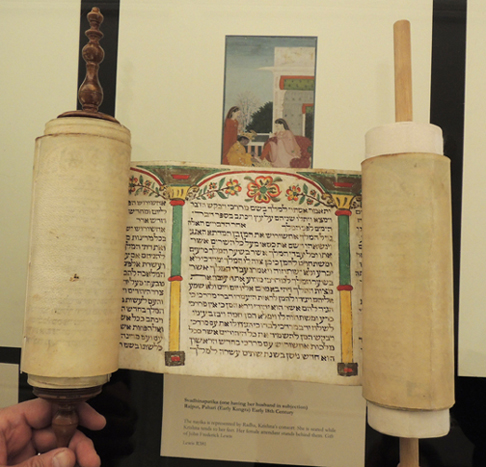
scrollThis Meghillat Esther scroll is a beautiful reminder of how the reading experience has changed over time. We flip pages to read, but before that, we scrolled. I suppose with computers, we’re back to scrolling. Huh.

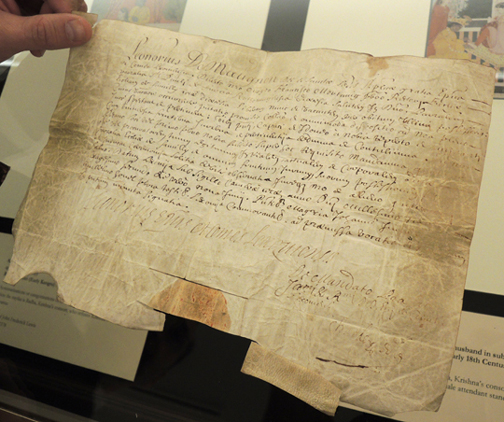
vellumMoving forward, we start to see manuscripts and books written on vellum (i.e. the skin of sheep, calves, and goats). Vellum was sturdy, but rather tedious and time consuming to produce. The size of the animals limited the size of the vellum, which inadvertently resulted in more standardized sizes of books.

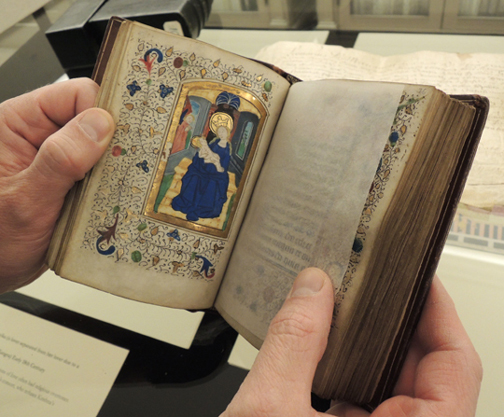
book of hoursThis is a Book of Hours (ca. 1475), a religious book that was the “bestseller” of the Middle Ages and the Renaissance. From the mid-13th century to the mid-16th century, more of these books were bought, sold, bequethed, inherited, printed, and reprinted more than any other book, including the bible. A Book of Hours was a book of prayers, but also contained a calendar of feast days (which commemorated the days on which particular saints were believed to have been martyred, as well as the important days of Christ and the Virgin).

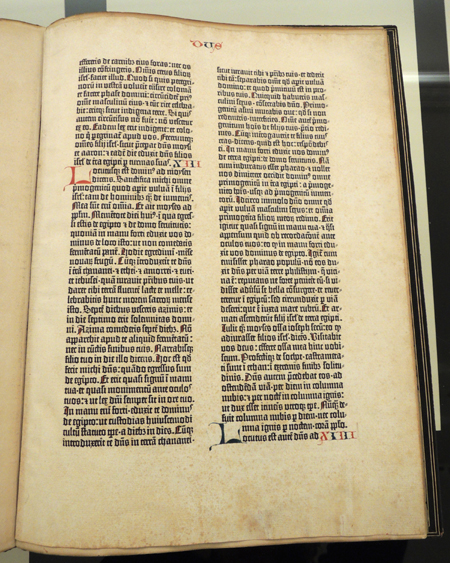
gutenberg bibleAt this point in history, books were still written entirely by hand. Until this came along. Above is a page from a Gutenberg Bible, the first book printed on a printing press. Johann Gutenberg invented his press in the 1450s and thus ushered in a new age of literacy. Gutenberg also popularized the use of plant-based paper rather than vellum. While opinions and records vary, it’s generally believed that approximately 180 copies of the Gutenberg Bible were printed, and only 21 complete copies exist today.

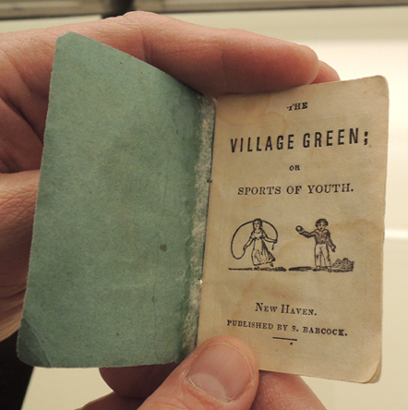
chapbookSprinting forward to the 19th century, books were looking very much like the ones we know and love today. And because of the plethora of printing presses, books were selling cheap. An 1840 chapbook like the one above would have cost mere pennies. This made the books more affordable to the lower classes, which  that meant more people could afford to start learning to read and write.

Of course, there were still some fancy books out there. Are you ready to see something really, really, cool?

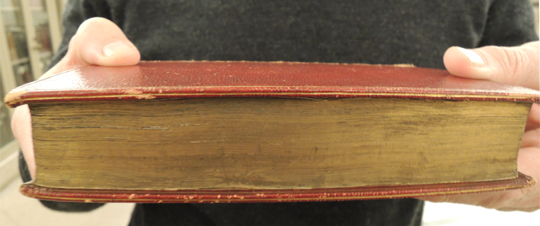
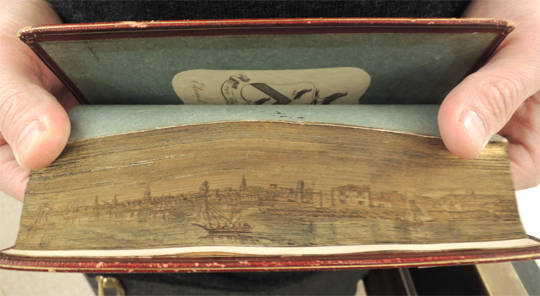
fore-edge 1This is a book with a fore-edge illustration. While it’s a little hard to see in the image above, the edges of the pages are gilded (i.e. burnished with gold). But, when you fan the pages  just so…

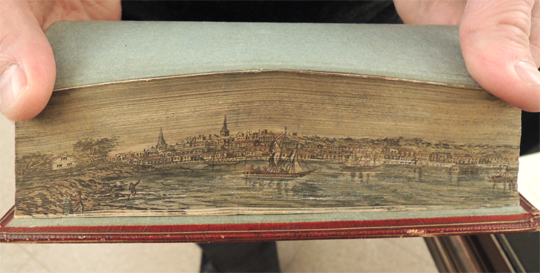
fore-edge 2…the pages reveal an illustration! How completely and totally amazing is that?!? Man, I love rare books! Even better, this book has a double fore-edge. If you flip it over and hold the pages just so…

fore-edge 3There’s a different illustration on the other side. Unbelievable. While the Rare Book Department has been giving history of the book tours for some time now, they were recently awarded a Hatching Innovation Grant to create a traveling educational program to local schools and library branches. Congrats Joe!

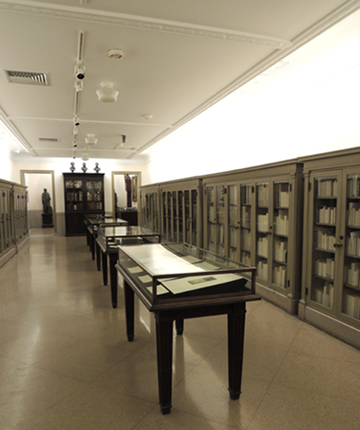
The Rare Book Department at the Philadelphia Free Library is open to the public and free of charge (they’re on Facebook as well). The library is open Monday-Saturday with daily tours starting at 11:00am. You are also free to visit their exhibit galleries, which are absolutely lovely.

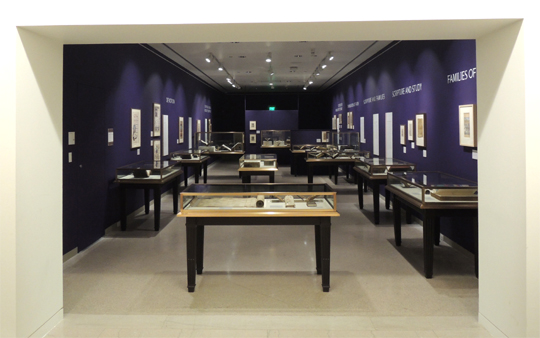
exhibit hallTheir new exhibit space, the William B. Dietrich Gallery, is currently showing Sacred Stories: The World’s Religious Traditions. The exhibit draws from “one thousand years of human history, illustrating the ways we have written, printed, decorated, and illuminated our Buddhist, Christian, Hindu, Jewish, and Muslim faiths.”

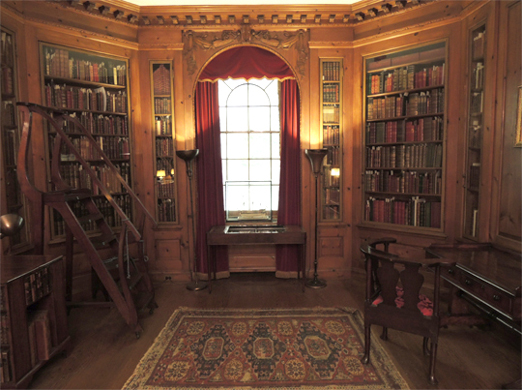
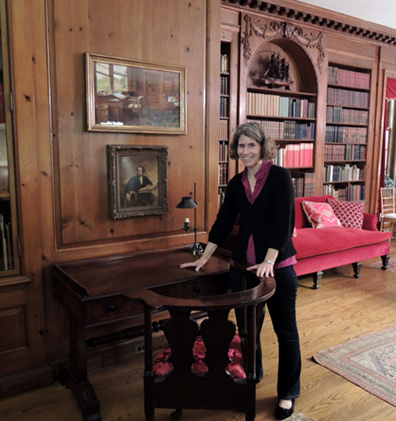
dietrich galleryWell, we began this post with Dickens, it seems only appropriate we end with him. This is the Elkins Room in the Rare Book Department, a gorgeous wood-paneled paradise filled with books, artifacts, sculptures, and artwork.

elkins roomSee the desk to the right? That, my friends, is Charles Dickens’ writing desk. Originally, it resided in Gad’s Hill Place, Dickens’ country home. The great man himself sat right there, wrote amazing things,  and even carved his initials in it! And there’s me, hopefully absorbing some of that writing power into my own fingertips.

dickens desk


Many thanks to Joe Shemtov and the Rare Book Department staff for an amazing afternoon! Sacred Stories: The World’s Religious Traditions is showing through January 30th, 2016.

DIY Harry Potter Party

diy harry potter partyWhat do you do when your best friend – who happens to be a huge Harry Potter fan – is celebrating her quinceañera? You throw her a surprise party of course, with all the trimmings! Our kid tester, Hope (who you last saw here) researched, designed, prepped, and coordinated this party for her friend Liv, and I was invited for a sneak peek.

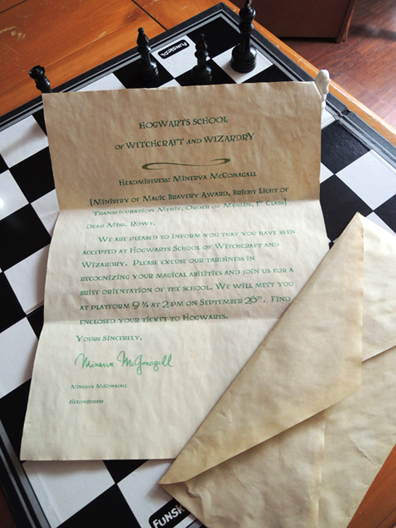
The party was announced when a mysterious letter arrived for the birthday girl, informing her of her acceptance to Hogwart’s. She was given no more information than a time and date (Liv’s mom, however, was filled in on all the details). Other attendees received similar invitations. Hope “aged” the paper by soaking regular old printer paper and an envelope in black tea. She used a cookie sheet for both soaking and flat drying the paper. Depending on your paper, you’ll need to soak for 30 minutes to an hour. If you’re doing a number of invites, have fresh tea water handy (the solution gets weaker with every soaking).

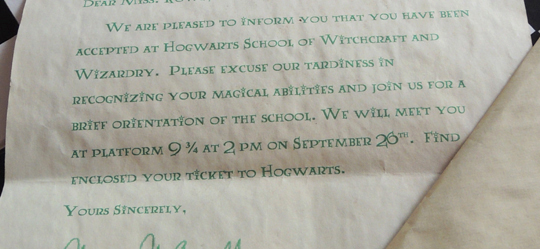
letter close upWhen the paper was dry, Hope ran it through her computer’s printer. I was curious to know how the printer handled the crackly papers? “For the most part they went through okay.” reports Hope. “Once or twice an envelope got stuck, and I had to get down on my hands and knees and yank it out of the printer.”

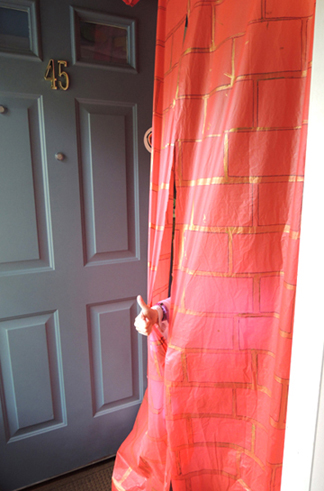
When guests arrived at the party, they encountered a “brick wall” at King’s Cross Station. Hope made a brick template out of card stock, and then repeatedly traced the template onto a red plastic tablecloth using a black permanent marker. Finally, she added gold mortar highlights with gold paint (it gives it a nice shimmer, doesn’t it?). The tablecloth was slit 3/4 of the way up so guests could walk through the wall…

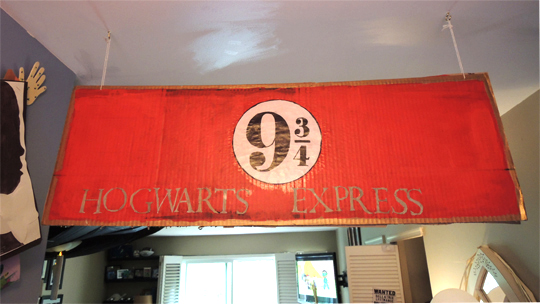
brick wall…and arrive at Platform 9 3/4! Hope hand-painted the sign on cardboard and hung it from the ceiling using tea cup hooks and twine (original instructions for the sign here).

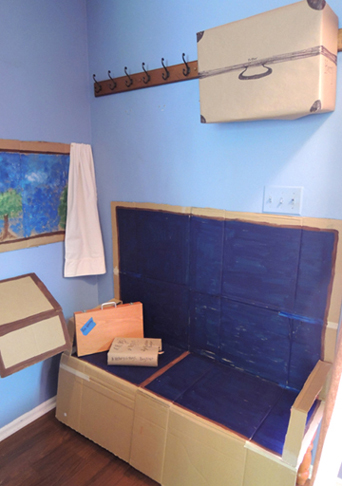
platform signTo the right on the sign was a train compartment (and later photo booth) for the Hogwarts Express. Hope’s mom gets the credit for this one. She covered a bench with cardboard and secured it with packing tape. Then she added all the details. I love the armrests on the seat. And the window with the curtain!

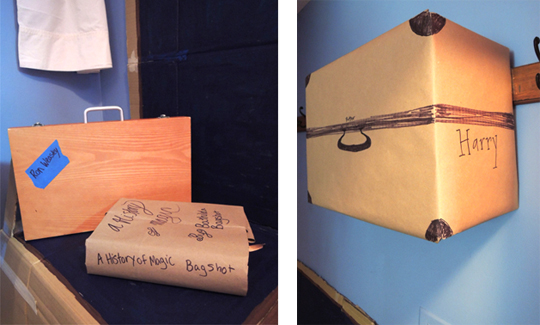
train compartmentHere’s a close up of the luggage on the train. That super thick A History of Magic book? Originally, it was the collected works of Jane Austin.

train luggageDisembarking from the train, party goers encountered two party tables (10 knuts if you spot Hope’s unintentional photobomb).

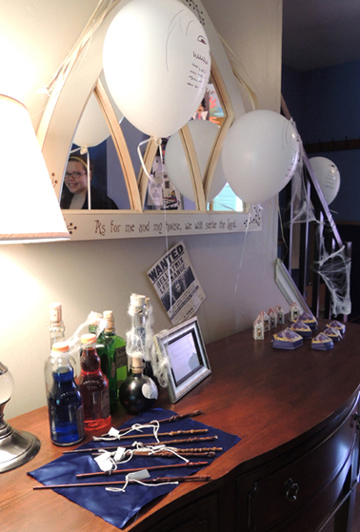
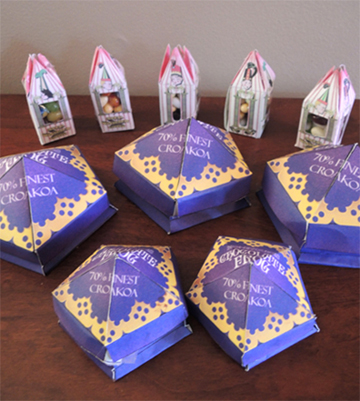
first party tableThe first party table held a slew of potions (labels found online and adhered to funky bottles filled with colored water), Chocolate Frogs (template here), and Bertie Bott’s Every Flavor Bean (template here). Depending on the number of beans and size of your frogs, you might need to adjust the templates a little.

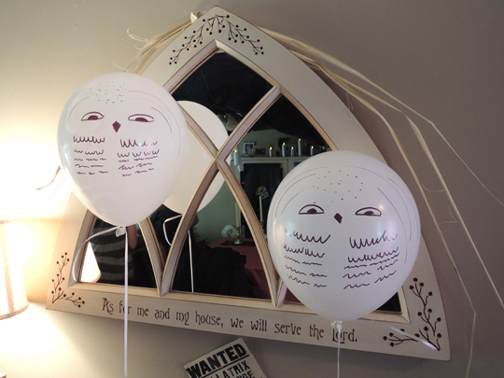
candy boxesSnowy white owl balloons hovered over the table. Hope recreated these from a picture she saw online. They are so cute and simple it’s just genius. Wouldn’t it be fun to do a whole shelf like an Owlery, with each balloon holding a special message?

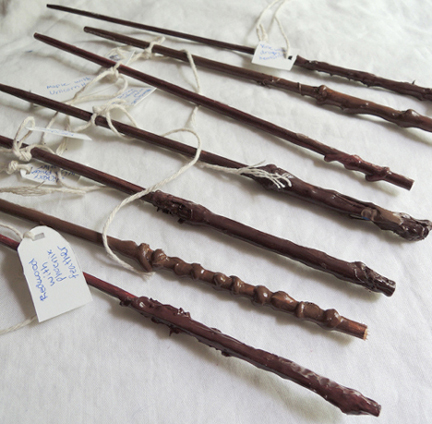
owl balloonsDid you happen to notice the wands on the party table? These were my absolute favorite party item. Here’s a close-up of them on a white background:

wandsHope modified these instructions and made the wands out of chopsticks and meat skewers (with the sharp ends sawed off of course). First, she used hot glue to create patterns on the sticks, then she painted them with with brown paint. When the paint started flaking, she added a coat of glossy mod podge. Each wand had a handwritten tag attached, informing the owner of the wand’s specs. Honestly, I couldn’t stop playing with them.

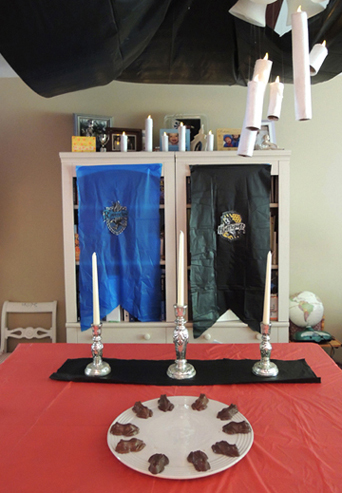
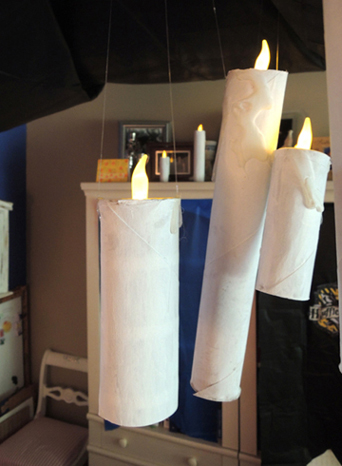
second party tableThe second party table was designed to hold some classic wizard delicacies. More on those in a moment. For now, let’s admire those house banners. They’re plastic table clothes cut into banner shapes and adorned with the house coat of arms (which Hope found online using a Google image search). Notice the floating candles overhead?

floating candlesThose are painted toilet paper and paper towel tubes with hot glue drips. An LED is mounted in a little paper towel sling at the top. They’re hanging from clear cord. And speaking of candles…

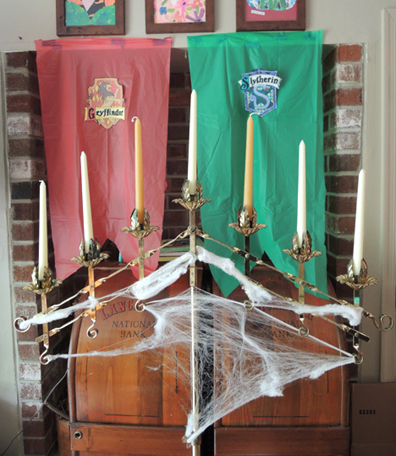
candelabraHope spotted this at her church and asked if she could borrow it for the party! Perfect, isn’t it? The cobwebs are a super nice touch too. Now, who’s hungry?

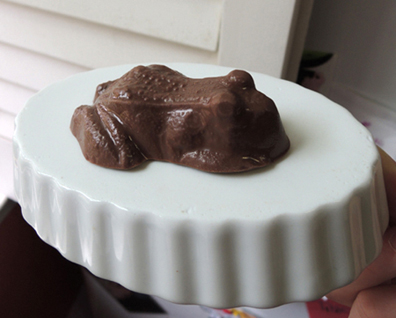
chocolate frogFirst, chocolate frogs. Hope found these molds on Amazon ($2.29 plus $3.27 shipping). She used Wilton’s dark melting chocolate and a borrowed chocolate melting pot (very similar to a fondue pot) to construct the treat. I tried one. It was very tasty, but I have to admit, it was a trifle unnerving to bite off its head. Next up? Pumpkin Pasties.

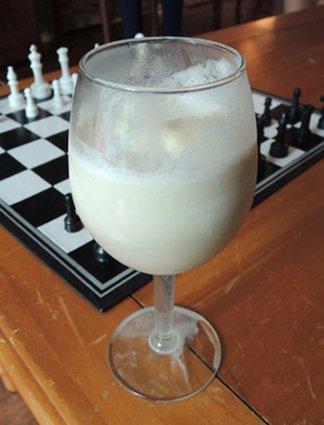
pumpkin pastiesHope used pre-made pie crust dough (Wegman’s brand) and the pumpkin pie recipe from the back of Libby’s canned pumpkin. The mini-pies were baked in a muffin tin. I tried one. Nom nom (if you’re in the mood for a different kind of pumpkin pastie, check out the one we posted about last summer). Finally, butterbeer. Served in a chilled wine glass of course.

butterbeerHere’s the recipe she used (and here’s the original source for it). Very rich and tasty!

Ingredients:

  • 1 quart vanilla ice cream
  • 1/4 cup butterscotch syrup
  • 32 oz cream soda

Directions:

  1. Place 4 (16-ounce) glasses in freezer and chill for at least 20 minutes
  2. Mix ice cream and cream soda in a blender until combined
  3. Divide between the frosted glasses
  4. Top each glass with whipped cream, if desired

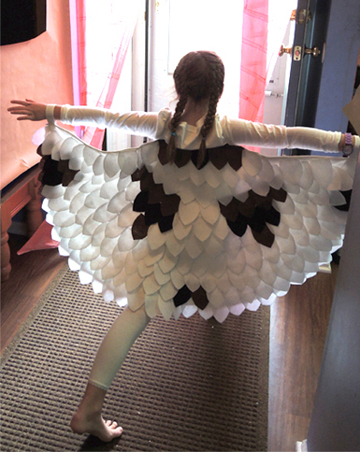
Shaking only slightly from all the sugar I had just consumed, I moved to the living room, where a Harry Potter movie marathon was being cued up. A CD of movie music was playing on the stereo as Hope’s little sister cavorted in her Hedwig costume (instructions for the no-sew costume here).

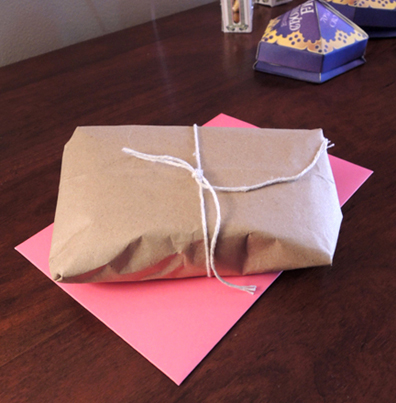
hedwigBy now, the guests were starting to arrive before the birthday girl’s big entrance. Hope had asked them to bring the gifts unwrapped so she could wrap them herself, using brown paper and twine reminiscent of  the owl post.

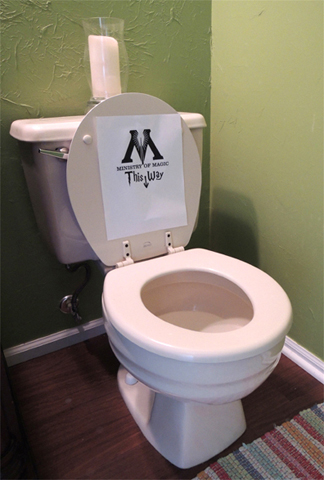
owl postRevelers could also opt to put on some wizard robes (i.e. old graduation gowns). Hope borrowed them from yours truly (because I – ahem! – have 5 sets of wizard robes in my attic. And 3 wizard hats. But who’s counting?). Since the birthday girl was due to arrive shortly, it was time to depart. A quick pit stop revealed that Hope had left no stone unturned:

ministry of magic entranceSo, how did the birthday girl react? According to Hope, she walked through the door and was overwhelmed. Stunned. Totally caught by surprise. And then she toured the party floor several times, pouncing on various items like a little kid in a candy shop.” The other guests were equally delighted and enchanted. Wouldn’t you be? I tip my hat to you Hope, and look forward to you coordinating all my children’s birthday parties until they go to college. I’m kidding of course. But only slightly.

While we’re on the subject of Harry Potter, here’s a rundown of all the HP projects, programs, and cool connections we’ve featured on the blog!