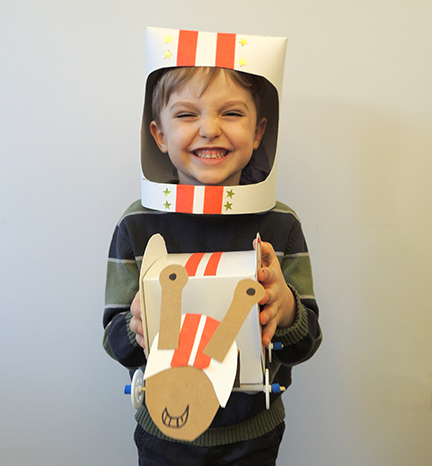
Who says a snail can’t be speedy? Start your engines, we’re putting it in 5th gear with a remote control snail racer rally!
We read Snail Crossing by Corey R. Tabor (Balzer + Bray, 2020). When Snail spots a delicious cabbage field across the road, he decides to motor over. However, many obstacles (birds, cars, rain, his own sense of direction) deter him from his goal. Thankfully, with the help of some new friends, it’s cabbage soup and tea for all! This book is hilarious and SO much fun to read aloud. Lots of laughter at story time! Highly recommend!
You’ll need:
- 1 box (ours was 4” x 4” x 4”, but a small tissue box works too)
- Poster board
- 1 wheel assembly (more on that below)
- 1 RC car or pull string
- Scissors, tape and/or glue for construction
- Markers for decorating
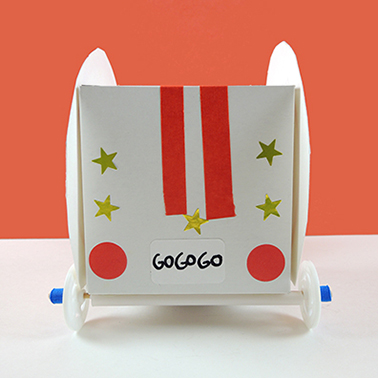
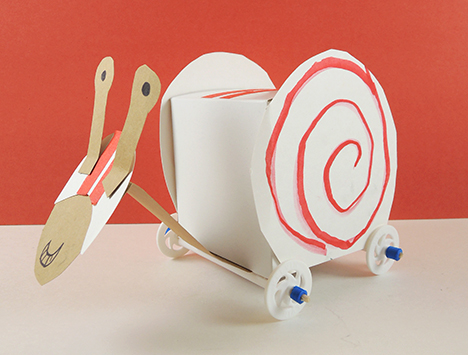 The snail part of this project is very simple. Decorate 2 poster board snail shells and attach them to both sides of a small box. To make the snail’s head and neck, round one end of an 8″ strip of poster board, then fold to create a head. Don’t forget the eye stalks! We also added a paper racing helmet, but that is optional. Tab the other end of the strip and attach it to the underside of the box.
If you are going to eventually make this a pull string snail like we did, you will find the wheel assembly instructions here. Finish the whole look off with color masking tape stripes and star stickers, or just use markers to decorate. We added red dot sticker taillights and a sticker license plate as well.
 Now to get your snail moving! We thought an RC snail rally would be super awesome, so I made a quick trip to Jazams, our local toy store. I found these RC trucks for $17.
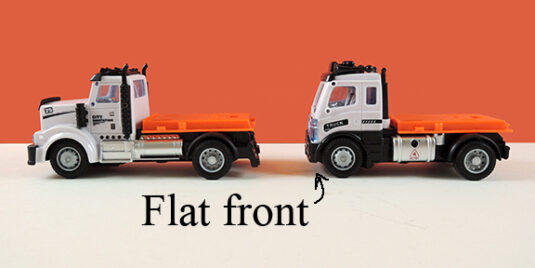
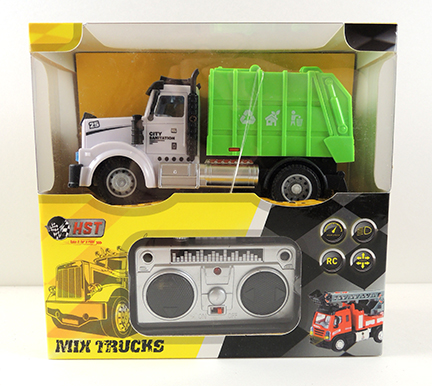 One quick note: You’ll notice that the RC truck in the picture above has a nose that sticks out. There was another box, exact same recycling truck, except it had a flat front (see below). Turns out the truck with the flat front held the snail box MUCH better. So aim to find a flat front truck if at all possible!
 I removed the green recycle section from the back of the truck, cut a hole in the bottom of each snail box, and then slid the snail onto the cab of the truck like so:
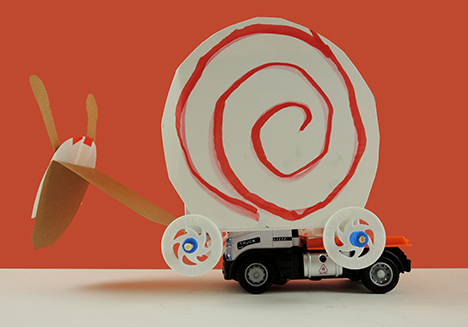
Then we headed out to the big lobby to race our snails! As you can imagine, it super chaotic (we had four running at once). So we waited until a slightly calmer time to video these two racers in action!
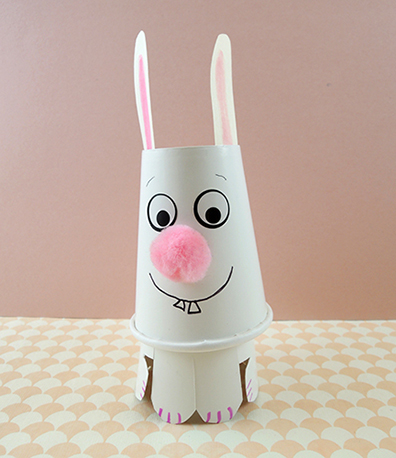
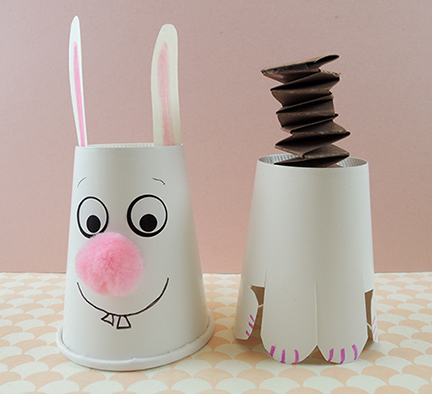 This project is essentially two cups stacked on top of one another with a paper spring in the middle. To begin, flip both cups upside down, then use markers to draw a face on the first cup. Add some paper ears (and an optional pom-pom nose if you desire!). Use scissors to cut bunny legs on the second cup.
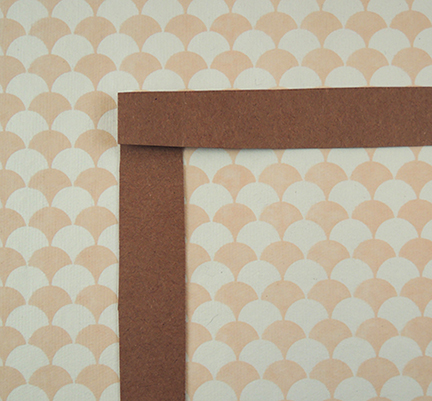 Keeping the corners together, alternately fold each strip up towards you. Continue until the strips are completely folded into an accordion spring. Tape the end sections together for more stability.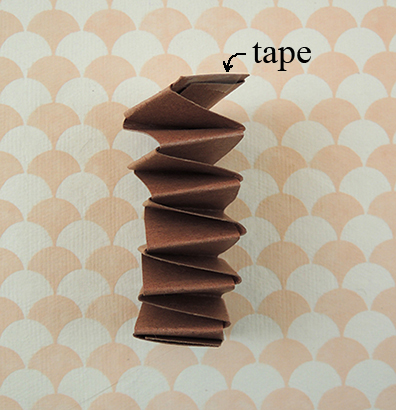
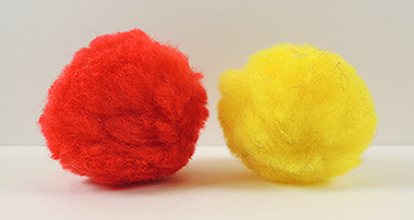
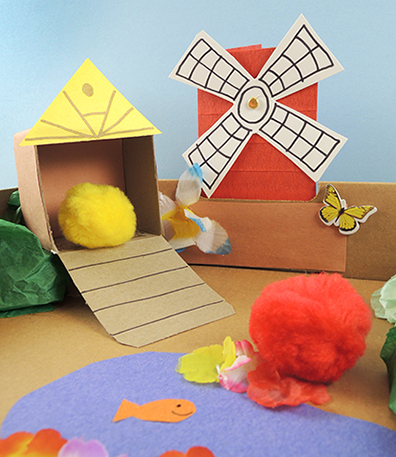 It’s a merry chase! Use your motor skills to navigate a yellow pom-pom hen around the barnyard. But beware the red pom-pom fox, who’s also on a roll!
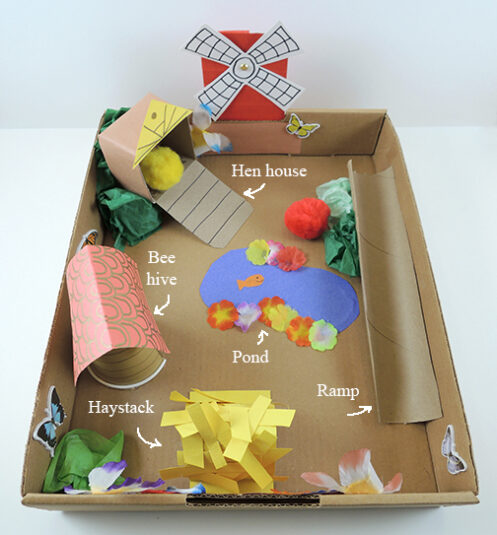 As you can see in the above photo, we used a copy paper box lid as the base of our barnyard. Then we glued a number of elements in place. The bee hive was a paper cup with an arched door. The haystack was a construction paper tunnel. The ramp was a paper towel tube, cut in half length-wise and elevated with a snippet of the remaining tube. The hen house was a small box with the lid positioned as a ramp, also elevated with a snippet of paper towel tube. We added a pond, fabric flowers, and tissue paper shrubs as well.