Creative Cookies

creative cookiesWhat could be better then stepping into a warm, fragrant kitchen and whipping up a tasty batch of cookies? Especially when the cookies magically appear in our one-of-a-kind story time oven!

cookie in ovenWe read Ginger Bear by Mini Grey (Knopf Books for Young Readers, 2004). Horace and his Mum make cookies, but the consumption of Horace’s ginger bear is continually delayed by trifling matters such as the cookie being too hot, the hour being too close to dinner, and Horace’s freshly brushed teeth. So Horace puts the cookie on his pillow for tomorrow. That night, Ginger Bear wakes up and marches to the kitchen. A few simple ingredients, some delicious toppings, and Ginger Bear creates a massive cookie circus! The revelers are having a grand time when they are intruded upon by Bongo the Dog, who really, really likes cookies. You can imagine what happens next. Ginger Bear just manages to get away, and realizes that he needs to find a safer place to live. The next morning, Horace awakes and Ginger Bear is gone. The clever cookie has found a new home in a pastry-shop window, where, as star of the elaborate displays, he will never be eaten!

You’ll need:

  • 4 rectangles of felt, any color (approximately 5.5″ x 8.5″)
  • 1 pencil
  • A selection of fabric tape (optional)
  • 1 cookie template, printed on 8.5″ x 11″ white card stock
  • A 6.75″ x 14.5″ piece of tagboard for cookies (brown poster board works too!)
  • Cookie decorating supplies (we used self-adhesive foam shapes, a selection of patterned tape, and dot stickers
  • A corrugated cardboard base (mine with 9.75″ x 13.75)
  • Tin foil to cover the cardboard base
  • 1 magic oven (more on this later!)
  • Scissors for construction
  • Markers for decorating
  • Hot glue

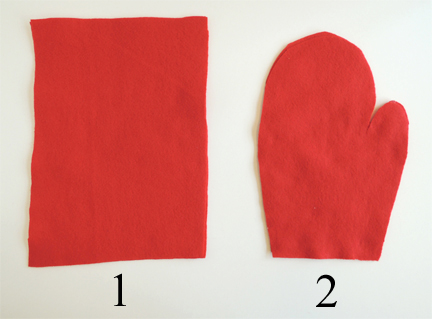
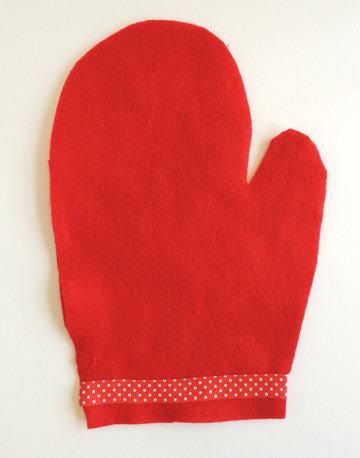
First, your oven mitts! Stack 2 rectangles of felt on top of one another, then place your hand on top of the stack (thumb out, fingers close together). Use a pencil to trace the outline of a mitt around your hand. You don’t want the mitts to be too snug, so make sure to leave plenty of room! Use scissors to cut your tracing from the stacked felt.

mitt step 1Now run a line of hot glue along the inside perimeter of the mitt (like you’re “stitching” the felt pieces together with hot glue). Make sure, of course, to leave the bottom of the mitt unglued so you can stick your hand in later. Next, attach a piece of fabric tape along the bottom of the mitt for decoration. Repeat the above steps with the second set of felt rectangles to make a second mitt.

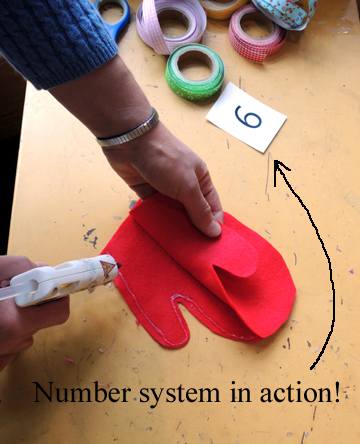
finished mittIf you are attempting this project with a large number of kids, I have a helpful hint to share. Gluing pairs of mitts for close to 20 kids takes some time. To avoid long waits at our hot glue stations, I devised a number system not unlike the “Now Serving” mechanism at delis or bakeries. First, everyone cut their mitts from felt. Then, we handed out a number card to each child, as well as the materials for the next phase of the project – tagboard cookies and decorating supplies.

During the cookie decorating, we called out numbers. When your number was “up,” you paused your decorating and brought your mitts to a hot glue station. We glued your mitts, let you choose from a selection of fabric tape, and then sent you back to your table to resume decorating. Then we called the next number. The system worked like a charm!

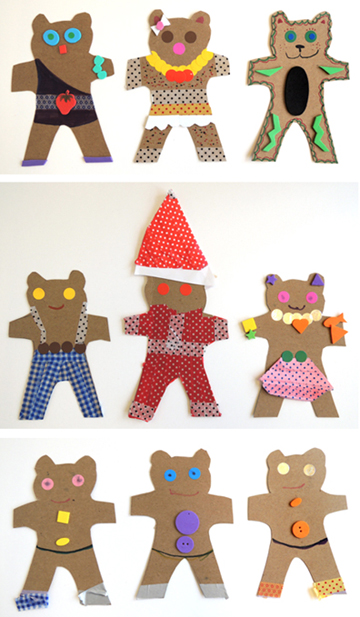
numberMaking the cookies is quite simple. Cut the cookie shape from the template, then trace its shape onto the rectangle of tagboard (or brown poster board). You could also use brown construction paper for your cookies, but it helps to use a material like tagboard or poster board to gives the cookies some thickness. We made 3 cookies per kid. We offered markers, self-adhesive foam shapes, patterned tape and dot stickers as cookie decoratives, but you can also just use markers.

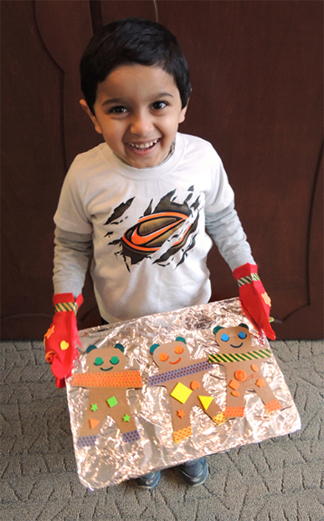
cookiesTo finish the project, wrap a corrugated cardboard base with tin foil to create a “baking tray.” Place the cookies on the tray, slip on your mitts, and you’re done!

You can stop here, or you can add a magic oven activity. We happened to have a big box and some cardboard scraps on hand (the scraps were left over from this project), so we made a magic oven.

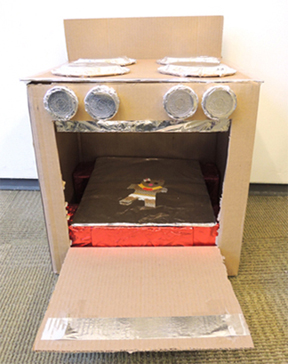
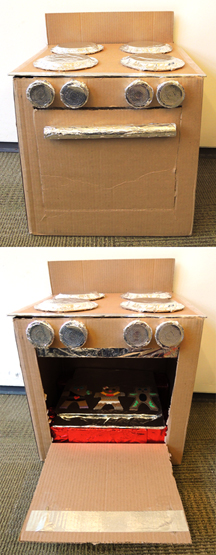
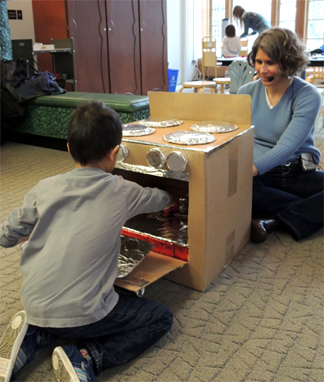
magic ovenOur box was 18.5″ wide x 18.75″ high x 16″ deep. I cut an oven door in the front, and then Katie added a cardboard shelf inside of the oven, a flat range on top (with 4 paper plate burners), and a splash guard on the back. She tricked it out with red cellophane “heat,” tin foil highlights, and beverage lid knobs faced with large silver embossed foil seals. The over door handle was a paper towel tube wrapped in foil and attached to the door with brass fasteners.

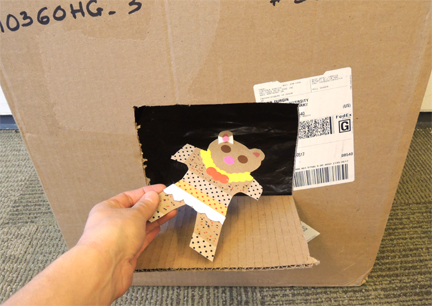
The “magic” part of the oven was a small door, cut in the back. This is where I would sneak the cookies in, making them appear magically on the shelf.

magic doorI borrowed a call bell from the library’s circulation desk to act as the oven’s “timer.” During the story time activity, kids wrote their names on the backs of their cookies, then piled the cookies in a big tub next to the oven. Then they sat in a semi-circle around the oven, wearing their mitts and holding their trays.

I would grab a cookie from the tub, silently read the name on the back, and sneak it into the oven. Then I would shout “Dan! Your cookie is ready!” and briskly ding the call bell. Dan would run forward, open the oven, hustle his cookie out, and run back to his place in the semi-circle. We kept going until all the cookies were claimed!

magic oven in use

Herbal Magic

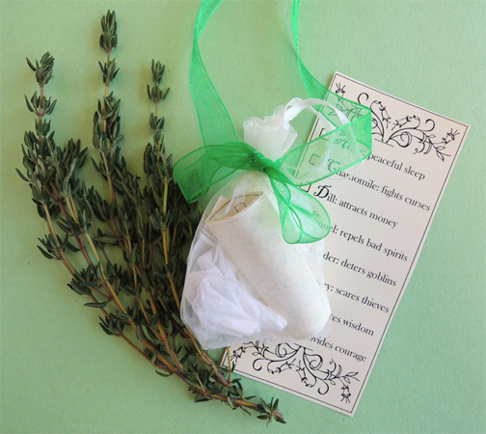
amuletHave issues with goblins? Need a peaceful night’s sleep? Are you seeking wisdom and courage? This herbal amulet is just what you need! We made these amulets at a Robin Hood/ medieval history event, but they would also work splendidly at a Harry Potter program.

You’ll need:

  • A 3.5″ mini organza drawstring bag (I bought mine at Oriental Trading Company)
  • 1 tissue (I used the smaller, 8″ x 8″ square kind)
  • herbal amulet list template, printed on 8.5″ x 11″ paper
  • A 30″ piece of ribbon or string
  • A selection of dried herbs (more on this below!)

After doing a little research on medieval herbal lore, we created a list of herbs and their purported properties. I purchased the herbs in bulk at my local natural foods store, which was much cheaper than buying them in individual bottles.

scrollAt the event, kids checked off which herbs they wanted in their amulets. Then a student volunteer helped the kids put dried herbs on squares of tissue. A little herb goes a looooong way, so just a sprinkle is needed – especially if kids select multiple herbs. Here’s about how much you want in your amulet in total:
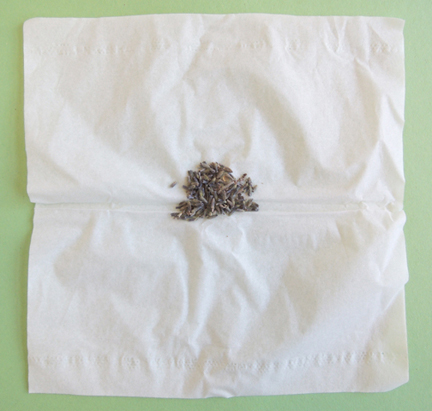
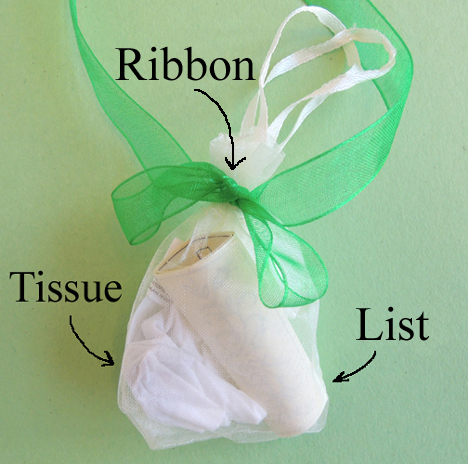
tissue and herbsNext, bunch the tissue around the herbs and slide the bundle into a mini organza drawstring bag. Roll up the herbal list and slide it in the bag too. Tighten the drawstring and tie a 30″ piece of ribbon or string around the top of the bag. Hang the amulet around your neck.

finished amuletThat’s it! You’re now ready to repel bad spirits, fight curses, attract money, and scare away thieves! At the very least, you will smell quite, quite interesting.


Many thanks to the Savory Spice Shop in Princeton for donating the dried lavender in the photo! Mmmm…lavender…

Robots at the Ready

robots at the readyA robot backpack? Yes indeed! Now you and your robot pal can embark on a series of terrific adventures. But the best thing about this story time? The author, Jared Aldwin Crooks, came to read the book to us!

jared aldwin crooksIn addition to penning a children’s book, Jared studied astrophysics, has worked at NASA, and is currently obtaining Masters degrees in International Policy and Mechanical/ Aerospace Engineering here at Princeton University. There’s a short interview with him at the end of this post!We read The Several Strange Adventures of Max and Ding, written by Jared Aldwin Crooks and illustrated by Scott T. Baldwin (Crooks with Books, 2014). Maximilian Finch (Max for short) lives in a sleepy town where not much happens. During school breaks his classmates go to all sorts of exciting places, but not Max. But one Sunday, Max builds a robot named Ding. That week, Max and Ding hit the road – riding paper planes through jungles, climbing mountains, visiting the circus, digging to Atlantis, fishing for treasure, building a bridge to the moon, and discovering new planets. Thanks to his pal Ding, Max now has plenty to talk about!

You’ll need:

  • 1 box for robot body (mine was 4 ½” X 4 ½” x 6” – a small tissue box works too)
  • 1 smaller box for robot head (mine was 2.5″ x 3.25″ x 4″)
  • 1 box cutter
  • 1 small craft stick
  • 2 strips of white poster board for backpack straps (approximately 1″ x 28″)
  • A 20″ piece of mesh tubing (string, ribbon, or yarn works too)
  • 2 rectangles of poster board for arms (approximately 1.5″ x 5.75″)
  • 2 rectangles of poster board for legs (approximately 1.5″ x 11″)
  • Robot decorating materials (we used metallic duct tape, prism tape, tin foil, beverage lids, washed Altoids tins, twisteez wire, sparkle stems, paper cups (in silver and gold), small plastic cups, embossed foil seals, craft ties, dot stickers, rectangular stickers, foil star stickers, color masking tape, balloon stick cups, grey construction paper, embossed foil paper, and mylar).
  • Scissors, tape, and glue stick for construction
  • Markers for decorating
  • Hot glue

To make a robot backpack, cut four, 1.5″ slits in a box. Then, use a small craft stick to enlarge the slits a little (this will make it easier to slide the backpack straps through the slits later).

backpack box slitsSlide the white poster board straps through the slits like so:

backpack strapsNow, holding the box firmly to your back, curl the straps over your shoulders, adjust them, and staple them. Put pieces of masking tape over the staples (thus avoiding staple scratches or clothing snags). Later, when your robot is finished, you’ll want to tie a piece of mesh tubing (or string, ribbon, or yarn) around both straps to keep them from sliding off your shoulders.

strap stepsWhen the backpack straps are finished, you’ll need to hot glue the head, arms, and legs on your robot’s body. You can do that now, or wait until you’ve decorated your robot a little. I offered OCuSoft lid scrub boxes as an option for the robot’s head. As you can see, when covered with tin foil, they look like fantastic smiling robot faces!

ocusoft box headAnother great recyclable discovery? balloon stick cups make great robot antennae holders. I definitely use balloon sticks for projects (see here, here, and here) but I don’t use the cups as much. But a doubled-up sparkle stem fit perfectly in the narrow end of the cup.

robot antennaeFor decorating, we offered metallic duct tape, prism tape, tin foil, beverage lids, washed Altoids tins, twisteez wire, sparkle stems, mesh tubing, paper cups (in silver and gold), small plastic cups, embossed foil seals, craft ties, dot stickers, rectangular stickers, foil star stickers, color masking tape, balloon stick cups, grey construction paper, embossed foil paper, and mylar.

Here’s Jared, his robot, and our program area after our creative little endeavor concluded!

jared and robotHi Jared! Tell us a little about yourself!
Hey there! My name is Jared Aldwin Crooks. I grew up in Fort Worth, Texas before coming to Princeton to get my undergraduate degree in Astrophysics and my Masters degrees in International Policy and Mechanical/ Aerospace Engineering. I have always loved creating things, whether it is some kind of contraption, food, or just writing down all of the things that are in my head. My creative partner, Scott T. Baldwin, and I are always working on a new project or book!

My passion is making the world around me a better place and I believe this can be done through little improvements over time (kaizen). My wife and I started NouriBar, a social venture that makes all-natural fruit and nut bars and for every bar purchased we work with the local communities to feed a child in need a hot meal in school. I also love doing radio and voice work. During my time at NASA, I was one of the narrators for the ScienceCasts! I love to cook and watch great films (Kurosawa, Bergman, Hitchcock).

What were some of your favorite books when you were a kid?
I was constantly reading as a kid. One of my all-time favorite books growing up was a picture book called Corduroy. The artwork seemed to jump out at you on each page and I loved the storyline! Other books that I really loved include any and all of the books from The Little Golden Books series, the Chronicles of Narnia series by C.S. Lewis, The Little Engine that Could by Watty Piper, and the Little House on the Prairie series by Laura Ingalls Wilder.

Why did you decide to write this book?
This book is loosely based on the daydreams that I had growing up. I had always wanted to share the things that had captured my imagination growing up; the stars, building things, wildlife, robotics etc. I also wanted write something to inspire kids to dream big and especially wanted to make sure that young kids of color could see another kid building and imagining things that are not typically represented in stories that are accessible to them. I linked up with my wonderful creative partner, Scott T. Baldwin right at the beginning and he shared the same vision that I had and he illustrated each page to show exactly what we had dreamed; so this is how the book came about!

What was an unexpected difficulty in writing this book?
One surprising difficulty I experienced while writing this book was trying to fit all of Max and Ding’s activities into 7 days! They have so many places to choose from and travel!

If Ding the robot appeared right now, where would you go?
Ding and I would most definitely travel to Cape Town, South Africa and have a swimming contest with a few great white sharks before hopping over to New Zealand and going to all of the Lord of the Rings filming locations!


Many thanks to Jared Aldwin Crooks for sharing his book and being our special guest!