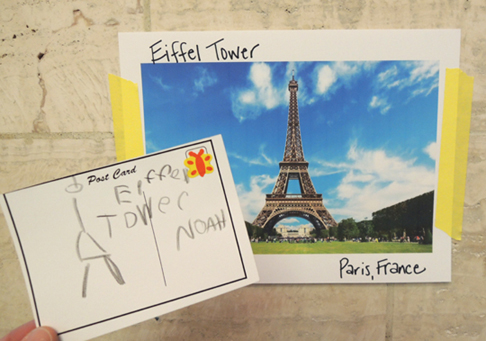
 It’s the ultimate global adventure that ends with custom postcards in your very own mailbox! We made classic blue mailboxes, then visited locations around the globe to create postcards to send home. And don’t forget the stamp!
We read Will Goes the the Post Office by Olof and Lena Landstrom, translated by Elisabeth Dyddegaard (R&S Books, 1994). Will is excited when the post office notifies him of a package that’s arrived from his Uncle Ben. At the post office, he discovers that the package is GIGANTIC! What could it be? With a little help from Karen, Peter, John and Susan, Will and the gang carry the package home and eagerly unwrap it. At first, it seems like the box is just full of paper…but then they discover a fantastic globe packed inside! And the globe lights up! The five children (and Mama) pile in the closet to see Will’s new globe lamp shine.
You’ll need:
- 1 small tissue box
- 1 box cutter
- Blue construction paper
- Blue poster board
- 1 mailbox signs template, printed on 8.5″ x 11″ white card stock
- A selection of
- 4 foam beads
- 1 small piece of drinking straw (ours was 1.5″ long)
- A blank postcards template, printed on 8.5″ x 11″ white card stock
- Print-outs of different locations around the globe
- Small stickers
- Scissors and tape for construction
- Markers for decorating
- Hot glue
This project was created by Katie, and I have to say, the kids absolutely LOVED it. I mean, who wouldn’t love this cute little mailbox? The round top! The feet! The door at the bottom!
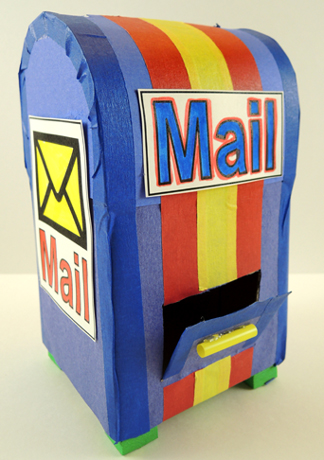 To make a mailbox, cut the top off a small tissue box. Use a box cutter to cut a little door at the bottom of the box. The postcards are 3″ wide, so make sure your door is 3″ or wider.
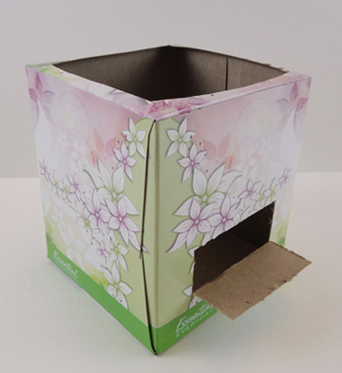 Wrap the box with blue construction paper, then use the box cutter (or scissors) to re-establish the little door.
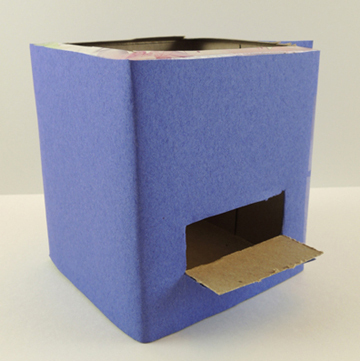 The rounded sides of the mailbox are 2 pieces of blue poster board (ours were approximately 4.25″ wide, and 3.25″ tall). Secure them in place with tape.
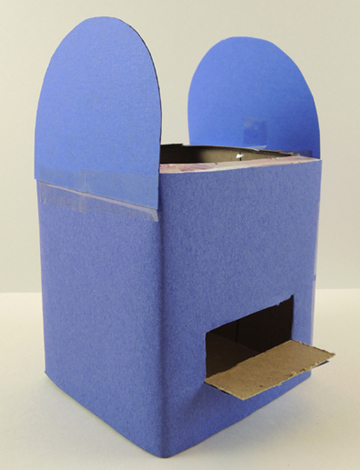 To make the top of the mailbox, cut a 3.5″ mail slot in the center of a 4.5″ x 9″ rectangle of blue poster board. Gently curl the poster board over the rounded sides of the mailbox, then tape in place. The curling and taping is definitely the toughest part of the project. Keep in mind that it doesn’t need to be perfect!
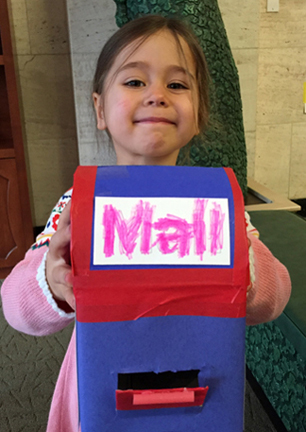
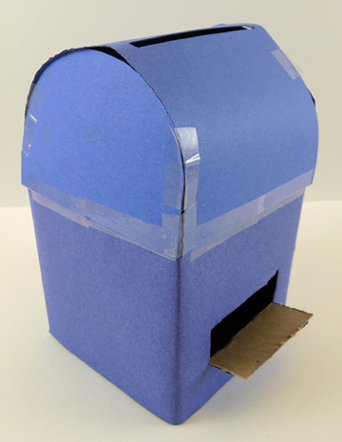 Next, use colored masking tape to reinforce the edges of the mailbox, and to decorate it. Color and cut the mailbox signs from the template and tape (or hot glue) in place.
Finish by hot gluing 4 foam bead “feet” to the bottom of the box, and a small piece of drinking straw to the front of the little door. Your mailbox is done – grab it and get ready to travel!
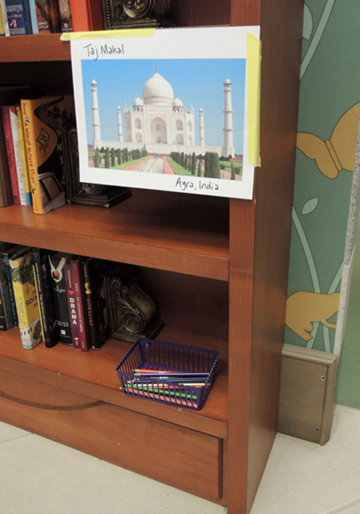
Katie printed up photos of different places (thank you, Google image search!), and taped them up around the gallery. Katie wrote the names of the locations or landmarks, as well as the country, on the photos as well. Underneath each photo was a basket of color pencils.
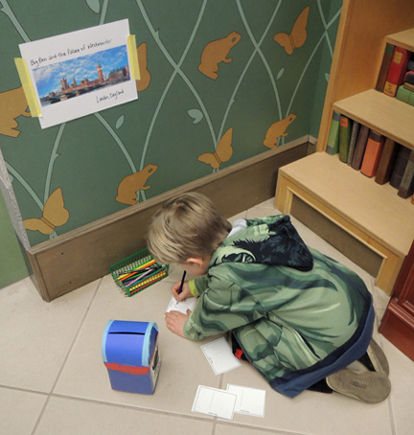
We invited kids to grab 6-8 blank postcards and visit different locations, sketching what they saw in the photos on their postcards. Here’s someone visiting London, England:
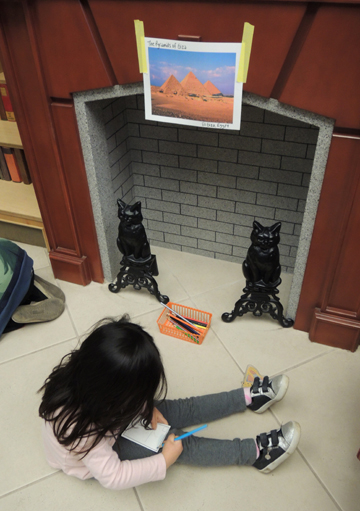
And another traveler enjoying the Pyramids of Giza in Egypt:
Ready to see some postcards from around the world?
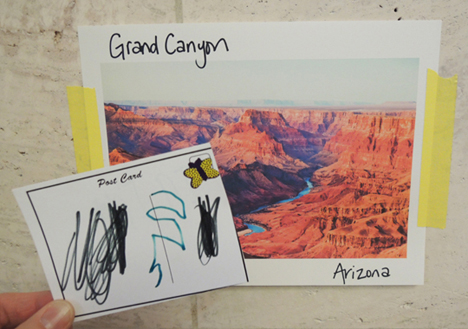
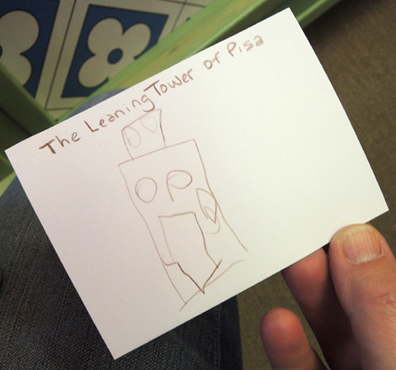
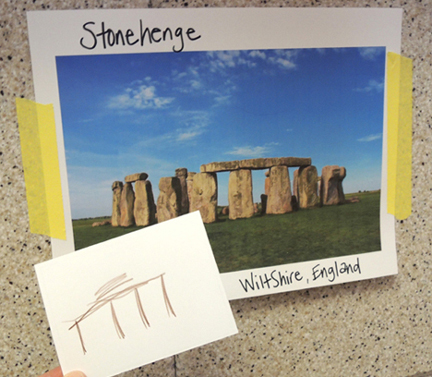
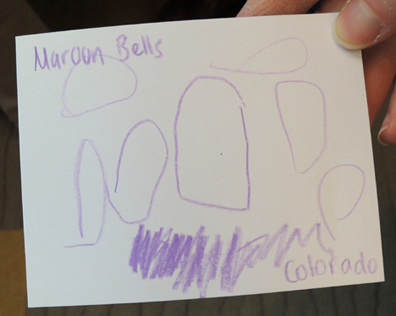
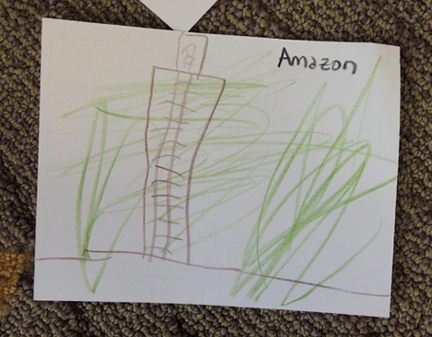
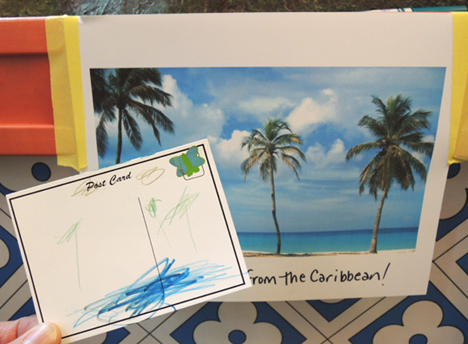 We even got postcards from places we didn’t include! Here’s a postcard from the Amazon, even though it wasn’t one of our photo locations. I think that’s a person on top of a giant tree with a ladder? Cool.
 To make the postcard activity official, Miss Melinda donned a stamp-selling visor and circulated the gallery, “selling” stamps that were actually cute little stickers.
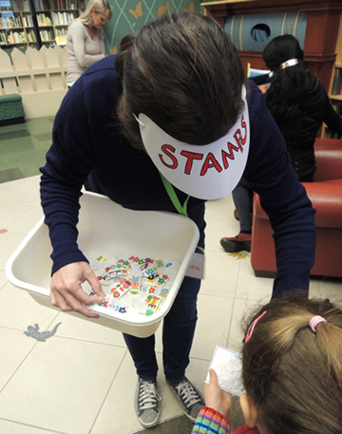
Melinda joined us this fall – she’s a Cotsen volunteer who works at the Princeton Writing Program. I went easy on her the first couple weeks, but slowly, inevitably, Melinda will be drawn into the vortex of ridiculous story time tasks. Today, a visor-wearing stamp seller. Tomorrow, a giant paper cookie!
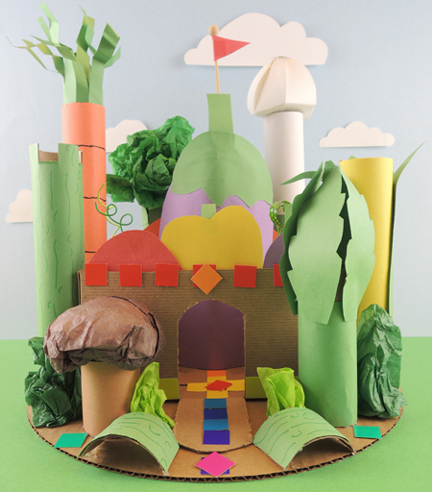 Craft a castle packed with phytochemicals! Behold towers of corn, asparagus, and carrot. Admire the eggplant and pepper wall fortifications. Stride through the cucumber slice gates. Vegetables have never looked so noble!
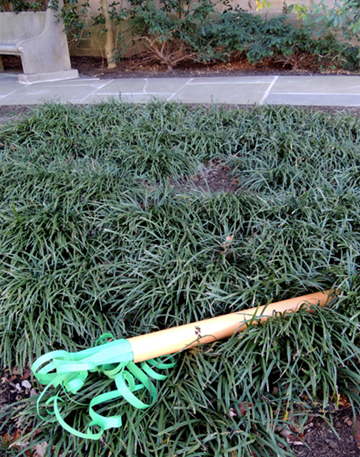
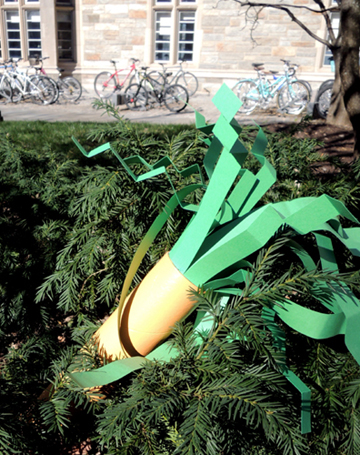
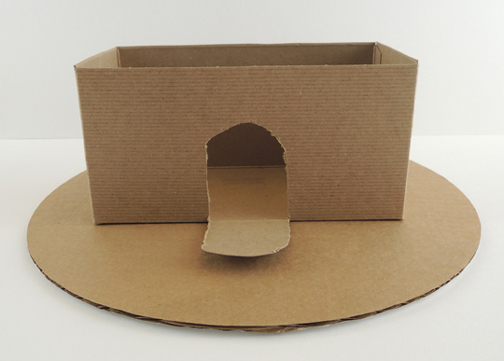 And now for the giant vegetables! Here they are, in no particular order.
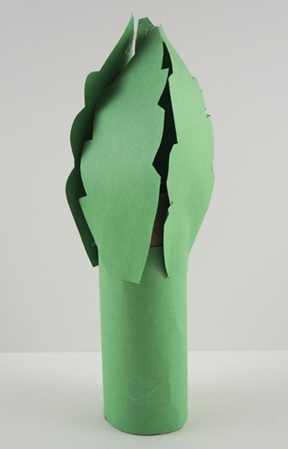 We used a toilet paper tube, but if you want a taller stalk, cut a paper towel tube to the desired height. Wrap the tube with green construction paper. Cut 4 serrated leaves out of green construction paper, and tape (or hot glue) them close to the top of the tube. Pinch the tips of the leaves together, then secure them with tape or hot glue.
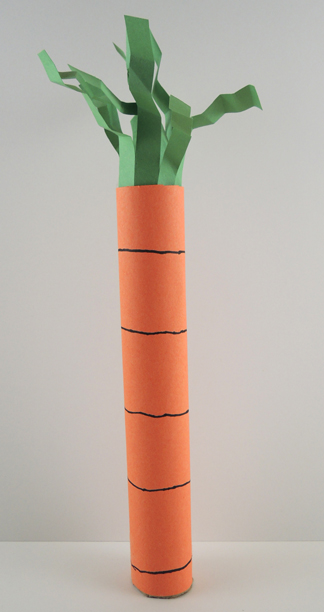 Cut a paper towel tube to the desired height, then wrap it with orange construction paper. Add a little green construction paper fringe to the top. Drawing black lines around the carrot are optional!
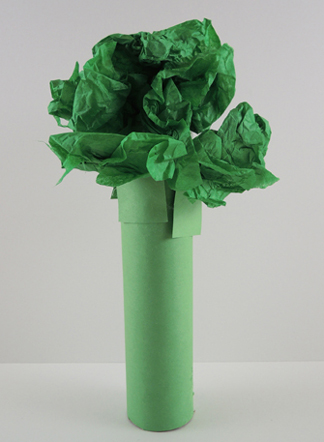 Cut a paper towel tube to the desired height, then wrap it with green construction paper. Crumble up a piece of green tissue paper and hot glue it to the top of the tube. To make the broccoli’s “floretes,” crumble up 4 smaller pieces of tissue paper, then hot glue them to the tops of four, 1.5″ x 2.25″ pieces of green construction paper. Tape or hot glue the floretes close to the top of the tube.
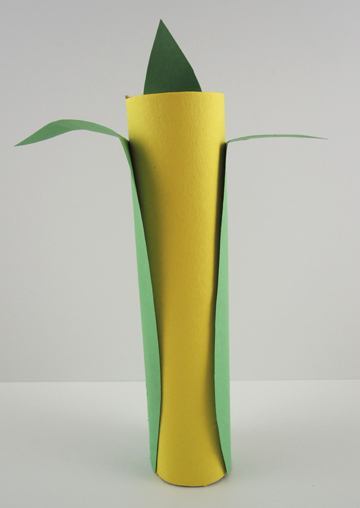 Cut a paper towel tube to the desired height, then wrap it with yellow paper. To make the corn’s “husk,” wrap a piece of green construction paper 3/4 of the way around the tube. Cut three points in the top of the green paper. Attach the husk with glue or tape, leaving the front of the corn exposed.
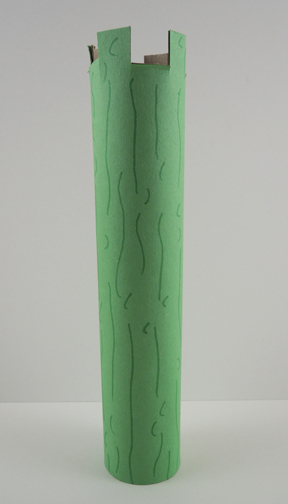 Cut a paper towel tube to the desired height, then wrap it with green construction paper. We cut castle parapets in the top as well. Use a green marker to draw cucumber lines and bumps.
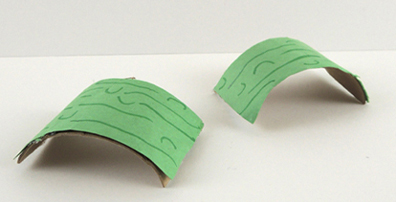 Cut a 1.5″ ring off the top of a toilet paper tube. Cut the ring in half and cover the tops of both sections with green construction paper. Use markers to draw cucumber lines and bumps.
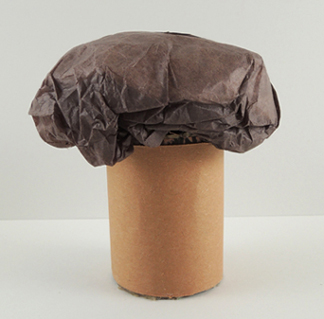 Cut a toilet paper tube to the desired height, then wrap it with brown paper. To make the mushroom’s cap, crumble brown tissue paper and wrap another piece of tissue paper over the crumbles. Squish the tissue paper to make a cap shape, then hot glue the cap to the top of the tube.
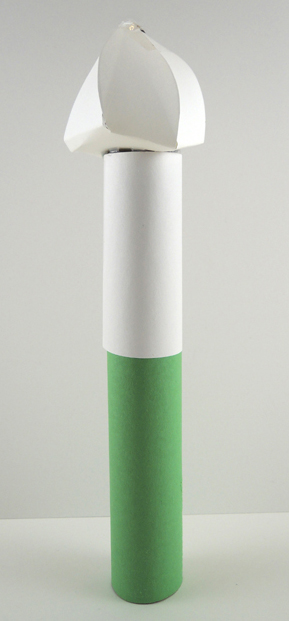 Cut a paper towel tube to the desired height, then wrap it with green construction paper. Next, wrap the top half of the tube with white paper. To make the bulb of the onion, cut the onion dome from the template. As you can see, it resembles a flower with multiple points. Fold each point inward toward the center of the template, then open it back up again.
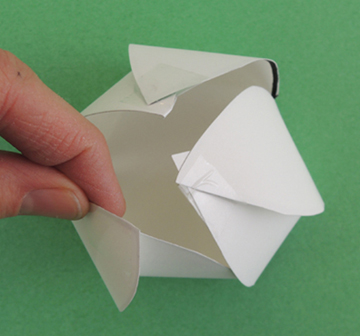
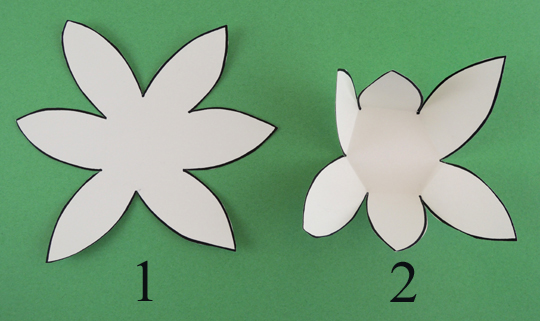 Gather two of the points over the center of the template and tape the tips together. Repeat with the remaining sets of points until you have 3 sets altogether.
 Gently push the 3 sets together over the center of the template, and tape together.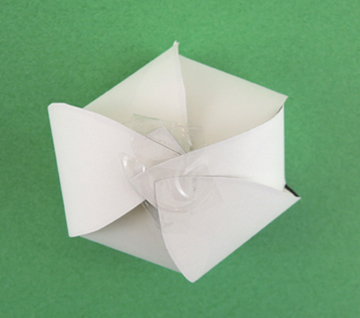
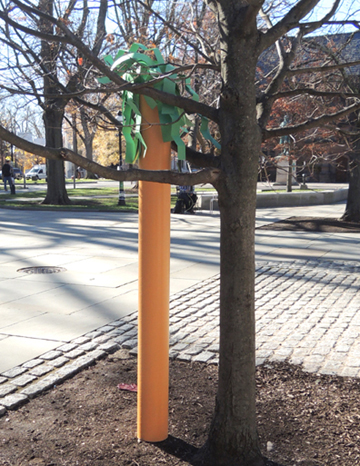
 Carrot, frolicking amidst flowers…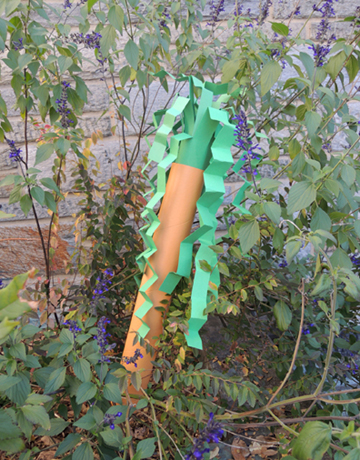
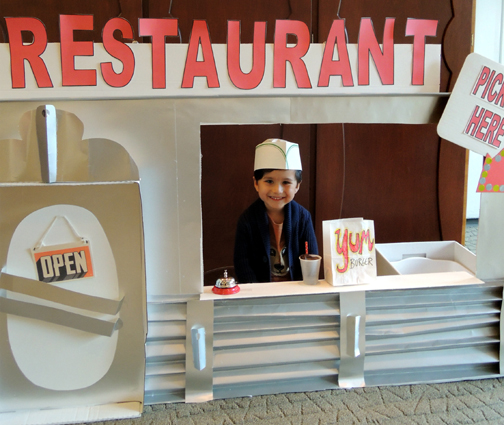
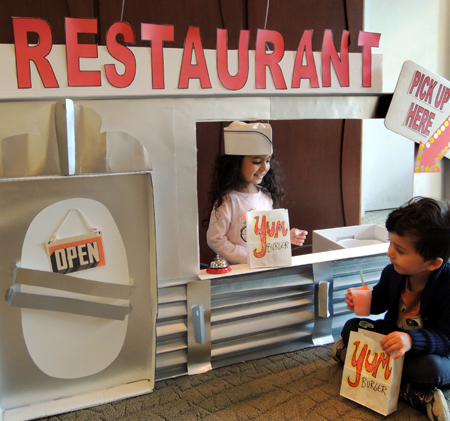 Get your piping hot hamburger, crispy crinkle fries, and ice cold soda served over the counter of this awesome 1950s diner! The cook is taking orders, and our fun matching game insures that your customers will get exactly what they like.
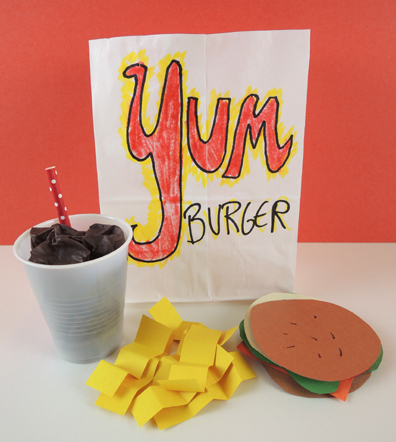 This project consists of 3 paper bags, 3 sodas, 3 sets of fries, 3 burgers, and 3 “customer cards.” First, cut the paper bags down to 7″, then decorate the fronts with your restaurant’s logo. To make the soda, squish three, 9″ x 13″ pieces of tissue paper into 3 small plastic cups. Add a half of a drinking straw to each cup (our straws were 4′ long). For the fries, accordion fold 1″ x 3″ pieces of yellow construction paper. We’ll get to the burgers in just a moment.
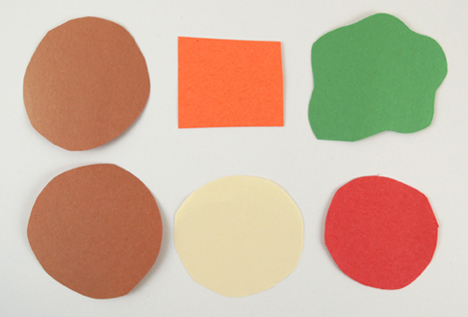
 Now for the matching burger! Each burger consists of 6 pieces of construction paper: 2 brown buns, 1 slice of cheese, 1 lettuce leaf, 1 tan burger patty, and 1 tomato slice. Since you’re making 3 burgers, you’ll need 3 sets of those 6 pieces.
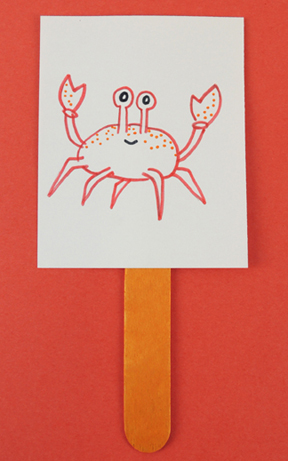
 To customize the 3 burger patties, draw what each creature eats on a patty. For example, one of our creatures is a crab. Among other things, crabs eat fish parts and algae. So we drew them on the burger patty (here’s a
 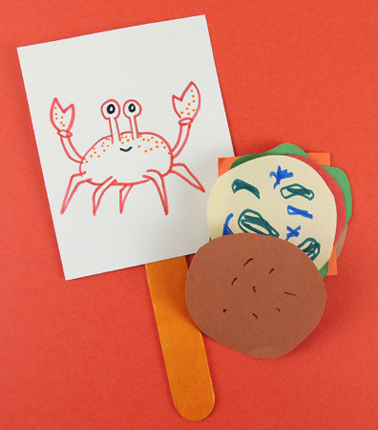 Use
Use 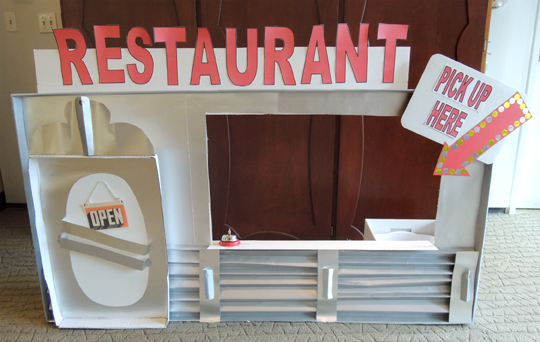 This diner is Marissa in all her awesomeness. The front is a recycled box lid (first used for this
 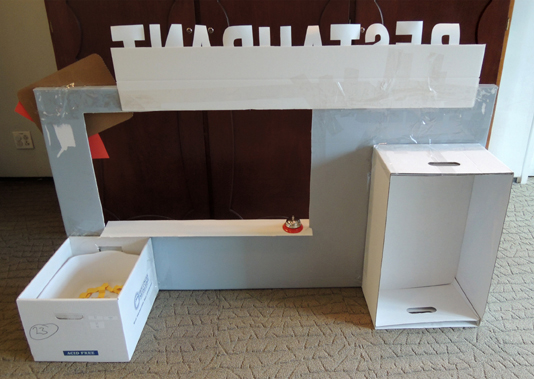 If you don’t have time to make a diner, no worries. Use a tabletop, small desk, or even an overturned box! However, I do recommend including a counter bell (in the past, I’ve borrowed the bell from the library’s circulation desk). Since our bell was going to get repeatedly slammed by kids, I taped it to the counter. You might want to do the same.
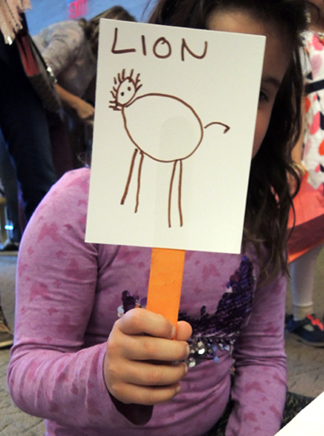 Kids matched the customer to the appropriate burger, took a drink order (we offered cola, lemonade, or orange pop), and grabbed a generous serving of crinkle fries.
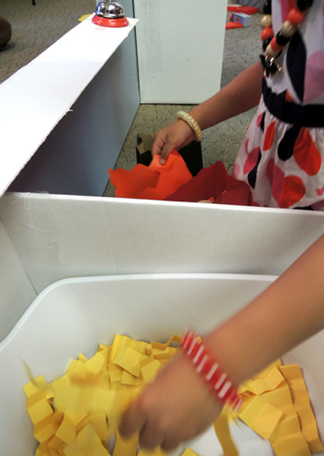 They bagged everything, briskly dinged the bell, and shouted “Order up!” Once that customer had left, it was on to the next customer until every creature had been matched to a burger. Did we have fun? Oh yeah! In fact, we left the diner up for 20 minutes after story time for repeat customers. There was lots of enthusiastic bell dinging and BIG smiles!
 Want to supersize that? Check out these