When the pumpkins begin to grow ripe on the vine, my thoughts always turn to my favorite spooky story since childhood, Washington Irving’s The Legend of Sleepy Hollow. I’ve always wanted to visit Sleepy Hollow and walk across that famous bridge, and this past weekend, I got my chance!
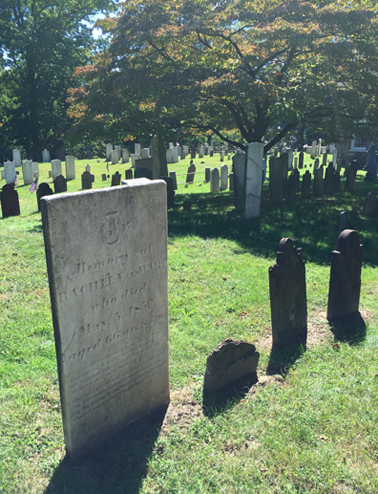
The tale was first published in 1820, and begins in Tarrytown, New York, on the banks of the Hudson river. Sleepy Hollow is a quiet glen a few miles away. Tarrytown most definitely exists, and North Tarrytown was officially renamed Sleepy Hollow in 1996. Here you will find all the famous sites, such as the cemetery where the Headless Horseman is said to materialize.
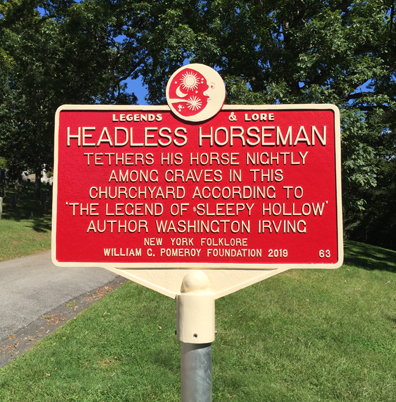
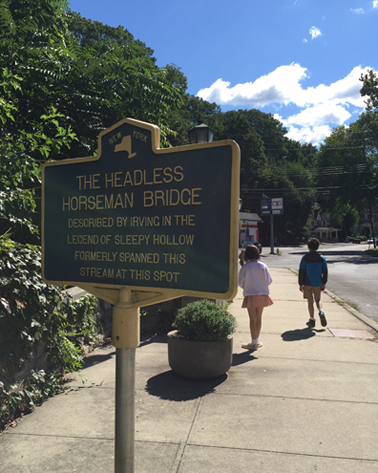
I love the graphics on top of this historical sign…
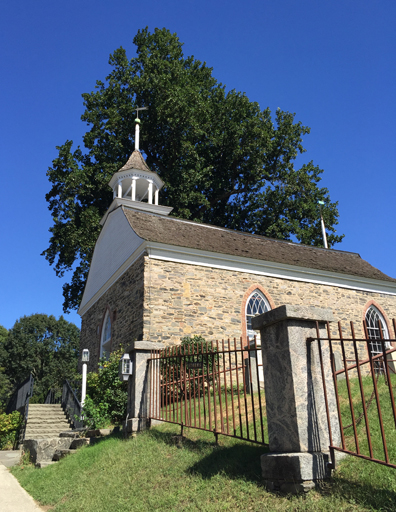
 The churchyard is part of the Old Dutch Church of Sleepy Hollow, which was constructed in the 17th century. Featured in Irving’s short story, it’s one of the of the oldest churches in New York State.
 From the church, we headed down to the FAMOUS BRIDGE. Which, as it turns out, is the “is the most popular destination in Sleepy Hollow that doesn’t exist.” Because the simple 1700s wooden bridge that inspired Irving has long since disintegrated (you can read a little more bridge history here).
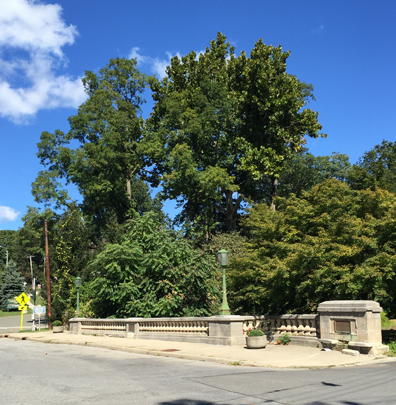
 The bridge is located in a pretty major intersection with a gas station nearby. So it’s almost a blink-and-you’ll-miss-it historical literary moment. Here’s the bridge as it stands today…
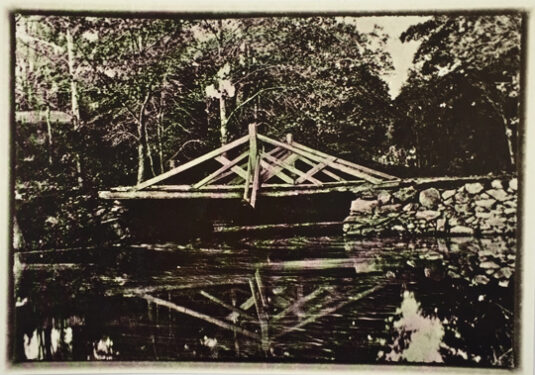
And here’s a postcard image of the historic bridge! With the logs, the stonework, and the silken water…you can absolutely imagine being clocked by a pumpkin at a ghostly hour.
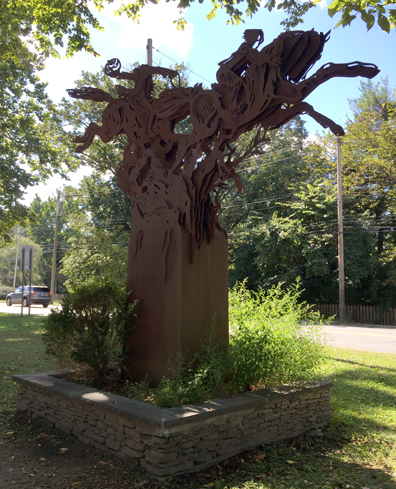
 Not far from the bridge is the town’s official statue, depicting Ichabod’s fatal race home. This was a bit of a surprise too. I expected something more traditional. But I like the metal layers on this interpretation – they’re almost like a paper cut silhouettes. Unveiled Halloween 2006, the statue was designed by artist Linda Perlmutter, and fabricated by MILGO/BUFKIN.
The Sleepy Hollow cemetery, church, bridge, and statue are all across the street from the Philipsburg Manor Upper Mills, which is a restored 18th century living-history museum (you can read more here). It’s currently closed for restoration work.
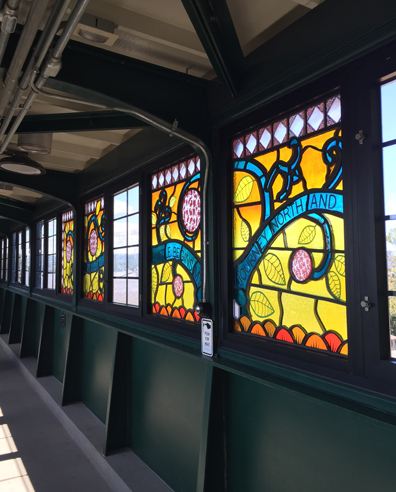
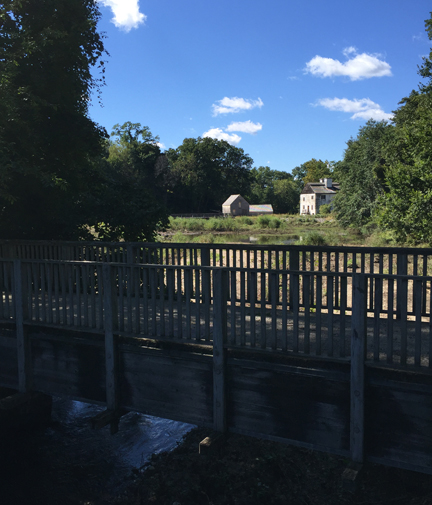 We also got an unexpected surprise at the nearby Philipse Manor train station, which operates on the Metro-North Railroad’s Hudson Line. The station’s pedestrian bridge had really cool stained glass windows…
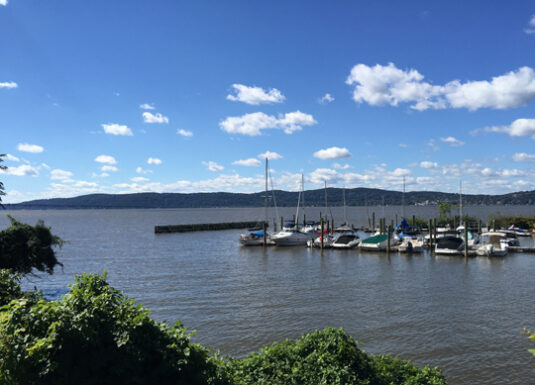
 And check out the VIEW of the Hudson River on the other side!
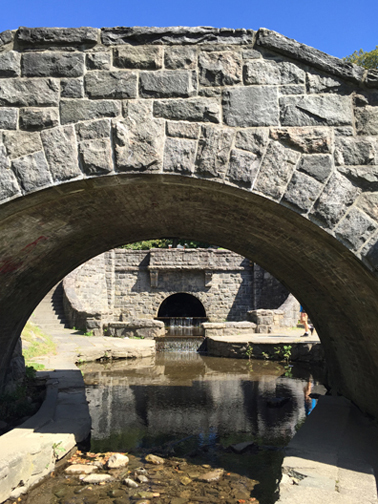
I also recommend heading to Patriot Park, which is on the border of Sleepy Hollow and Tarrytown. It boasts stone bridges, staircases, and water. And plenty of green space to run around on!
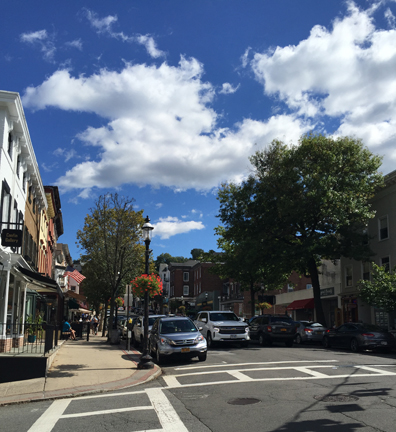
 At this point, we were getting hungry, so we headed over to Tarrytown for some bites. Main Street was charming, walk-able, and there were plenty of eateries to chose from.
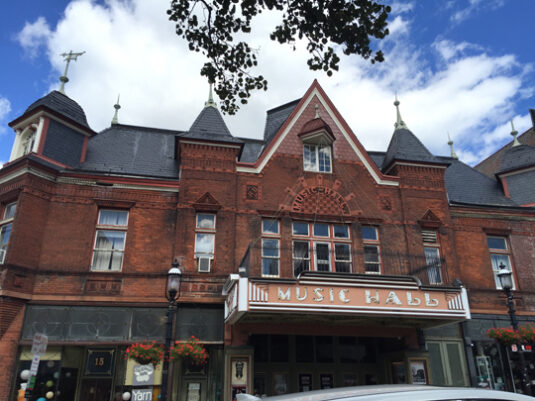
 One other building of note is the historic Tarrytown Music Hall, a 136 year-old historic theater. Supposedly haunted, and yes, they DO have ghost tours. And yes, I’m definitely kicking myself for not thinking of buying tickets in advance of my trip!
 The sun was starting to set as we headed back to New Jersey with haunted places still on our minds. This Halloween, when I revisit Irving’s tale, I’ll actually be able to say that I’ve walked through the cemetery, stood next to the church, and crossed the bridge! How awesome is that?

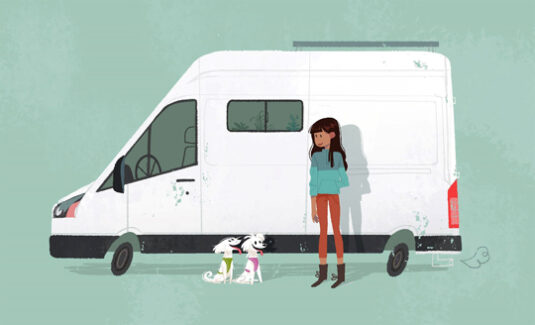 Get ready to be amazed… this studio is on wheels! Today, we’re visiting Stevie Lewis. For half the year, Stevie, her partner, and her dogs (Kiki and Tigger, seen smiling above) travel to hiking and rock climbing destinations. And Stevie takes her work with her in a sweet van she customized herself! An animator for four years, Stevie has also illustrated a number of beautiful picture books. Her newest releases, I Am Thinking My Life (Bala Kids), and We Are Better Together (Henry Holt) will be available in 2022.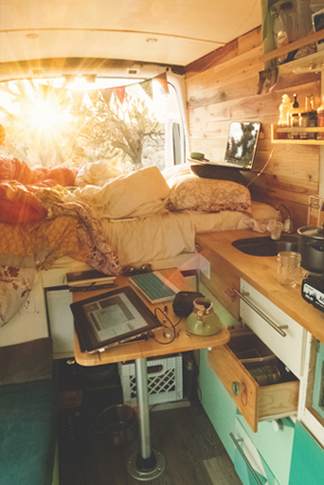
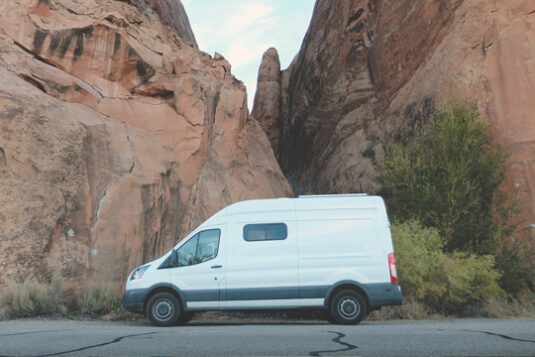 Picture 2: Having a van home makes traveling feel very comfortable. I can park anywhere, and gather endless inspiration from the outdoors. Here’s the van parked off a road in Moab, Utah, where I enjoyed painting and drawing in the desert.
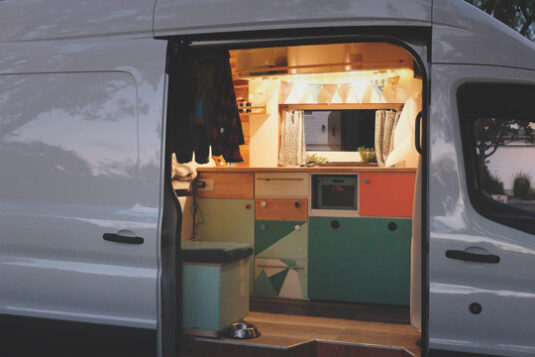 Picture 3: Another view of the kitchen/studio/living room area. It’s so important to stay organized living in such a small space!
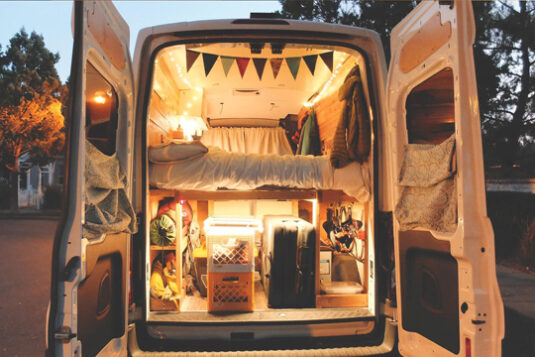 Picture 4: The trunk is where we keep our outdoor climbing, camping, and biking gear, as well as any art supplies I bring on the road with me.
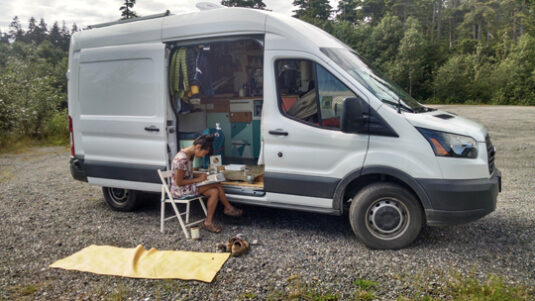 Picture 5: Sometimes I”ll bring my art outside, and use traditional mediums like color pencil and gouache. I can’t bring too many supplies with me on the road, but I can manage a few paints and pencils! I’m looking forward to having a real, non-moving art studio someday!