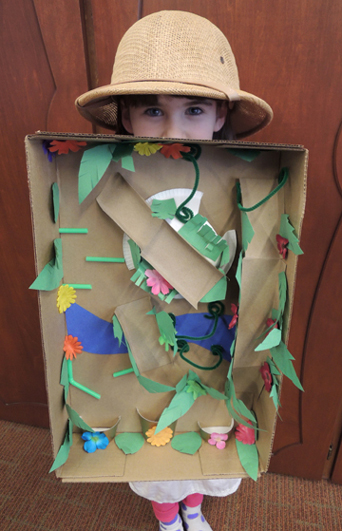
It’s a jungle out there, but we bet you can safely navigate your bouncy ball up ramps, over bridges, past drinking straw obstacles, and through pipe cleaner wickets to the goal!
We recommend reading The Zabajaba Jungle by William Steig (Farrar, Straus and Giroux, 1987). In a dreamy, dangerous journey through the Zabajaba jungle, young Leonard and his trusty bolo encounter a number of jungle creatures and treacherous obstacles. A Steig classic.
You’ll need:
- 1 copy paper box lid
- Construction paper
- Drinking straws
- Green pipe cleaners
- Paper cups
- Paper bowl
- Poster board or tagboard
- Scissors, tape and/or glue for construction
- Hot glue (optional)
Our jungle game is a copy paper box lid with as many (or as few) obstacles for you to navigate a ball through. We used bouncy balls – I bought a 6-pack for $1 at our local dollar store. Here’s our basic jungle:
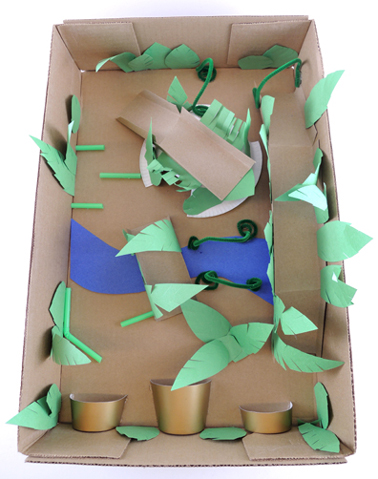
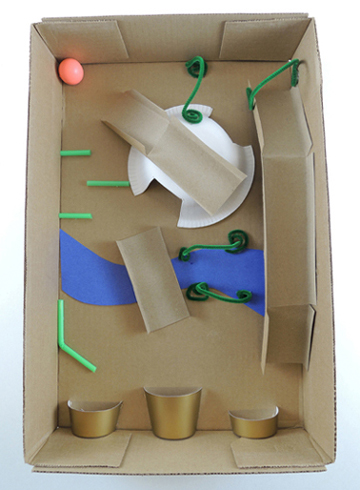 As you can see, we had a paper bowl tunnel, a bumpy drinking straw “path,” green pipe cleaners acting as vine wickets, and a blue construction paper river. We used tagboard to make a bridge, as well as a ramp and an elevated pathway. At the bottom of the box lid are the “goals”…paper cup halves cut down to various heights. Want to fill things out a little? Add construction paper foliage:
 You can also add fabric (or construction paper) flowers for some pops of color!
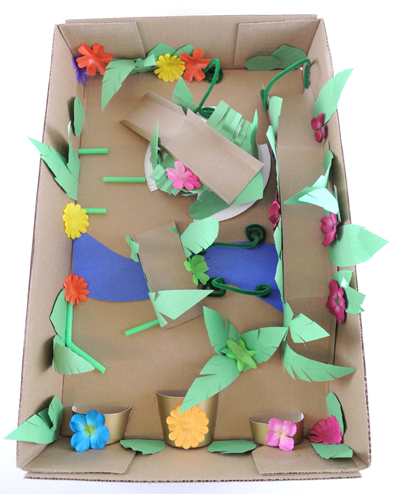 To play, drop a bouncy ball in anywhere, then navigate through the obstacles and foliage by tilting and turning your box top. The ball goes in a cup, you win! Bonus fun – use multiple balls at once, or play with one kid at each end of the box top!
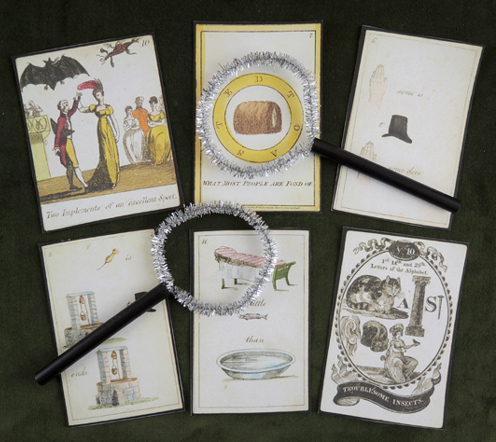 Calling all consulting detectives…grab your sparkle stem magnifying glass and examine this most intriguing collection of 18th and 19th century puzzle cards. And, while the individual man is an insoluble puzzle, the answers to these cards are at the end of the post (and you can print a set of your own)!
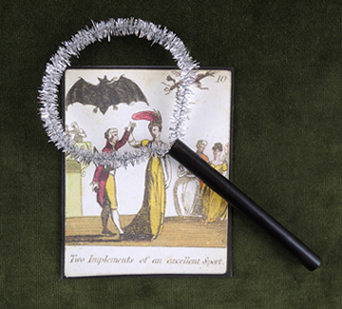 And what of those curious cards? They are reproductions of 18th and 19th century rebus puzzle cards in our library’s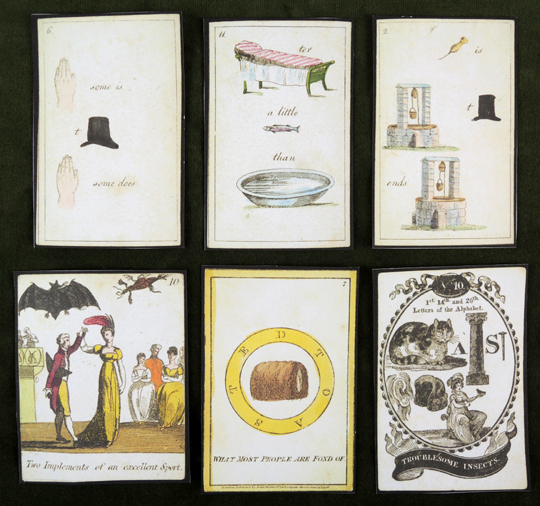
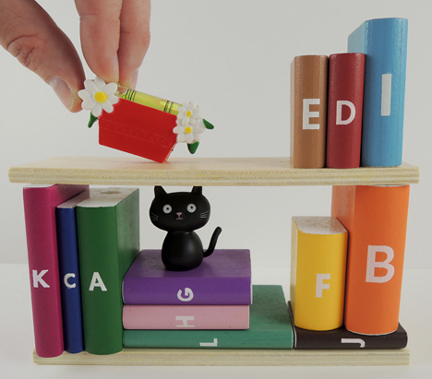
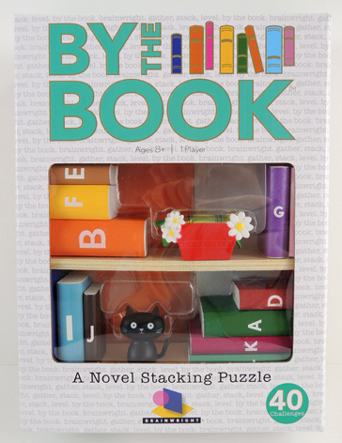 To play, select a challenge card (which are graded as beginner, intermediate, advanced, or expert). The face of the card tells you which books you can use, if they need to be placed horizontally or vertically, or if they can’t touch at all. Sometimes, the card will require the cat to be included on the shelf as well. The back side of the card has the solution. Here are a couple examples of card faces and solutions:
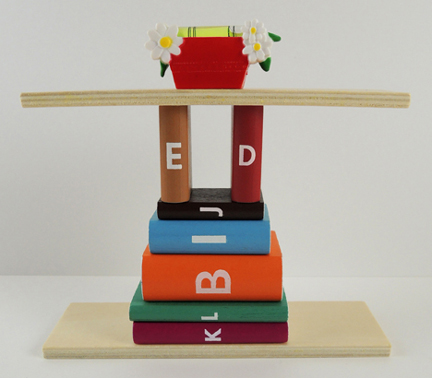
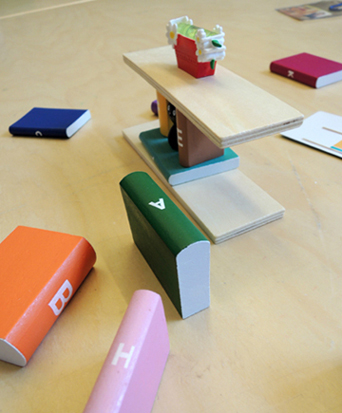
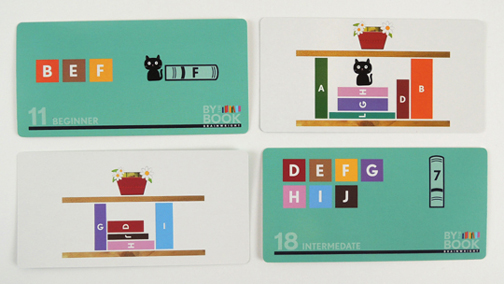 Once you’ve gathered all the relevant pieces, lay the bottom shelf on a level surface, then try configuring the books to the card’s specifications. Put the top shelf in place when you think you’re done, then place the balance level on top to see if your solution measures up. And remember – a minimum of 2 books much be touching the top shelf at any time.