 Q: In a previous post, you mentioned creative programs & projects students have done in the past for your library…can you share some of them?
A: We’d love to! Over the years, we have worked with so many incredibly talented students at Princeton University. From developing in-person community events, to designing exhibits, to headlining blog posts, to working with our young visitors – the students’ energy, ideas, enthusiasm, and dedication is always next level. Need a gang of literary villains? Trying to find the perfect recipe for Pumpkin Pasties? Would you like Alice to read you a chapter from her adventures in Wonderland? Want to learn about cloud science? How about a Rube Goldberg machine? Or perhaps Gandalf can lead you on a quest? Here’s a round up of some of our favorite collaborations on Pop Goes the Page:
MINI GOLF MASTERMIND: RICKY FEIG
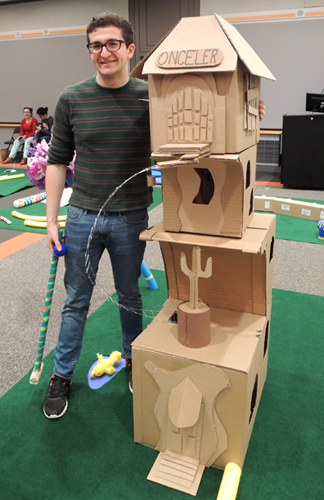 Our Seuss Mini Golf event was fun chaos, but the show-stoppers were the golf holes and magnificent Onceler Tower designed and constructed by Ricky. Legend has it that the Onceler Tower is still standing in a Princeton University campus building (I checked a couple years ago)!
THE MATHAMAGICIAN: CASANDRA MONROE
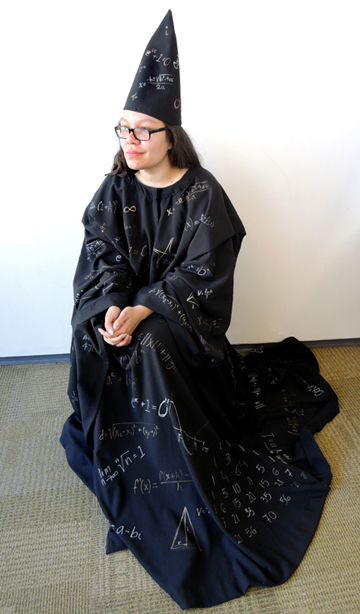 The Day at Digitopolis event was massive (we had to split it into a post 1 and post 2), but a big shout out goes to Casandra Monroe for playfully covering the Mathamagician’s robes with artistic equations. But definitely check out the two blog posts – you’ll also meet Emile Oshima and Rei Mastsuura who ran abacus races, Matt Smith and Demi Zhang who taught musical fractions, and a number of student groups who contributed their considerable skills!
MUGGLE STUDIES 101: TÉA WIMER
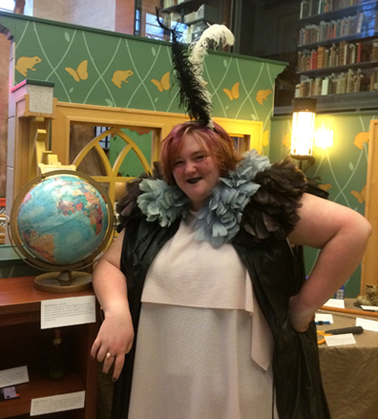
It’s not everyday you meet faculty of Muggle Studies, but Téa was just that! She developed an exhibit for our Wand Works event, and was there to answer even the most ridiculous wizarding questions about the mysterious and mind-boggling world of Muggles.
MAGIC UNLEASHED: JOSÉ M RICO
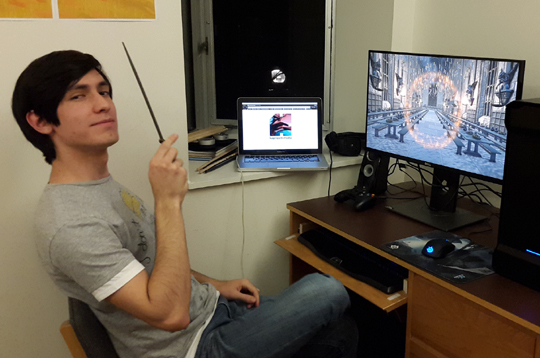
Also part of Wand Works was the insanely talented José, who designed an EPIC interactive Harry Potter spell game and premiered it at the event. You have to see it to believe it. And you can download and play it free here!
LITERAL FAIRY GODMOTHER: SYLVIA JACOBSON
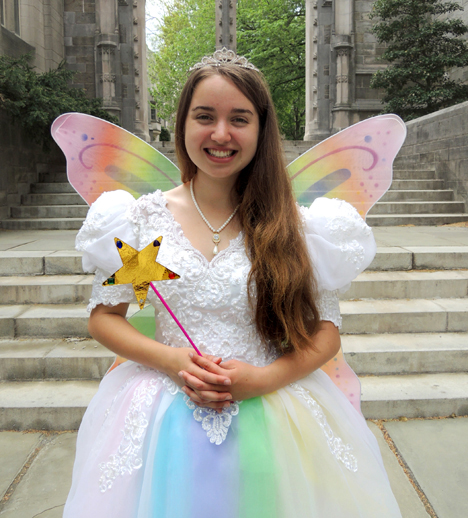 Be careful…this fairy godmother grants wishes EXACTLY as you make them, thanks to Sylvia’s tongue-in-cheek literalness and rainbow wings. An oft-requested visitor at our children’s literary society, she wielded her star wand with grace and a wicked sense of humor!
DESIGNER TO THE (LITERARY) STARS: JAMES JARED
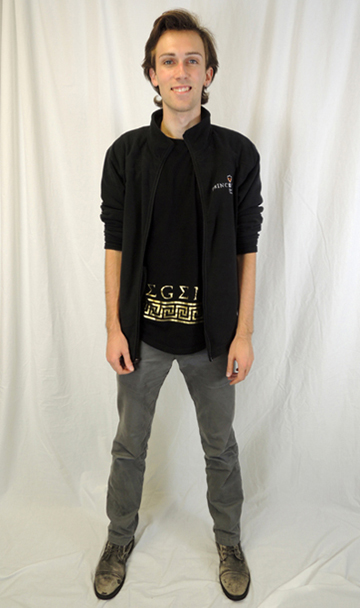 This particular post shows up on our favorite lists a LOT. James had 180 minutes to costume as many literary characters as he could at at local thrift store. Spoiler alert…he rocked it. The post also features student models Amanda Blanco, Ailyn Brizo, Joani Etskovitz, and Grace Turner, who were simply amazing!
THE ARTIST EXTRAORDINAIRE: ALIISA LEE
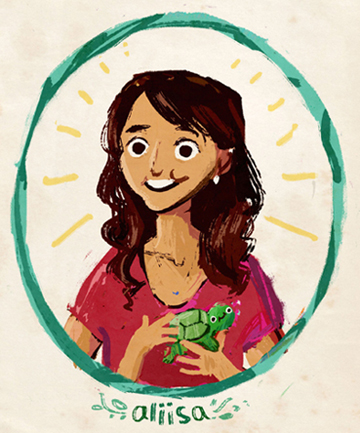
The most magical thing about this student? She still works for us! Artist Aliisa Lee was a student illustrator at our library for four years, and in that time she contributed everything from thaumatropes, to literary Pokemon, to book perps, to the logo of our podcast! Aliisa is also the official illustrator of our annual 350 for 50 writing contest, which is currently in its 15th year. We love you Aliisa!
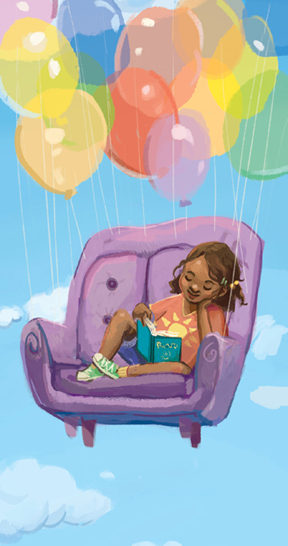
Also! Starting off the blog post was Jared Crooks, an undergraduate AND grad student in science who not only wrote a picture book, he came to our story time to share it and build awesome robots.
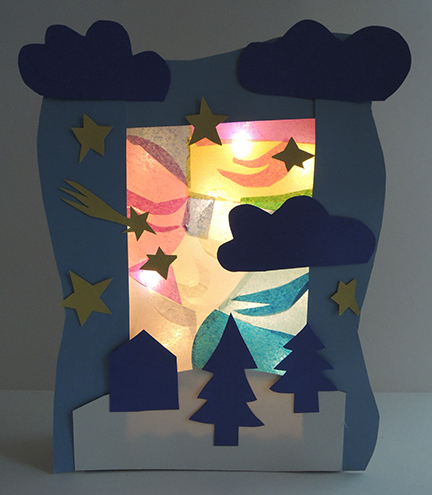 It’s a simple project, but oh-so-beautiful! Design your own aurora borealis in Arctic skies, then light it up for a creative and colorful glow box!
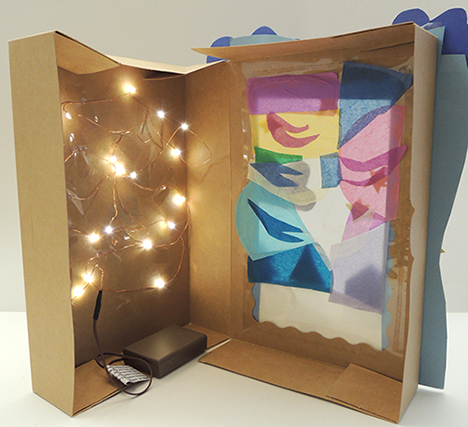
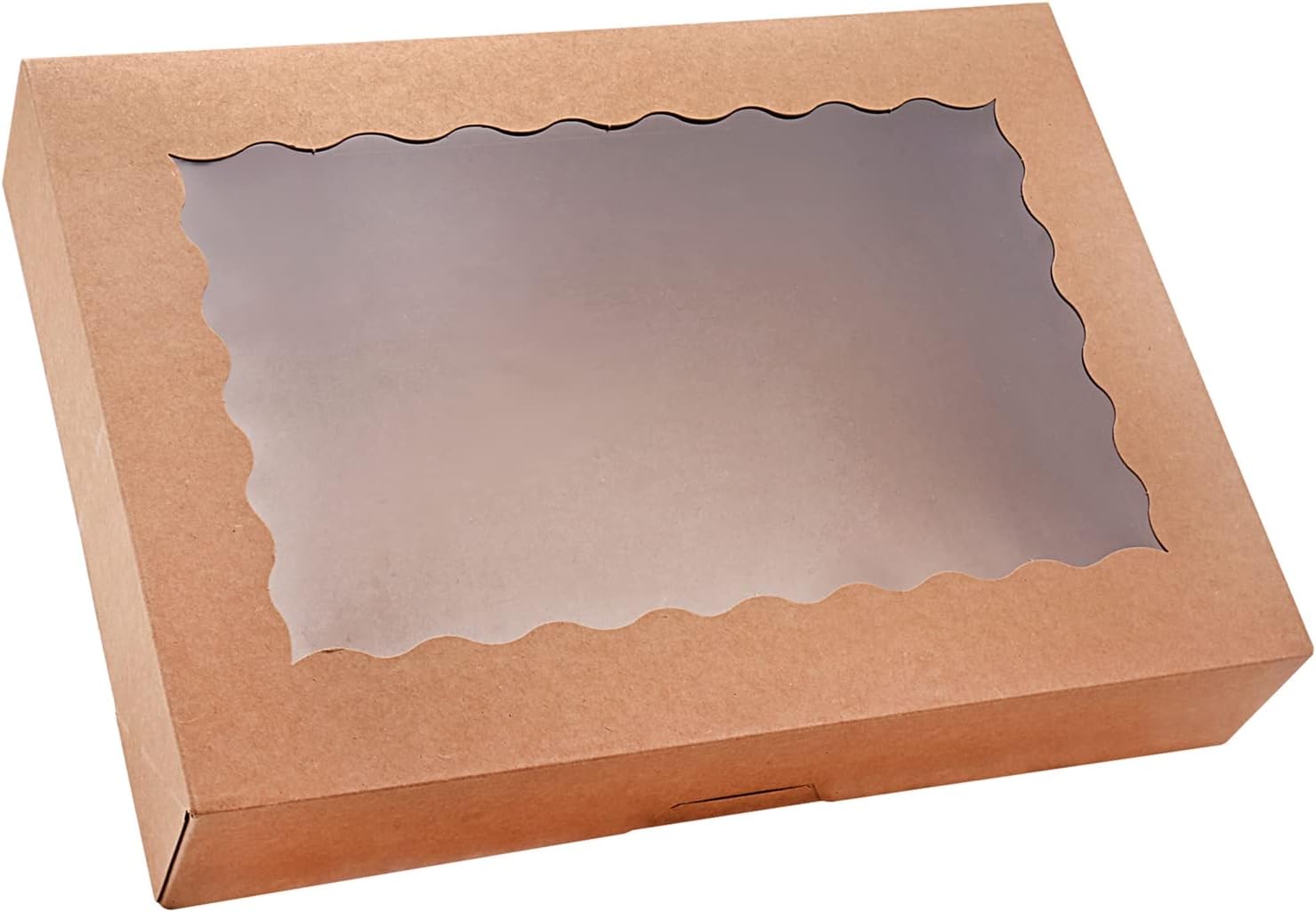 Now for the aurora borealis! Open the box and glue tissue paper snippets on the interior side of the window. We found glue sticks to be the best way to adhere things, because you can clearly see the glue going on and it dries clear! When the sky is finished, tape a string of LED mini lights to the back of the box like so:
 Close the box and use poster board to create a landscape on the front of the box. We used cool Arctic colors: light blue, dark blue, yellow and white. The boxes turned out great…especially this one with a FLYING UNICORN!!!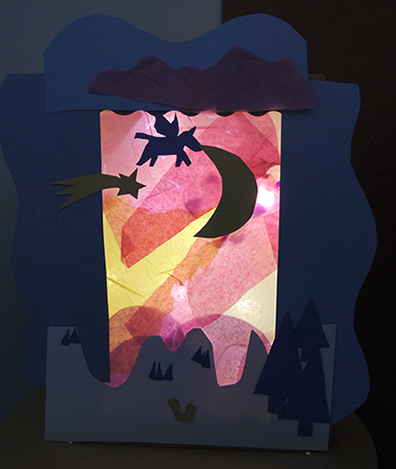
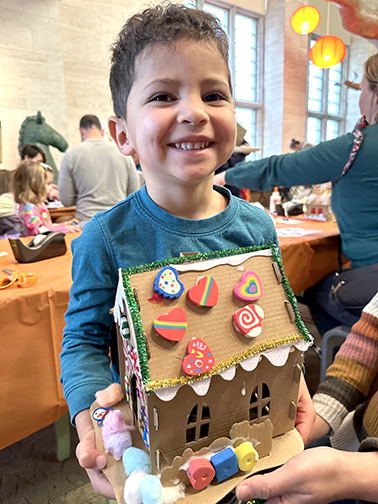 Recently, we coordinated a very special program celebrating the opening of our
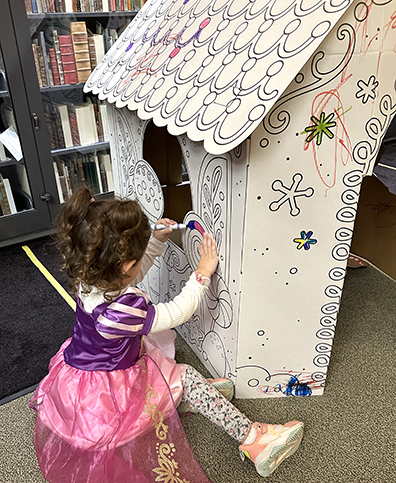
 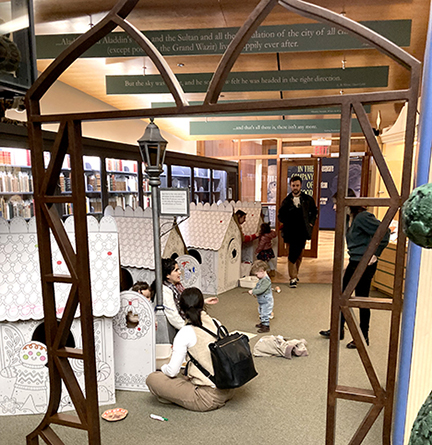 All four houses included plenty of markers for decorating, a task many artists took very seriously, spending at least an hour concentrating mightily…
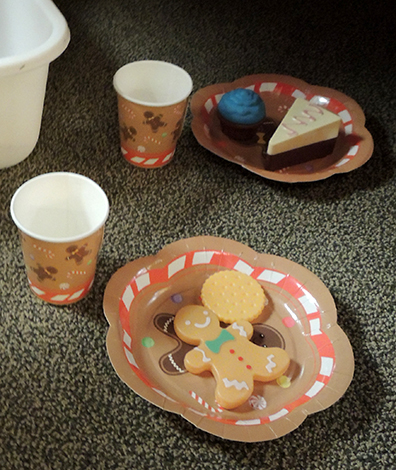
 Inside the houses were cute paper gingerbread plates and cups (set of 24 pieces for $15 on Amazon), as well as a couple plastic cookie sets (65 piece set $15 on Amazon):
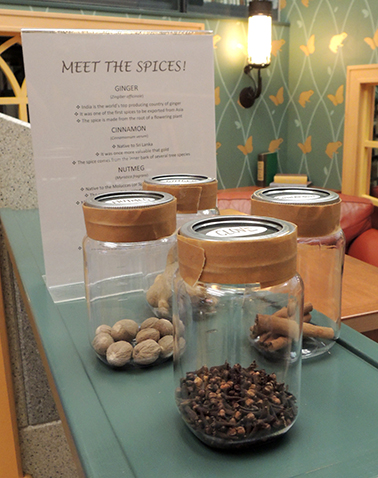
 Elsewhere in the gallery was a mini exhibit on “Gingerbread Geography.” We pinpointed different locations on a world map that highlighted the origin of various ingredients, some fun facts (example: Shakespeare mentioned gingerbread in Love’s Labour’s Lost!), and a take-home copy of Mary Ball Washington’s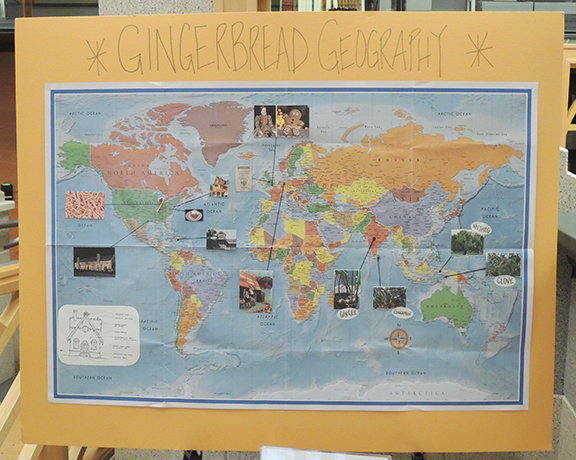
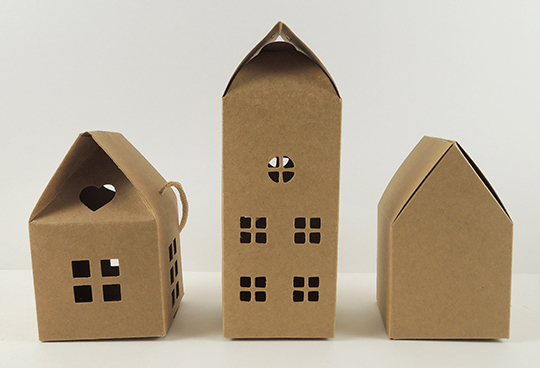
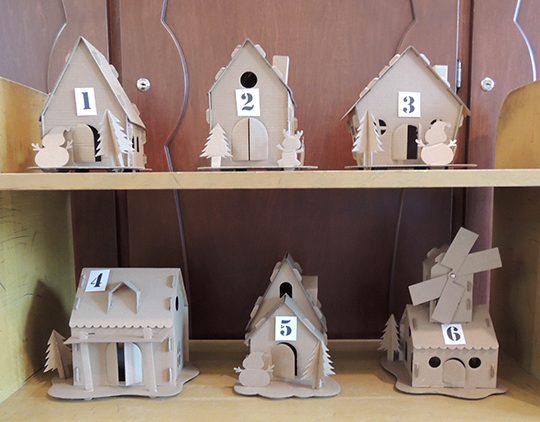 Since the sets arrived with a tiny photo label and no instructions, we built one of each to display. Kids picked the one they wanted, and we handed them the set to build from scratch! For those who wanted a more basic build, we offered three options, also purchased from Amazon (left house was 15 for $12; middle house was 50 for $12; right house was 50 for $25):
 Once the house was assembled, families headed to our craft section to load up on decorations! We offered white self-adhesive foam sheets, tons of candy stickers, mini pom-poms, cotton balls in various colors, heart erasers, sparkle stems, striped straws, plastic peppermints, ric rac ribbon, foam beads, and mini plastic candy canes.
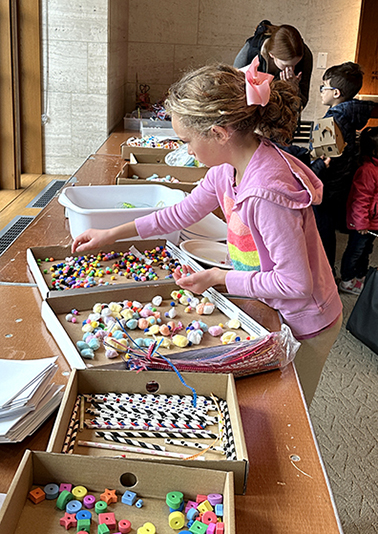 The workshop area was stocked with scissors, markers, tape, and glue, but we also had a hot glue station running for trickier pieces. The results were full of variety and creativity, as you can see from the gallery below!
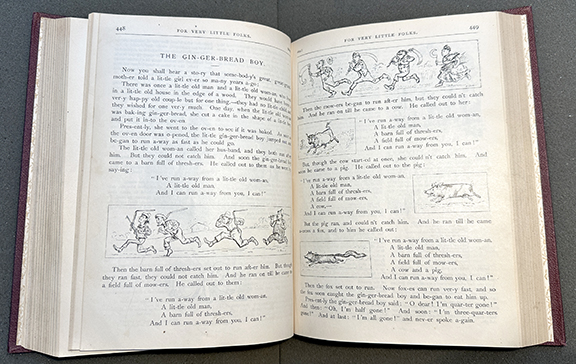
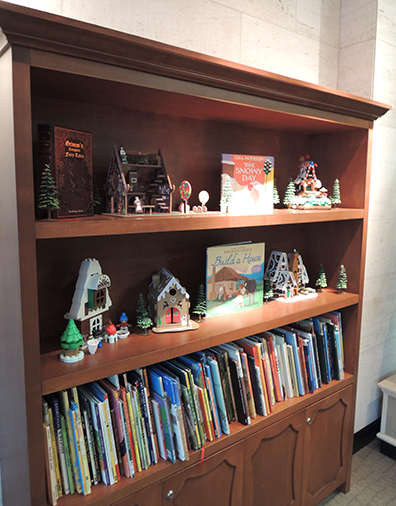
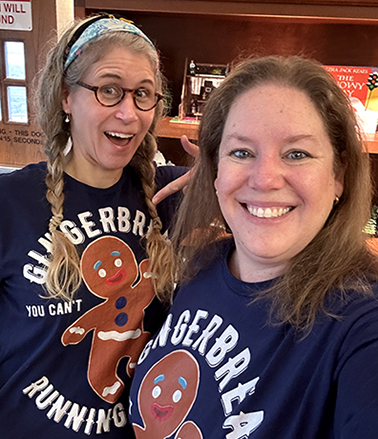 What’s really cool is that the shirts are a literary nod to “The Gingerbread Man,” which was originally printed as “The Gin-Ger-Bread Boy” in St. Nicholas Magazine in 1875. And yes, we did have a copy in our