 Calling all adorable bumble bears! Today we’ll be sharing the details of our Teddy Bear Picnic baby event. It was crowded, chaotic, happy, and messy. In short, stupendous!
As I mentioned in the sneak peak, we offer a regular weekly baby social hour in which we bring out soft vinyl obstacles, toys, tents, and manipulatives for kids ages 0-2 to explore with their caregivers and peers. The goal is for babies to be active and social, all the while building motor, concentration, and vocabulary skills through free play.
We followed this same format for our Teddy Bear Picnic event, but the fun was in designing a woodsy-themed playscape for the babies. We aimed for activities and manipulatives that complimented this phenomenal range of physical and mental development in children.
LOG BRIDGE
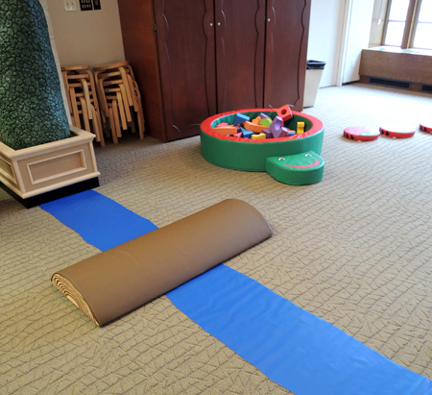
Locomotion – namely wiggling, rolling over, crawling, and walking – are the hallmarks of this age, so we included two balancing activities at the event. The first is this vinyl log bridge, which could be treated like a balance beam or a speed bump. The “creek” is a roll of contact paper we stuck to the carpet. It took about 5 minutes for the contact paper creek to get pulled off the floor and totally crumpled. So…we won’t be doing THAT again, unless the contact paper is stuck to a harder floor.
STEPPING STONES
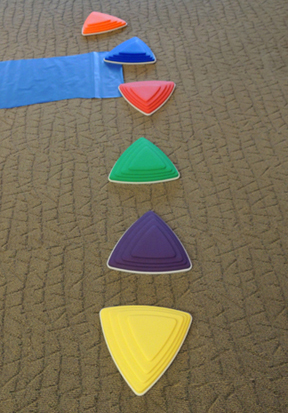 These non-skid stepping stones were our second balancing activity at the event (and you might recognize them from this post about our most popular toddler activity of all time!). Though some kids were flipping the stones over and using them as trays to carry things around!
TURTLE POOL
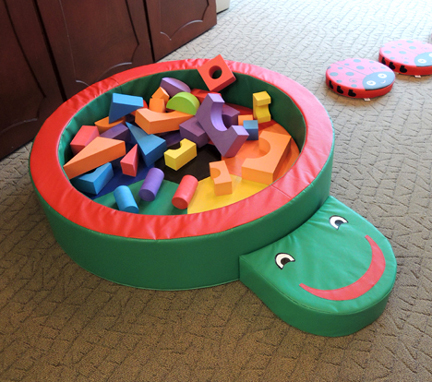 This turtle, and the foam blocks inside it, are the STAR attractions at our weekly program. There is literally a baby stampede every time we bring it out. The colorful padded mat inside, the 9.5″ walls, the smiley face that also acts as a step, it’s perfect.
LADYBUG CUSHIONS
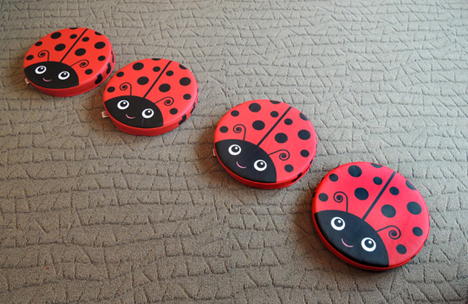 Light, round, and with striking contrasting colors….perfect for tummy time and crawling babies! For the older kids, they became picnic companions!
TREE TENT
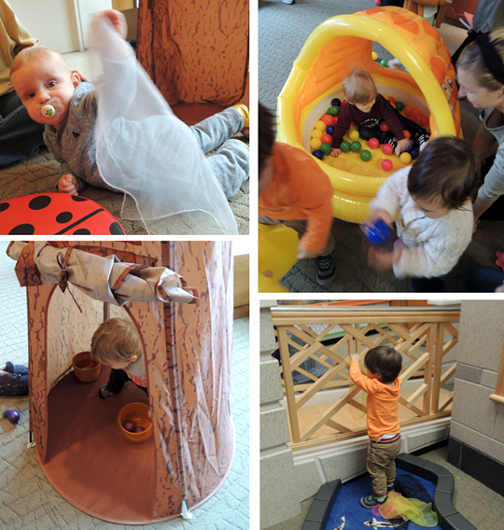
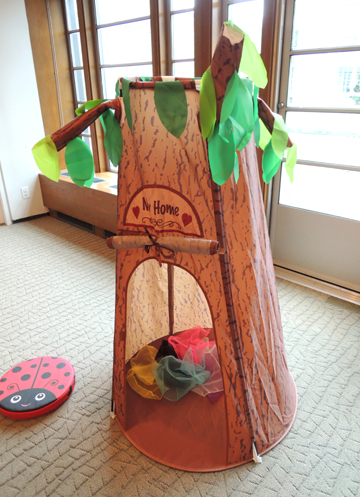 Kids love to own small spaces, whether it be a pillow fort, underneath a table, or a play tent (which is why we included 3 at our Secret Garden event). This tree tent, with its roll-down door flap, fit the bill perfectly. Inside were colorful sheer scarves, a staple for baby/toddler play.
PICNIC BLANKET AND FOOD BASKETS
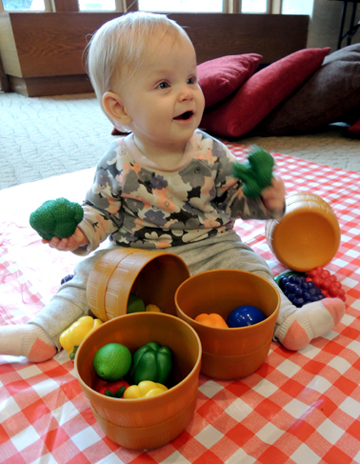
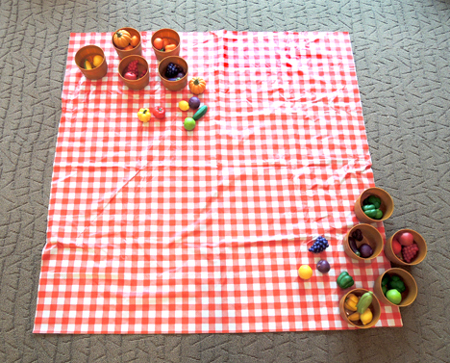 This heavy vinyl picnic blanket was the centerpiece of the event! We stocked it with 2 fruit and veggie sorting games. They were very popular and versatile. Babies on their tummies reached for the colorful fruits. Babies sitting up practiced taking out and putting in. Toddlers loaded up and moved things. Older siblings engaged in imaginative play with picnic partners.
SNAIL BALL PIT
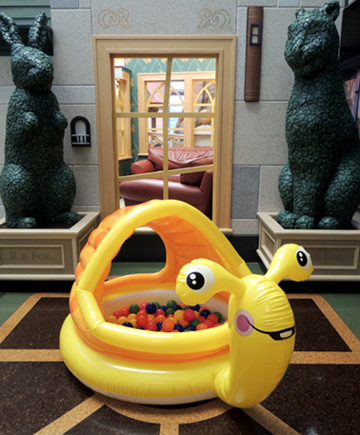
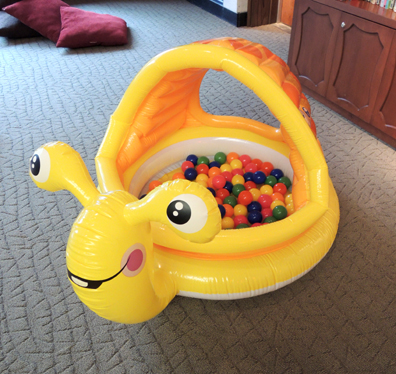 We knew this snail ball bath was going to be huge, and it WAS. It was constantly packed, including one innovative toddler who rode on its neck! This tough little toy stayed intact the entire time, too.
About 20 minutes into the event, I circulated the floor with my camera, fully intending to get all sorts of adorable photos for this post. Folks, we were so packed I could barely get a clear shot. So I just decided to step back and let those busy babies and toddlers explore!
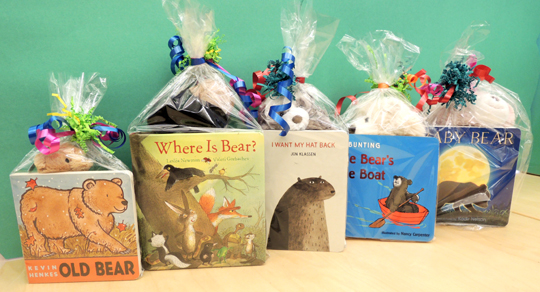
The final event activity was a teddy bear and book giveaway! We had so much fun shopping for these bears and books at JaZams, our locally owned and operated toy store.
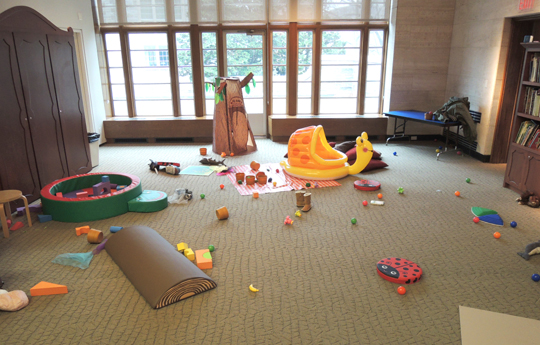
 Parents and caregivers were very eager, and very appreciative, to have an event for the 0-2 year-old set. Teddy Bear Picnic was a whopping success, with over 70 attendees. We thought it would be funny to share the before and after photos. Here’s how we set the event floor up…so nice and tidy…
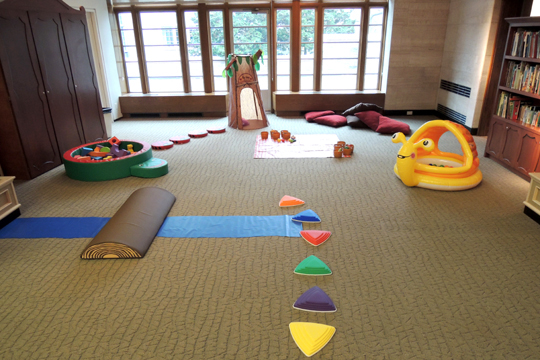 And here’s what it looked like an hour later! And that doesn’t even capture all the stuff scattered left, right, and behind me in the photo. Hah hah!
If you’re interested in the prices or links to any the items you saw in the post today, please e-mail Katie: zondlo@princeton.edu It should be noted that in the case of the larger, more pricey items (such as the log bridge and the turtle pool) we fully intend to integrate them into our year-round baby program. A bit of an investment, but very much worth it!
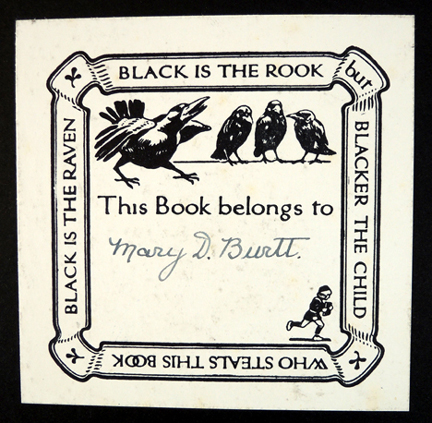
 If you hop over to Cotsen’s fabulous curatorial blog, you’ll find this post,