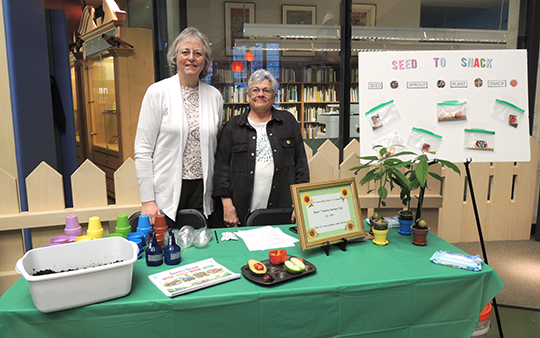
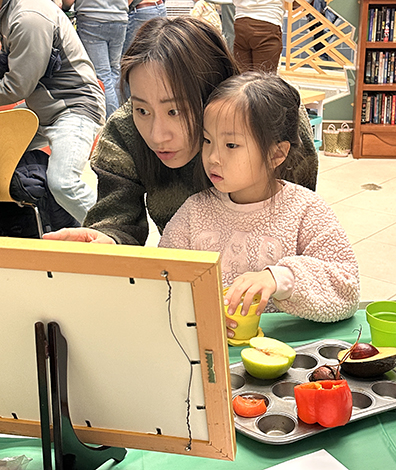
You may recall our bustling Peter Rabbit Party back in February, in which rabbit fans celebrated everything garden! At the center of the festivities were Barbara Lear and Anne Skalka from the West Trenton Garden Club. Armed with know-how and sprouting avocado trees, Barbara and Anne taught local families how their food grows from seed to snack, and helped them plant pots of their very own!
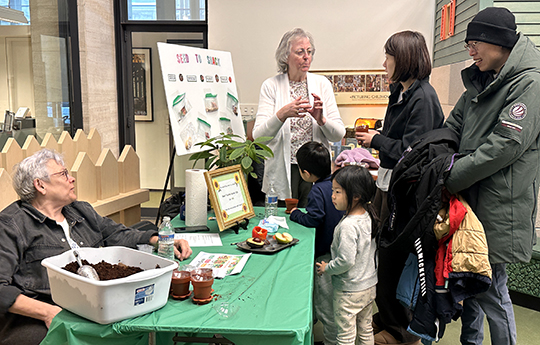
I caught up with them after the event to find out a little more about their personal connections to gardening, as well as take a peek at their gorgeous grounds…
Please tell us a little bit about yourselves!
Anne: I’m a retired CPA who practiced in Mercer County for 45 years. For over 35 years, I ran my own my small tax and accounting practice and with my staff, we serviced approximately 700 clients. I retired in 2020. Currently, I sit on three not-for-profit agency boards whose missions are the empowerment of children and families in Mercer County. I’m the immediate past president of the Central Jersey Orchid Society and the current president of the West Trenton Garden Club.
Barbara: I have been retired for almost 18 years. I have a daughter, son in law and three grandchildren.
When did you first become interested in gardening?
Anne: I’m an avid gardener. I started in gardening in my twenties, as an antidote to the frustration I faced as a woman in what was once an all-male profession. I felt peaceful and competent with my hands in the soil. That feeling I get from gardening has sustained me throughout the years. I got interested in orchids about 25 years ago, and my husband and I built my greenhouse in 2018.
Barbara: Plants, gardening and nature have always been a part of my life. My parents had me pulling weeds and planting since I was a child. Even as a teenager, I had a few African Violets in my bedroom. Life and children kept me busy for many years, but once I retired there was more time to spend outside and enjoy my plants and flowers. Last year, I decided to join the West Trenton Garden Club and it was a perfect fit for me. Everyone was so friendly and so willing to talk about and share their experiences and plants.
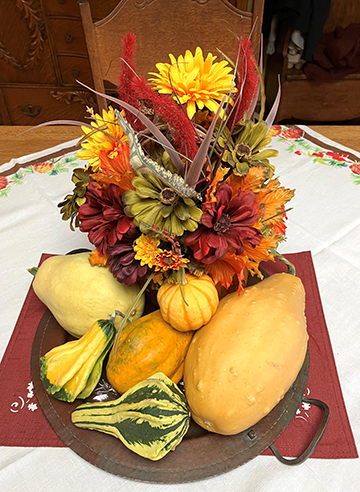
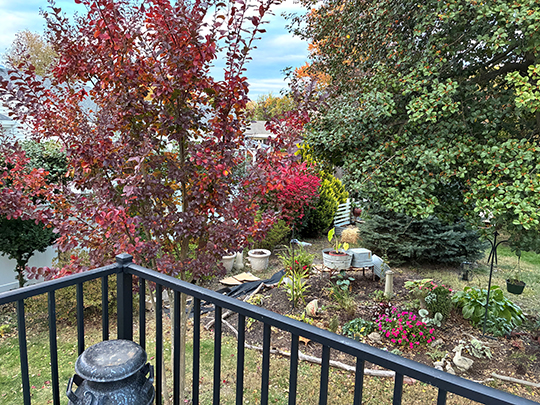
Describe your gardens to us.
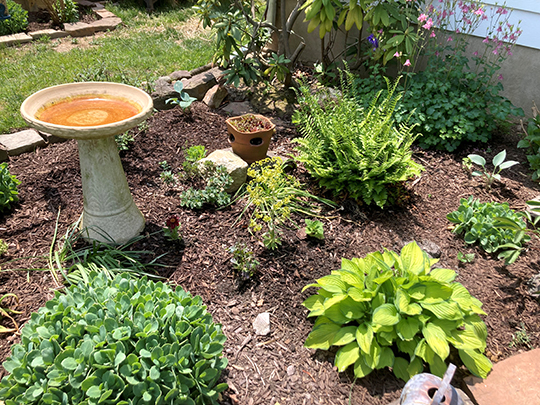
Barbara: After having to cut down many of the huge trees around our property, we decided to put in more flower and garden beds. My daughter gives me different plants for my birthday and Mother’s Day. There is always room for another plant. I also enjoy growing vegetables and then eating them. It’s so rewarding!
How did you come up with the concept “From Seed to Snack” for our Peter Rabbit event?
Anne: I’ve done “Seed to Snack” presentations with different age groups and different seeds, mainly in small classes. I love doing it and it reminds me of the joy I’ve had watching seedlings come up. If I get at least one child to love gardening, I’ll be happy.
What was your favorite thing about the event?
Barbara: Anne had the initial idea for our Peter Rabbit presentation, but it certainly evolved from her original plan. And with the pots and supplies Cotsen provided, it all came together as a very worthwhile and fun collaboration. The most fun part for me was watching the kids get their hands dirty.
What are the plans for your spring/summer gardens this year?
Anne: My daughter and her kids live in Wales, United Kingdom. My husband, Paul, and I bought a cottage near her and happily, the cottage has a huge well-developed garden. It also has a small greenhouse, workshop and tool shed. In June, I’ll be leaving my garden here in New Jersey to live in Wales and will work on a very large, overgrown site that includes a pond. When we return to New Jersey, I’ll be tending my indoor garden of orchids and other house plants.
Barbara: I look forward to having a bigger vegetable garden and continuing to improve on my shade and full-sun gardens.
Barbara and Anne will be delighted to know that 2 weeks after the event, a family came into Cotsen to excitedly report that their bean was sprouting in its pot!
Three cheers for new gardeners!
And three cheers for Barbara and Anne!

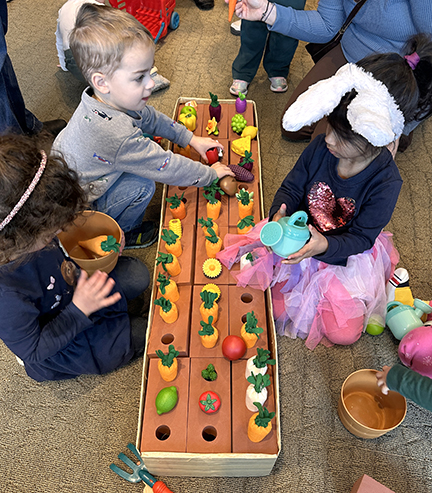 Finally! You CAN go into Mr. McGregor’s garden!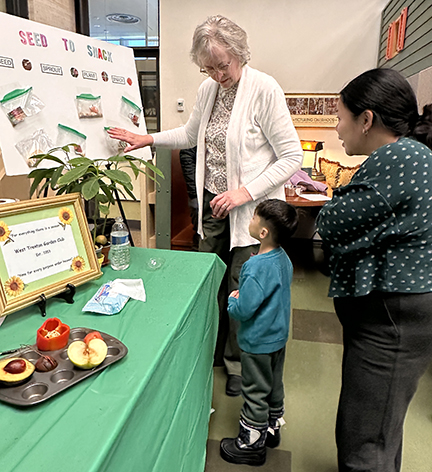
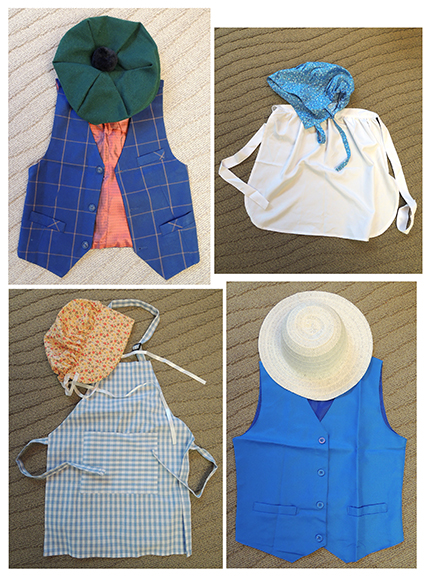
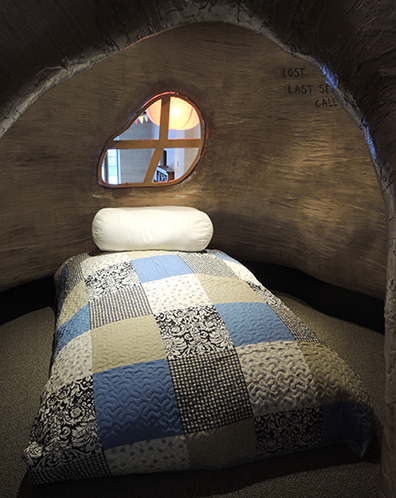
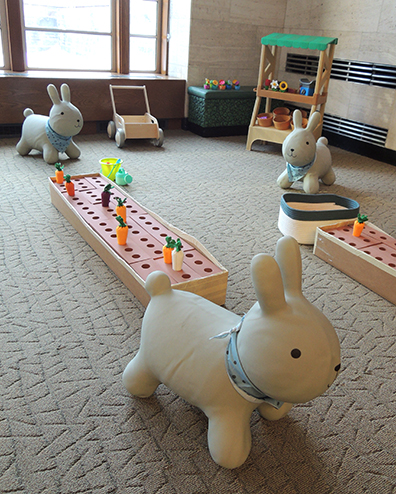 The vegetable beds were long cardboard boxes. We bought dozens of toy foam bricks, then laid the bricks on top of short pieces of toilet paper tubes hot glued to the bottom of the box. The tubes elevated the bricks just enough to allow 7.5″ fabric carrots to be “planted” in the holes of the bricks. Below you can see one of the bricks removed to reveal its toilet paper tube support: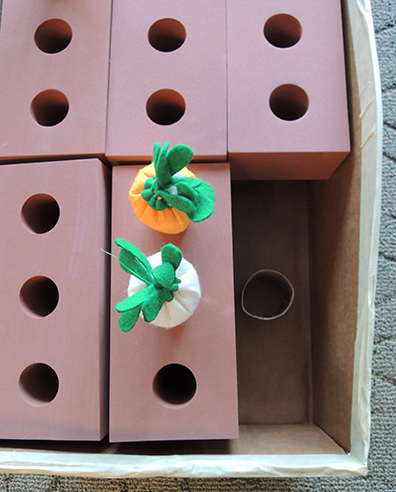
 I mentioned them in the introduction, but now it is my distinct pleasure to present Barbara Lear and Anne Skalka from the West Trenton Garden Club! These two wonderful ladies brought their enthusiasm, expertise, and boundless energy to the event, teaching kids about how plants go from seed to snack, including an display of sprouted avocado trees! They had plenty of dirt and pots on hand so kids could start little gardens of their own. They were an absolutely amazing team, and we appreciate them so much!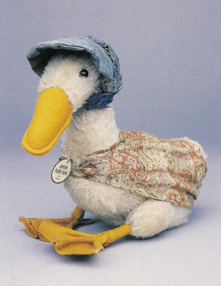
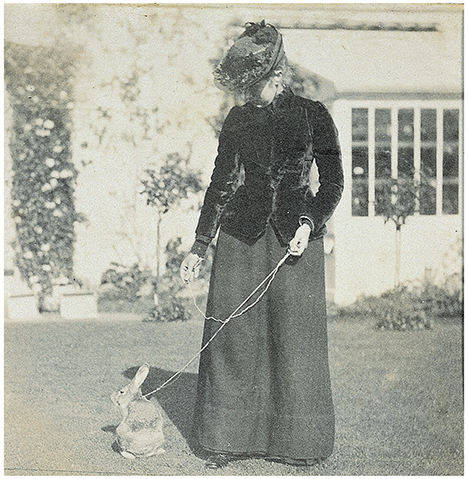
 In addition to the Jemima stuffed animal, Cotsen has a number of Beatrix Potter’s family photographs (you can browse them