It sparkles and shimmers. Could it be gold? Well, you might strike gold and get rich…or you might be fooled by some glittery pyrite! We made some awesome geology connections at To Be Continued, our story time for 6-8 year-olds, including rocks that sing!
We read Missing on Superstition Mountain by Elise Broach (Henry Holt, 2011). Brothers Simon, Henry, and Jack have moved from Chicago to Superstition, Arizona. The sleepy little town is shadowed by the looming and unforgiving Superstition Mountain, which has a history that none of the adults seem to want to share. The boys have been forbidden to go into the mountains, but when Josie the cat runs away, they follow her and soon uncover a mystery that involves three human skulls, a lost gold mine, and the strange, seemingly supernatural, power of the mountain. Can the boys and their friend Delilah survive Superstition?
In addition to a secret gold mine (which is totally awesome), Missing on Superstition Mountain has quite a bit about rocks, landscapes, and geology. When we finished the book, I thought it would be cool to do some rock-based activities. And Princeton University have some fantastic resources when it comes to geology.
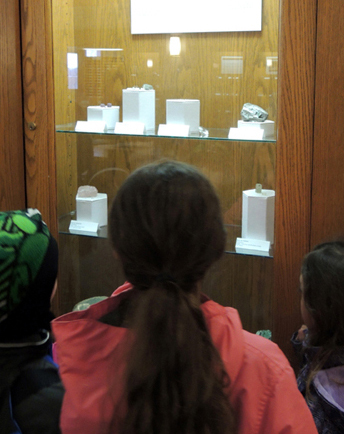
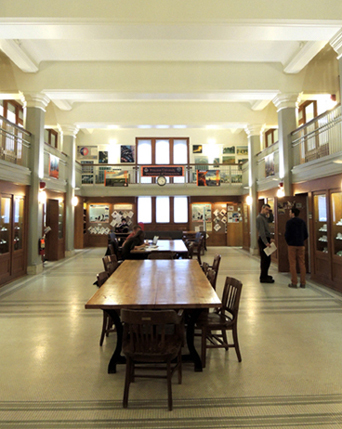 First, we took a walk across campus to Guyot Hall, home of the Department of Geosciences. Their central office space is lined with display cases full of rocks, gems, fossils, and minerals.
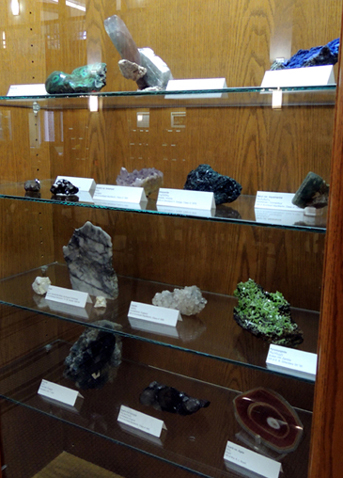 The kids oohed and aahed over some of the precious stones…
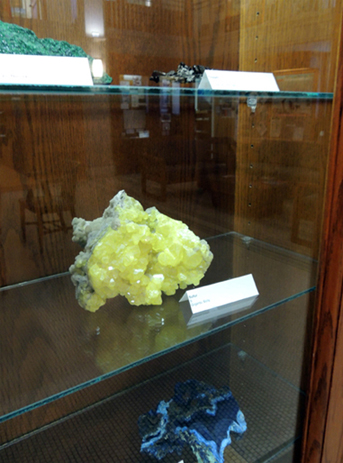
 But were equally impressed by the gigantic mineral specimens!
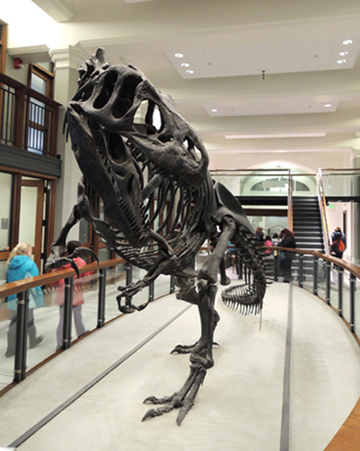
 We visited a Allosaurus skeleton and a T. Rex skull on our way out of the building. Yes!
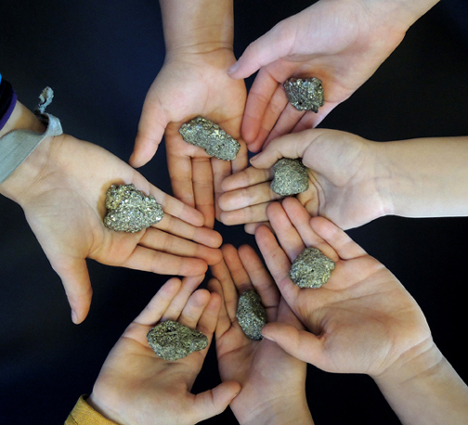
 Back at the library, I had samples of pyrite for the kids to look at (courtesy of Laurel Goodell, manager of the undergraduate labs in geosciences). Pyrite is called “Fool’s Gold” because of its sparkly gold appearance, but it’s actually a mineral.
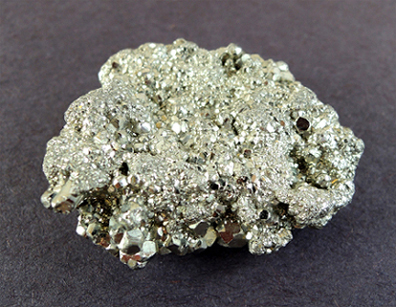 The kids couldn’t take home the big samples of pyrite, but I did find some smaller pieces on Amazon. I bought three, 0.2 ounce boxes of pyrite nuggets for $5.79 a box. They arrived powdered with black grit, so be prepared to do some major rinsing, and maybe a little scrubbing, before you given them to kids. But as you can see below, they cleaned up nicely and there were some pretty good sized pieces in there.
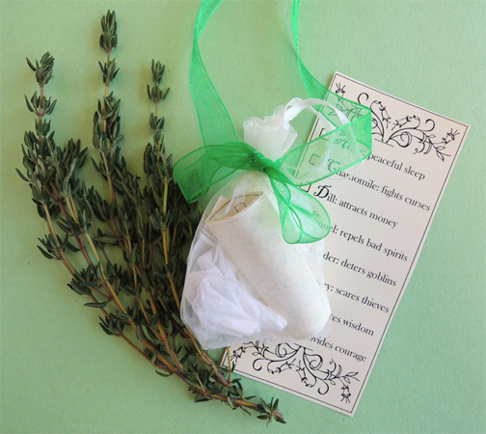
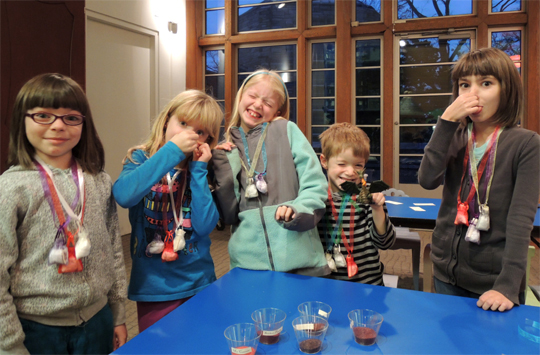
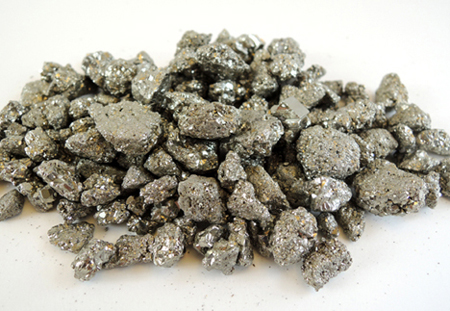 The kids took their stash home in a cotton drawstring bag (left over from this event). I also tucked a little information sheet inside the bag too (here’s the template if you’re interested). But I saved the best geology connection for last. Did you know that some rocks can produce musical notes?
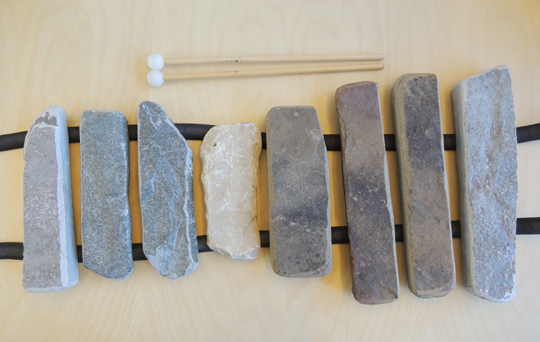 This is a lithophone. It’s a xylophone with tone bars that are made out of stone (as opposed to wood or metal). When you strike the stones with a mallet, they produce a musical tone. But not all rocks sing! It takes a lot of trial and error, as well as a lot of chipping and grinding to make rock tone bars. The stones you see above are limestone, sandstone, and granite.
The lithophone was made by Tom Kaufman, owner of Tinkertunes Music Studio in Michigan. I commissioned him to build it for a Journey to the Centre of the Earth event in 2013. After the event, the lithophone went to its new home in the geosciences lab.
Ready for a little rock concert?
If you think that’s cool, you should check out Tom’s lithophone fence. It plays “Row Row Row Your Boat” as you run around it with a mallet! The fence was installed at the Gerald R. Ford Presidential Museum in Grand Rapids, Michigan for ArtPrize, an annual art contest.
Many thanks to Laurel Goodell and the Department of Geosciences for the pyrite and lithophone loan!
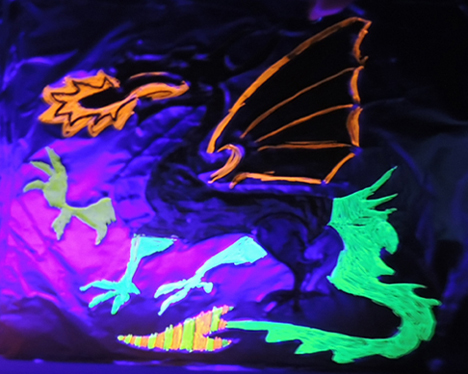
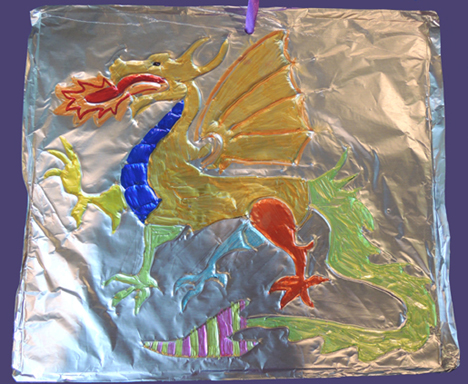 One of our regulars called this her “most favorite project, ever.” It’s amazingly simple to do, yet has fantastically beautiful results. Best of all, if you use the right markers, your metallic marvel of a dragon will illuminate under a black light! Get ready to test your metal at
  We read Lily Quench and the Dragon of Ashby, written by Natalie Jane Prior, and illustrated by Janine Dawson (Puffin Books, 1999). The town of Ashby Water used to be peacefully ruled by a King and Queen. But then the Black Count invaded, usurped the throne, tore up the botanical gardens, and built a grommet factory. Now the town is filthy, the river is polluted, and the people are suffering. To make matters worse, a dragon has landed on the grommet factory, and doesn’t appear to be leaving. Captain Zouche and Miss Moldavia (the baddies in charge), demand that young Lily Quench (a dragon slayer only by inheritance), defeat the dragon. But rather than slaying the dragon, Lily befriends it. With the help of Queen Dragon, Lily learns that there just might be a chance to defeat the Black Count, find a lost Prince, and rescue Ashby Water from ruin.
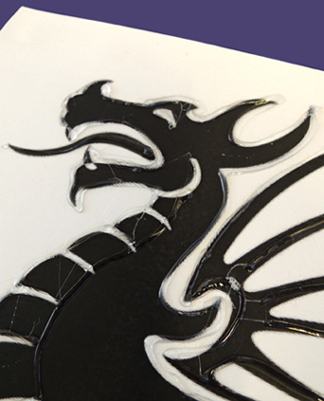
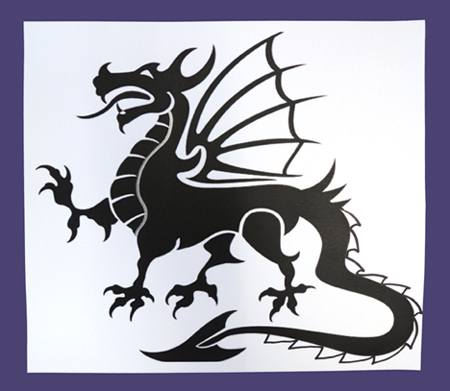 Next, outline the image with hot glue. The more outlines you make, the better the final drawing will look.
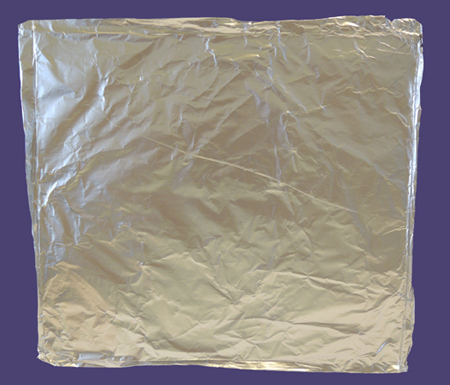
 Once the hot glue is dry, cover the drawing with tin foil. Secure the tin foil to the back of drawing with tape – not hot glue! The hot glue will create unwanted ridges later. Below you can see exactly what we presented to the kids – a mysterious sheet of metal for them to explore with their fingers.
 Use your fingertips to gently, but firmly, press down on the tin foil. As you press, the hot glue ridges will pop out, revealing a raised outline of the the image underneath!
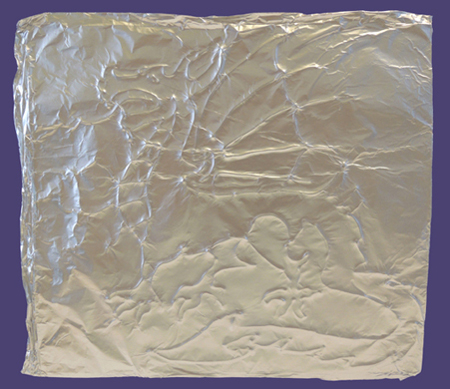 Here’s another shot that shows the ridges a little better…
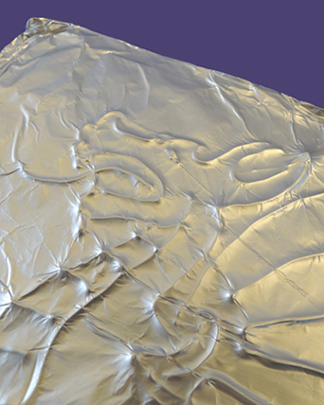 Some kids liked the idea of the image revealing itself from a “blank slate,” but other kids liked having an image to guide them. So have a few copies of the original image on your work tables, just in case.
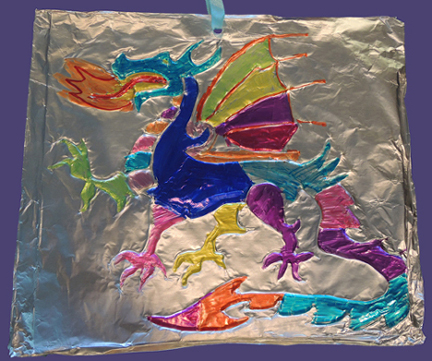 I was excited to learn that certain packs of neon color Sharpies fluoresce under black light (you’ll know because it says so right on the package). Awesome! I totally wish I had used them when we made
 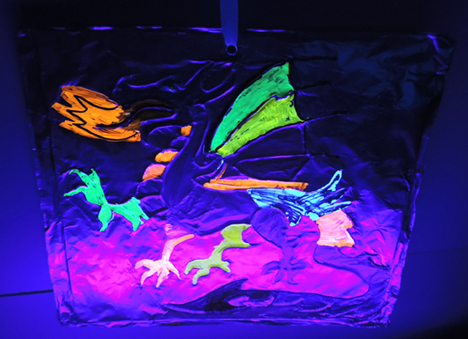 The final step is optional. I punched a hole in the top of each project and looped a ribbon through it so kids could hang their metallic creations up at home.
 If you haven’t read Charmed Life, or anyone of the other books in the Chronicles of Chrestomani series, I can’t recommend them enough. I love how Diana Wynne Jones writes her characters and create her magic. I love her sense of humor and her amazing descriptions. The Pinhoe Egg is a book I re-read annually, because it’s like visiting family. Conrad’s Fate comes in a close second. It’s a bit like Downton Abbey…with magic!