Forms & Functions: The Splendors of Global Bookmaking

Book enthusiasts near and far are cordially invited to a fantastic new exhibit!

Forms and Function: The Splendors of Global Book Making,” is currently in the Ellen and Leonard Milberg Gallery in Firestone Library on Princeton University campus. Curated by Martin Heijdra, Director of PUL’s East Asian Library, the exhibit showcases the diversity and beauty of global book making, focusing on three major traditions of the book form: codex, East Asian, and pothī.

Awash in rich jewel tones and featuring a range of striking visuals, the exhibition features treasures from some of Princeton’s lesser-known collections, as well as items from its renowned collections of Western, Islamic, East Asian, and Mesoamerican manuscripts and printed books. There are also works by modern artists completed in the style of these global traditions. For gallery hours and directions to campus, please click here. The exhibit runs through December 7, 2025.

Can’t make the trip? No worries! There is a video tour here, a digital version of the exhibit here, and a downloadable guide here.

In celebration of the exhibit’s amazing holdings, we selected some of our more unusual book-crafting projects for further fun. Simply click the titles over the images to visit the project pages!

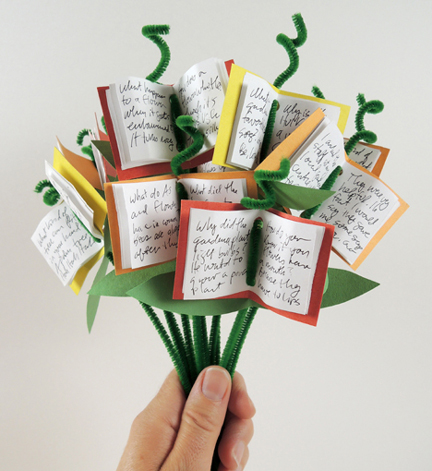
BOOK BOUQUET

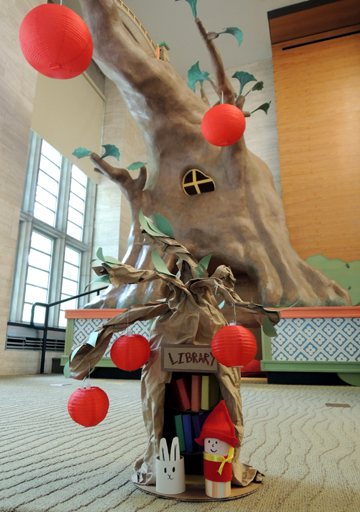
MINI TREE LIBRARY

big tree library, little tree library

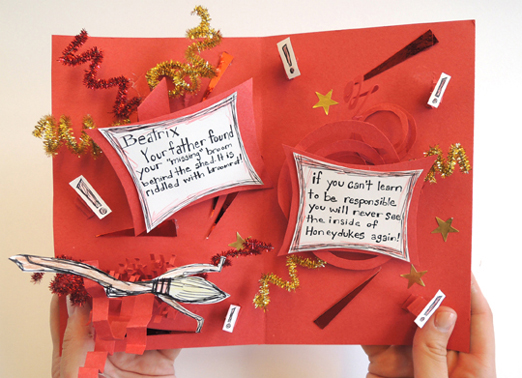
CLASSIC HOWLER

a real howler

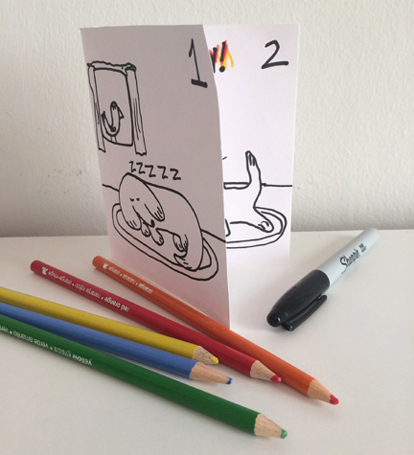
FUN FLIP BOOK 

one two books 3

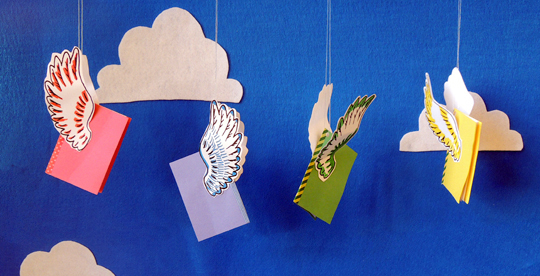
WINGED CODEX

flying books

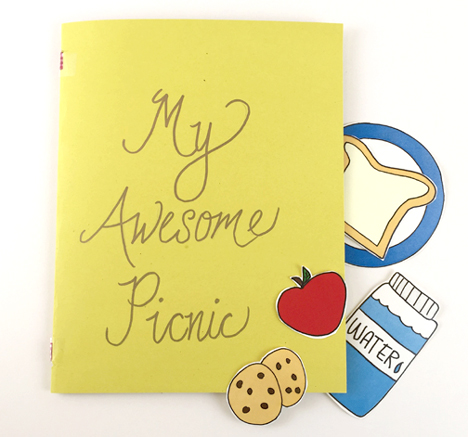
PIRANESI PICNIC

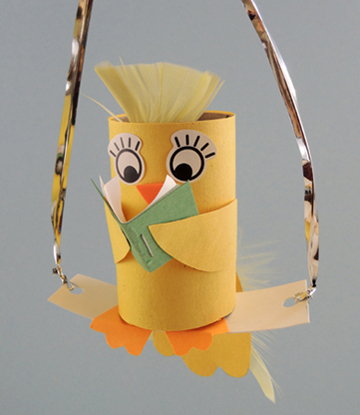
A VERY LITERARY CANARY

tweet-reading-is-sweet

THE PERFECT PLACEHOLDER

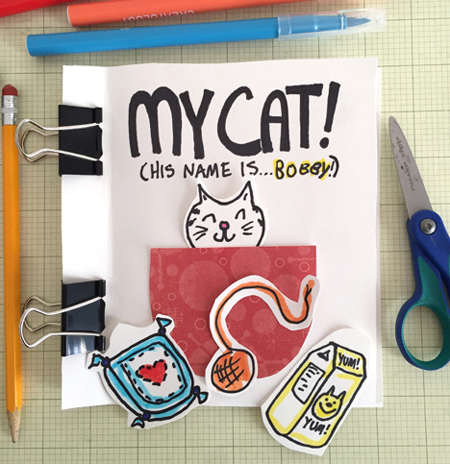
Miniature paper book with personal information about a person named Katie written in it.MINI PET PORTRAYALS

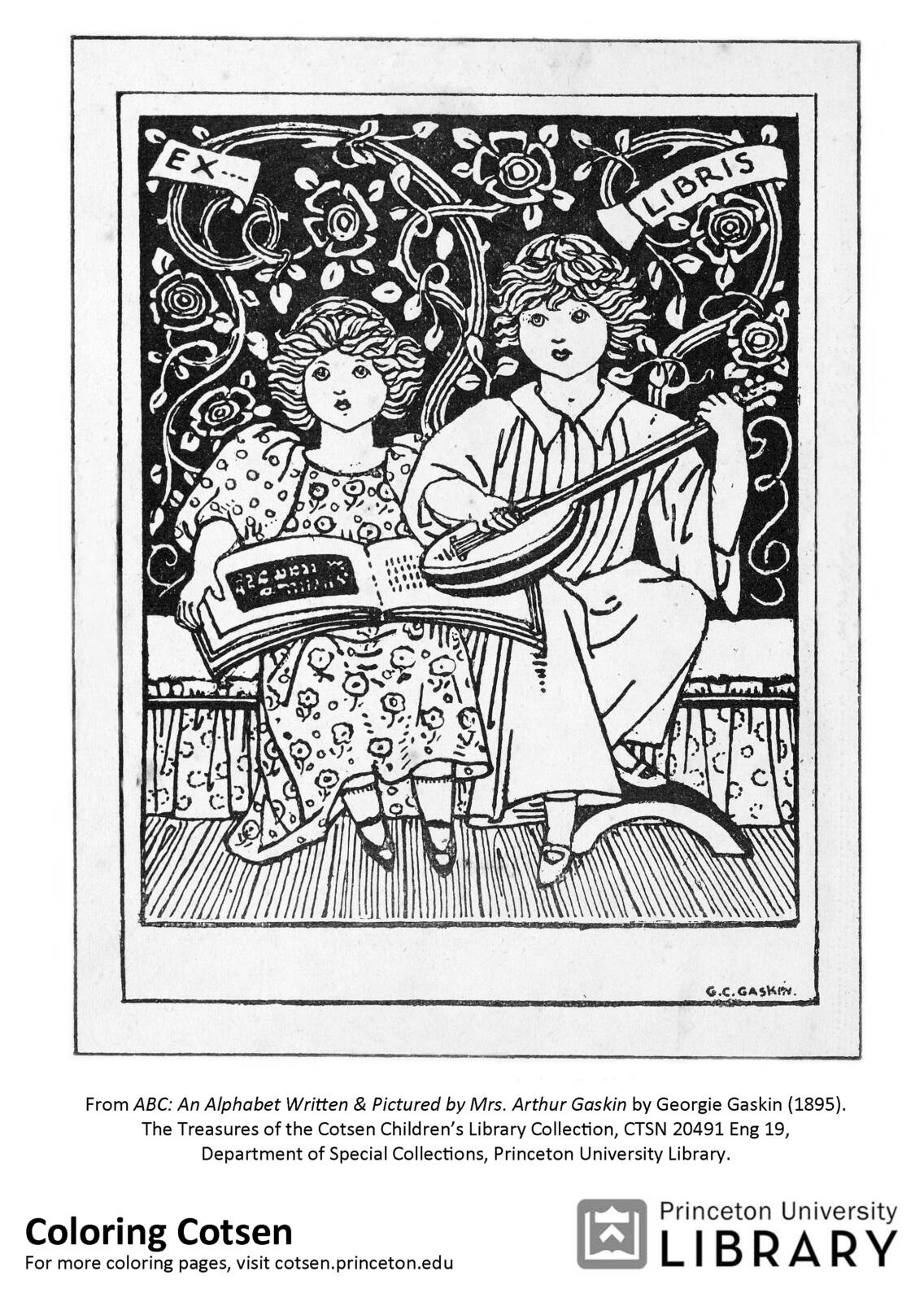
Coloring Cotsen: Ex Libris

For our next round of Coloring Cotsen, Katie selected three bookplates from our special collections, and also did a little digging for more information on the bookplate’s owners!


An Ex Libris, which means “from the books” or “from the library” in Latin, is used to indicate ownership of a book and is usually found on a bookplate, which is a decorative label adhered inside a book’s cover. A bookplate’s design is unique to its owner and displays a family coat-of-arms, reflects their hobbies or interests, or provides a special dedication. Sometimes bookplates are simply the owner’s name or signature. In any fashion or form, bookplates are a relatively simple way to add a personal touch to your library and definitively claim a book as yours.

Here are a few fun tidbits of information about the three people whose bookplates we used for Cotsen’s latest coloring sheets:

Georgina “Georgie” Evelyn Cave Gaskin was a jeweler and metalwork designer, as well as an author and illustrator. Georgie and her husband, Arthur, led the Arts and Crafts jewelry movement in Birmingham, England.

Sylvia Mary Allen was the daughter of Charles Allen, who is considered one of the leading experts on bookplates, especially old American plates and designs. He published several books on the topic.

Carrie Nelson was a humanitarian, civic leader and founder of the Columbus (Ohio) Society for the Prevention and Control of Tuberculosis, which is known today as The Breathing Association. Carrie’s husband, Samuel L. Black, served as Mayor of Columbus from 1897-99 and later became a judge.

Swiftie Science!

ARE YOU READY FOR IT? As you might recall from our recent sneak peek, we joined forces with our friends at Science Outreach at Princeton University and the Department of Chemistry to host a fantastic celebration of science and the lyrics, visuals, and overall awesomeness of Taylor Swift! The crowds were enchanted, bejeweled, and the alchemy exceeded our wildest dreams! How did we mastermind this event? Dear reader, it was a wonderland!

The event was divided into two parts: 1) hands-on activity tables; and 2) an auditorium show. Part one featured five hands-on demonstration tables that uniquely represented a Swift song. This part of the event was led by the amazing Paryn Wallace, Associate Director of Science Outreach, and a talented team of Princeton University undergraduate and graduate student volunteers from Science Outreach at Princeton University.

Front row, left to right: Davis Hobley, Adrija Kundu, Meghana Bhupait, Paryn Wallace, Maddie Bland. Back row: Back row, left to right: Amalia Nevarez, Mell Aguiar, Aryan Gupta, Kennedy Casey, Zaighum Nagra, Jeffrey Asiedu-Brako, Emma Petzold, Ash Reddy

At the “Shake it Off” table, kids could learn about non-Newtonian fluids by examining the curious properties of oobleck as it danced on top of speakers blasting Swift’s music. Nearby was the “Clean” table, where budding scientists could determine the pH levels of various water samples (tap, bottled, rain, etc.) using litmus paper. At the “Blank Space” table, kids learned about chemical reactions as they revealed lemon juice invisible ink messages with a heat source.

One of my favorite tables, however, was “All Too Well.” This classic song is all about memories, so the table featured Nitinol wire. Because of its unique atomic structure, Nitinol wire can “remember” its original shape during temperature changes. It’s pretty astounding to watch. The final hands-on table was “Mastermind,” where we literally brought Taylor’s song lyrics to life as chain reactions of “dominos cascaded in a line.”

This slideshow requires JavaScript.

Once the tables were thoroughly explored, it was time for part two, the auditorium show (which was, ironically, held in the Taylor auditorium inside the Frick Chemistry Building)! The show was led by the extraordinary Angie Miller, Lecture Demonstrator in Princeton University’s Department of Chemistry.

Angie had the task of pairing Swiftie concepts with principals of science, so in preparation for the show, Katie and I steered Angie to what we believe to be Taylor’s most science-y music video, “ME!” Here, Taylor cavorts with cats, clouds, rainbow prisms, and colorful foam.

So Angie talked extensively about the scientific method while bursting hydrogen balloons, making nitrogen clouds, and testing audience predictions of marshmallow cat behaviors in vacuum chambers. Angie invited the young scientists to gaze at line spectra of various gases, created colored fireballs with metal salts and a Bunsen burner, and…in a grand finale…played the “ME!” video for the crowd on the big screen while coordinating larger versions of the previous demos, capping everything off with a six beaker rainbow deluxe version of elephant toothpaste!

Peppered throughout the show were audience trivia questions for friendship bracelet prizes. Before the marshmallow cat demo, for example, I asked the audience if someone could name Taylor’s three cats. They sure could! First names AND last names (though I was secretly waiting to hear someone shout “Dibbles!”).

The auditorium show’s crescendo was the “ME!” video, but we had one more fantastic surprise in store for the crowds that day…a cameo appearance by Taylor!

Well, that’s not ACTUALLY Taylor Swift. It’s Princeton University sophomore Margo Mattes! A Politics major and massive Swiftie, Margo gamely volunteered to play Tay and take photos with the kids. She was so utterly fantastic, we can’t thank her enough for giving her time and exuberance to this event!

As the happy crowd exited the building, we handed out friendship bracelet kits made out of UV beads. These plain beads react with sunlight and change to rainbow colors. Just a little extra TS science to take home!

I can’t even begin to express my gratitude and appreciation to everyone who made this event possible. Thank you to the students from Science Outreach at Princeton for your ideas, boundless energy, and time. Margo Mattes, thank you for bringing your sweet brilliance and enthusiasm as Miss Americana. And a massive shout out to event masterminds Paryn Wallace and Angie Miller. You were so game to try this, and Katie and I absolutely loved working with you!

From left to right: Paryn Wallace, Dana Sheridan, Katie Zondlo, Angie Miller


Event images courtesy of Daniel Wang