Forms & Functions: The Splendors of Global Bookmaking

Book enthusiasts near and far are cordially invited to a fantastic new exhibit!

Forms and Function: The Splendors of Global Book Making,” is currently in the Ellen and Leonard Milberg Gallery in Firestone Library on Princeton University campus. Curated by Martin Heijdra, Director of PUL’s East Asian Library, the exhibit showcases the diversity and beauty of global book making, focusing on three major traditions of the book form: codex, East Asian, and pothī.

Awash in rich jewel tones and featuring a range of striking visuals, the exhibition features treasures from some of Princeton’s lesser-known collections, as well as items from its renowned collections of Western, Islamic, East Asian, and Mesoamerican manuscripts and printed books. There are also works by modern artists completed in the style of these global traditions. For gallery hours and directions to campus, please click here. The exhibit runs through December 7, 2025.

Can’t make the trip? No worries! There is a video tour here, a digital version of the exhibit here, and a downloadable guide here.

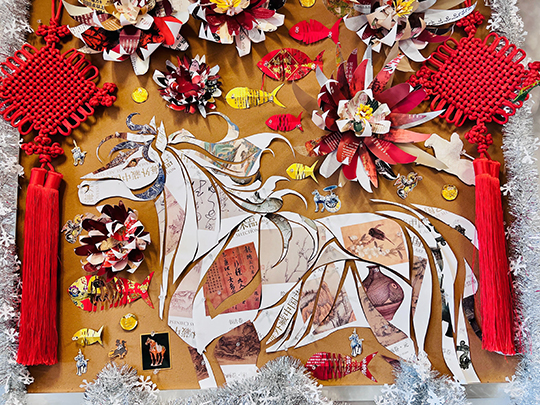
In celebration of the exhibit’s amazing holdings, we selected some of our more unusual book-crafting projects for further fun. Simply click the titles over the images to visit the project pages!

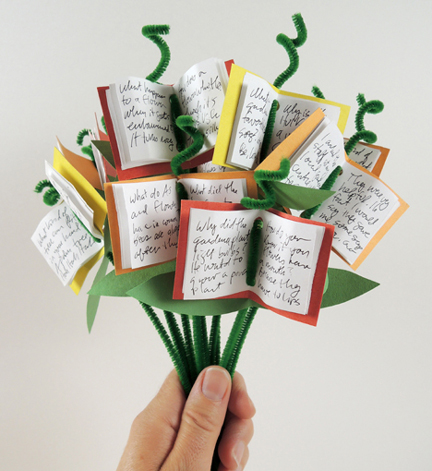
BOOK BOUQUET

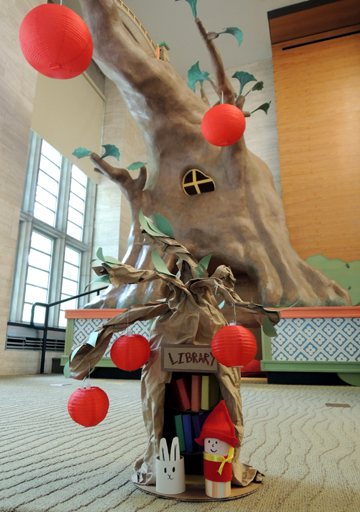
MINI TREE LIBRARY

big tree library, little tree library

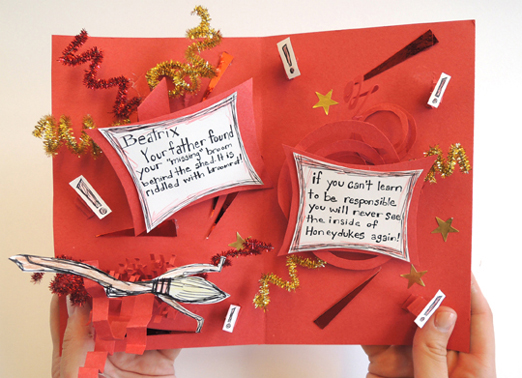
CLASSIC HOWLER

a real howler

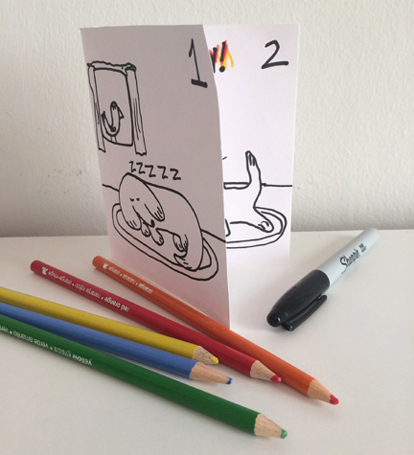
FUN FLIP BOOK 

one two books 3

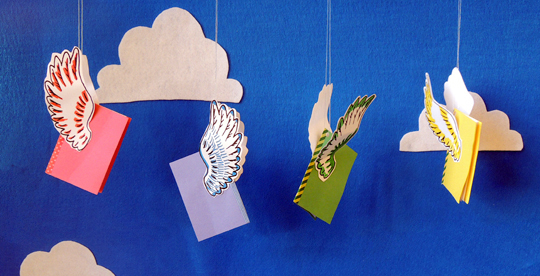
WINGED CODEX

flying books

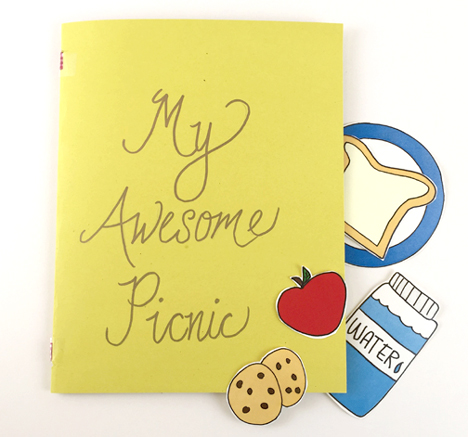
PIRANESI PICNIC

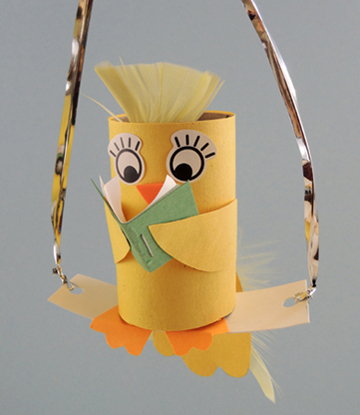
A VERY LITERARY CANARY

tweet-reading-is-sweet

THE PERFECT PLACEHOLDER

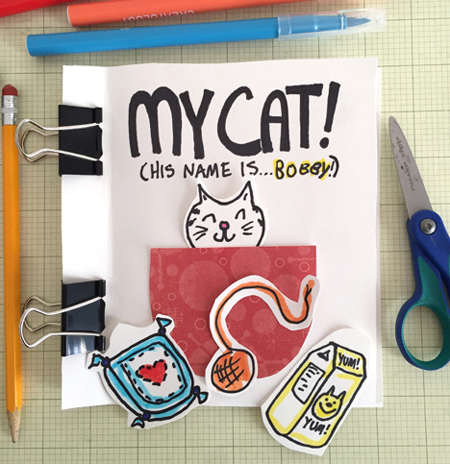
Miniature paper book with personal information about a person named Katie written in it.MINI PET PORTRAYALS

Alston’s Awesome Alphabet

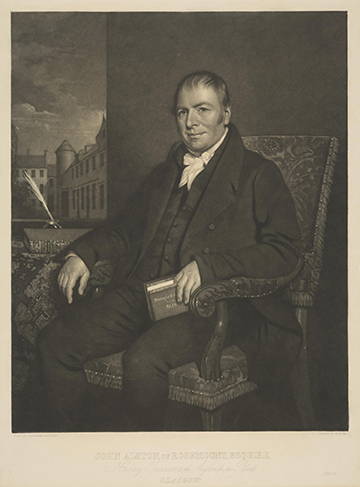
Alexander Hay. John Alston of Rosemount, 1778-1846. Hon. Treasurer of the Glasgow Blind Asylum. National Galleries of Scotland Collection. Photo, National Galleries of Scotland.

In today’s post, Katie delves into our special collections vaults and makes some very interesting connections! Let’s join her…


Sometimes doing research in the Cotsen collection feels a bit like the children’s book If You Give a Mouse a Cookie. I start looking for one title, which leads me to a different topic, and then I change directions entirely from what I was originally looking for. During a recent research excursion, I discovered Alston Type books, a new-to-me alphabet created in the 19th century to teach people who are blind or have low vision how to read.
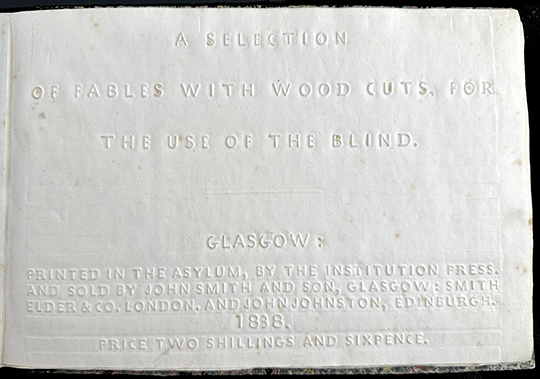
A Selection of Fables with Wood Cuts, for the Use of the Blind by John Alston (1838). The Treasures of the Cotsen Children’s Library Collection, CTSN 40903 Eng 18, Department of Special Collections, Princeton University Library.

Everyone knows Louis Braille, who became blind as a young boy and invented his namesake alphabet in 1824 when he was a student at the National Institute for Blind Children in Paris. The braille alphabet consists of 64 characters, with each letter or number made up of raised dots in a certain pattern and embossed on paper. Today, braille is universally recognized as the common writing system for people who are blind or have low vision. Before braille was used worldwide, there were other tactile reading systems; some are discussed in a post written by Library Collections Specialist Charles Doran on Princeton University Library’s Special Collections blog.

Another such system was created in 1837 by John Alston, who worked with the Asylum for the Blind in Glasgow, Scotland. Alston designed a raised font using the Roman alphabet in two different sizes: the smaller font for school-aged children and a larger version for older adults with a diminished sense of touch. Most of the Alston Type books were religious, but other topics included geography, music, natural history, and popular fables.
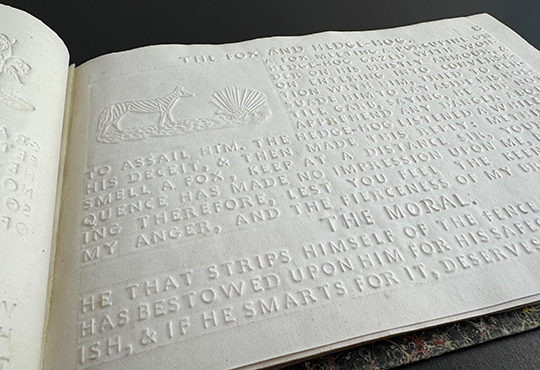
A Selection of Fables with Wood Cuts, for the Use of the Blind by John Alston (1838). The Treasures of the Cotsen Children’s Library Collection, CTSN 40903 Eng 18, Department of Special Collections, Princeton University Library.

Alston’s desire was for every blind person in the United Kingdom to have an opportunity to read and learn from the Alston Type books. In a letter sent to directors of institutions throughout Great Britain, he stated: “The advantage to the Blind in having books printed for their use, in a distinct and tangible character is incalculable.”1 Alston was awarded a government grant to assist with printing and by 1844, more than 14,000 volumes were available for purchase. All of the sales proceeds were used to print more Alston Type books.
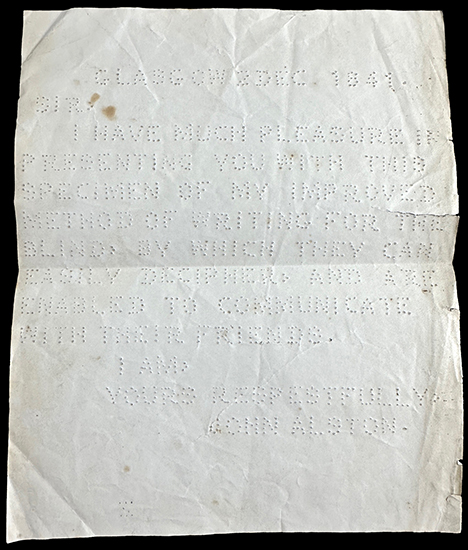
From A Selection of Fables with Wood Cuts, for the Use of the Blind by John Alston (1838). The Treasures of the Cotsen Children’s Library Collection, CTSN 40903 Eng 18, Department of Special Collections, Princeton University Library.

Glasgow 2 Dec 1841
Sir:
I have much pleasure in presenting you with this specimen of my improved method of writing for the blind, by which they can easily decipher, and are enabled to communicate with their friends.
I am yours respectfully,
John Alston

Children trained to read using Alston Type had a much easier time learning and reading other raised type books. Most importantly and due largely in part to Alston’s contributions, it was soon considered essential by all to provide formal education to people who are blind or have low vision.
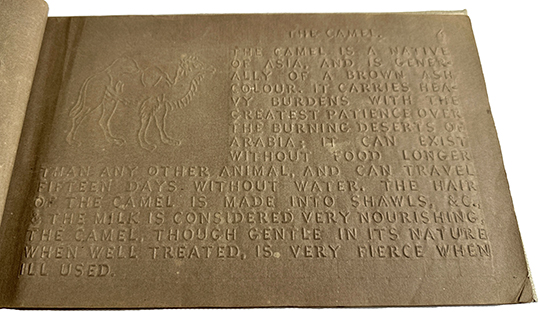
Outlines of Natural History: Quadrupeds; Embossed for the Use of the Blind by John Alston (1842). The Treasures of the Cotsen Children’s Library Collection, CTSN 19486 Eng 19, Department of Special Collections, Princeton University Library.

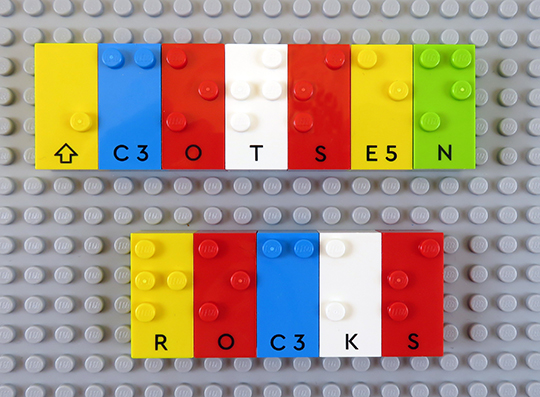
In a modern approach to inclusive education, LEGO introduced braille bricks in 2020. Along with a raised dot pattern on each brick, LEGO included the printed letter or character so sighted people could participate equally with the child who is blind or has low vision. There are multiple languages of braille bricks available for purchase, including French, Spanish, German and Italian.
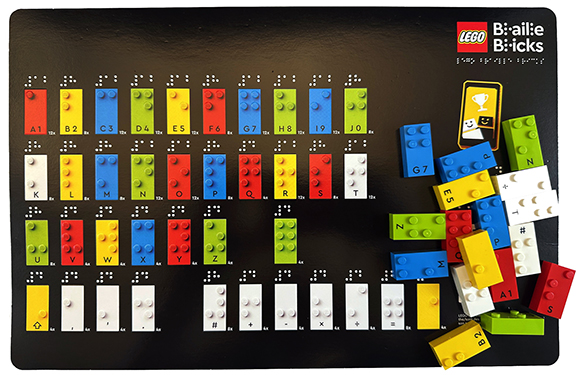
LEGO. Play with Braille – English Alphabet. Set No. 40656 (The LEGO Group, 2023).

But the best part is the braille LEGO can be incorporated into all LEGO sets for additional ways to learn through play! LEGO also designed an online toolkit, The Braille Program, which provides professionals, teachers and families with courses, lesson plans, tips and tricks, and a multitude of ways to encourage playful learning.
Looking for picture books on this topic to add to your school or personal library? These titles come with our highest recommendation!
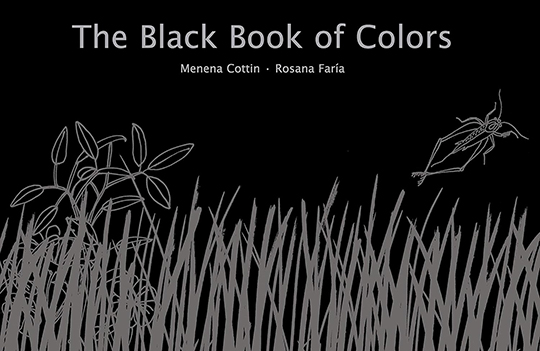
Image courtesy of Amazon UK

The Black Book of Colors by Menena Cottin and Rosana Faría (Groundwood Books, 2008) is a groundbreaking picture book written for children who are blind as well as children who are sighted. The entirely black pages throughout the book provide text in braille and printed white font on left, while the right-side pages have tactile raised line drawings of what the text is describing. It’s a beautiful way to challenge readers who are sighted to share the experience of a person who can only see by touch, taste, smell and sound.
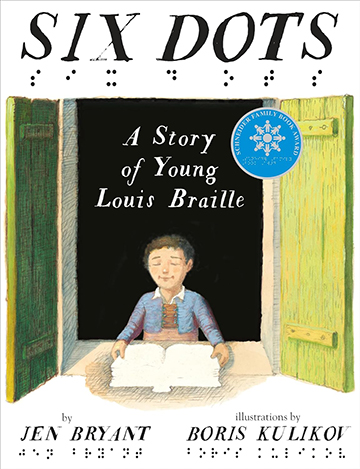
Image courtesy of Amazon

Six Dots: A Story of Young Louis Braille by Jen Bryant (Alfred A. Knopf, 2016) shares the story of Louis Braille’s childhood and how he overcame many obstacles and challenges to invent an alphabet for people who are blind that is still in use today.


1 John Alston, Letter to the Directors of the Institutions for the Blind in Great Britain & Ireland, 4 July 1837
Happy International Children’s Book Day!

Portrait of Hans Christian Andersen, taken by Thora Hallager (1869). Wikimedia Commons

April 2 is not only Hans Christian Andersen’s birthday (happy 219th birthday, Hans!), it’s also International Children’s Book Day! Started in 1967 by the International Board on Books for Young People (IBBY), International Children’s Book Day is dedicated to children’s books and is committed to inspire a love of reading in children around the globe. Schools and libraries are encouraged to host parties or story times, read picture and chapter books, have kids pen their own tales or poems, and overall celebrate a worldwide appreciation of children’s books.

Every year, a National Section of IBBY is nominated to be the sponsor of International Children’s Book Day. The sponsor decides upon a theme, invites a prominent author to write a message, and an illustrator is asked to design an announcement poster. The 2024 international sponsor is Japan!

Courtesy of IBBY Japan #ICBD24

Japan’s 2024 theme is “Cross the Seas on the Wing of your Imagination.” Author and recipient of the 2018 Hans Christian Andersen Award Eiko Kadono composed a gorgeous letter encouraging children to listen to stories that travel everywhere. Artist Nana Furiya designed the official poster, which whimsically repeats the theme in several different languages under a tall tree filled with book characters.

As Katie was composing this post, she got to thinking…what are our Princeton University Library colleagues’ favorite children’s books? Katie asked them that very question and also asked them to explain why in just one sentence.The book could be a recent read, a beloved title from the past, or a favorite as of today.

The response was tremendous! Our colleagues shared books we remembered reading as a child, titles we had never heard of before, stories we have poured over multiple times, and others we are eager to pick up and read. Here are the favorites, listed in alphabetical order by last name:

“Aside from being beautifully illustrated by Gary White Deer, it’s based on a true story, largely forgotten by most of the world, that unites the disparate parts of my ethnic heritage (which aren’t actually that disparate in the end).”

April Armstrong – Library Collections Specialist V, Mudd Manuscript Library


“I remember reading the Redwall books every chance I could get while on family vacation in Maine circa 1994. Just a totally immersive, absorbing experience.”

Kathleen Brennan – Records Manager


“Not only has it been a joy to read it with both of my kids, but it’s a surprisingly thoughtful little story about childhood anxieties and misunderstandings.”

Tom Bruno – Assistant Director, Content Access


“The art is gorgeous, the book is inclusive, and it’s a great introduction to graphic novels. Plus, the tea dragons are adorable.”

Halle Burns – Research Data Management Specialist


“’Favorite’ does not seem an apt word for describing a story that made a fourth-grade me sob uncontrollably as if in bereavement, but I would not trade the experience of reading “Little Mermaid” for that of reading ten happy-ending stories combined. (HCA’s “Little Mermaid” in Chinese translation by Ye Junjian, not in its Disneyfied version)

Minjie Chen – Metadata Librarian for the Cotsen Children’s Library


“I still quote this book: ‘You get what you get and you don’t get upset.’”

Carolyn Cole – Senior Library Software Engineer


“It illustrates the process of self-discovery.”

Alicia Cozine – Senior Library IT Operations Engineer


“It is a story about not caring what others think or conforming to the role society has written for you. With hard work, persistence and creativity, you can make anything happen – like surrounding yourself with nature, even in the middle of the city.”

Jessica Hoppe Dağcı – Coordinator, Marquand Library Operations and Special Collections


“Her house is upside-down! She’s essentially the neighborhood witch, and I love how all the kids’ commonplace problems manifest in reality.”

Dominique Dixon – Associate Librarian


“Adventures of a worker bee who likes to eat pollen, make sweets, and organize her honey pots.”

Mireille Djenno – Global Special Collections Librarian


“It opens up a good discussion about where our food comes from.”

Ameet Doshi – Head, Stokes Library


Darlene Dreyer – Assistant to the Associate University Librarian


“I read it as an adult and was very moved by it. The description of the family and beautiful young friendship, and the more than devastating ending.”

Rebecca Friedman – Assistant Librarian, Marquand Library


“I love the details in illustrations, and as a young parent I could totally understand Petson’s life with a naughty kitten. I read it in Russian countless times, and it was translated to many languages (English title: Pancakes for Findus).”

Maria Gorbunova – Rare Books Cataloging Librarian


“Besides beings a nice story for children who love animals, I appreciate that it was an early exposure to thinking about ethics in scientific research. It also provided considerate thoughts about the nature of prejudice and touched on environmentalism, so not merely the endearing tale of a motherly mouse seeking to save her sick child from the spring plow, but that was also a lovely aspect of the story.”

Hannah Hadley – Manager, Open Publishing and Repository Services, Library-Data, Research and Teaching Services


Berta Harvey – Library Collections Specialist V, Lewis Science Library


“My children found it so engaging when they were toddlers. It has very expressive pictures and it’s fun to read.”

Anna Headley – Senior Library Software Engineer


“A book of stories and poems, mostly whimsical, always thoughtful, and sometimes melancholical.”

Regine Heberlein – Library IT Data Analyst


“ALL of Freeman’s picture books are beautiful!”

Flora Kim – Metadata Operations Specialist


“It was the first time I’d seen my own love for books and fantasy stories reflected back in a book.”

Morgan Kirkpatrick – Special Collections Project Cataloging Specialist II


“This is a wonderful story about how love and care impact the ways living beings interact with the world – all wrapped up in an adorable story about a family trying to adopt fearsome watchdogs only for each dog to become more of a marshmallow than the last.”

Brittany Norwood – Policy and International Affairs Librarian


“The illustrations are rich; my son and I see something new each time we read it. It’s also a wonderful story about how even the most contentious relationships can be healed!”

Stephanie Oster – Publicity Manager, Library Communications


“My favorite story to read to my kids when they were young.”

Anu Vedantham – Assistant University Librarian for Research, Teaching, and Social Sciences


“Timeless triumph of peace and gentleness over stupidity and aggression. And the cork trees!”

Eric White – Scheide Librarian and Assistant University Librarian for Special Collections


“The book builds self-esteem and kids learn how quiet is a superpower.”

Emily Wild – Chemistry, Geosciences and Environmental Studies Librarian


And how about Katie and Dr. Dana’s books? Since someone already mentioned her favorite picture book (“…but not Ferdinand”), Katie picked Charlotte’s Web by E.B. White “because it’s a beautiful story of unexpected friendship, growth, family, and life’s hardest lesson: learning to let go.”

Katie also reminded me of how she visited Andersen’s home country during her awesome travels in Europe! You can read more about her adventures in this post!

As for me, I picked this Jan Brett classic from my childhood because “I was horse-obsessed.” I spent countless hours reading, studying, and drawing elaborate tributes to this picture book (you can see a delightful story time project we did for it here):

I wanted a horse so so so soooo very bad growing up. Wished for it, dreamed of it, waited for it. It took a couple decades, but my horse FINALLY arrived! My heart runneth over…

Three cheers for International Children’s Book Day everyone! And may all your stories have happy endings!