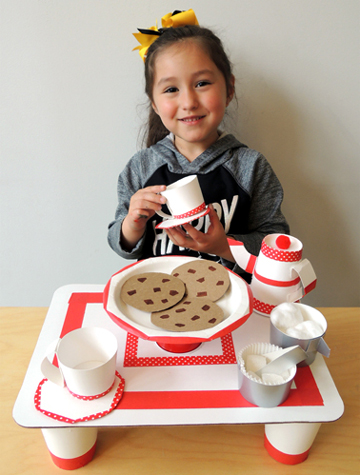
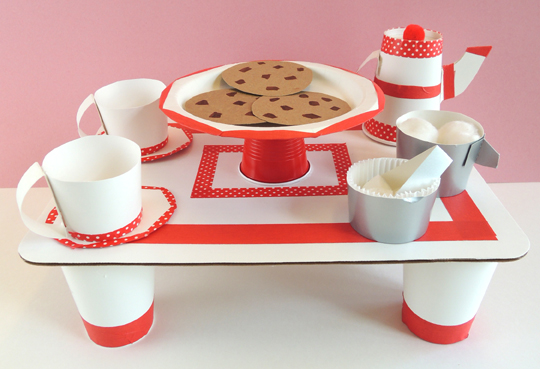
It might look like a proper tea table with matching teapot, cups, saucers, sugar bowl, creamer, and a platter of cookies. But beware! Your guests want those cookies something fierce, and aren’t afraid to get grabby in our fast-paced cookie snatching game! Video, of course, at the end of the post.
We read Tea Party Rules, written by Ame Dyckman, and illustrated by K.G. Campbell (Viking, 2013). A bear cub follows the delicious smell of cookies to a little girl’s tea party. Pretending to be the girl’s stuffed bear, the cub eagerly awaits the moment when he can devour the cookies. He’s got her completely fooled, but then the girl decides that her toy bear needs to follow the “Tea Party Rules.” In other words, he needs to be clean, neat, fancy, and dainty. Poor Cub is subjected to a bath, ribbons, perfume and a dress. But when it comes time for a lecture on dainty eating, he snaps. He attacks the cookies. When only one cookie remains, Cub stops. Suddenly, he realizes that he’s not only ruined the tea party, he’s made the girl very sad. So he gives the final cookie to her. Does she eat daintily? No she does not. She decides it’s time to play BEAR!
You’ll need:
- 9 – 10 paper cups
- 1 corrugated cardboard base (I used a 9.75″ x 13.75″ cake pad)
- A selection of patterned tape
- A selection of color masking tape
- 1 small paper plate (mine was 7″ in diameter)
- 1 spouts template, printed on 8.5″ x 11″ card stock
- Extra poster board for tea set handles, spouts, and sugar tongs
- 1 small pom-pom
- 2 circles of white poster board (approximately 3.5″ in diameter)
- 3 circles of tag board or brown poster board (approximately 3.5″ in diameter)
- 3 button magnets
- 1 rectangle of or brown poster board (approximately 2.5″ x 9.25″)
- 1 rectangle of white poster board (approximately 3.5″ x 9.25″)
- 2 jumbo paper clips (mine were 2″ long)
- Scissors and tape for construction
- Markers for decorating
- Hot glue
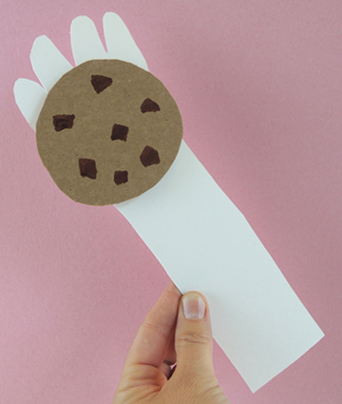
 This project consists of 1) A tea set with cookies; and 2) A pair hand grabbers for the snatching game. The cookies have magnets hot glued to them, and the hand grabbers have paper clips taped to them. Thus, when the hand slaps down on the cookie, it picks it up!
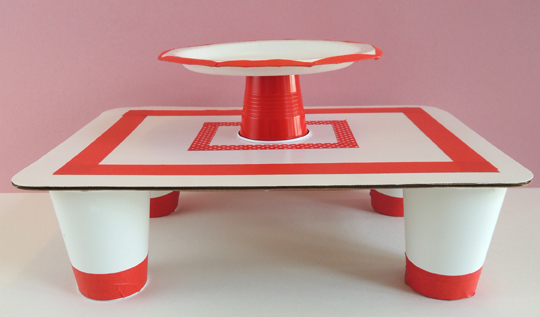
 We’ll begin with the tea set. To make the table, hot glue 4 paper cups to the bottom of a corrugated cardboard base. The cookie platter is a flipped-over cup hot glued to a small paper plate. You don’t want the cookie platter to be too tall, so you can either cut a full size paper cup down to 2.25″ inches, or use a shorter cup (we used 3.5oz plastic drinking cups from Target). Decorate the platter and table with patterned tape, color masking tape, and/or markers. Then hot glue the platter firmly to the top of the table.
 To make the teapot, flip a paper cup over, then tape (or hot glue) a poster board handle to one side. Cut the spout from the template and trace it onto white poster board. Fold the tea pot spout in half (the fold is marked with a solid black line on the template). Next, fold the spout’s tabs outward (the tabs are marked with dotted lines on the template). Attach the tabs to the tea pot with tape (or hot glue). Finish by hot gluing a small pom-pom to the top of the tea pot.
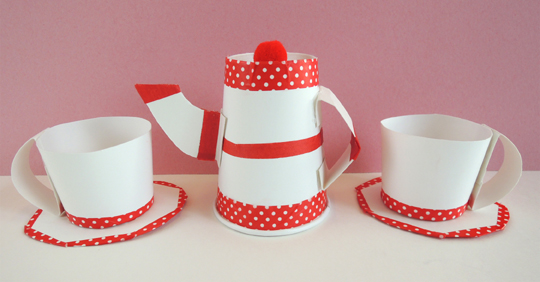 To make tea cups, cut 2 paper cups down to 2″. Use tape (or hot glue) to attach a white poster board handle to the side of each cup. Then place the cups on a white poster board “saucers.” Decorate the teapot, cups, and saucers with patterned tape, color masking tape, and/or markers.
Next up – the sugar bowl and creamer. To make the sugar bowl, cut a paper cup down to 1.5″. Drop a paper baking cup inside for extra flair. To make tongs, fold a narrow strip of poster board in half. Those cute little sugar cubes? Foam packing peanuts, cut in half.
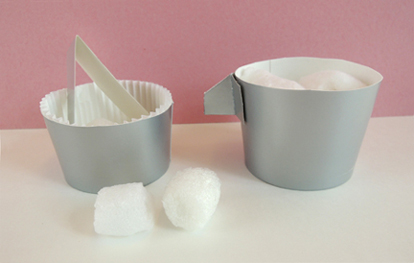 The creamer is a paper cup cut down to 2″. Cut the creamer spout from the template, and trace it into poster board. Fold the spout in half (the fold is marked with a solid black line on the template). Next, fold the spout’s tabs outward (the tabs are marked with dotted lines on the template). Attach the tabs to the cup with tape (or hot glue). We filled the creamer with white cotton ball “cream.”
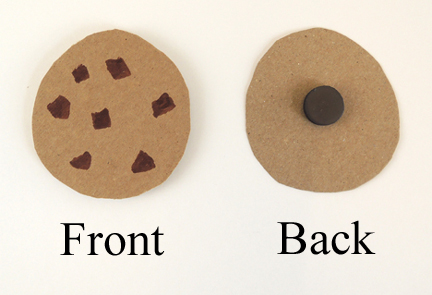
Finally…the cookies. These are circles of tagboard (or poster board) decorated with markers. We made 3 cookies per kid. Hot glue a button magnet to the back of each cookie.
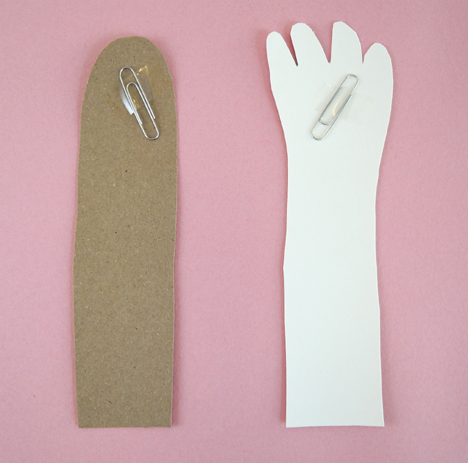
Now for the game! We had 2 hand grabbers – a bear paw and a fancy white glove. To make the bear’s paw, round one end of a 2.5″ x 9.25″ strip of tag board (or brown poster board). To make the glove, cut a hand in one end of a 3.5″ x 9.25″ strip of white poster board. Tape a jumbo paperclip across the palms of both grabbers.
 Ready to play? Have 2 kids select a grabber and sit down at the table. On “Go!” each kid must use his/her grabber to quickly remove cookies from the platter. The kid who grabs the most cookies, wins!
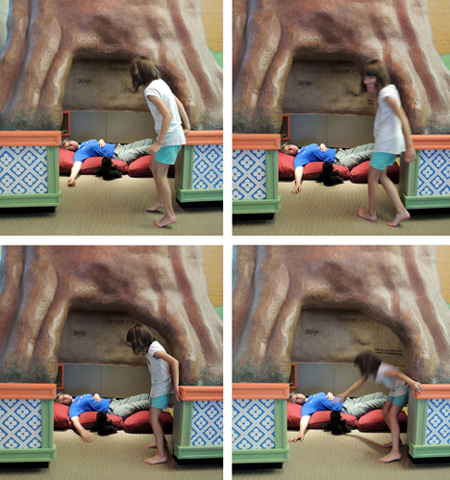 Navigate your way through a laser maze, steal a bear from a snoring sleeper, and snag some hidden diamonds. Stealthiness, sneakiness, and silence are strongly encouraged at
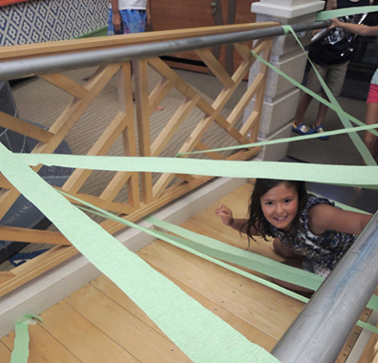
 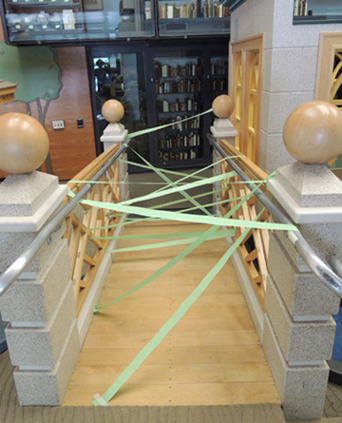 Starting at the bottom of the bridge, kids had to squeeze, crawl, and slide through the course without touching a single “laser beam.” I stood nearby, making “Zzzzzt!” laser noises at key moments.
 Story Time Task #2: George’s midterm exam involves stealing a teddy bear from a sleeping toddler. I grabbed a bear puppet, flopped on some pillows, closed my eyes, and started snoring wildly.
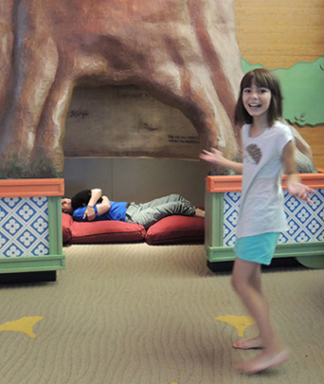
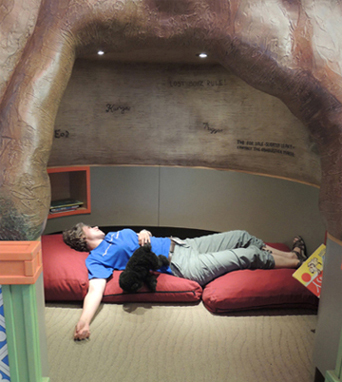 One by one, the kids had to sneak up and grab the bear without me noticing them (and they were quite astonishingly good at this). To increase the challenge, sometimes I would randomly thrash around in my sleep, throw the bear around, or grab it tightly to my chest.
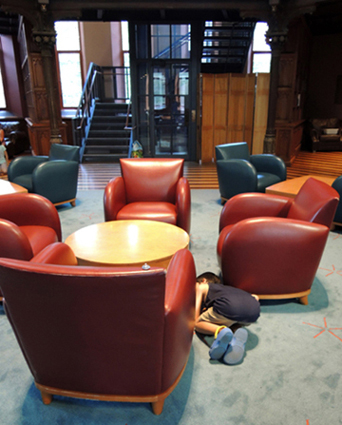
 Story Time Task #3: The diamond hunt. Pilfer Academy is a massive Gothic mansion with arches, spires, and stained-glass windows. I thought it would be fantastic to immerse kids in a similar environment, so we headed over to one of my favorite places, the Chancellor Green Rotunda.
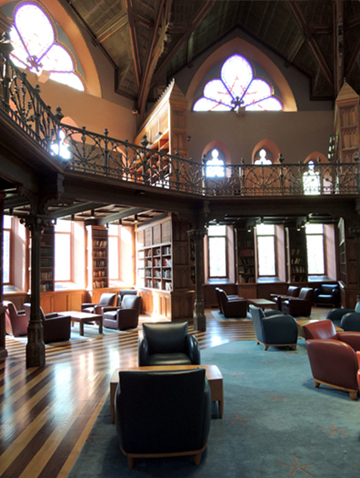 This beautiful room was once the original library for Princeton University. Now it’s a study space for the Andlinger Humanities Center. Here’s a shot of its elegant stained-glass dome.
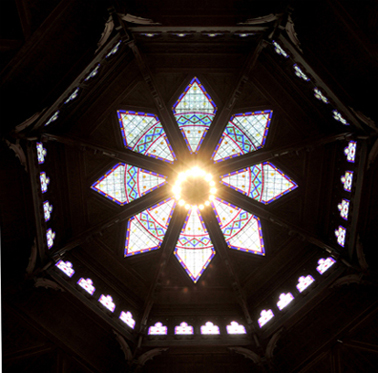 On this particular afternoon, however, the room was full of hidden diamonds!
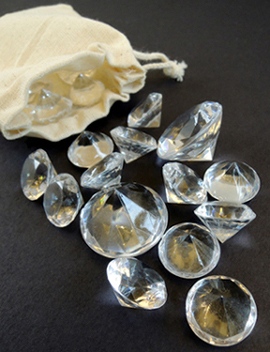 I found these acrylic diamonds in the wedding section of Michaels Craft store. A $5 pack contained over 75 diamonds of assorted sizes (from 0.75″ to 1″). I hid the larger diamonds in various locations in the room.
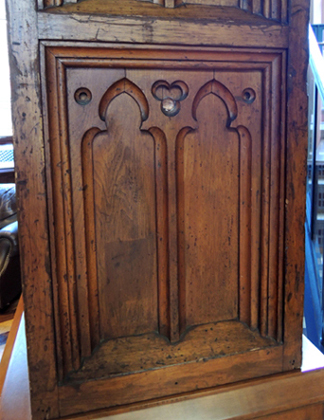
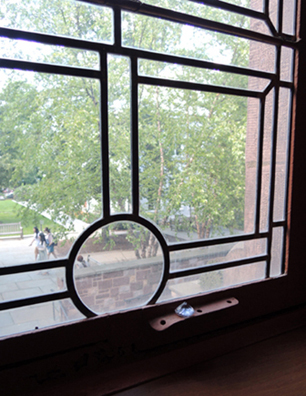 Sometimes I got a little sneaky. Can you spot the diamond in the wood paneling below?
 One by one, kids went searching for diamonds in the room. Once you found two diamonds, it was another person’s turn to search. And you had to be completely silent while searching!
 At the end of the program, each kid got to take home a little drawstring bag with some diamonds in it. Score!
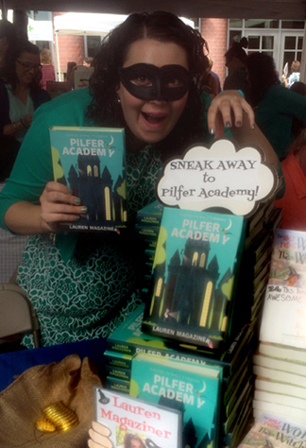 That’s right! Lauren Magaziner herself! Totally rocking a bandit mask, I must say. Thanks for the fantastic book Lauren. We absolutely loved it.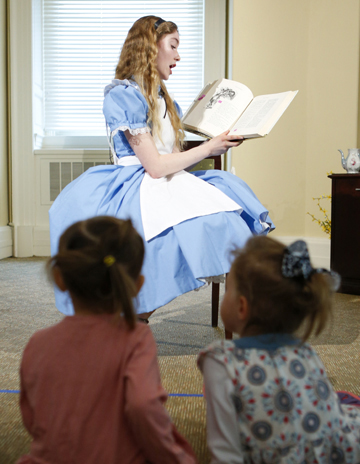
 Interestingly, there is a connection between the original Alice manuscript and the Library of Congress. In 1864, Charles Dodgson (better know as Lewis Carroll) presented Alice Liddell, his child friend, with Alice’s Adventures Underground, a fantastical story he wrote and illustrated just for her. Later, the manuscript would be re-worked, illustrated by John Tenniel, and published as Alice’s Adventures in Wonderland.
 After a reading by Joani (who also performed a song from the time period – you can listen to an earlier performance of it
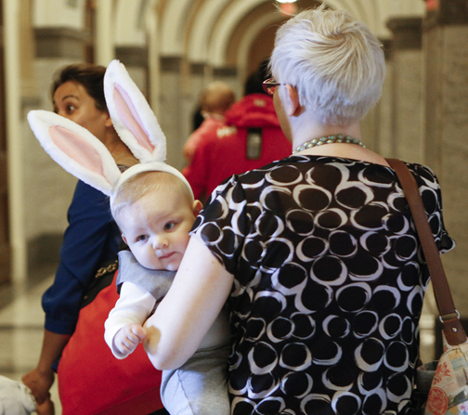
 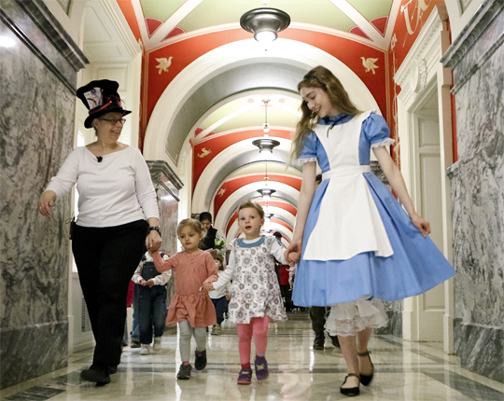 Many got into the spirit of things by wearing their own costumes!
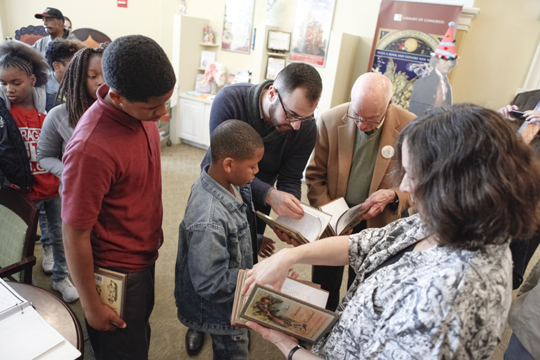
 In addition to the Alice story time program, the Young Readers Center partnered with the DC-based nonprofit Everybody Wins! DC. Fifth grade students from the J.O. Wilson Elementary School heard members of the International Lewis Carroll Society read from the book. Then, they chatted about what it means to be a professional hobbyists and book collectors. Each child was presented with a copy of the book to take home too.
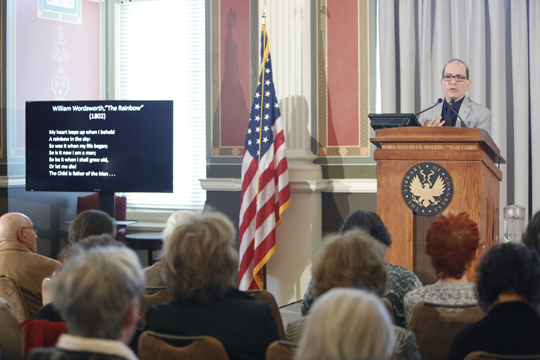
 The following day, the Center for the Book presented scholar and historian Leonard Marcus as their “Books and Beyond” speaker. His talk, which was titled “Lewis Carroll in the Mirror of Surrealism,” discussed the famous author and his place in surrealism art.
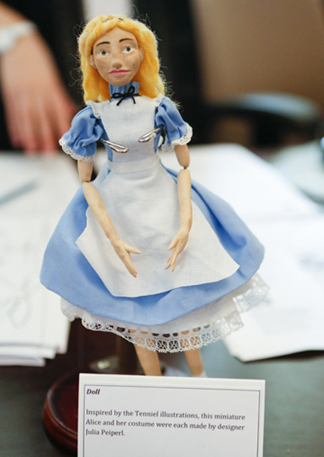
 Before we leave these adventures in wonderland, a quick word about Joani’s fantastic dress. It was custom-made by Princeton University junior Julia Peiperl. Julia based her designs on Tenniel’s original illustrations, complete with the petticoats and pantaloons. She also made a smaller version of the dress, which was included in a Young Reader’s Center exhibit. Callooh! Callay!