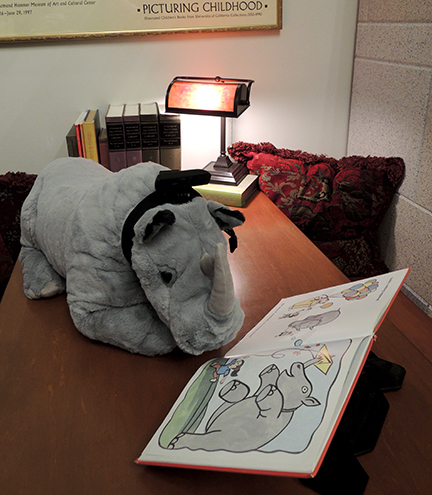
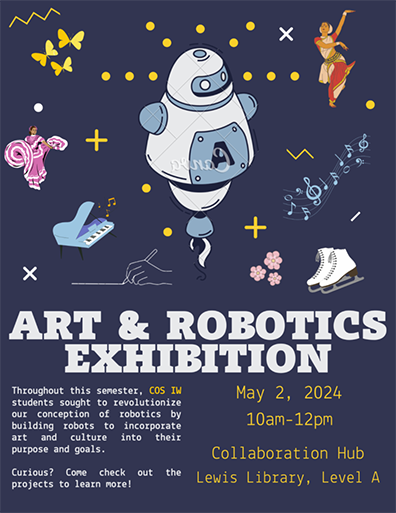
Grab a book, cuddle up, and let the reading begin! This is Rey the Rhino Reader, an original robotics project designed and programmed by Princeton University graduate Aneekah Uddin. Rey was part of a larger “Art & Robotics” exhibit on campus last spring.
 As you can see from the set up below, Rey wears a camera on his head, which is in turn connected to a laptop. When you place a book in front of Rey’s nose, the program will scan the page and read the book aloud to you! Flip the page, and the story continues at your pace.
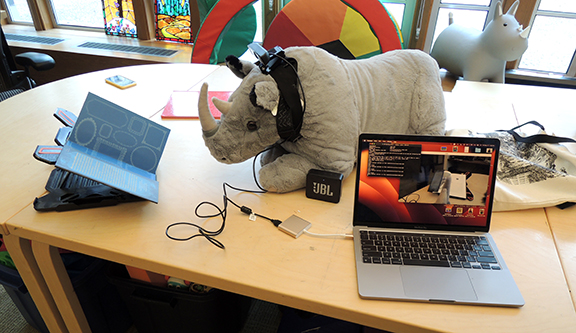 While the concept appears very simple, it turns out that programming a robot to read can get rather…complicated. I caught up with Aneekah to ask about her inspirations for this adorable project.
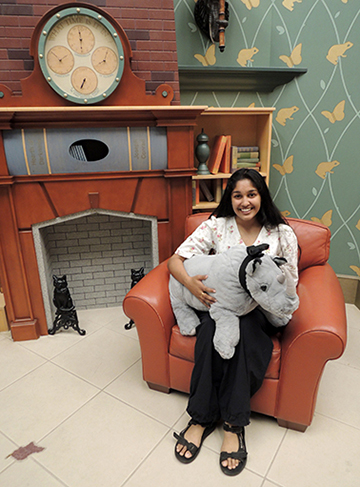 Hi Aneekah! Tell us a little about yourself!
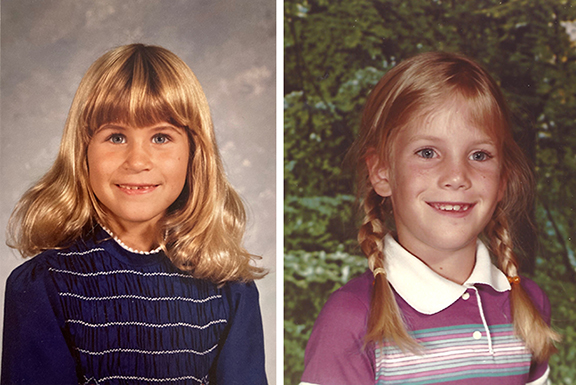
Hi! I was born and raised in Montclair, NJ, and I recently graduated from Princeton (Class of 2024) with a degree in Computer Science and Theater. I love exploring new places, performing arts, and crafting—particularly metalworking and upcycling clothes. One of my favorite childhood book series was Cam Jansen!
How did this project begin?
In my final semester at Princeton, I participated in an Independent Work Seminar titled “Reimagining Robotics Through Art,” taught by Professor Radhika Nagpal. At the beginning of the semester, we explored how the origins of robotics have been influenced by colonialist and patriarchal frameworks, as highlighted by Professor Ruha Benjamin in her book “Race After Technology.” Inspired by these discussions, Professor Nagpal encouraged us to reimagine a future of robotics that challenges these frameworks by centering arts and creativity. As an actress, scriptwriter, and dancer, storytelling is fundamental to my understanding of art. For my project, I aimed to create something both functional and subversive of colonialist and patriarchal norms, while celebrating my love for storytelling. This led to the creation of Rhino Reader!
Tell us a little bit about your philosophy on early literacy for kids!
Eighty-two percent of students eligible for free or reduced lunches do not read at or above proficient levels by fourth grade. I was among the fortunate 18 percent who did, thanks largely to my upbringing. My mother instilled in me the importance of reading from an early age. She read to me daily and, as I grew older, helped me practice reading, sounding out words, and tackling more challenging books. Her dedication was instrumental in my development of English skills and my eventual acceptance into a leading university. However, not every child has the privilege of having a parent who can read, who has time to spend, or who has access to resources. Studies have shown that this kind of support can significantly transform a child’s trajectory. All children should have access to the opportunities and resources they need to develop strong literacy skills from a young age.
What was the most difficult or unexpected part of this venture?
Reading children’s books is challenging! It’s even more difficult for a robot because there’s often no clear “order” to the text. Words can be arranged across pages in unconventional shapes, various fonts, and conflicting orientations. Distinguishing between line breaks and sentence endings isn’t always straightforward, and there’s the added complexity of onomatopoeia. For a robot, learning to read a children’s book is a significantly harder task than understanding a legal contract or research paper.
If you were a kid again, what book would you like the rhino to read to you and why?
Elephant and Piggy! These Mo Willems books are among my favorites, and I spent countless hours reading them to my younger siblings, who are five and six years younger than me. They hold a special place in my heart.
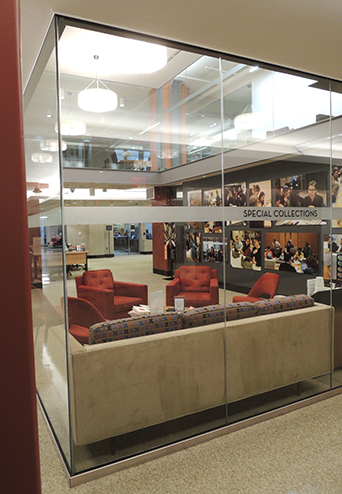
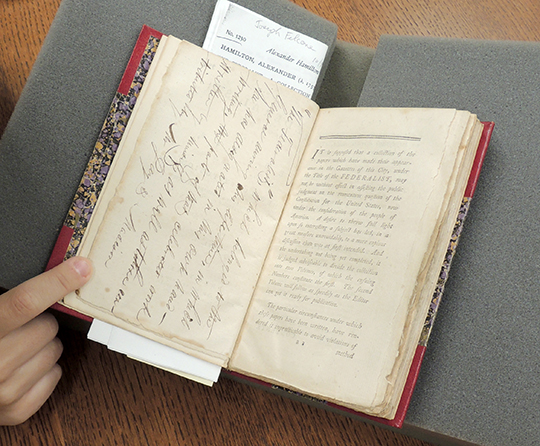
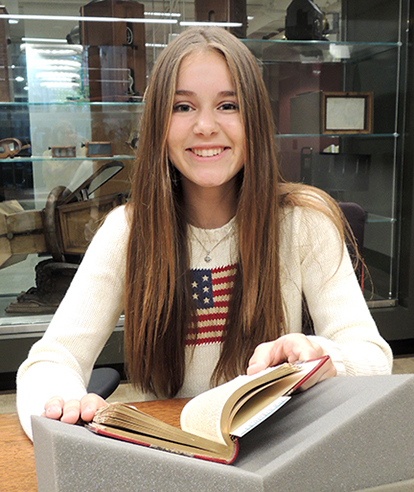 It’s not everyday you get to hold history in your hands! But when Princeton University sophomore Abigail Readlinger gifted us a copy of her children’s novel, I just had to facilitate a connection between her love of American history and our special collections. Later, I asked Abigail to write about her experience and share the inspiration for her charming book…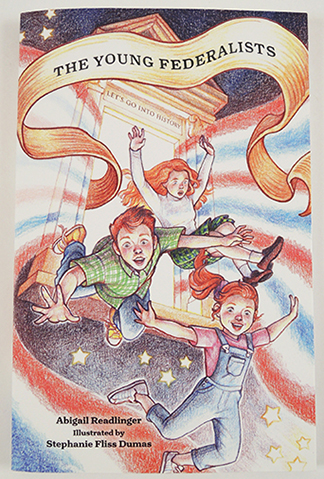
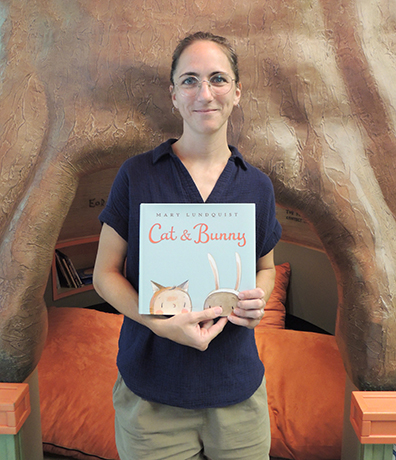
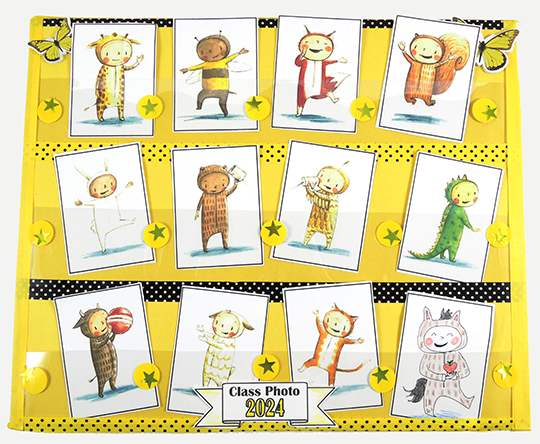 Fall weather is here, kids are back in school, and that means…school picture day! We put a fun twist on class photos when we invited awesome author and illustrator Mary Lundquist to our library. Check out her interview at the end of the post!
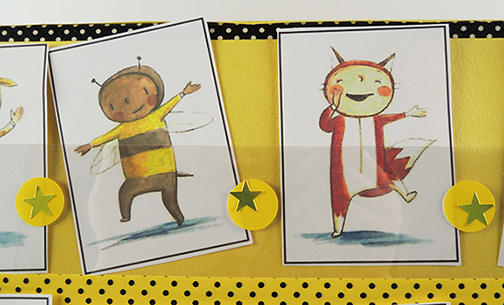 The back of our boxes had flaps, so we hot glued a strategically-placed jumbo craft stick to the top flap, which allowed the class photo display to be propped up like an easel.
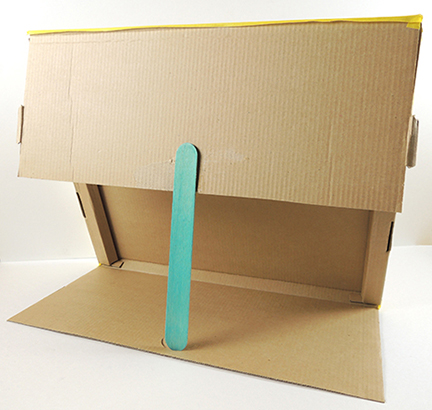 This project also works with a flat piece of cardboard or poster board and simple construction paper pockets. It’s super easy to modify!
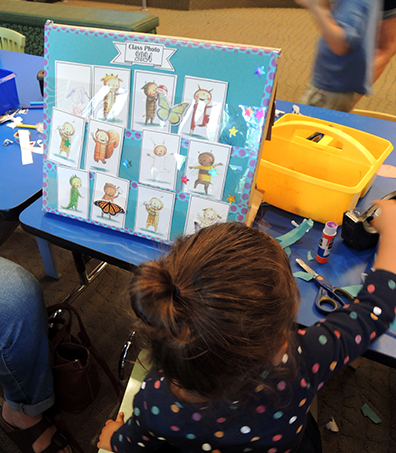 Once kids had finished their class photo display boards, we had everyone gather on the gallery floor. Next, we distributed packs of cards containing the characters in the book. One kid had a pack of just cats, another had just bunnies, another had just foxes…you get the idea. When we said “Go!” the kids (and their caregivers) mingled, trading cards back and forth until they had a complete deck of all eleven unique characters.
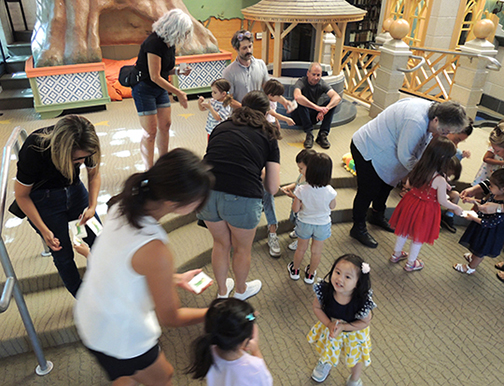 As you can imagine, trading was brisk, and involved a lot of saying hi, talking, sharing, keeping track of your cards. It was so friendly, and so sweet.
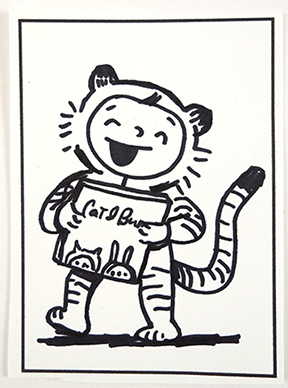
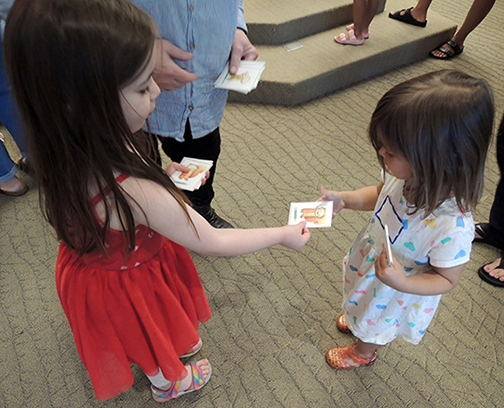 There was one extra special bonus! Each deck had a blank card, so kids could draw themselves on the card as part of the class photo. OR…even BETTER…Mary Lundquist could draw you as one of her characters! Look at this Princeton tiger!
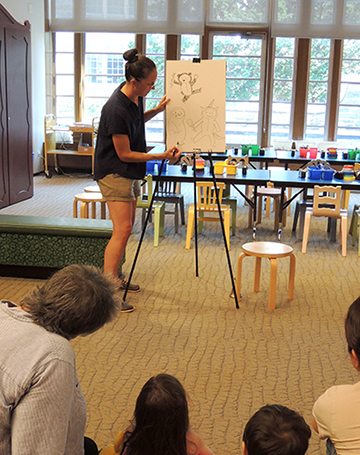
 Mary was so fantastic to have at our library! Not only did she give a fabulous read aloud of Cat & Bunny, she did a free draw portion where kids voted on a new book character and she demonstrated how she illustrates!
 Later, I caught up with Mary to ask her a few questions about her delightful work…