Monkey Business

monkey businessWith a turn of the wrist, this gymnastic little money swings around (and around and around) his colorful rainforest branch!

monkey swingsWe read BIG Little Monkey, written by Carole Lexa Schaefer and illustrated by Pierre Pratt (Candlewick, 2008). A little monkey wakes up one morning, ready to play, and finds that his family still wants to sleep. He decides he’s ready to be a Big Little Monkey and leave the tree to find some new friends to play with. He encounters a sloth, a parrot, and finally…Sly Boa. The game “curl my tail around in tricky ways” doesn’t sound too good to Big Little Monkey, so he quickly scoots back to his family, happy to be their Little Monkey once again.

You’ll need:

  • 1 small oatmeal container
  • Dark brown construction paper for body, hair, and ears.
  • Light brown construction paper for mouth (approximately 2.25″ x 3.5″)
  • 1 oval of self-adhesive foam (approximately 1″ x 1.5″)
  • 2 wiggle eyes
  • 1 strip of brown poster board for the tail (approximately 2″ x 10.5″)
  • 1 monkey business template, printed on 8.5″ x 11″ card stock
  • An 8.5″ x 8.5″ square of tagboard for arm & leg templates and tree branches
  • box cutter
  • 1 brass fastener
  • 1 paper towel tube
  • A pencil for tracing
  • 6 – 8 green construction paper leaves
  • 2 small feathers
  • Scissors, tape, and glue stick for construction
  • Markers for decorating
  • Hot glue

Begin by wrapping the oatmeal container with dark brown construction paper. Fringe more dark brown construction paper and tape it to the top of the lid for hair. IMPORTANT: Make sure you don’t tape the lid to the oatmeal container closed! You’ll open the container later to secure your monkey’s swinging arm.

Cut the light brown construction paper rectangle into an oval, and glue to the front of the head. Attach the wiggle eyes (using hot glue), the self-adhesive foam oval, and two dark brown construction paper ears. I used the markers to drawl little swirls in the ears and put a smile on my monkey’s face.

monkey faceYou’ll notice that the ears very close to the eyes and mouth. This is so the ears don’t hamper the movement of the monkey’s swinging arm.

The face is done, now for the body! Curl one end of the brown construction paper tail around a marker, then tape or hot glue it to the back of the oatmeal container. Cut the arms and legs out of the template and tape (or hot glue) the two legs and the short arm to the container. I curled the short arm up in the classic monkey “hand in the armpit pose.”

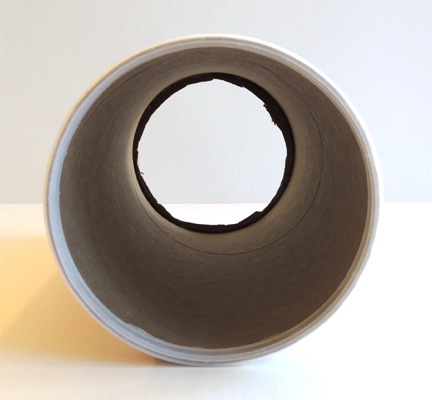
classic monkey armFinally, the monkey’s swinging arm. Cut a tagboard arm from the template, then place the paper towel tube on the round part of the swinging arm. Use the pencil to trace the diameter of the tube onto the template. Then cut the circle out.

swinging arm stepsUse the box cutter to make a small slit at the bottom of the swinging arm (you can see it in Step 3 of the image above). Make another slit in the side of the oatmeal container. Push the brass fastener through the slit in the swinging arm:

swinging arm 1 Then remove the oatmeal container’s lid and push the brass fastener through the slit in the oatmeal container.swing arm 2cReach inside the container to unfold the prongs, then replace the oatmeal container lid.

swinging arm 3The monkey is done, now for the rainforest swinging branch! Cut two tagboard branches (mine were about 8.5″ long):

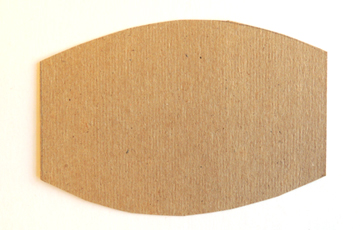
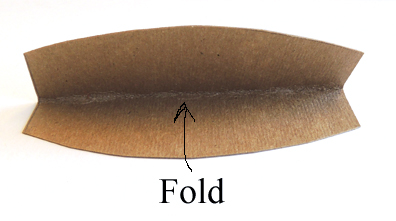
branchesHot glue or tape the tagboard branches to the very end of the paper towel tube. Use markers to color the bird and the butterflies. The butterflies and green construction paper leaves can be glued of taped onto the tagboard branches. The bird requires just a few extra steps. First, fold the template like so:

bird step 1Using the dotted lines as guides, fold the two tabs outwards.

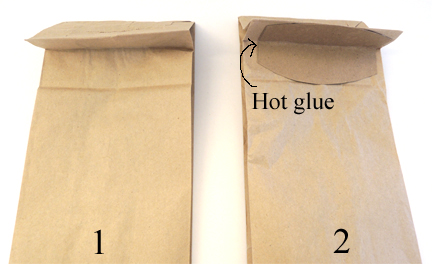
bird step 2Use tape to attach 2 small feathers to the bird template as a tail. However, when you finally tape or hot glue your bird’s tabs to the branch, make sure the bird is at the very end and the tail faces away from the monkey’s swinging area.

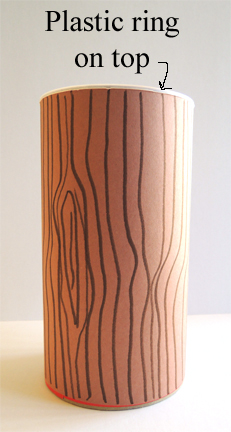
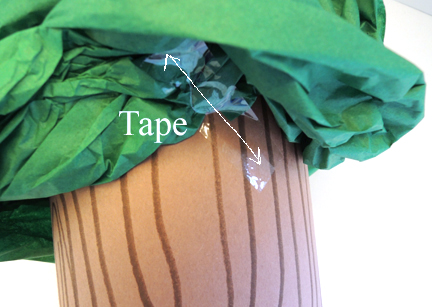
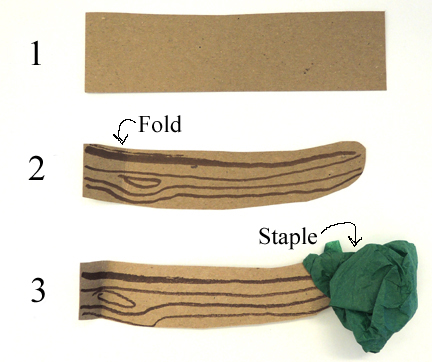
end of tubeAgain, attach the branches and bird on the very end of the tube! Otherwise, those items will be smacked repeatedly (or completely taken out) by the swinging monkey. We had a few tangled monkeys and squashed birds at story time, and had to do some quick repairs.

To operate the monkey, slide the swinging arm over the paper towel tube, hold it at arm’s length, and begin swaying the tube back and forth. As you build more momentum, the monkey will circle around and around on it’s branch. It’s virtually impossible to not make monkey noises while you’re doing this. Go on. We dare you to not make monkey noises!

The Perfect Boggart

the perfect boggartNeed a boggart in a suitcase to transport to your next Defense Against the Dark Arts class? We can make that happen! Imagine a suitcase innocently resting on a tabletop (or handsome leather chair). But then, just when you least expect it, it jumps and bumps as the boggart inside tries to escape!

I created this suitcase boggart for a Harry Potter event my library hosted, and it was very much enjoyed. Best of all, it was super simple to make. The secret behind the boggart is this:

weazel ballMeet the “Weazel Ball.” It’s a pet toy with a rotating motor inside it that causes the ball to scoot around randomly, pulling and twitching the furry weasel on top. It’s meant to drive cats and small dogs crazy, but I knew it would be the perfect boggart. I purchased this one on Amazon for $6.

In addition to the Weazel Ball, you’ll need a suitcase or trunk. The 12″ X 18″ suitcase pictured in this post is made of decorative cardboard. I found it at Michael’s Crafts on the 40% discount shelf, so it cost $15. Woot woot!

My suitcase was smooth on the inside, but if you use something with a textured wood interior, you might consider removing the furry weasel from the ball so it doesn’t snag on the wood and slow the ball down.

interiorThe most important thing when selecting your suitcase (or trunk) is the ability to latch or padlock it shut. This will prevent young skeptics from pulling up the lid and shouting “Daaaaad! I told you there’s no boggart in here!”

latchesThe other thing you’ll need are spare batteries. If you haven’t heard from your boggart in a while, the battery may have run out (the Weazel Ball uses a single AA). Depending on how long the event is, you’ll want several on hand.

You could get ambitious and put more than one Weazel Ball in the suitcase (I’ve only tried one). But if the suitcase is threatening to bounce off the table, put some no-skid rug runners or self-adhesive foam pieces on the bottom to help it stay in place.

Kinetic Kites

kiteNo wind in the sky? No worries. With a little arm action, these kites fly indoors!

flying kiteWe read Ping-Li’s Kite by Sanne Te Loo (Front Street, 1998). Captivated by the beautiful kites in the sky, Ping-Li goes to Mr. Fo’s shop to purchase kite-building supplies. As he departs, Mr. Fo warns Ping-Li not to offend the Emperor of the Sky by flying an unpainted kite. But Ping-Li can’t resist a little test run. Unfortunately, his unpainted kite is spotted by the Emperor of the Sky, who hauls Ping-Li up to his dragon ship. Furious at the boy’s cheek, he demands that Ping-Li make the most beautiful kite in the sky or forever remain his prisoner. Clever Ping-Li paints a portrait of the Emperor on his bold and beautiful kite, winning both the Emperor’s admiration, and his freedom.

You’ll need:

  • 1 large rectangle of white poster board for kite (approximately 12″ x 19″)
  • Hole punch
  • Pieces of white poster board for decorative templates
  • 1 pencil
  • A selection of tissue paper (cut into 8″ x 10″ rectangles)
  • A selection of crepe paper streamers (approximately 23″ long)
  • 1 balloon stick
  • A selection of color masking tape
  • A length of string (mine was 45″)
  • Scissors, stapler, and tape for construction
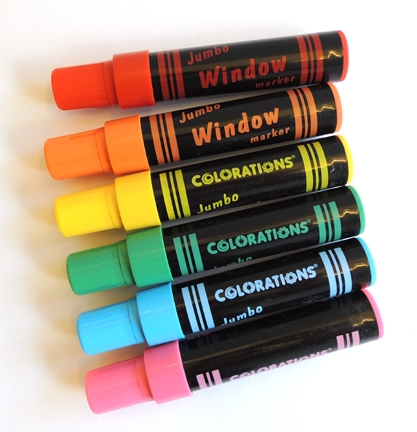
  • Markers for decorating

First, cut the kite shape out of the large poster board rectangle. After some trial and error, we determined that this shape works best. Note that the top is rounded. You don’t want any sharp corners on the top of your kite, lest it bonk you on the head!

kite shape 1Punch two holes on the right and left of the kite:

kite shape 2Now it’s time to decorate! I created a selection of poster board templates (tiger, butterfly, fish, bird, and dragon) and invited kids to trace their favorite onto the center of the kite with a pencil. When the tracing was done, they used markers to decorate the kite. I also circled the program area, Sharpie in hand, to add legs and wings to dragons, fierce eyes to tigers, antennae to butterfly, etc.

templatesWith the body of the kite decorated, select at least 3 crepe paper streamers, and staple them to the bottom (and only the bottom) of the kite. Then, fringe the tissue paper rectangles and tape them to the lower section of the kite.

fringesNot only do the fringes look great, they sound great! As the kite is circling around you, they pop and snap just like a real kite up in the sky.  If you’re interested in adding a tissue paper rosette, crumble up a tissue paper rectangle, then staple it to the bottom (and only the bottom) of the kite. Make sure to attach an even number of rosettes on the kite, so it remains balanced.

rosettePlace the kite face-down on a table. Thread the balloon stick through the two holes.

kite stick 1Wrap a 5″ piece of color masking tape around the left-hand side of the stick.

kite stick 2Next, use your fingers to push the poster board up against the taped end of the stick. The goal is to make your kite curve away from the stick slightly (so it can get some lift when you swoop it around on the string). The curve should look something like this:

kite stick 3Keeping the poster board curved, wrap a 5″ piece of color masking tape around right-hand side of the stick.

kite stick 4Then use scissors to cut off the excess stick.

kite stick 5The final step is to attach the kite string. I tried a couple different types of string and determined that this heavier string was easiest for kids to grip while still allowing the kite to fly.  Definitely don’t use yarn. It’s way too stretchy!

kite stringKnot one end of the string tightly to the center of the kite stick, then make a small “x” of color masking tape over the knot. Fold each piece of tape down tightly to secure the knot.

string stepsReady to fly your kite? Go to a clear, open space (if you have lots of little kids, make sure they s-p-r-e-a-d o-u-t and don’t cluster together). If you are right-handed, use your right hand to hold the string approximately 1.5 feet from the knotted end. Hold the other end of the string in your left hand. If you are left-handed, reverse the above instructions. Extend your right (or left) arm (i.e. the arm closest to the kite) outward and:

  1. Twirl in a circle and watch the kite spin around with you.
  2. Use your arm to circle the kite around your head like a cowboy lasso.
  3. Swoop the kite in a criss-cross / infinity symbol motion in front of you.

All three methods of flying worked at our story time, even though the criss-cross / infinity symbol motion yielded the best results (as demonstrated by the talented Mr. Ian).

final kite