 Finally! You CAN go into Mr. McGregor’s garden!
Last weekend, community families were invited to spend a day with Peter Rabbit, literature’s most enduring radish-eater. This was our first foray into Saturday programming specifically aimed at children ages 2-6, and oh my goodness was it a rousing success. We were also delighted to be joined by our friends from the West Trenton Garden Club, who you will meet a little later in this post!
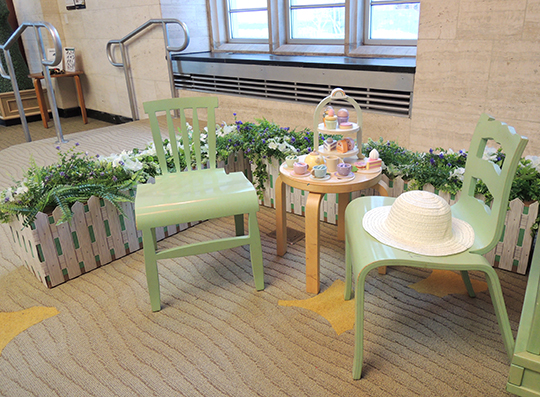
While there was plenty to learn about Beatrix Potter at the event, the main attraction was the dress up cottage and planting garden, designed with a charming Potter-esque vibe in mind. Heading over to the cottage, we had an outdoor tea garden…
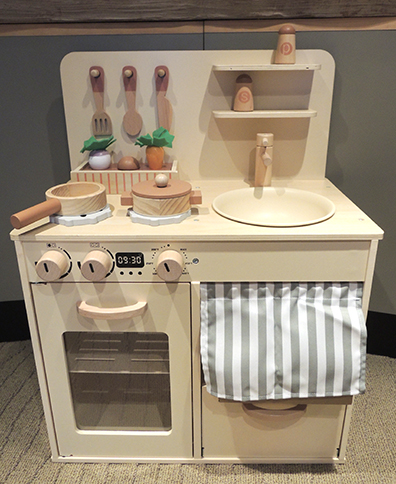
And just a few steps away is the kitchen! This was a cute wooden set we scored inexpensively online, we removed the peg legs to make it extra stable for young enthusiastic chefs.
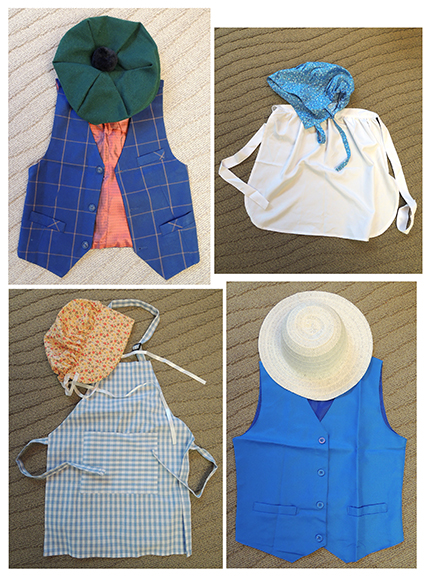
Next to the kitchen set were three baskets of dress up clothes. You can see just a few combinations below…we tried to replicate Potter’s aesthetic with aprons, bonnets, vests, straw hats, shawls, and a dashing tam o’ shanter!
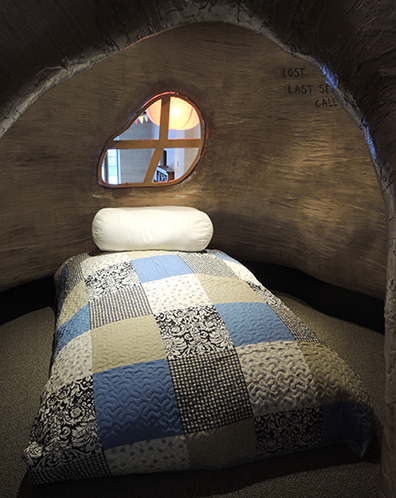
Upstairs was a cozy cottage bed (a giant floor pillow covered with a quilt and bolster):
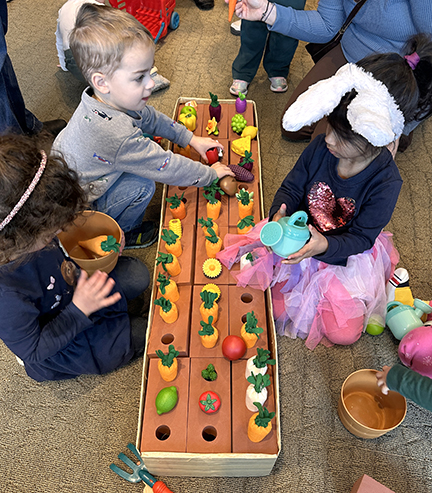
Meanwhile, over in the garden, we had two “plantable” vegetable beds, fabric carrots, garden carts, a well-stocked produce stand, and a trio of bunny bouncers!
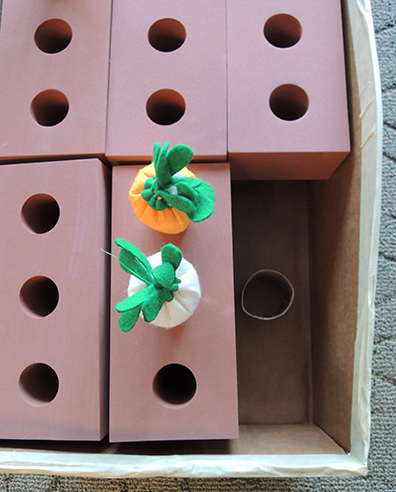
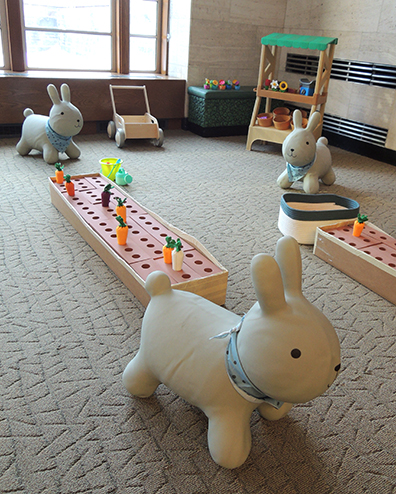 The vegetable beds were long cardboard boxes. We bought dozens of toy foam bricks, then laid the bricks on top of short pieces of toilet paper tubes hot glued to the bottom of the box. The tubes elevated the bricks just enough to allow 7.5″ fabric carrots to be “planted” in the holes of the bricks. Below you can see one of the bricks removed to reveal its toilet paper tube support:
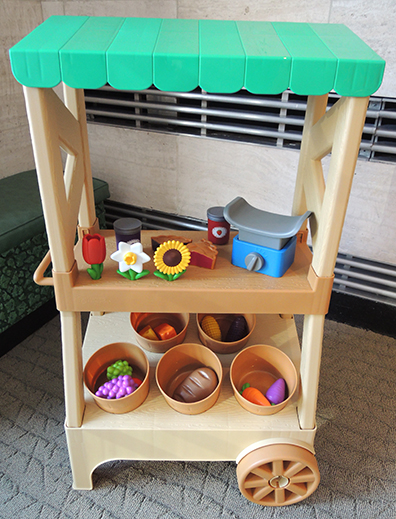
And here’s a close up of that adorable produce cart!
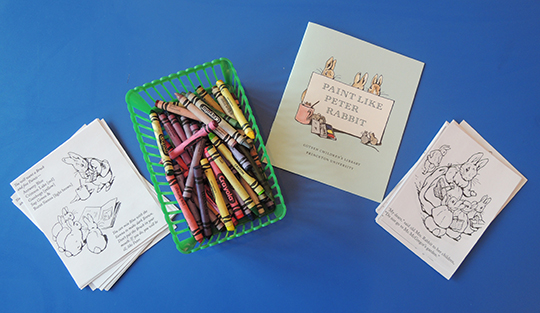
For quieter activities, we had a coloring table with sheets from “Paint Like Peter Rabbit,” a free Cotsen Children’s Library publication that features illustrations reproduced from Peter Rabbit’s Painting Book, an item we have in our special collections.
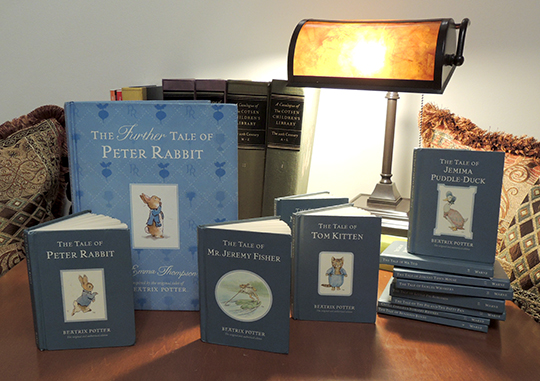
We also had a sweet little reading nook with a number of Beatrix Potter books to enjoy:
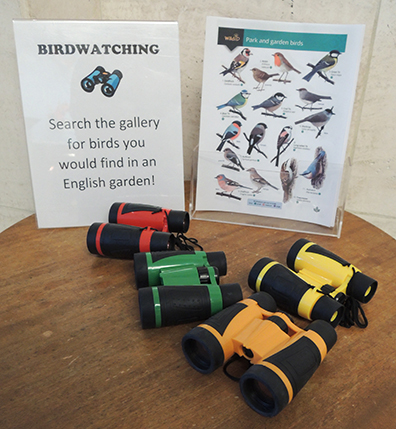
Adventurous budding ornithologists could scan the gallery for garden birds of England, eight of which we posted around the event floor:
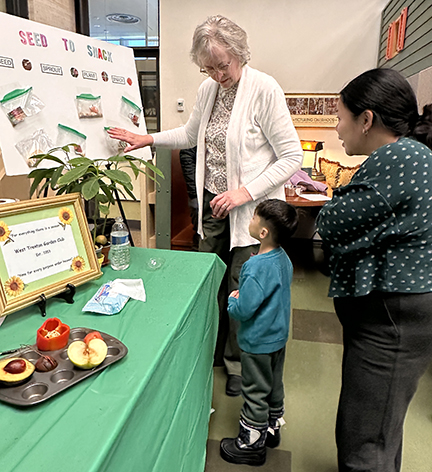
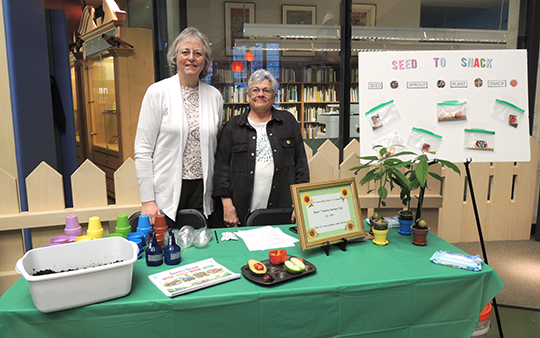
 I mentioned them in the introduction, but now it is my distinct pleasure to present Barbara Lear and Anne Skalka from the West Trenton Garden Club! These two wonderful ladies brought their enthusiasm, expertise, and boundless energy to the event, teaching kids about how plants go from seed to snack, including an display of sprouted avocado trees! They had plenty of dirt and pots on hand so kids could start little gardens of their own. They were an absolutely amazing team, and we appreciate them so much!
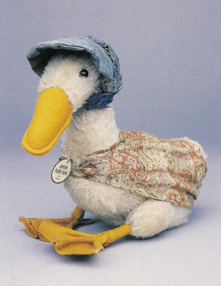
The Cotsen Children’s Library has a number of Beatrix Potter treasures in its special collections, and we wanted to use this opportunity to educate young visitors about these fantastic items. We’ll begin with an original stuffed Jemima Puddle-Duck (which I posted about here on the blog).
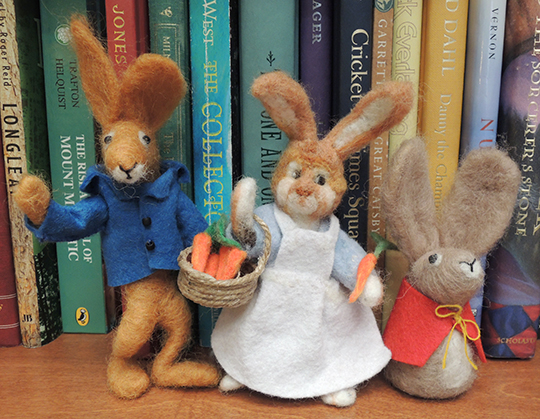
In honor of this terrific original textile, two library staff members – Wind Cowles, Associate Dean for Data, Research, and Teaching; and Sarah Reiff Conell, Research Data Management Specialist – crafted a needle felt rabbit family for visitors to enjoy!
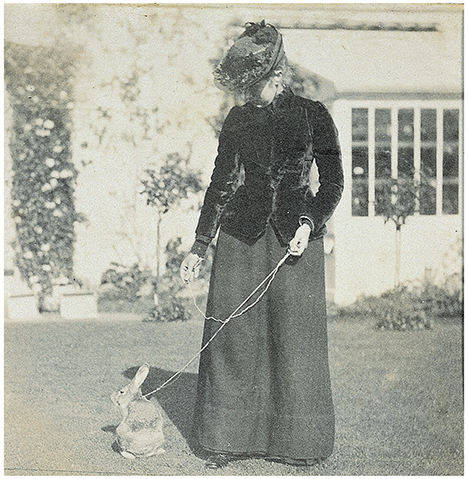
 In addition to the Jemima stuffed animal, Cotsen has a number of Beatrix Potter’s family photographs (you can browse them here). Several photos include Beatrix with her beloved pets, so we put together an exhibit wall of eight photos, including this one of Beatrix and Benjamin Bouncer:
We also have some of Beatrix Potter’s natural history drawings and picture letters she sent to children. Many of those letters became the famous books we know today, including the Tale of Mr. Jeremy Fisher, which you can view in our special collections here. We put together an event table with a display of her drawings and picture letters, with plenty of paper and pens on hand for children to try drawing and writing their own.
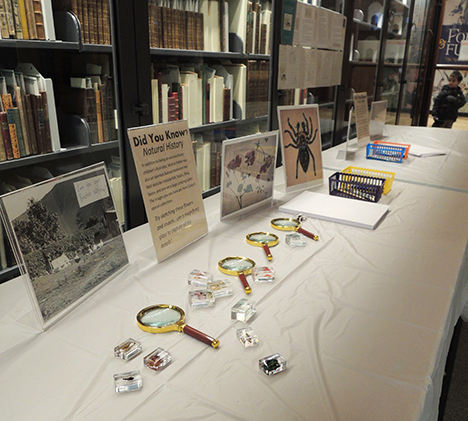
If you’d like a closer look at the handsome jumping spider illustration that’s prominently displayed in the center of the tables, you’ll find it this post.
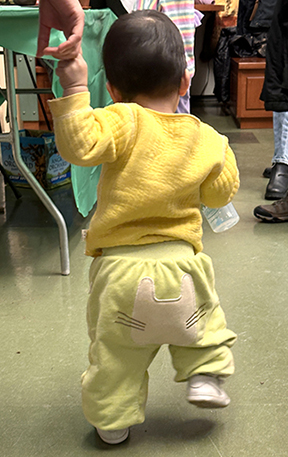
Almost all the photos you’ve seen were taken before the event, when everything was nice and tidy. But then the doors opened and it was a massive flood of happy gardeners for four hours straight. We had a HUGE turnout. Honestly, we were so hopping we barely managed to snap photos!
This slideshow requires JavaScript.
I would say that our inaugural event for younger children was an unqualified success, and it was such a delight to see everyone turn out for such a classic children’s character. In their best rabbit duds no less!
Many thanks to Barbara Lear and Anne Skalka from the West Trenton Garden Club for volunteering their time and expertise! Thank you as well to Wind Cowles and Sarah Reiff Conell for your beautiful artistic needle felt creations. And finally, thank you to graduate student volunteer Shruti Sharma for helping out on such a big day!
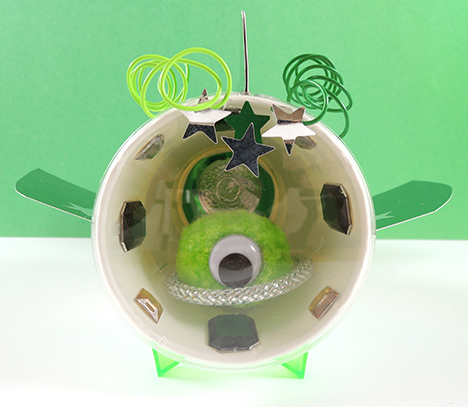 The tale of Cinderella takes an intergalactic spin with this charming paper cup rocket. Never underestimate the power of a space ship. The story time kids LOVED this project!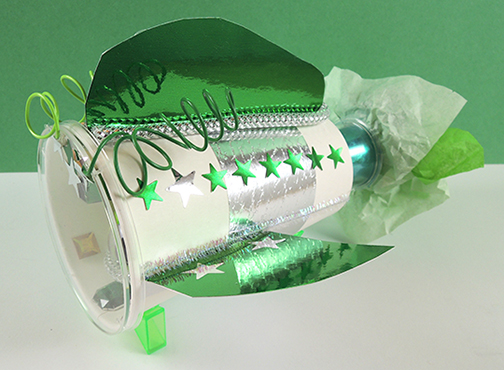
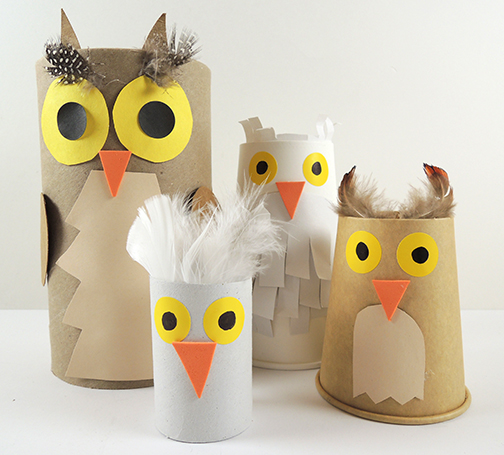 It’s a simple craft, but oh-so-dynamic when this owl family reveals itself to be a set of charming nesting dolls!
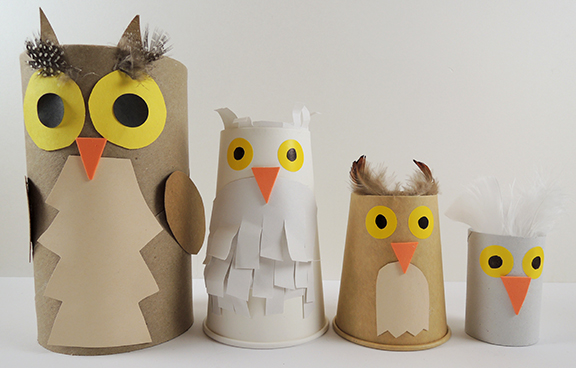 As you can see, we did different combinations of construction paper, textures, and feathers to make each owl unique, but also to keep them visually cohesive as a family. If you can, we highly recommend brown AND white cups, just to give the nesting doll reveal a fun color-change.