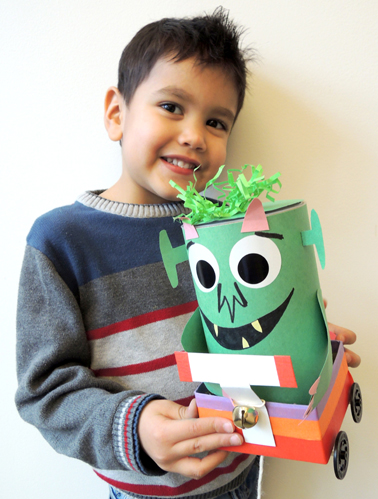
 We’ve made a lot of monster projects on the blog, but this is our first monster…on a bicycle! Where is he going? To find YOU, of course. And make a very special delivery.
We read Bedtime for Monsters by Ed Vere (Henry Holt, 2011). There are monsters out there. In fact, there’s one thinking about you at this very moment…and now he’s heading your way! But as he’s cycling, climbing mountains, and crossing swamps, is his thinking of how delicious you’ll be on toast? Or how tasty you would be slathered in ketchup? No silly! He just wants to give you a big goodnight kiss!
You’ll need:
- 1 small oatmeal container
- Construction paper
- 1 small box
- 1 piece of yarn (ours was 30″)
- 1 set of wheels (more on this below)
- Scissors and tape for construction
- Markers for decorating
- Hot glue
In one section of the book, the monster rides a bicycle. We loved the idea of a pull string bike and a pursuing monster. But it turns out, crafting working 2 wheel bikes is really hard! So you’ll have to pardon us if our bike ultimately had 4 wheels.
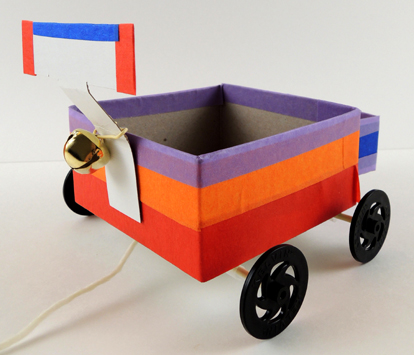 The bike is a 4″ x 4″ x 4″ craft box cut down to 2″ tall (a small tissue box works too!). We also cut the lid off the box and used it to create the T shape handlebars for the bike. Use color masking tape or markers to decorate the bike and handlebars.
The yarn pull string gets taped to the bottom of the box, and we also added a jingle bell secured with twisteez wire. To get things rolling, we recommend our “classic wheel assembly” (instructions here), but wooden wheels or spools work too. And did you notice the basket on the back of the bike?
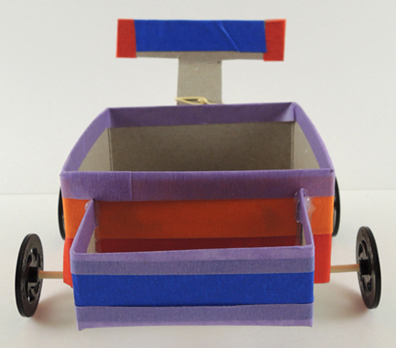 Use a small box or extra cardboard to create a small bike basket, then tape or hot glue to the back of the bike box. Not only does the basket keep the bike from tipping too far back when you’re pulling it, the basket holds something VERY special a little later. Finally, we have our monster…
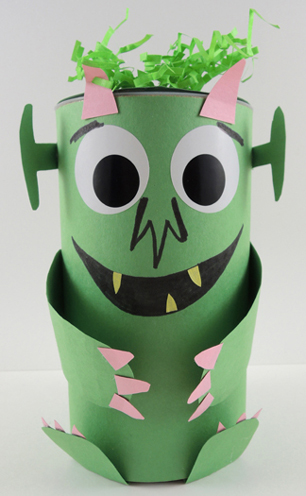 Wrap a small oatmeal container with construction paper, then add arms, legs, eyes, ears, and horns. We added a little paper crinkle to the top of his head as well. Note: if your bike box was small like ours, you might consider folding the monster’s legs upwards so they don’t get crushed. A crushed monster is an unhappy monster.
When the bikes and monsters were finished, kids pulled their creations around the gallery to where I was sitting with some construction paper hearts.
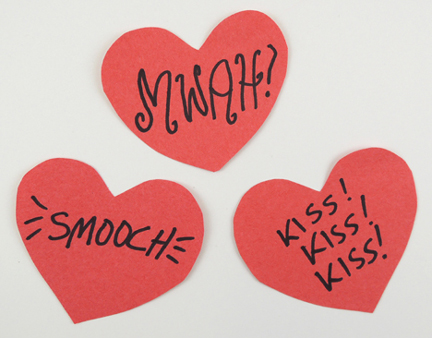 These were “kisses” the monster was carrying with him in his bike basket for you! Awww!

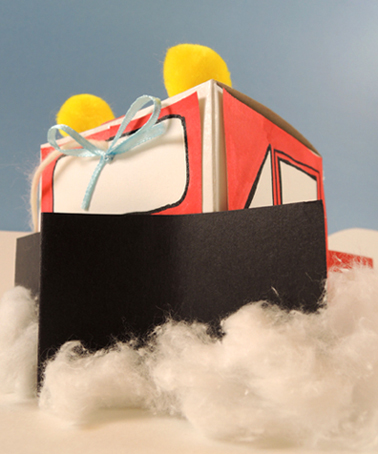
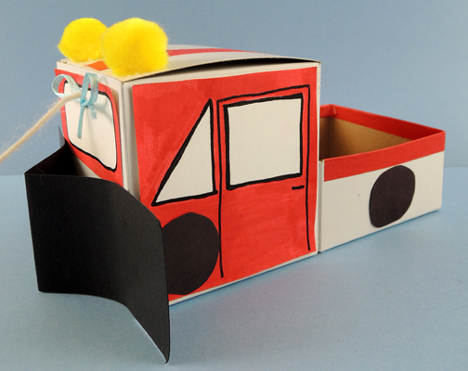
 Color and cut the side doors and windshields from the template, then tape them to the box. I would, however, like to bring your attention to this very clever variation on the template. The kid bent the doors outwards, and drew a snowplow driver inside!
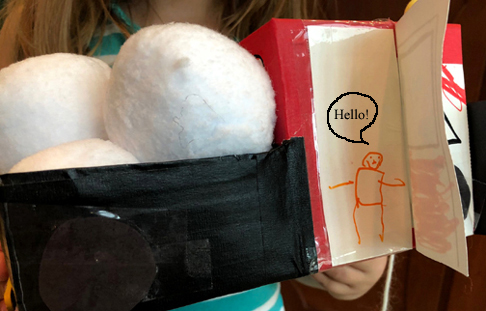 We provided
 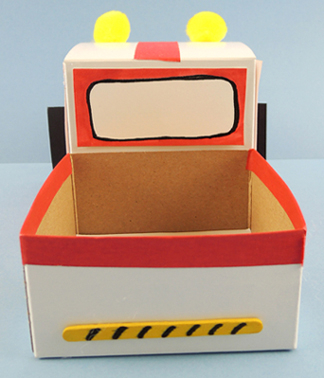 The wheels and blade of the snowplow are black poster board. Add 2 yellow pom-pom “flasher lights,” a yarn pull string, and you’re done! We decided to add an extra challenge to our story time project in the form of these fabric snowballs. I scored a dozen packages of these on deep, deep discount this summer.
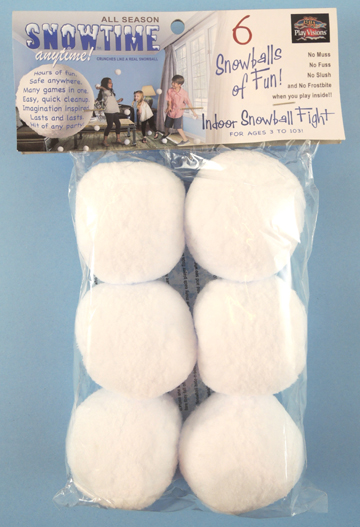 Kids were challenged to navigate our gallery, rolling the snowballs in front of the plow without losing them. Then they got to take some snowballs home!
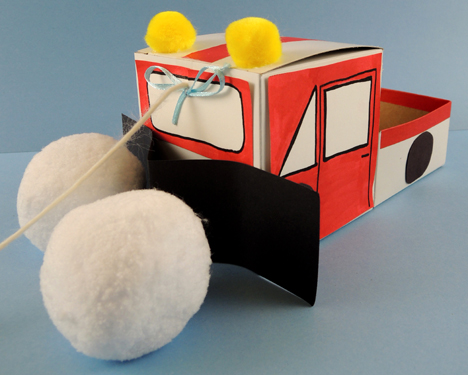 Did you notice the little blue bow on the snowplow’s windshield? In the story, Gus ties his blue scarf on Walt to celebrate the little plow being “Number One!” We definitely wanted to capture that sweetness here as well.
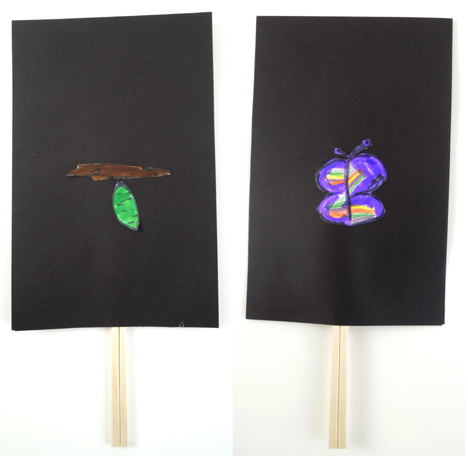
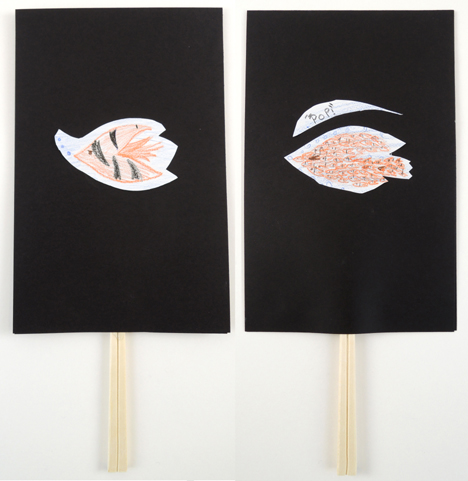
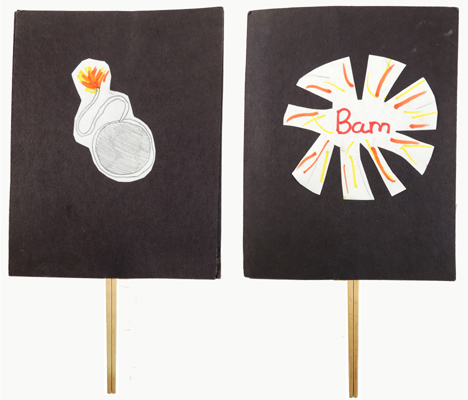
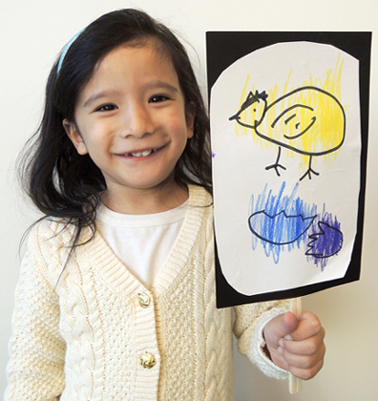 Flip the puppet back and forth to reveal a simple, dynamic story! This project was part of our library’s World Kamishibai Day
 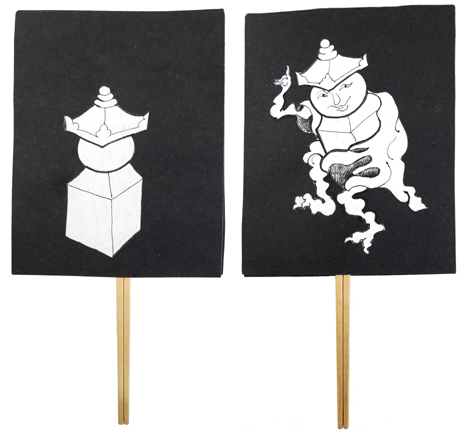 It’s way cooler to see the puppet in action though…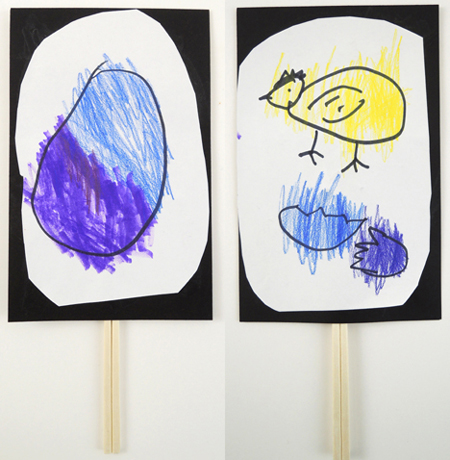
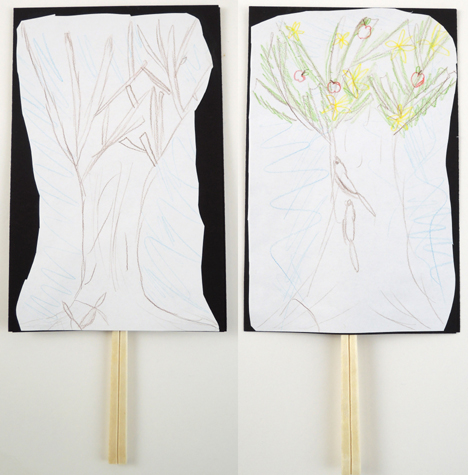 A very sweet butterfly…
 A single fish that goes “Pop!” and turns into a school of fish…
 An exploding firework…
 And a girl that duplicates into 5 girls!
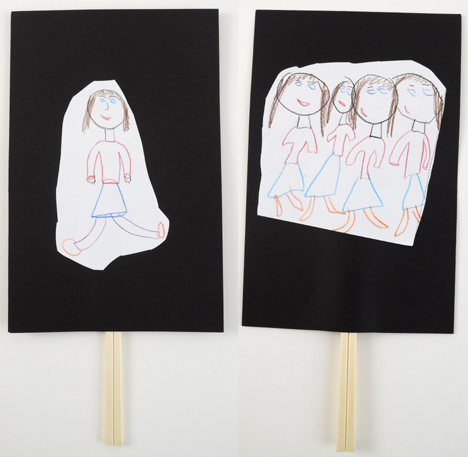 If that last one seems a little confusing, it was inspired by a kamishibai performance of Manmaru manma tantakatan (written by Fumiko Araki, and illustrated by Takuya Kusumi). It’s about a ninja boy who duplicates himself to foil a wicked serpent.