The BiblioFiles Presents: Lissa Evans

lissa evansJust posted! An interview with Lissa Evans, author of Horten’s Miraculous Mechanisms and its sequel, Horten’s Incredible Illusions.

Stuart Horten has problems. First, he’s short. Very short. Second, he’s just moved to a new town and is bored. Very bored. Third, the triplet girls who live next door appear to have some sort of journalistic vendetta against him. They’re relentless. But everything changes when Stuart discovers a cache of old coins and a hidden message from his Great-Uncle, Tony. Great-Uncle Tony was a renowned stage magician, illusionist, and creator of fabulous contraptions. He mysteriously disappeared in 1940, leaving behind a secret workshop. If Stuart can follow the clues and solve the puzzles, he’ll find the workshop.

In the sequel, Stuart, accompanied by his friend April, once again finds himself on a mysterious adventure. This time, the clues are embedded in a series of Great-Uncle Tony’s custom-built stage illusions. But the magic is real, and in some cases, dangerous. And Stuart and April aren’t the only ones interested in getting their hands on what Great-Uncle Tony has hidden.

These books are so much fun to read, and to read aloud, to kids. They are creative, humorous, intriguing, and perfectly paced. Stuart and April are wonderful characters who squabble and reconcile so realistically, you feel like you’re joining a pair of old friends. The clever clues, puzzles, and the mysteries they unveil will keep you intrigued until the very end. Horten’s Miraculous Mechanisms was short-listed for the Carnegie Medal and the Costa Book Awards.

Follow this link to the BiblioFiles webcast, podcast, and transcript

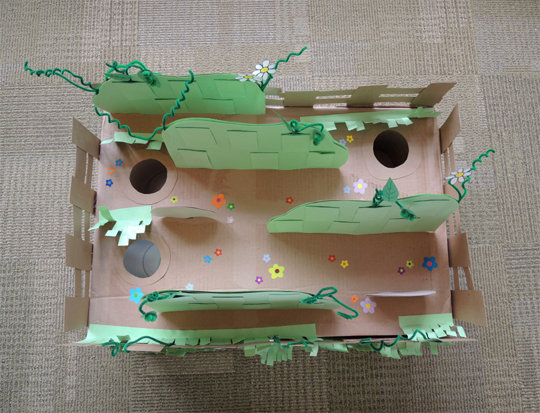
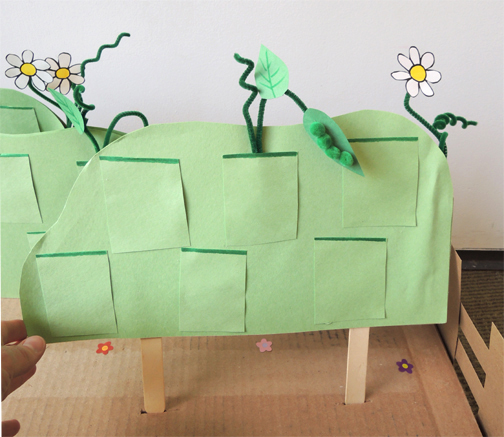
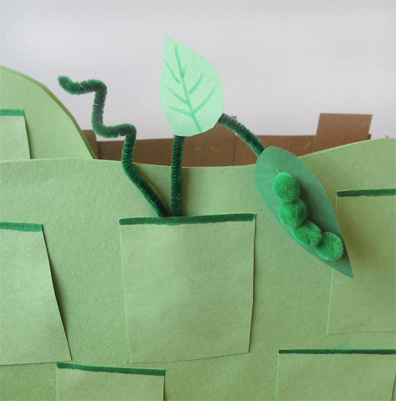
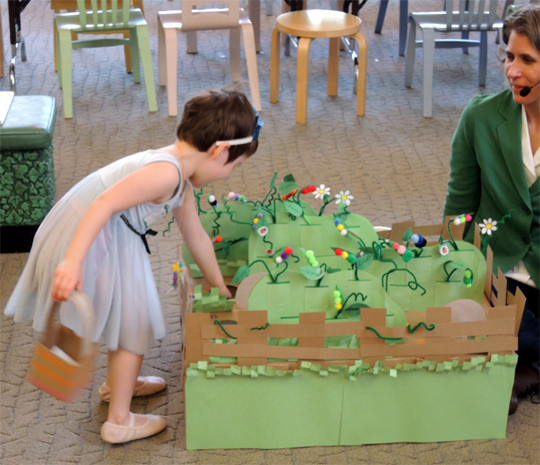
I had much success reading both books aloud at our story time for 6-8 year-olds. Check out the amazing mechanisms we built for Horten’s Miraculous Mechanisms, and the mini magic shows we made for Horten’s Incredible Illusions!

Who Will You Be?

who will you beYou’ve donned the cap and gown, walked the stage, and received your diploma. Your bright and beautiful future awaits! Only one question remains…who will you be when you grow up?

We read Owliver, written by Robert Kraus, and illustrated by Jose Aruego and Ariane Dewey (Simon & Schuster, 1987). Young Owliver the owl like to act. He can become a hummingbird, a flamingo, even a bat! While Mother Owl is definitely up for an actor or playwright in the family, Father Owl thinks Owliver would make an excellent doctor or lawyer. When Father gives his son doctor and lawyers toys, Mother gives him acting and tap dancing lessons. Both are completely convinced that they’ve successfully nurtured Owliver’s future career. Time passes and Owliver grows up. Is he an actor, a playwright, a doctor, or a lawyer? Turns out he’s none of the above. Owliver’s a fireman!

We made oatmeal container owls, then filled an owl-sized briefcase with the tools said owl would need to follow his/her chosen profession. Then our owls walked the graduation stage for caps and diplomas!

completed owl projectYou’ll need:

  • 1 large oatmeal container
  • White construction paper
  • 1 owl parts template, printed on 8.5 x 11 white card stock
  • A rectangle of tagboard (mine was 4.25″ x 6″)
  • Brown construction paper
  • 2 circles of yellow construction paper (approximately 1.75″ in diameter)
  • 2 black dot stickers
  • A small triangle of orange self-adhesive foam
  • A selection of natural feathers
  • 1 manilla file folder
  • 2 small squares of tagboard (approximately 1.75″)
  • 1 strip of black poster board (approximately 1.5″ x 8″)
  • 1 square of black poster board (approximately 3.75″)
  • 1 small strip of yellow construction paper (approximately 0.25″ x 3.25″)
  • 1 diploma template, printed on 8.5 x 11 white paper
  • A scrap of ribbon to tie the diploma
  • Scissors, tape, white glue, and stapler for construction
  • Markers for decorating
  • Hot glue

The owl is first! Wrap an oatmeal container with white construction paper. Add a circle of construction paper to the top of the container’s lid if you like.

Cut the owl parts from the template, then use the individual pieces to trace a pair of feet onto tagboard (or poster board), the “tummy feathers” onto brown construction paper, and a pair of wings on white construction paper. Hot glue the feet to the bottom of the container, and glue or tape the tummy feathers to the front. Add a pair of yellow construction paper eyes with black dot sticker pupils (or just draw the pupils in with markers). Use a triangle of orange self-adhesive foam (or orange construction paper) for a beak.

Use white glue (or tape) to attach feathers to the wings, then hot glue the wings to the oatmeal container. Add some feather eyebrows, and you’re done!

owlNext is the briefcase! I cut a 3″ x 4.5″ piece from the folded bottom of a manilla file folder. Unfold the piece and lay it flat (the unfolded piece will measure 4.5″ x 6″). Cut a pair of “briefcase handles” from 2 small squares of tagboard, and hot glue (or tape) the handles to the sides of the paper like so:

briefcaseUse markers to draw the tools your owl will need in his/her future profession. Here’s mine:

writerSome paper, books, a pencil, a pen, and a laptop. Yup, my owl wants to be a writer! Here’s a sampling of some other briefcases…

This slideshow requires JavaScript.

Finally, the graduation cap and diploma! To make the cap, circle and staple a strip of black construction paper (my circle was 2.25″ in diameter). Hot glue (or tape) a square of black poster board to the top of the circle.

For the tassel, hot glue (or tape) one end of a small strip of yellow construction paper to the center of the square.Fold the strip over the edge of the hat, then fringe the free end. You can cover the top of the tassel with a small square of black post board (as seen below), but that step is purely optional.

cap and diplomaCut a diploma from the template, roll it, and tie it with a ribbon. The diplomas on my template say “Congratulations! You Rock!” but you can customize your diploma however you like.

We prepped the caps and diplomas in advance. And, with “Pomp and Circumstance” playing on my iPhone, the owls marched across the graduation stage (i.e., a piece of white poster board with gold embossed foil seal “footlights”) and received a cap and diploma.

Way to go, class of 2015!

Spring Chicken

spring chickenNo spring chicken? We got your spring chicken! The drinking straw “sticks” on this little bird puppet allow it to flap its wings and soar across the big blue sky! I designed the project for a weekend story time event for 50 kids. It needed to be inexpensive, appealing to ages 2 – 6, constructed without white glue or hot glue, and easy to put together with minimal adult assistance. For the full effect of the bird’s flight, check out the video clip at the end of the post!

You’ll need:

First, cut the bird’s body and wings from the template and color them with markers. Tape a jumbo craft stick to the back of the bird’s body (an 8″ craft stick work best). Make sure to leave approximately 1.5″ of space above the craft stick. Later, you’ll need that space to attach the bird’s wing.

bird on craft stick with typeYou could also wait until the end of the project to tape the craft stick in place, but I found that the early placement of the stick helped kids attach their wings in the right place (i.e. close to the top of the bird’s body instead of the middle).

Next, fold each wing downwards along the dotted line, then attach the wings to the body with long pieces of tape. It’s important that the entire fold of the wing is covered with tape. I used orange masking tape to demonstrate this in the image below, but I used clear tape on the actual project.

taped wingNow stick an additional piece of tape over the bird’s back and wings like a “tape saddle.” Again, I used orange masking tape to demonstrate it below…

tape saddleUse tape to add feathers to the head, tops of the wings, and tail. Finally, tape the short end of a flexible straw to the underside of each wing, close to the wingtips (if the straws are too close to the body, the wings won’t flap properly). Use scissors to trim the ends of the straws so they don’t extend past the wings.

taped drinking straw with typeTo operate your bird, hold the craft stick in one hand, then gather the two drinking straws in your other hand. Holding the straws straight behind the bird, use them to flap the wings of the bird up and down!


Since my audience was primarily preschoolers, I read Birds, written by Kevin Henkes and illustrated by Laura Dronzek (Greenwillow Books, 2009). It’s a lovely book with simple text and plenty of opportunities for audience participation (such as naming the colors of birds, naming the types of birds, and yelling “Surprise!” on one of my favorite pages). The illustrations are colorful, pretty, and, in some places, extremely imaginative and delightful.