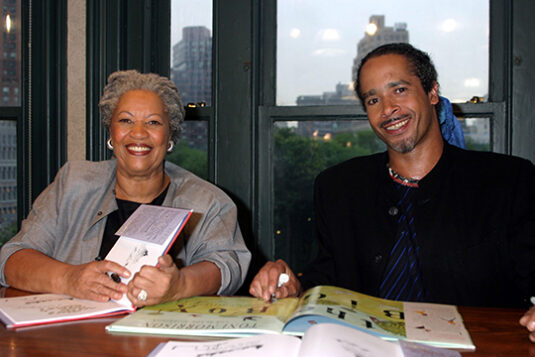
CAAHB4 Jun 18, 2003; New York, NY, USA; TONI and SLADE MORRISON at the Who’s Got Game? Book signing at Barnes and Noble Union Square on June 18, 2003.
This winter, it was our honor to curate “They’ve Got Game: The Children’s Books of Toni & Slade Morrison,” an exhibit that runs in the Cotsen Children’s Library gallery until June 4, 2023. It’s part of the larger, absolutely magnificent exhibit “Toni Morrison: Sites of Memory,” which is currently in the Milberg Gallery of Princeton University’s Firestone Library.
In a nine book collaboration spanning well over a decade, Toni and Slade Morrison deftly crafted stories around themes such as individualism, independence of thought, family connections, freedom, imagination, and the empowerment of self
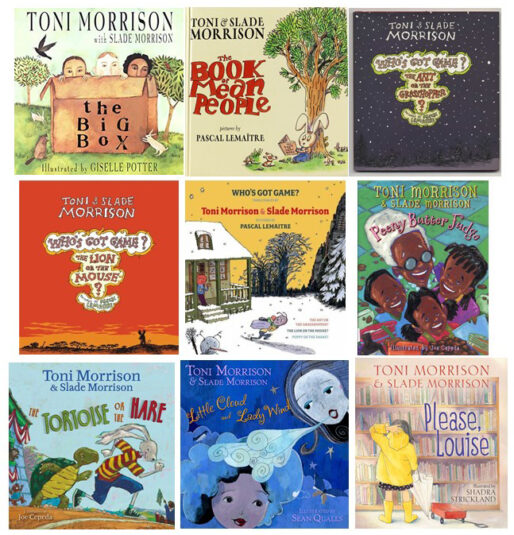 The Cotsen gallery exhibit primarily features the Morrisons’ Who’s Got Game? series, which reimagined Aesop’s fables without any concrete morals. Instead, the stories put that decisive power on the reader. Morrisons’ characters are not good or evil, smart or foolish, weak or strong. Rather, they are more flexible, and offer different perspectives, leaving it to the reader to ultimately ask themselves: who’s got game? The Ant or the Grasshopper? The Lion or the Mouse? Poppy or the Snake?
Visitors can enjoy viewing handwritten pages by Toni Morrison, the charming illustrations of artist Pascal Lemaître (interviewed here), and even some 2004 fan art from a New Jersey third grader! Please stop by, or take a look at the online companion to the exhibit.
We were also delighted to host a Zoom panel with the five artists who illustrated Toni & Slade Morrison’s children’s books! You will find that here.
 It’s time for the annual
 Perhaps you’d like to expand to entire household with this tiny
 Even alligators can be
  Or make up your
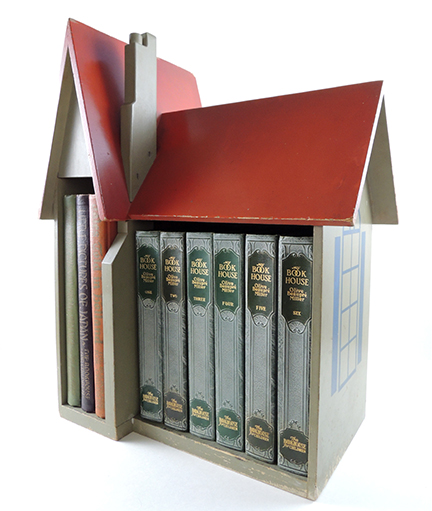
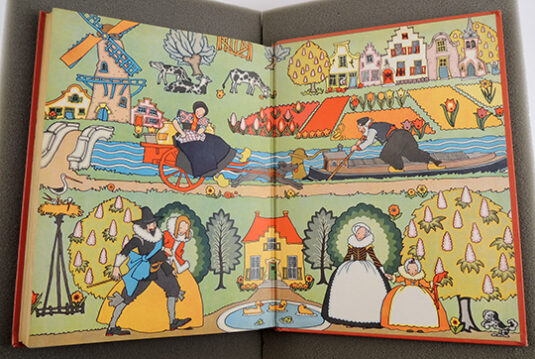
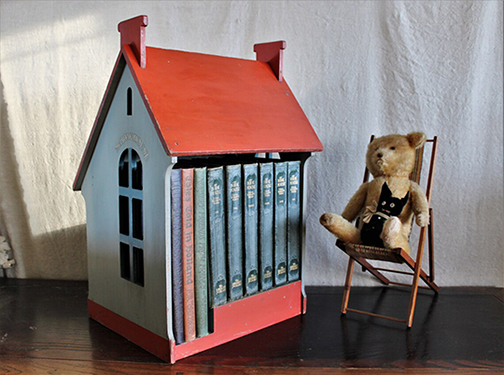
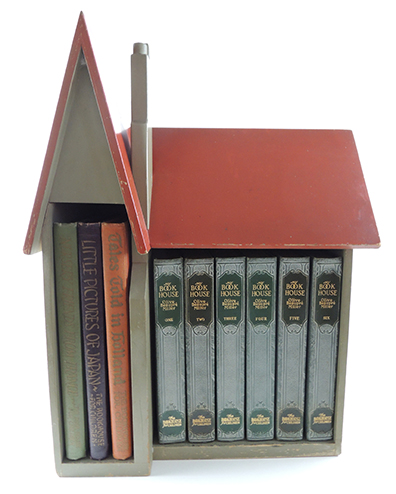 As you can see, this particular item houses nine books, and the quality of the illustration and print is remarkable. Just look at the end papers for Tales Told in Holland: