A Box of Puzzles…and Ducks

contents of boxInside this box are a number of tantalizing puzzles, mazes, optical illusions, images of unusual hotel rooms, building projects, and…ducks. Can all of these things be some how related? The answer is mostly definitely yes.

This project was part of To Be Continued, our story time program for children ages 6-8. Typically, we do the projects during the program. But unfortunately, the timing on this particular day only gave me five minutes to present the project. To further confound things, it was also the eve of a one month programming hiatus. So I needed something the kids could grab, take home, and discover for themselves. Not unlike the main character in the book!

We read Floors by Patrick Carman (Scholastic, 2011). Ten-year-old Leo Fillmore and his father are the maintenance crew at the Whippet Hotel. But the Whippet isn’t an ordinary hotel. It has a room that’s a giant pinball machine, a roller coaster elevator called the Double Helix, a roof-top duck pond, a Cake Room, a Robot Room, a Pond & Caves room, and a shark head named Daisy. The Whippet is the brainchild of Merganzer D. Whippet, inventor, engineer, architect, and eccentric. Unfortunately, Mr. Whippet has gone missing, the hotel is going haywire, and two mysterious men have been making nefarious inquiries. But things take a turn for the strange when Leo finds a mysterious purple box. Inside is a letter from a lawyer and a clue that can only be from Mr. Whippet. Now Leo, his friend Remi, a duck named Betty, and a talkative robot named Blop have just two days to solve the clues, find more puzzle boxes, explore some of the hotel’s strangest rooms, and save the Whippet.

You’ll need:

  • 1 box
  • Different color printer paper
  • Puzzle box templates (located at the bottom of this post)
  • A piece of curling ribbon
  • Scissors for construction
  • 1 rubber mini-duckie (optional)

Any old box will do, but I decided to splurge and purchase these super-sturdy papier-mâché treasure boxes from Discount School Supply (a set of 12 is $21). My idea was that once kids were done with the activities inside the box, they could decorate the outside with art supplies at home. Here’s what my boxes looked like:
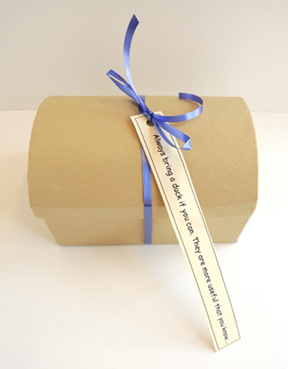
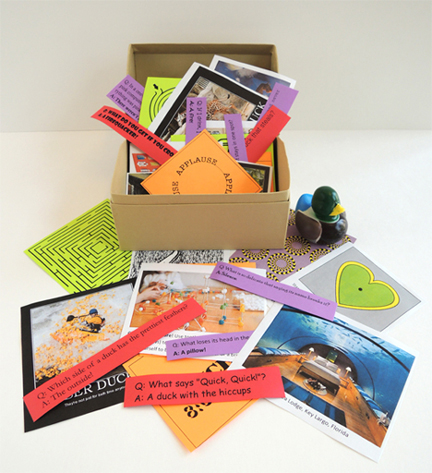
exterior of boxThe tag says “Always bring a duck if you can. They are more useful than you know.” That’s a quote from the book. It’s a very valuable piece of advice given to Leo when he finds the first box. Here’s an image of the full contents of the box:

contents of boxIn the book, Leo and his friend Remi have to follow cryptic clues, solve a number of riddles, and learn that things are not always as they seem. To replicate this experience for the story time kids, I grabbed mazes, optical illusions, and riddles from the internet.
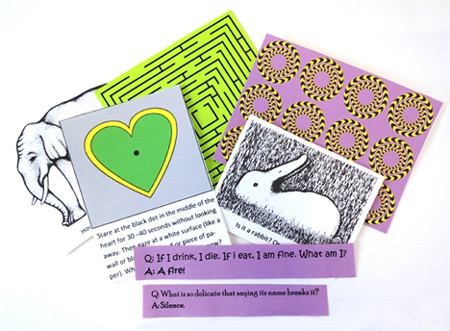
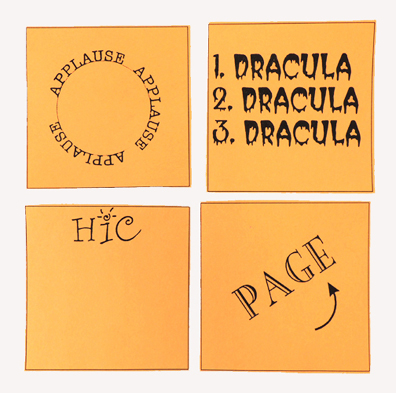
mazes, optical illusions, riddlesI also scanned some Thinklers (i.e. visual riddles) from the book Thinklers! by Kevin Brougher (Missing Piece Press, 2000).
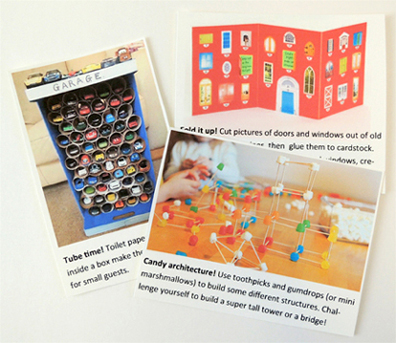
thinklersSince Merganzer engineered the Whippet himself, I included suggestions for a couple building projects involving things like gumdrops, marshmallows, toothpicks, toilet paper tubes, and card stock.
building activitiesThe rooms at the Whippet Hotel are fantastical and amazing. So I did a Google search for unusual real-life hotel rooms. And I found them. Oh yes I did. You must check out the ICEHOTEL in Sweden. Wow.
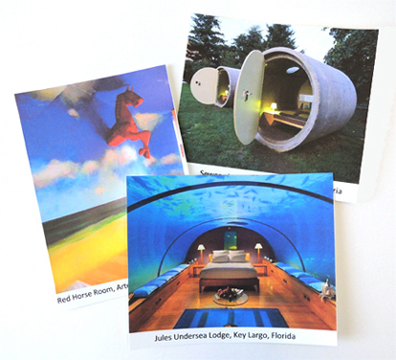
unique hotel roomsMr. Whippet is obsessed with ducks, and Betty the duck saves the day more than once. So I rounded up some duck jokes, duck memes, and other miscellaneous duck items.
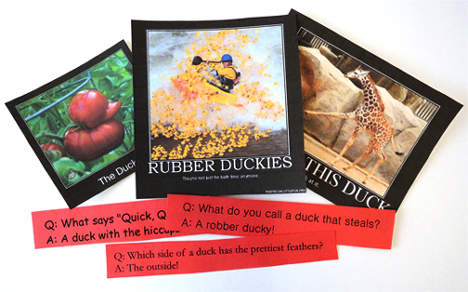
duck memes, jokesI topped everything off with a rubber mini-duck. I found these on Amazon (12 for $6.87).
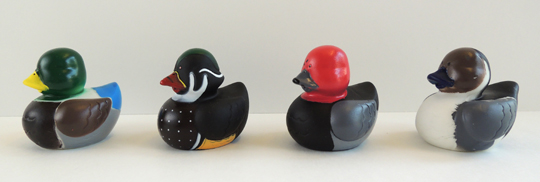
ducksReady to put together a box? Here are the templates you’ll need to reproduce everything.

The box tag template for the exterior of the box (you’ll need a hole punch too).

The box contents template 1 consists of 3 pages of duck memes, building activities, optical illusions, and images of unique hotel rooms. Since the images are in color, print them on white paper (card stock works great).

The box contents template 2 consists of 4 pages of Thinklers, mazes, riddles and duck jokes. I recommend printing each page on a different color paper. Also, to economize a little, I repeated the duck jokes and riddles twice on a single page.

Have fun! And may the duck be with you, always.
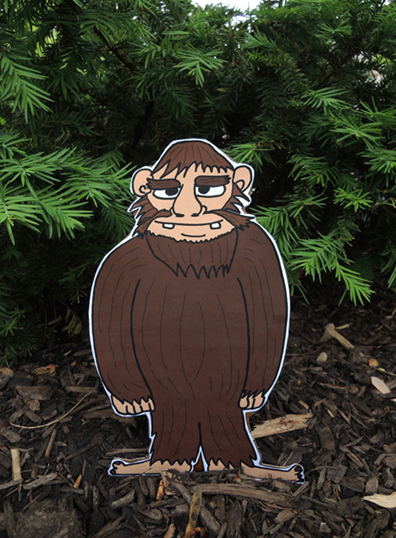
Searching for Sasquatch

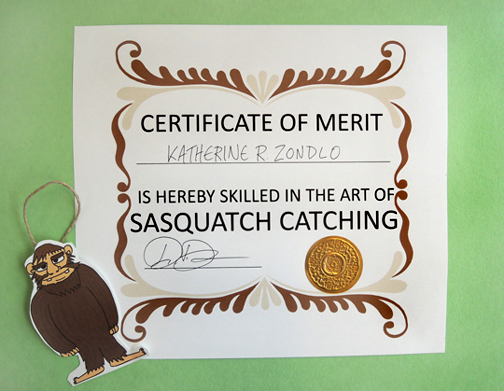
sasquatchA sasquatch is on the loose, and it will take 2 resourceful kids to find him! Our story time teams ventured into our gallery to find a hidden sasquatch. One team member had no idea where he was hiding. The other team member knew exactly where he was hiding, but could only give directions by saying “Hot” or “Cold.” The prize was a personalized “Certificate of Merit for Sasquatch Catching,” and a sasquatch ornament to take home! This activity was part of To Be Continued, our story time for kids ages 6-8.

ornament and certificateWe read The Imaginary Veterinary Book 1: The Sasquatch Escape, written by Suzanne Selfors, and illustrated by Dan Santat (Little, Brown, 2013). Ben Silverstein, age 10, has been exiled for the summer. While his parents work through some troubles, Ben is sent to stay with his Grandpa Abe in the town of Buttonville, middle of nowhere, USA. Once bustling, Buttonville is quickly sliding into disrepair after the enormous button factory shut down. But things are not what they seem. A giant bird swooping through the night sky looks a lot like a dragon. The “bat” Grandpa’s cat dragged in? It breathes fire! Eventually, Ben and his new friend, Pearl Petal, learn that the old button factory has been converted into a top secret hospital for Imaginary Creatures. And Ben accidentally lets the sasquatch out. Can Ben and Pearl catch the sasquatch before the whole town discovers the secret?

You’ll need:

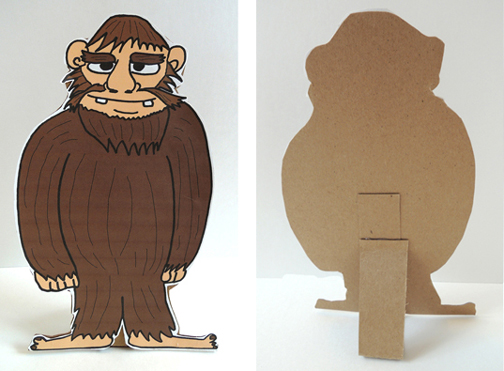
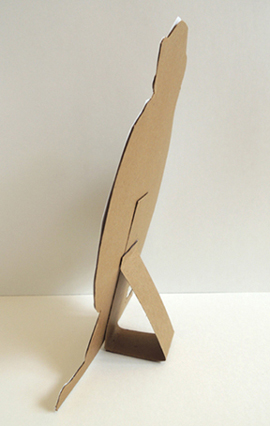
First, print the big sasquatch. You can simply cut it out, or you can reinforce it with some  tagboard or poster board. Since my sasquatch was going to get a real workout, I reinforced it with tagboard and added a triangular base.

front and back of sasquatchHere’s a shot of the base from the side. I secured it with hot glue, but tape works too!

base of sasquatchTo play the game, divide the kids into teams of 2 (rather than let them team up with their buddies, I had them put their names in a box and randomly drew to create the teams). The first team member hid his/her eyes while I hid the sasquatch in the gallery. The second team member watched me hide it, so he/she knew exactly where it was. When I said “Go!” the teams started to search for the sasquatch. The first team member proceeded through the gallery, relying on the second team member to direct him/her towards the sasquatch using the words “Hot” (i.e. getting close to it) and “Cold” (i.e. moving away from it). Teams ran twice so each kid got a chance to find the sasquatch AND be the one to give directions.

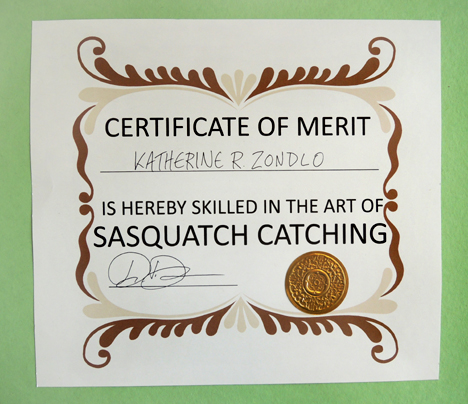
When we were finished, everyone received a “Certificate of Merit” for catching the sasquatch – which is exactly what Ben and Pearl earn in the books! The frame clipart I used didn’t extend to a full-size page, so I trimmed the certificate down to 8.5″ x 9.5″.  I also fancied up my certificates with an embossed gold foil seal.

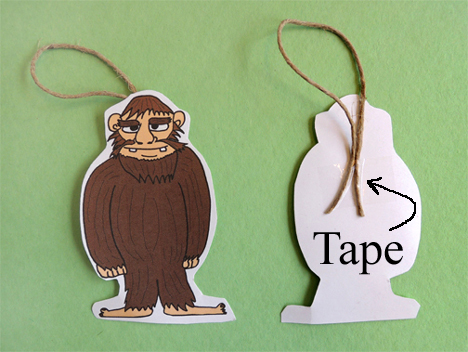
certificateKids also received a mini sasquatch ornament. Basically, it’s a smaller version of the big guy with a piece of twine taped to the back:

taped ornamentYou could, of course, give each kid a “full-size” sasquatch. Totally up to you!

I tend not to incorporate food into many of my programs because of food allergies, but another fantastic prize would be a bar of chocolate. In the book, a chocolate bar is an essential tool in the “Sasquatch Catching Kit” (along with a tranquilizer dart, blowpipe, net, fog bomb, and a sasquatch calling whistle). Just don’t ask the sasquatch any questions. It’ll make him angry.

A final word about The Sasquatch Escape. Not only did my story time kids love this book, my son and I are currently blasting through the series. They are funny, fantastical, unusual, and terrific to read-aloud. As one boy in the program said about halfway through the book, “This is the BEST book I’ve ever heard!” Absolutely worth checking out!

La Cucaracha

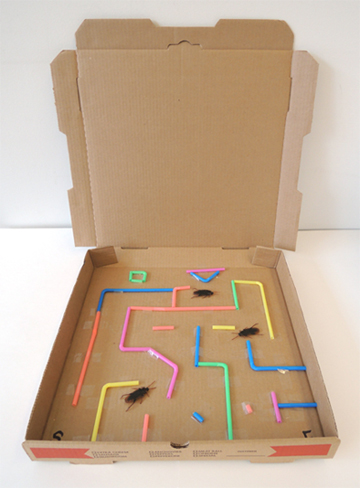
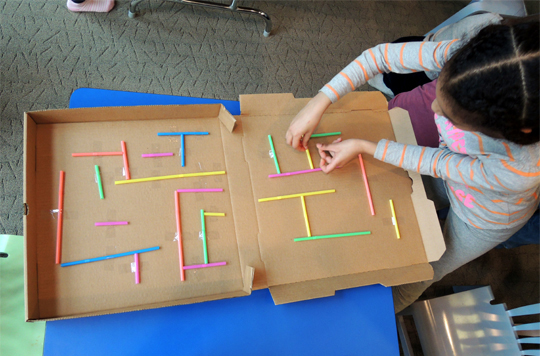
cockroach pizza boxDon’t panic! Those are FAKE cockroaches winding their way through a pizza box maze. The roaches crawl beautifully, thanks to a hidden magnet wand positioned underneath the box. This project is from To Be Continued, our story time for 6 to 8 year-olds. It was a big hit!

We read Measle and the Wrathmonk by Ian Ogilvy (Harper Collins, 2004). Young Measle Stubbs lives in a grim house on an abandoned street. His legal guardian, Basil Tramplebone, is a very strange man. He always wears black. His skin is ghostly pale. And oddly, whenever Basil goes outside, a raincloud follows him. But up in the attic of Basil’s horrible house is the world’s most amazing train set, and Measle desperately wants to play with it. He throws together a wild plan to get into the attic – and gets caught. While Measle certainly expects Basil to be angry, he doesn’t expect Basil to shrink him down to a half an inch and put him in the train set! Measle soon discovers he’s not the only victim trapped on the set. Can Measle and his gang put together a plan to defeat Basil?

I won’t give away too much, but there are some terrific giant cockroach chase scenes on the train table. For the project, I toyed with the idea of making a miniature train set obstacle course inside a box top. But then opted for something simpler and quicker to construct – a drinking straw maze. Building off a marble maze project I spotted on Pinterest (you can see it pinned to my board here), I decided to replace the marble with a magnetic plastic cockroach.

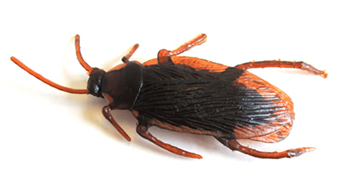
plastic cockroachYou’ll need:

  • 1 pizza box
  • 1 plastic roach (I purchased mine on Amazon – a set of 12 was $4.58)
  • 2 button magnets
  • 1 wine cork
  • Drinking straws
  • Scissors and tape for construction
  • Markers for decorating
  • Hot glue

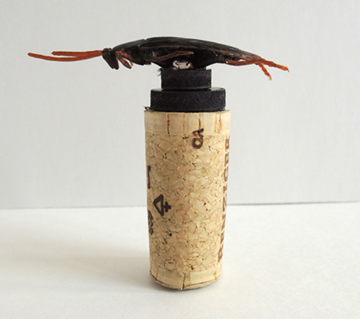
To make your magnet “wand,” hot glue a button magnet to the top of a wine cork, then hot glue a second button magnet to the bottom of the plastic cockroach.

cockroach magnet corkAfter some trial and error, we determined that using 2 different sized button magnets (0.5″ and 0.75″) worked best for our roaches and pizza boxes.

Slice Between, a local pizza shop, gave us a deal on 2 dozen pizza boxes (a copy paper box lid would work too, but I thought pizza boxes would be a better match for the creepy cockroaches). During the story time workshop kids cut, arranged, and taped drinking straws into maze configurations. Some kids expanded the maze to both sides of the box!

double box topTo navigate your cockroach through the maze, place the cockroach on top of the box. Hold your cork magnet wand against the underside of the box, directly underneath the cockroach. The two magnets will connect through the cardboard and you can mosey your cockroach through the maze!

Two hints for this project:

  1. When attaching the straws to the box, keep the tape as flat as possible. Bumps or raised bunches of tape might hinder your roach’s movement through the maze.
  2. When guiding your roach through the maze, move the cork wand slowly. If you go too fast, the magnets tend to break their connection.

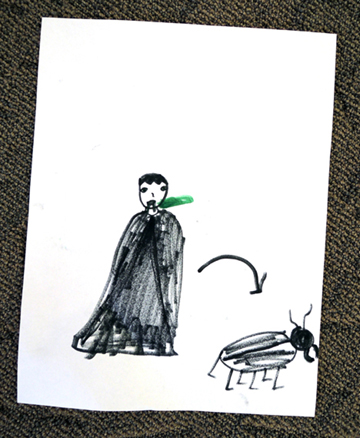
I had markers handy in case anyone wanted to decorate their boxes (or make “Start” and “Finish” lines for their mazes), but some kids used the markers to create some fan art. Here’s Basil, his stinky Wrathmonk breath, and an indication of what happens to him later in the book:

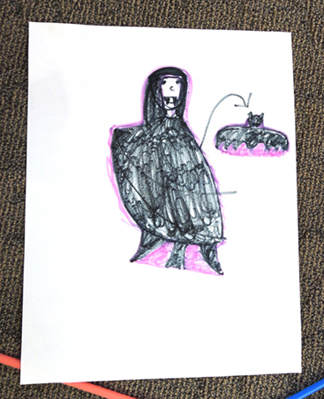
wrathmonk fan art 1And here’s yet another portrait of Basil, with a little hint about his ultimate fate:

wrathmonk fan art 2Measle and the Wrathmonk (and its sequels) are fantastic. They’re fun, scary, creative, and even though Wrathmonks are horribly evil, they’re terribly funny too. Ian Ogilvy was a well-known English actor before he became a children’s author, and it shows in his talent for dialogue, pace and characterizations. Measle and the Wrathmonk is delightful to read aloud and had the kids hooked right from the beginning. Honestly, you could hear a pin drop when I was reading certain sections of the story!