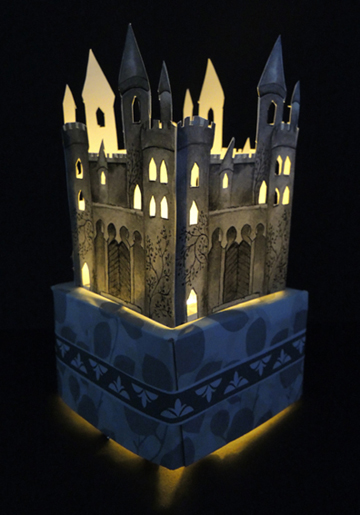
 On the market for some truly radiant real estate? Perhaps this elegant castle votive will do! This simple, but way cool project was part of To Be Continued, our story time for kids ages 6-8.
We read Castle Hangnail by Ursula Vernon (Puffin, 2015). Castle Hangnail isn’t the most ideal evil castle. For starters, it’s situated on grassy hills peppered with flowers (as opposed to, say, a wind-blasted cliff or a lonely moor). But an ever bigger issue is that currently, it doesn’t have a resident Evil Master or Mistress. Soon, it will be magically decommissioned and shut down for good. Desperate, the castle’s faithful minions send out a final round of invitations. They get just one response. A 12 year-old Wicked Witch named Eudaimonia. Or at least the girl says her name is Eudaimonia. In reality, her name is Molly, and she is a maybe-not-so-wicked witch who has told some whopper lies to her parents in order to fill the castle’s vacancy. Molly quickly falls in love with Hangnail Castle and the minions. In fact, everything appears to be working out beautifully – until the real Eudaimonia shows up. Will Molly and her friends be able to win Castle Hangnail back from the Evil Sorceress?
A shadow spell plays an important role in the book, so I wanted to do a project that involved castles, light, and shadow. Also, we had only 20 minutes at the program to complete the project, so I needed something simple. This castle votive project fit the bill perfectly!
 You’ll need:
- 2 castle template pages (more on this below), printed on 8.5″ x 11″ card stock
- An x-acto knife
- A small box with a window in the lid – the top of a small tissue box works great!
- 1 large square of tin foil (mine was 12″ x12″)
- 2 castle borders template pages, printed on 8.5″ x 14″ paper
- Scissors and glue for construction
- Metallic markers (optional)
- 1 LED votive
- Hot glue
Usually, I draw the project templates myself. But while researching the project, Marissa discovered this beautiful little castle votive by artist Lova Blåvarg. Lova’s castle is in color, but we thought it looked more Gothic when we printed it in black and white. The template and instructions for making Lova’s castle can be found here.
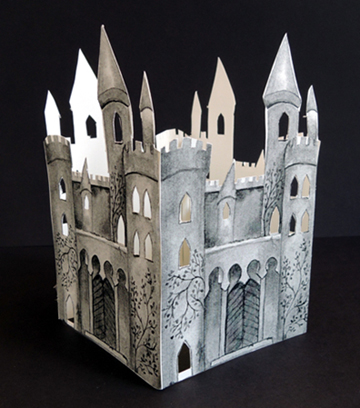
Castle by Lova Blåvarg for Sweet Paul magazine
The most time consuming part of the project is cutting all the little castle windows out with an x-acto knife. Marissa, the champion of all things x-acto, printed, cut, and hot glued 16 castles in preparation for the program. That’s 64 castle panels and 640 tiny little windows! Daaaaang.
You could make the castle, drop in the LED votive, and stop there. But I wanted to add a base to give the project a little more heft. I used these window boxes from Discount School Supply. The boxes are nice and sturdy, but a set of 12 costs $17, which can get pricey.
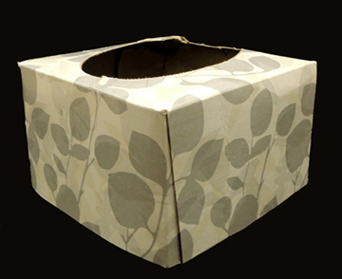
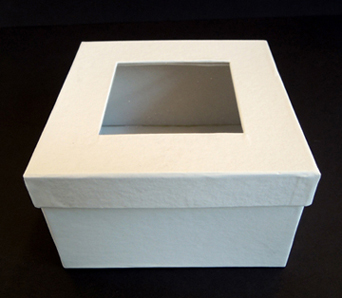 A cheaper option is to use the top of a small tissue box. Cut approximately 2.5″ off the bottom of the box. If you don’t like the pattern, cover it with your choice of construction paper. Remove any plastic from around the mouth of the box, and your base is ready to go!
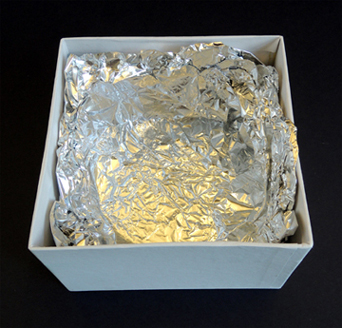
 Line the inside of the box with a square of tin foil (if you’re using a tissue box, you’ll need to secure the tin foil in place with tape and peel it back from the mouth of the box).
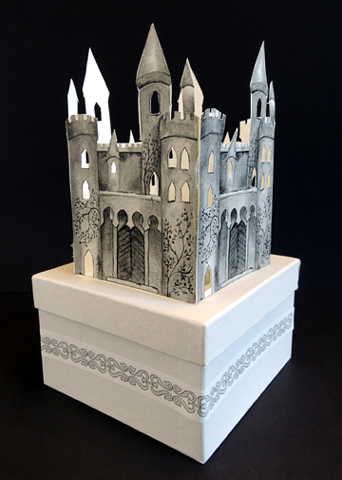
 Next, print the castle borders template and select your favorites. Glue the borders to the sides of the box, Then hot glue the castle to the top of the box. Done! Here’s the finished window box version:
 And here’s the finished tissue box version:
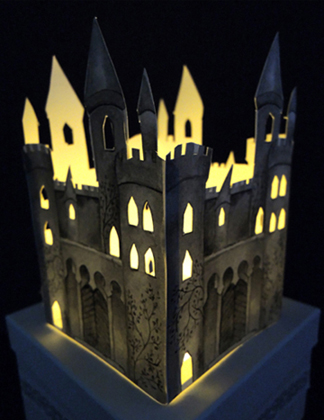
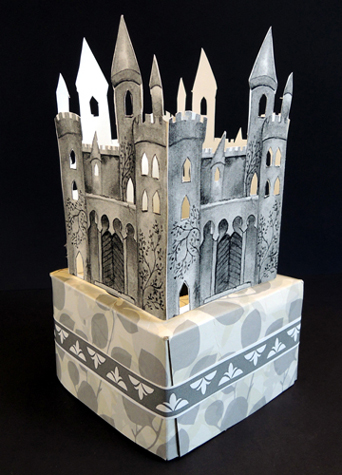 We offered the kids metallic markers for additional decorating, but this step is totally optional. Finally, drop an LED votive into the box and bask in the glow! Here’s the illuminated window box version:
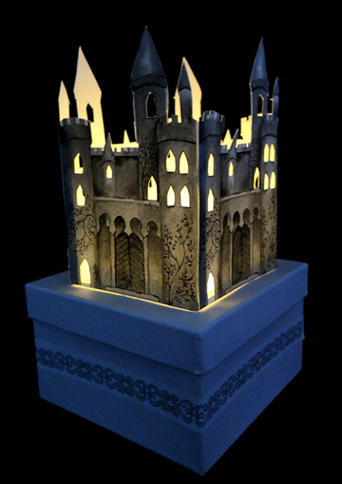 And here’s the tissue box version! The halo of light coming out of the bottom is rather cool, don’t you think? In fact, I believe I like the tissue box version better than the more expensive window box version.
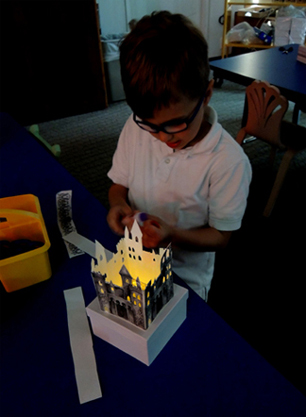
And speaking of glowing, when we did the project for the program, I darkened the gallery, turned out the lights, and had the kids create by “candlelight.” The effect was very cozy actually. Ah, home sweet castle!
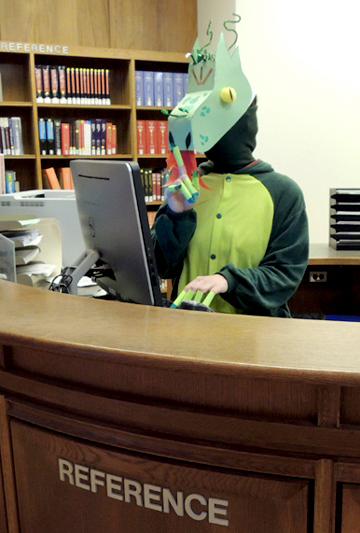 Wow I hear that new librarian is a total dragon. Like…literally.
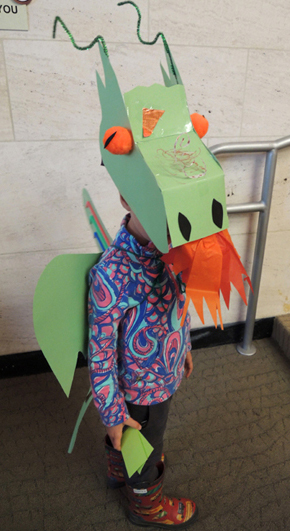 You’ll need:
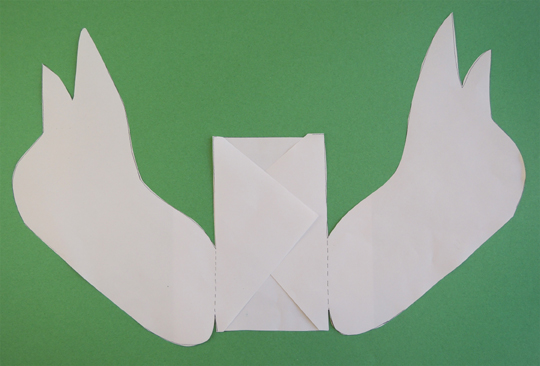 Next, lay the paper template on a piece of poster board (we ultimately decided to use light green). Trace the template on the poster board, then cut the entire thing out as one big piece. You’ll notice that there are 2 dotted lines on the paper template. Fold the poster board template downwards along the dotted lines. Then slide the poster board template on top of the box, and hot glue the sides of the template to the sides of the box.
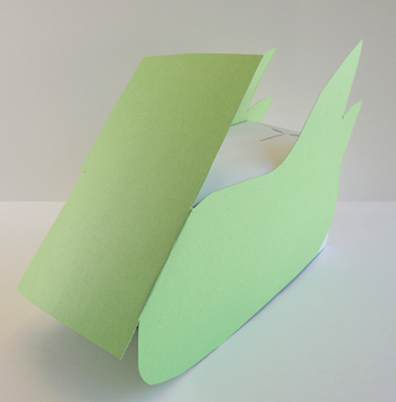 Next, hot glue the middle section of the template to the top of the box.
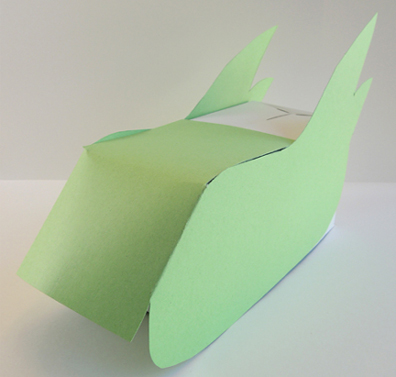 Trace the forehead template onto green poster board, and tape it to the front of the dragon’s head.
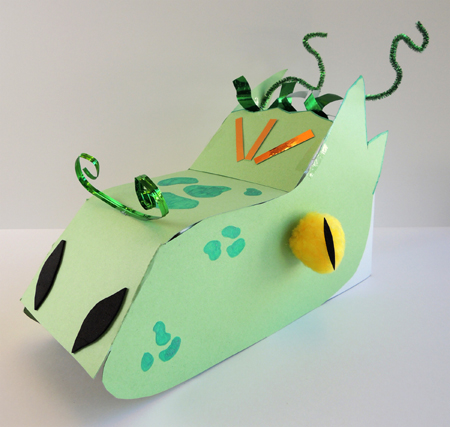
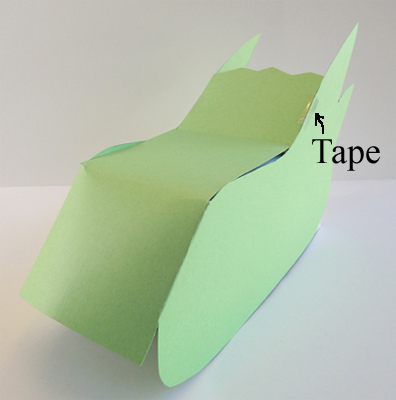 Now decorate! We used markers to create spots, slivers of
  To create flames, cut 2-3 rectangles of tissue paper into flame shapes, then staple them together. Hot glue (or tape) the flames to the underside of the nose. Make sure to attach the flames to the end of the poster board nose, not the end of the box. Otherwise, the flames won’t flutter properly. Here’s a shot of the underside of the box, so you can see where the flames are attached.
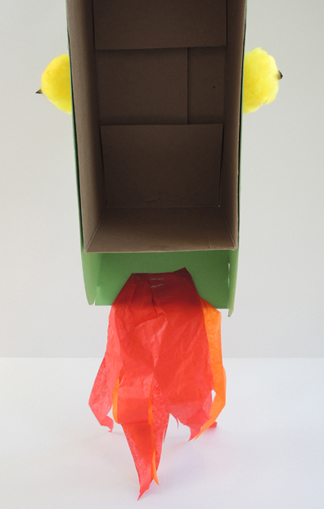 Try your head on. If it’s a little loose, stuff the back and front of the box with sheets of tissue paper. To breath fire, simply blow upwards and outwards on the tissue paper flames!
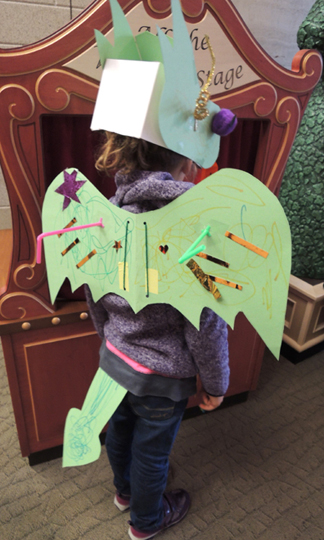
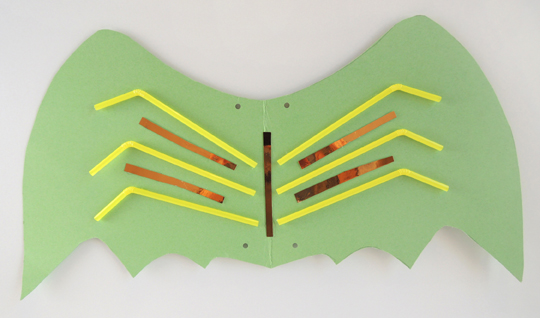 Here’s our dragon tail, which was roughly 6″ x 19″. We decorated ours with a couple pieces of mirror board (some kids went with drinking straws or just markers).
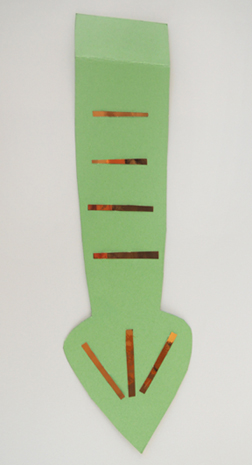 You’ll notice that the tail in the above photo has a 2.25″ fold at the top. The folded end tucks into the back of your pants (or, if you’re wearing a dress, punch a hole in the tail and run a yarn belt through it).
 If you’d like dragon claws (and some kids really liked this part), wrap a 3.5″ x 4″ piece of green paper around your finger, then secure the tube with tape. Wrap one end of the tube with green masking tape and cut the masking tape into a point. Here’s Marissa modeling a fine set of claws and a truly awesome dragon onesie.
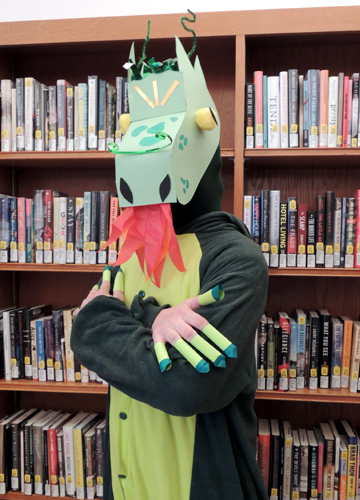 Now go forth dragon, and guard some books!
 This winter, we had a couple of intense snow storms. Whenever it snows, my program attendance drops dramatically. And yet, there are always a couple of hard core patrons who don their snow pants and brave the drifts to come to story time. This causes a bit of a conundrum. You see, some of my projects involve quite a bit of prep work (a-hem! I’m looking at you
 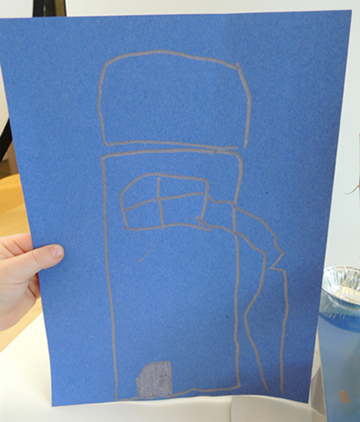 As the kids drew their houses, I rummaged through the office for boxes, tubes, cardboard, items left over from other projects, and interesting odds and ends (including, of course, the
  This house’s base is a box with a clear lid (leftover from
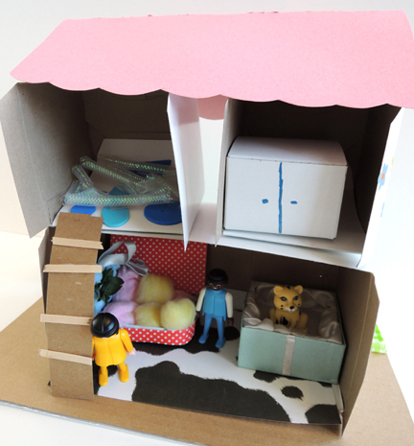
  The next architect went for wide and stacked, with multiple boxes for multiple rooms. I like the ladder to the second floor!
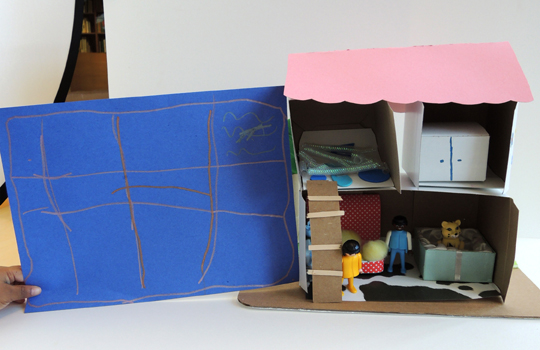 She also forayed into interior design. That polka-dot couch is made out of patterned paper, pink and yellow cottons balls, and an Altoid tin!
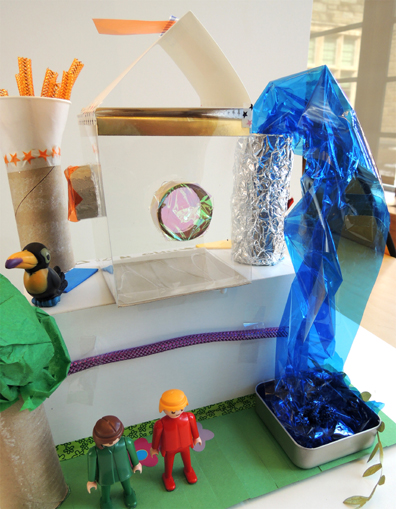
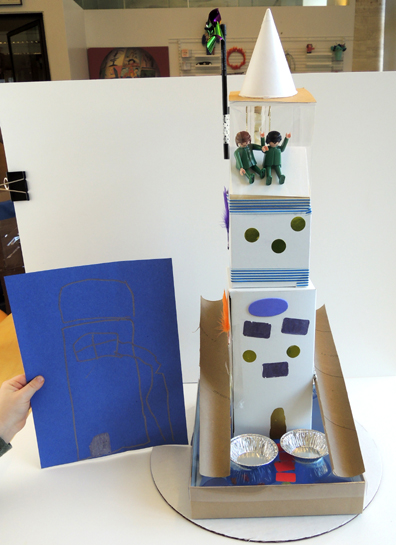
 The final house’s blueprint appeared to have a tree, a squiggle of water, and antenna. I was curious to see how the model would develop, and I was not disappointed.
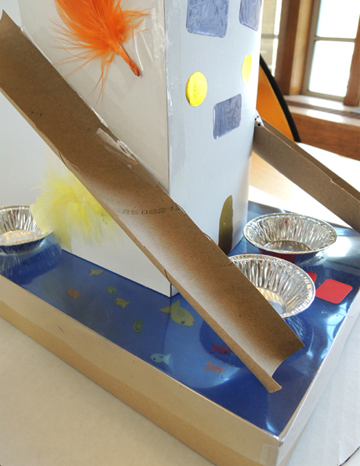
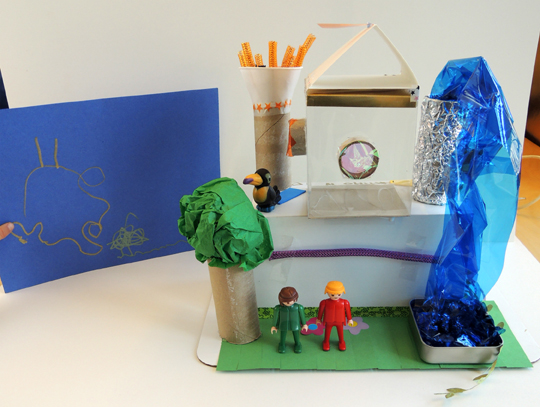 LOVE the fountain! And I’m not sure if you noticed that the “glass” room at the top has multi-color portholes made out of tape rolls with cellophane panes?