A Real Page-Turner

rube goldberg machineThis machine really DID turn a page – after automatically cranking a half-dozen ping-pong balls up two towers and dropping them randomly through a number of pathways until one ball finally hit a mechanism that turned…a single page. Then the process started all over again!

The machine was built by Princeton University Engineering students Sarah Tang and Tanner DeVoe. It was built entirely of K’Nex, was over 7 feet tall, and it took 45 hours to complete. Not to mention zillions of test runs!

The “Page-Turner” was the centerpiece of a Rube Goldberg program at our library. Rube Goldberg was an American cartoonist famous for illustrating crazy, intricate machines meant to make life “easier.”

In addition to the machine, we had student group Princeton Engineering Education for Kids constructing simple (and not so simple) LEGO machines with kids, an extensive marble maze set for younger kids to build and test, a video loop of OK Go’s music video This Too Shall Pass, and student artist Kemy Lin inspiring kids to draw their own machines using this Rube Goldberg template.

Here’s a way cute example of “How to Catch a Butterfly” by a budding engineer:

kids machine

Pit Sweet Pit

pit interiorAh, the comforts of home…a rug, a chair, a reading lamp, a good book, and a pit to put it all in. Wait…a PIT?

pit exteriorWe read Uncle Frank’s Pit by Matthew McElligott (Viking Juvenile, 1998). When Uncle Frank comes to visit, the family is somewhat incredulous when he claims – after some calculations with a coat hanger – that there is treasure buried in the backyard. Uncle Frank starts to dig. And dig. And dig. First, he brings in a ladder to help him climb out. Then a chair to rest in. Eventually, Uncle Frank moves into the pit – which is now fully decorated and wired with electricity. When the subterranean hot tub arrives, however, Dad puts his foot down. But the adventure isn’t over quite yet. Turns out Uncle Frank was right. There IS something buried in the backyard!

You’ll need:

  • 1 large oatmeal container
  • Brown construction paper
  • 1 piece of green construction paper (approximately 3″ x 12″)
  • A selection of patterned paper
  • 1 rectangle of felt (mine was 2.5″ x 4″)
  • 2 wooden beads
  • 1 beverage cap
  • 1 small box (mine was 3” x 3” x 2” but any small box will do)
  • 1 rectangular kitchen sponge
  • pit decor template printed on 8.5″ x 11″ card stock
  • 1 small craft stick
  • Hot glue
  • Markers for decorating
  • Scissors and tape for construction

Start by covering the outside of the oatmeal container with brown construction paper. We created “dirt layers” with other shades of brown construction paper too, but that step is completely optional.

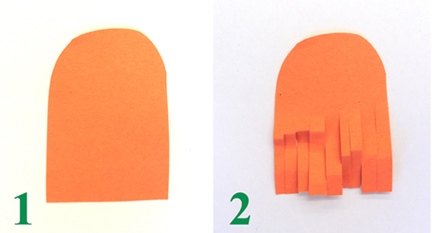
dirt layersFringe the piece of green construction paper and tape it around the mouth of the oatmeal container. This is the “grass” growing at the top of your pit. It’s OK if the grass doesn’t go all the way around the oatmeal container (after all, you need some room for your mailbox and front door!). I stuck flower stickers at the base of the grass to reinforce the idea that the pit extends underground, but flowers drawn on with markers work too.

The pit is complete, now for some interior decorating! Begin by using the patterned paper as wallpaper. Next comes the rug, which is a rectangular piece of felt, fringed on two ends (since little kid scissors don’t do so well with felt, we did the fringing in advance).

To make a lamp & table, color 2 wooden beads with markers. One bead is the lampshade, and the other bead is the lamp base. When the decorating is complete, hot glue the beads together. Then hot glue the entire lamp to the beverage cap “table.”

lamp and tableWe also made some tiny books (in advance) by folding construction paper over white copy paper and stapling the spine. I couldn’t resist adding an oh-so-relevant title to mine.

bookTo create a comfy reading chair, cut a small box into a couch-like shape (since our boxes were white, we decorated them with markers). Next, cut a kitchen sponge to create a bottom cushion, a backrest, two armrests, and two throw pillows. It’s best to attach the sponge pieces with hot glue (except the throw pillows, of course).

couch stepsThe throw pillows were a really nice touch, especially since they were created from the different sponge scraps already on the table.

Now for some art! Fill in the empty picture frames on the pit decor template and attach them to the walls with tape. And don’t forget to attach the interior ladder that leads up to your “front door!”

The last step to your fabulous dream pit is the mail box. First, locate the large dotted line.

mailbox step 1Then fold the paper downward, along the large dotted line, like so:

mailbox step 2Curl it over to the other side of the mailbox, and tape.

mailbox step 3 and 4Next, cut the template along the small dotted line.

mailbox step 5Then fold the two tabs down and tape.Finish by taping the flag on the mailbox and hot gluing the small craft stick onto the back of the mailbox.

flag and postThen hot glue the mailbox to the outside of the oatmeal container.Uncle Frank definitely finds something in the back yard, so as a final touch, I hot glued a “treasure” (i.e. an old foreign coin) at the bottom of each pit.

treasure

Pop Art

pop artIt’s a fusion of form and function as a classic self-portrait is transformed into bubbly pop art. Don’t miss the gallery at the bottom of this post!

We read Lester Fizz, Bubble-Gum Artist, written by Ruth Spiro and illustrated by Thor Wickstrom (Dutton Juvenile, 2008). Everyone in Lester’s family (Frieda, Winslow, Cornell, Pablo, and Georgia) is an artist, but Lester just can’t seem to find his medium. Then one day, during a visit to Uncle Edgar’s studio, Lester discovers his amazing talent for creating art with pink bubble gum bubbles. Confidence growing, he decides to enter the art competition at his school. But disaster strikes when Lester loses a front tooth on the big day! Fortunately, recalling a bit of artistic wisdom, Lester is able to rally and produce the most tremendous bubble ever.

You’ll need:

  • 1/2 sheet of white poster board (approximately 14″ x 22″)
  • Multiple pieces of tagboard or brown poster board
  • 2 small pieces of white poster board (approximately 1″ x 1.5″)
  • Hole punch
  • 1 piece of yarn (approximately 10″)
  • A box cutter
  • A selection of multicultural construction paper
  • A selection of construction paper
  • 1 pink balloon
  • 1 pencil
  • Markers for decorating
  • Scissors, glue stick, tape, and hot glue for construction

The project begins with the creation of your portrait frame. We prepped the following tagboard (or brown poster board) pieces in advance:

frame piecesIf it helps, here are their approximate sizes:

Top piece: 3.5″ x 8.5″
Corner pieces: 3.5″ x 3.5″
Side pieces: 2″ x 14″
Bottom piece: 2″ x 8.5″

The frame pieces were laid out on top of the white poster board “canvas.” Then we encouraged the kids to customize the corners and sides by shaping them with their scissors. A corner, for example, could be shaped into something a little more delicate:

cornerAnd the sides could be given a bit of a curve:

frame sideThen, we invited the kids to select some “frame doodads” from a big pile to bulk up their frames. We were very proud of our doodad pile. Here are a few of our lovely choices:

various doodadsUse markers to create scrolls, lines, and shapes on your frame pieces (metallic Sharpie markers worked great too). Then use a glue stick to attach the pieces to the poster board canvas.

finished frameThe last step for the frame is adding your “hangers” (you can see them sticking out of the top of the frame in the image above). To create the hangers, take two small white poster board pieces, punch holes in them, and then hot glue them to the back of the canvas like this:

hangersKnot the ends of the yarn in each hole, and the frame is ready to hang. The only thing that’s missing, of course, is the portrait! Use the regular and multicultural construction paper to create a shirt, face and hair. Draw the facial features with markers. I brought out the Bling Bin for artistic embellishments as well.

Now all you need is bubble gum! Use the box cutter to cut a slit in the portrait’s mouth, then poke the pencil through the slit to enlarge it. The goal is to make a hole large enough for the mouth and neck of the balloon to go through.

Starting on the outside of the portrait (i.e. the finished side) push the mouth and neck of the balloon through the hole to the other side. Here’s what the back of your portrait should now look like:Stand behind the portrait and blow into the balloon. Your portrait will blow a bubble! You can also blow up the balloon, knot it, push it through hole in the portrait, and hang it on a wall to admire your work from afar.

This slideshow requires JavaScript.