Will The Real Sasquatch Please Stand Up?

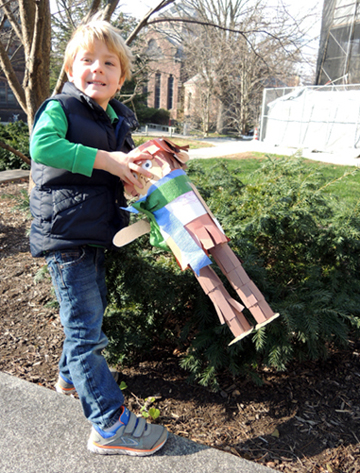
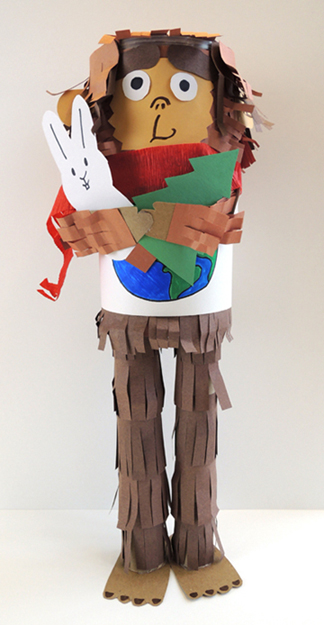
the real sasquatchIt’s tall, furry, reclusive, and tree-hugging. Long considered to be a myth, we’re going to prove that the elusive sasquatch does, in fact, exist.

We read Larf by Ashley Spires (Kids Can Press, 2012). Larf is a sasquatch. The only sasquatch in the world. He likes his quiet life in the woods with his bunny, Eric. But one day, while reading the newspaper, Larf learns that a sasquatch is scheduled to make an appearance at a nearby city. Another sasquatch? Despite his love for solitude, Larf decides to brave the trip to see if there is someone like him. Navigating the city (with Eric in a baby bjorn), Larf is scared, anxious, self-conscious, and full of doubts. But he sticks it out, and discovers that the sasquatch is…a fake. Disappointed, Larf is waiting for the bus to take him home, when someone compliments him on his bunny. Lo and behold! It’s another sasquatch! Shurl (with her companion bird, Patricia) came to the city thinking she was the only sasquatch. It looks like the two loners, are not longer lonely!

You’ll need:

  • 1 large oatmeal container
  • 1 sasquatch parts template, printed on 8.5″ x 11″ paper
  • 2 paper towel tubes (make sure they’re the same height)
  • Some tagboard or brown poster board
  • Dark brown, light brown, and white construction paper
  • 1 piece of crepe paper streamer (mine was approximately 27″)
  • Several large plastic buttons for counterweights, if needed
  • Scissors, glue, and tape for construction
  • Markers for decorating
  • Hot glue

The trickiest part of the this project is getting the sasquatch to balance on its paper towel tube legs. Other than that, it’s very simple, and the templates for all the project parts can be found on the sasquatch parts template. You’ll need lots of construction paper fringes too.

We’ll build from the bottom up! Trace two feet from the template onto tagboard, card board, or heavy-duty poster board. Hot glue the feet to the bottom of a pair of paper towel tubes, then wrap the tubes with several rows of brown construction paper fringe. Use markers to add toenails if you’d like.
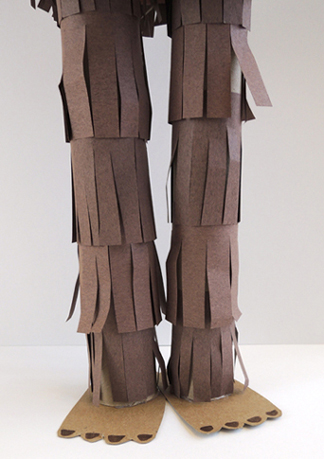
sasquatch legsSet the legs aside for a moment. Wrap an oatmeal container with brown construction paper. Add a fringe of brown construction paper around the bottom of the container like a skirt. Trace the face and ears from the template onto light brown construction paper, then tape or glue them to the container. Add eyes, eyebrows, and draw a nose and mouth. Add brown construction paper fringes around the face and head.
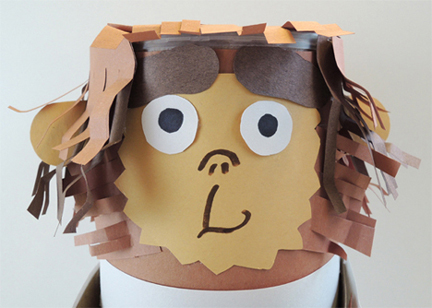
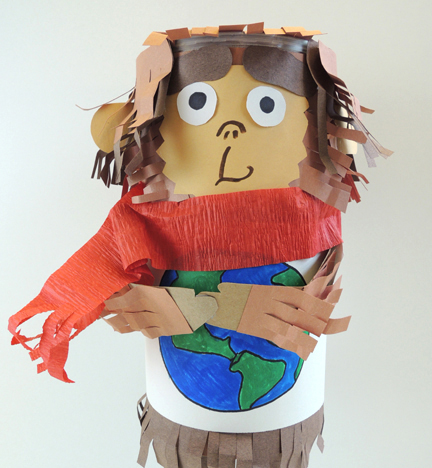
faceLarf wears a scarf in the book, so we added a scarf (and a t-shirt) to our sasquatches. The t-shirt was a 5″ x 18″ piece of white construction paper. Kids used markers to draw a design on the t-shirt, then wrapped it around the middle of the oatmeal container. The scarf was a 27″ piece of crepe paper streamer (fringed on the ends of course). Some kids made hair bows out of crepe paper streamers as well. Very cute!

To make the arms, trace the arm template onto 2 pieces of tagboard, add some hair fringes, and hot glue the arms to the sides of the oatmeal container (you can’t see them in the below photo, but I added white short-sleeved t-shirt sleeves to the arms too). Cut some thumbs into the hands, then curl the arms around the chest and hot glue the hands together. Your sasquatch’s arms will now form a circle in front of his/her chest like so:
attached armsNow for the trickiest step. Hot gluing the legs to the bottom of the oatmeal container. Stand the legs up on a level surface and lower the body on top of them. You’ll know right away if the body needs to be adjusted left, right, forward, or backward. When you think you’ve struck the right balance, remove the body, squeeze some hot glue around the rims of the leg tubes, and gently lower the body on top of the hot glue.

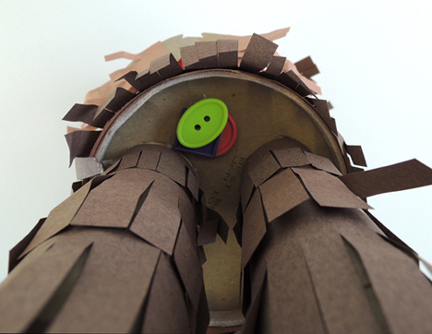
If your sasquatch is still a little wobbly, use large plastic buttons as counterweights. Hot glue them to the underside of the body – front or back – as needed. Here’s a shot of the underside of my sasquatch, with a couple button counterweights attached.
counterbalance buttonsThe sasquatch is finished, but we’re not quite done with the project! You’ll notice a tree and bunny shape on the template. We made trees (with brown paper trunks) and bunnies (with white pom-pom tails) as prizes for a sasquatch finding game.
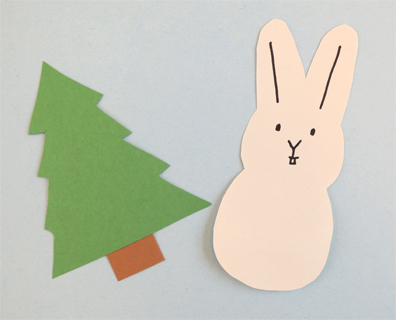
tree and bunnyOutside, we collected the sasquatches and hid them all over the library’s plaza. Then we shouted “1-2-3-Go!” and the kids dashed off to locate their furry friends.
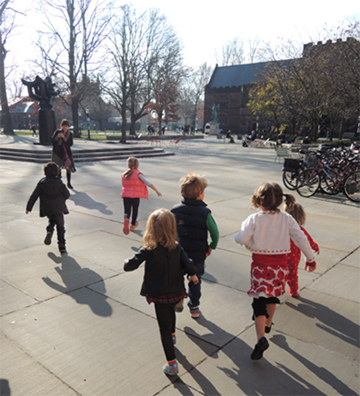
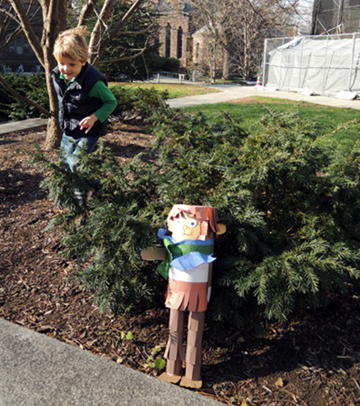
taking offthe searchsasquatch foundThe reward for discovery was a bunny and a tree, tucked safely into the sasquatch’s arms. Awwwww!

the real sasquatchBelieve it or not, this isn’t the first sasquatch activity I’ve posted on this blog. Here’s another project for older kids that also involves a slightly different sort of search!
City of Light

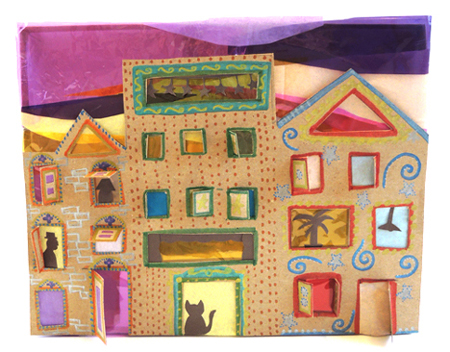
city of lightThe minute I picked up Dusk by Uri Shulevitz, I knew we had to create a city full of color and light at our story time. It’s a simple project with truly magical results.

We read Dusk by Uri Shulevitz (Farrar, Straus and Giroux, 2013). A boy, his grandfather, and their dog go for a wintertime walk. As the sky fades to dusk, the lights in the city go on one by one. People stroll and shop, and windows glow in a city that is light as day. This book is set during the holiday season, and includes Christmas, Hanukkah, and Kwanzaa imagery (without mentioning any of them outright). The gorgeous illustrations and lyrical text pull you right into the story. I wanted to capture that beauty and ambiance in our story time project.

You’ll need:

  • 1 box with a clear lid
  • A piece of tagboard or brown poster board (big enough to cover the box’s lid)
  • A box cutter
  • A selection of cellophane
  • A selection of tissue paper
  • Glow sticks
  • Scissors and tape for construction
  • Markers for decorating

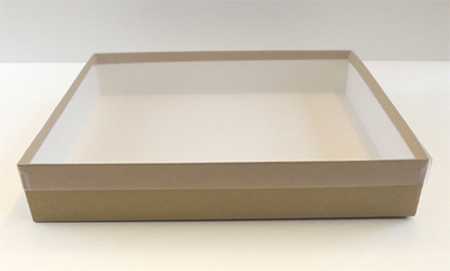
Admittedly, this project can get pricey. Especially the glow sticks (more on those later). It also requires a box with a clear lid or window. I bought my boxes online from Nashville Wraps (they’re “clear lid display boxes” that measure 2″ x 8.75″ x 11.25″). They cost $32.50 for 20, and that doesn’t include the cost of shipping. But just look at the nice, big, clear lid on that box!

box with clear lidIf you’re looking for a cheaper option, you might consider a sheet cake or pie box at your local supermarket or bakery. So long as the box has a window on one side, you’re good.

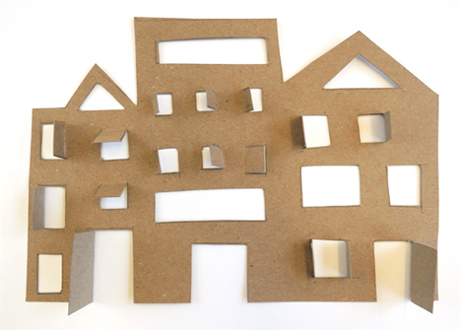
On to the project! Use scissors to cut a city skyline out of tagboard or brown poster board (we tried black paper, but brown turned out to be a much mellower color). Use a box cutter to add windows, shutters, doors, and doorways. We added a couple of elongated rectangles and triangles as well.

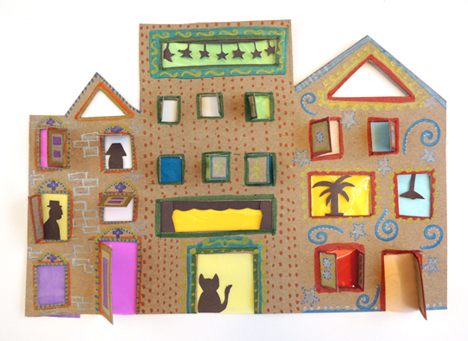
cut cityUse markers to decorate the exterior of your city (Crayola metallic markers look especially fantastic). Tape pieces of cellophane and/or tissue paper behind some (or all) of the windows and doors. If you’d like, use dark brown paper to add silhouettes in the windows and doorways.

finished cityAnd now, we come to the priciest part of this project. Glow sticks. Our 11.25″ boxes illuminated best with six, 4″ sticks inside them. I bought my sticks at Party City (a pack of 25 costs $10). So I spent $40 on glow sticks. Dang. Daaaang. You could definitely make do with fewer sticks and a smaller box to reduce the cost.

By the way, not all glow sticks colors have the same intensity. White, for example, is very weak (and actually light purple, not white). Yellow is strong, orange and red are somewhat in the medium range. For our project, we used yellow, red, orange, and white.

Activate your glow sticks, arrange them in your box, and secure them in place with tape.

light table 2Put the lid back on the box, and use pieces of tissue paper, cellophane, and tape to create “dusk” on the box lid. When you’re done with the sky, tape the city onto the box lid. Below, you can see my finished box with its dusk-filled sky:

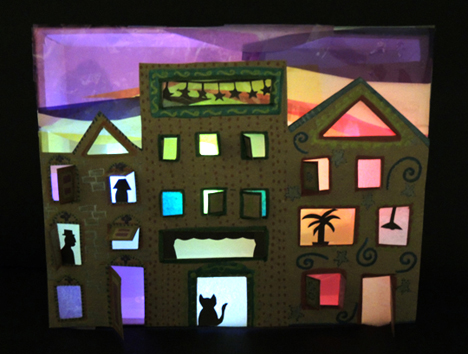
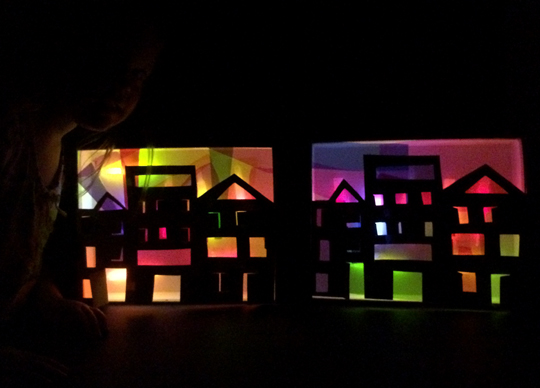
finished city boxAnd here’s what it looked like in a darkened room!

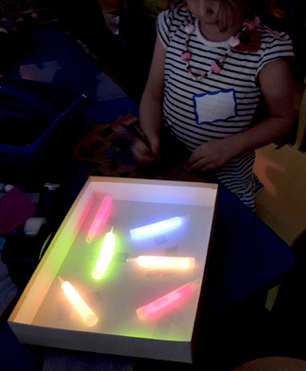
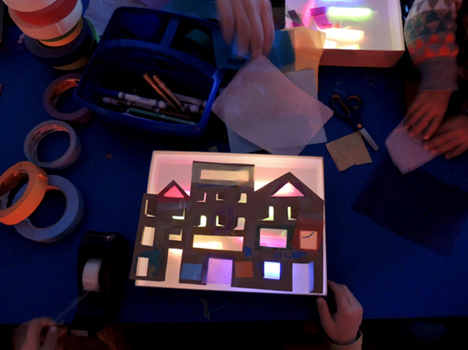
finished glowing cityFor the “dusk designing” portion of the program, I turned most of the gallery lights off. There was a big gasp as kids discovered that they had their own personal light tables to work on.

light table 1Eagerly, kids experimented with different cellophane and tissue arrangements, developing the perfect little dusk. I set up a small table in a closet so they could see the full effect of their illuminated cities when they were finished. Just look at these gorgeous glowing cities!

This slideshow requires JavaScript.

Later, when the glow sticks have faded, you can remove the box lid and place your city on a bright windowsill. Instant suncatcher!

Quoth the Raven

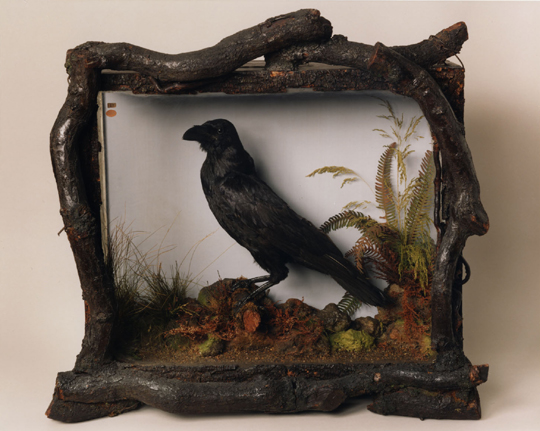
quoth the ravenThis a not just a raven. It’s THE raven. The raven believed to have inspired Edgar Allan Poe to write his famous poem. If that isn’t enough of a distinction, this same raven (his name is Grip) was once the the beloved pet of Charles Dickens. After Grip died, Dickens had him stuffed and it’s reported that he arranged the foliage in the display box himself. Grip was a minor character in Dickens’ book, Barnaby Ridge. Poe, who was working as a reviewer in Philadelphia, read the book and remarked that the raven’s “…croakings might have been prophetically heard in the course of the drama.” Four years later, he published “The Raven.”

Grip the raven is just one of the treasures in the Rare Book Department at the Free Library of Philadelphia. I spent a happy afternoon there, learning about the history of the book and enjoying a massive cheese steak, both provided compliments of Joe Shemtov, Rare Books Librarian. Ready for a little history lesson?

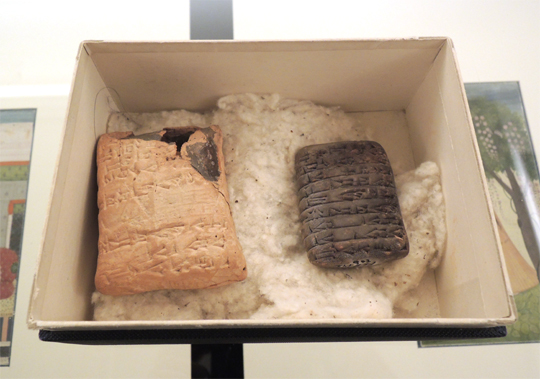
envelope and tabletFirst, Joe brought out this Sumerian clay tablet and envelope (ca 2000 B.C.E). That’s the envelope on the left, and the tablet on the right. The envelope is, of course, clay, and was cracked open in order to gain access to the tablet. Interestingly, the tablet is a contract for a delivery of lard with a penalty clause. All business, those Sumerians.

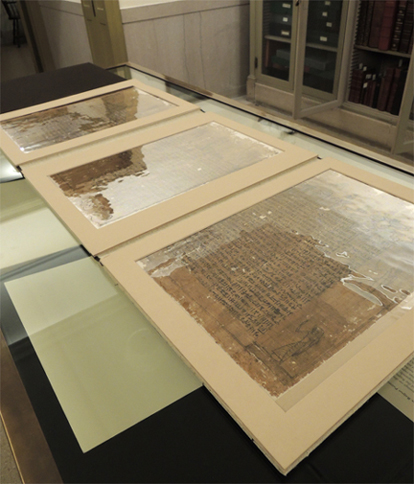
papyrusNext, we move to a papyrus manuscript from Ancient Egypt (ca. 700 B.C.E.). The image above is a section from a Book of the Dead, which the wealthier Egyptians were privy to. Interesting fact – while the scribes were producing these, they would leave blank spaces for the names of the book’s future owners. The manuscript is written in Hieratic, a cursive writing system that allowed scribes to write more quickly than with hieroglyphs.

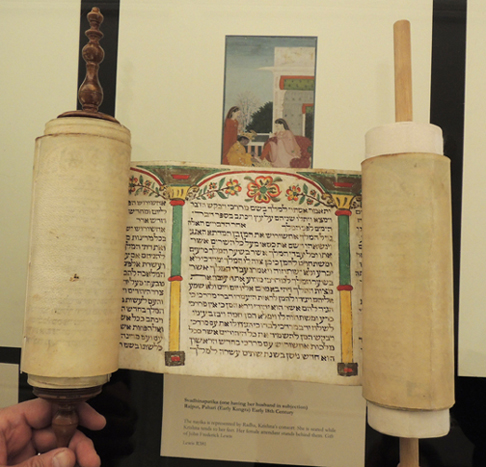
scrollThis Meghillat Esther scroll is a beautiful reminder of how the reading experience has changed over time. We flip pages to read, but before that, we scrolled. I suppose with computers, we’re back to scrolling. Huh.

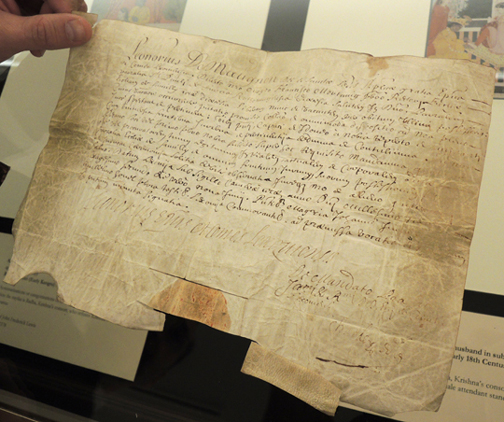
vellumMoving forward, we start to see manuscripts and books written on vellum (i.e. the skin of sheep, calves, and goats). Vellum was sturdy, but rather tedious and time consuming to produce. The size of the animals limited the size of the vellum, which inadvertently resulted in more standardized sizes of books.

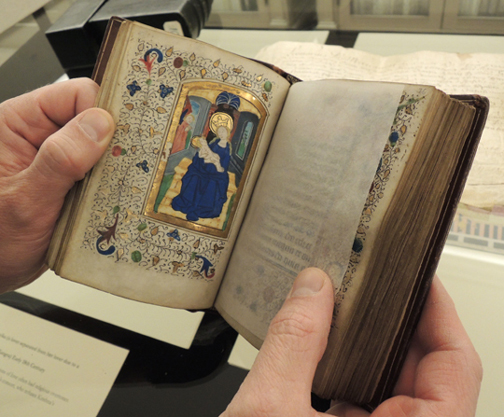
book of hoursThis is a Book of Hours (ca. 1475), a religious book that was the “bestseller” of the Middle Ages and the Renaissance. From the mid-13th century to the mid-16th century, more of these books were bought, sold, bequethed, inherited, printed, and reprinted more than any other book, including the bible. A Book of Hours was a book of prayers, but also contained a calendar of feast days (which commemorated the days on which particular saints were believed to have been martyred, as well as the important days of Christ and the Virgin).

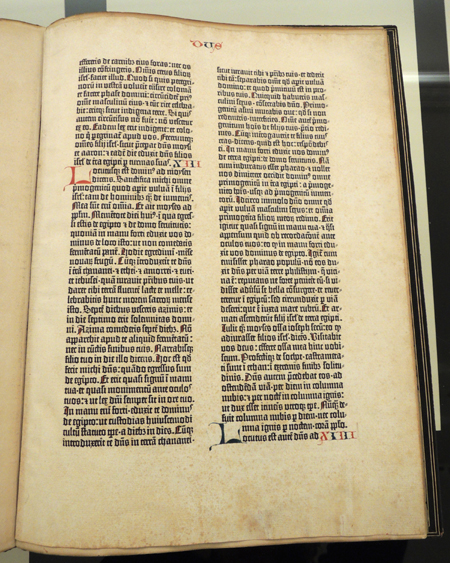
gutenberg bibleAt this point in history, books were still written entirely by hand. Until this came along. Above is a page from a Gutenberg Bible, the first book printed on a printing press. Johann Gutenberg invented his press in the 1450s and thus ushered in a new age of literacy. Gutenberg also popularized the use of plant-based paper rather than vellum. While opinions and records vary, it’s generally believed that approximately 180 copies of the Gutenberg Bible were printed, and only 21 complete copies exist today.

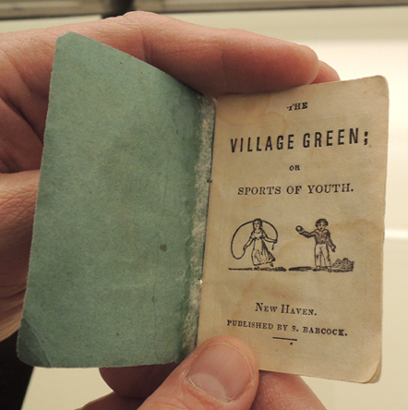
chapbookSprinting forward to the 19th century, books were looking very much like the ones we know and love today. And because of the plethora of printing presses, books were selling cheap. An 1840 chapbook like the one above would have cost mere pennies. This made the books more affordable to the lower classes, which  that meant more people could afford to start learning to read and write.

Of course, there were still some fancy books out there. Are you ready to see something really, really, cool?

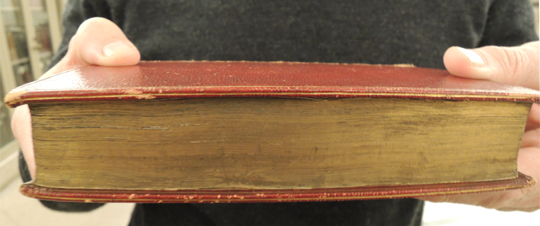
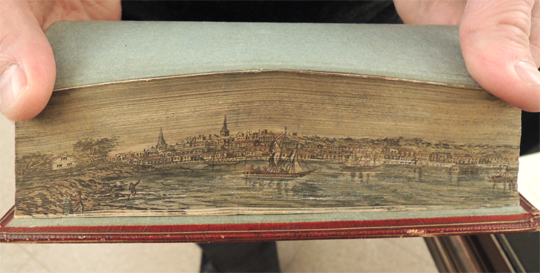
fore-edge 1This is a book with a fore-edge illustration. While it’s a little hard to see in the image above, the edges of the pages are gilded (i.e. burnished with gold). But, when you fan the pages  just so…

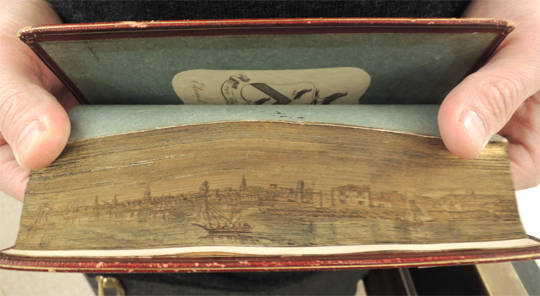
fore-edge 2…the pages reveal an illustration! How completely and totally amazing is that?!? Man, I love rare books! Even better, this book has a double fore-edge. If you flip it over and hold the pages just so…

fore-edge 3There’s a different illustration on the other side. Unbelievable. While the Rare Book Department has been giving history of the book tours for some time now, they were recently awarded a Hatching Innovation Grant to create a traveling educational program to local schools and library branches. Congrats Joe!

The Rare Book Department at the Philadelphia Free Library is open to the public and free of charge (they’re on Facebook as well). The library is open Monday-Saturday with daily tours starting at 11:00am. You are also free to visit their exhibit galleries, which are absolutely lovely.

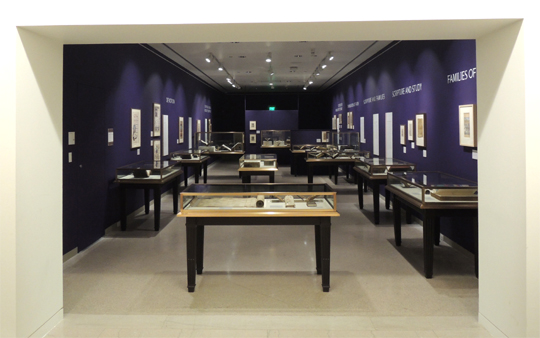
exhibit hallTheir new exhibit space, the William B. Dietrich Gallery, is currently showing Sacred Stories: The World’s Religious Traditions. The exhibit draws from “one thousand years of human history, illustrating the ways we have written, printed, decorated, and illuminated our Buddhist, Christian, Hindu, Jewish, and Muslim faiths.”

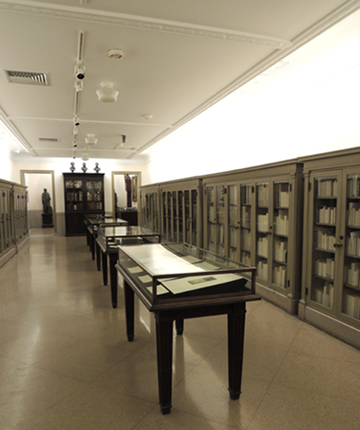
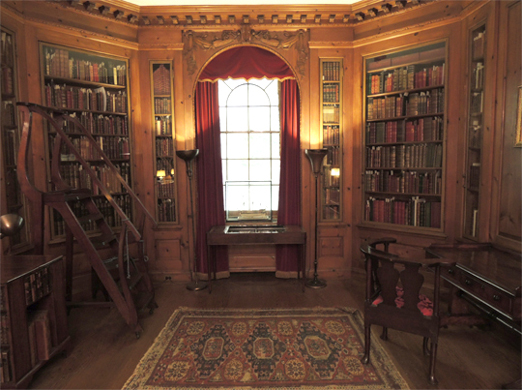
dietrich galleryWell, we began this post with Dickens, it seems only appropriate we end with him. This is the Elkins Room in the Rare Book Department, a gorgeous wood-paneled paradise filled with books, artifacts, sculptures, and artwork.

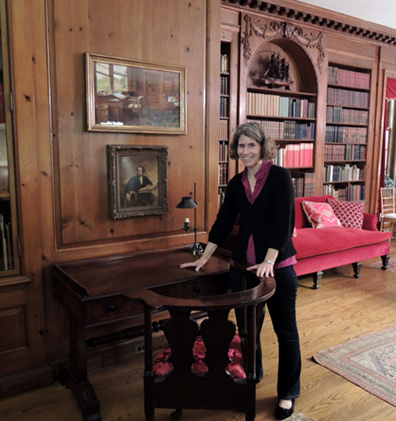
elkins roomSee the desk to the right? That, my friends, is Charles Dickens’ writing desk. Originally, it resided in Gad’s Hill Place, Dickens’ country home. The great man himself sat right there, wrote amazing things,  and even carved his initials in it! And there’s me, hopefully absorbing some of that writing power into my own fingertips.

dickens desk


Many thanks to Joe Shemtov and the Rare Book Department staff for an amazing afternoon! Sacred Stories: The World’s Religious Traditions is showing through January 30th, 2016.