 It’s grilling season, but we couldn’t JUST serve up a steak. We had to make it personal.
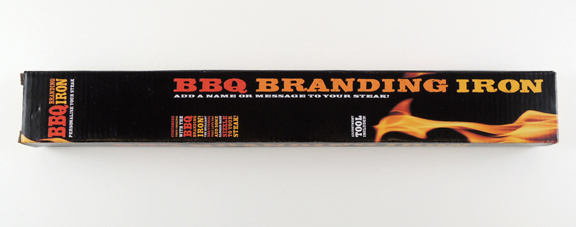
Today, we’re testing a “BBQ Branding Iron” which purports to “Add a name or message to your steak!” It’s offered by multiple Amazon sellers each using different descriptive names, but every listing appears to sell the exact same product. Prices range from $11.65 to $39.99, but we paid in the lower range and ordered from a seller who offered Prime shipping.
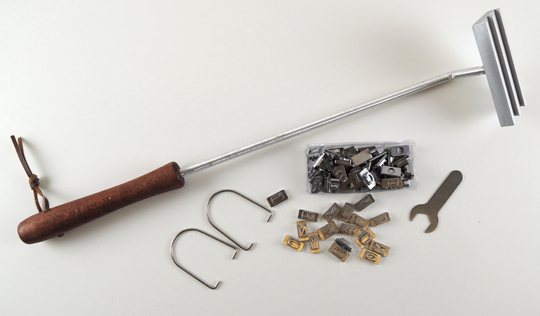
 The box includes a handle with a letter block, individual letters, blanks to insert between the letters, a small wrench, and 2 metal loops to prevent the letters from sliding out of the block.
 Our office grill champion took on the task of testing the bbq brander. Take it away Katie!
First, I hand-washed the metal letters, letter track and two loop locks before playing around with funny messages to brand. “YES” was an easy choice, as was “DO NOT TOUCH” and “THIS IS MINE.” I finally settled on “GET IN MY BELLY.” When arranging the letters, you have to remember to put them into the letter track backwards. It’s easy to forget, particularly with some letters that aren’t identifiable already backwards. The kit also includes blank metal spaces to separate the words in your message. You attach the two loop locks on either side of the letter track to keep everything in place as you are using the iron.
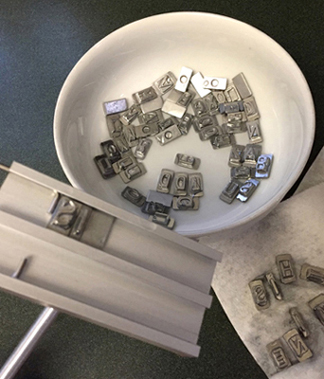 Once I felt confident I had everything backwards and spelled correctly, I headed out to start cooking. Beef steak was first.
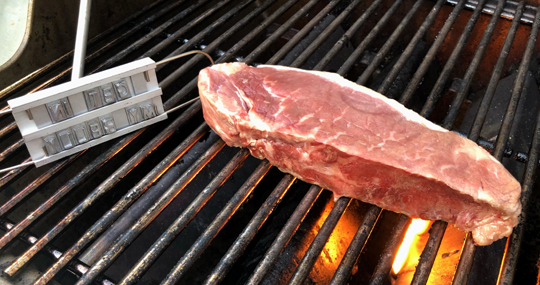 As my grill was heating up, I put the branding iron inside and made sure to leave the wood handle sticking out. I grilled one side of my steak, flipped it over, and tried the iron. Despite having left the wood handle outside of the grill, it was still hot. VERY hot. Not wanting to continue burning the palm of my hand, I dropped the branding iron and scurried to my kitchen to get an oven mitt.
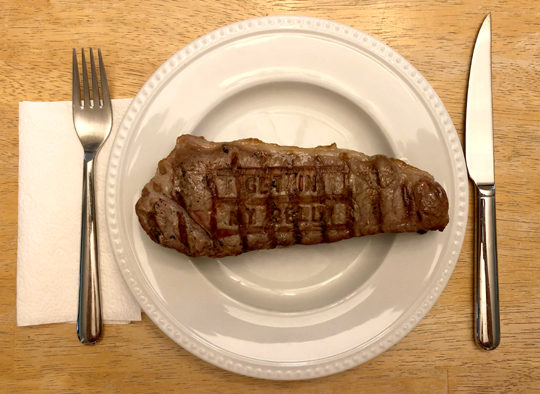
The second attempt was a success. After 10 seconds of leaving the hot branding iron on the sizzling meat, the message “GET IN MY BELLY” appeared on the steak. Nice!
 The next food test was for our vegetarian and vegan friends: TOFU! (Side note: I am not a tofu connoisseur and had no idea it comes in different sizes and varying consistencies. Who knew? I do now!). I went extra firm, to get as close to the consistency of steak as I could.
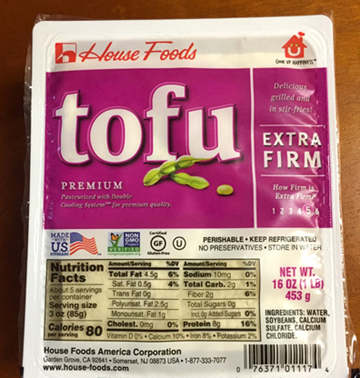 In order to change the letters, I ran the branding iron under cold water and simply slid the used letters out of the track. Not feeling terribly creative, I changed the message to read “NOT MEAT.”
Perhaps my inexperience grilling tofu didn’t help with the branding, but it was an epic fail. I tried multiple times to make the “NOT MEAT” brand dark enough on the tofu. Not once did it work. I tried leaving the brand on the grill for more time, putting the iron on the tofu longer, and it just didn’t take. I also thoroughly destroyed the tofu as I was flipping it over (and over).
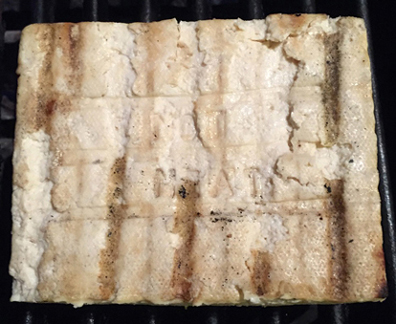 My thoughts on the BBQ Branding Iron? Steaks – beef, pork, lamb – and certainly chicken breast are the choice meat to use in order to get the message sufficiently branded. I suspect that hamburger might also work, but since I didn’t test the iron on a burger, I’m not sure. Tofu is definitely a no-go.
There were some reviewers who felt there weren’t enough letters included in the package, and that the letter track was too small and should be wider for longer messages. I can fully appreciate and understand their concerns.
I believe the BBQ Branding Iron would provide a clever personal touch for a reception or party where steaks are on the menu. It also would be a great gift for someone who loves to grill. Personally, I can’t imagine myself using it on a regular basis.
Recommended for grill masters, meat lovers, and party planners!
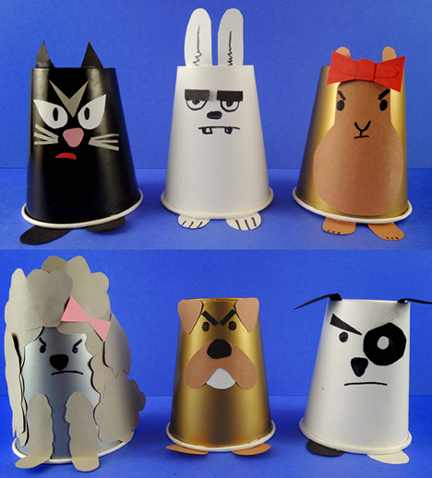 Scowls, frowns, crabbiness, and a general feeling of malcontent? Totally fine. Because when it comes to pet ownership, you need to find the pet that works for you. Even when you’re grouchy!
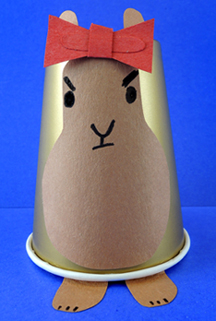 When everyone is finished, it’s time for a game! Line the pets up on a “pet store” table. One by one, have the kids find their pets, then tell the group (or, if they’re shy, their grown-ups) the pet’s name and what the pet hates. However, the kids must have tremendous scowls on their faces while talking. The minute they smile or laugh, their turn is up!
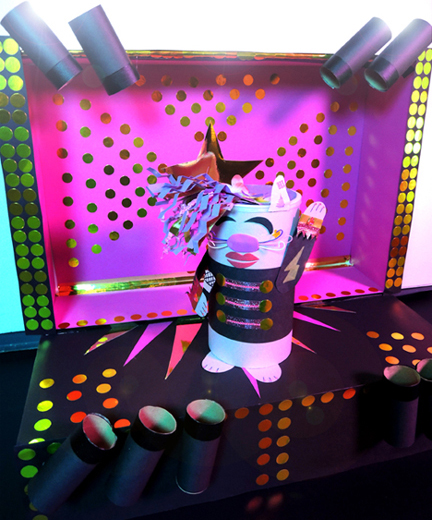 The roar of the audience, the flashing lights, the first strains of your big number thrumming through the arena…grab the mic…it’s time for some kitty karaoke. We made rockin’ oatmeal container cats and then hit the stage to sing our hearts out. But, given the feline nature of this rock star, you could only sing in “meow.”
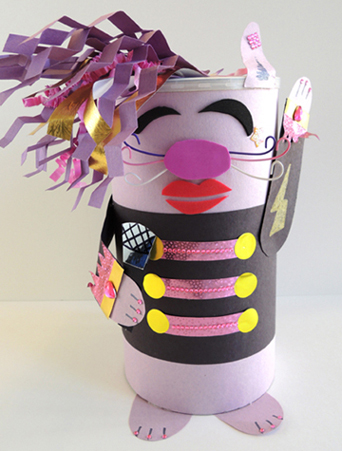 Wrap a large oatmeal container with construction paper, then add an additional strip of black construction paper around the middle for a “jacket.” To make whiskers, tape 3 Twisteez wires to front of the oatmeal container:
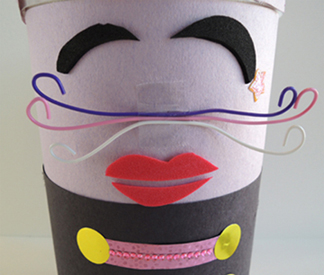 Then peel and stick an oval of self-adhesive foam over the tape.
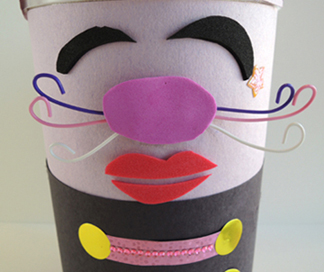 In the above photo, you’ll also notice how I used self-adhesive foam shapes to make eyes and a pair of lips (but you can also just use markers).
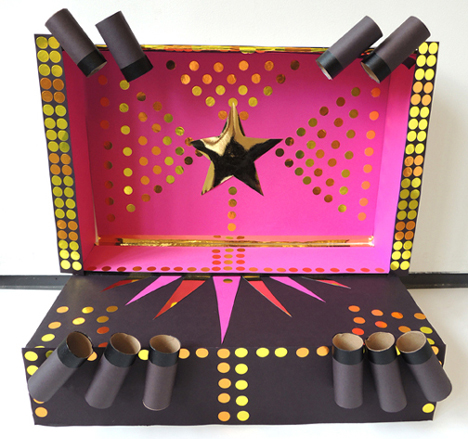
 Now for the concert! We made our stage out of an old archive box. As you can see in the image below, we hot glued the lid to the base (and reinforced the connection with packing tape). The stage lights are toilet paper tubes wrapped in black construction paper with black masking tape wrapped around one end. The stage lights are attached with hot glue, then reinforced with a bit of packing tape.
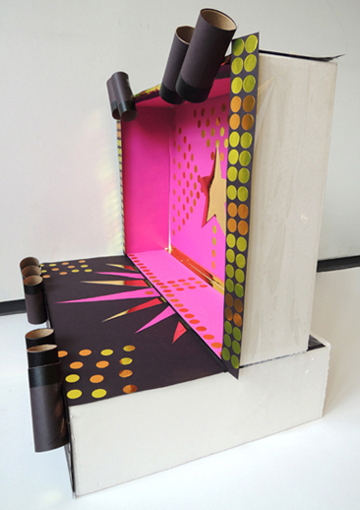 We used black and fuchsia poster board, mirror board, and a ton of metallic dot stickers to create a sparking wonderland of rock-stardom. Oh. Yeah.
 For the final touch, we wrapped two LED floor lights with purple and blue cellophane, and pointed them at the stage. You certainly don’t have to go this elaborate. A shoe box wrapped with tin foil, a sparkly scarf on the floor, a section of carpet with a light shining on it. Really, it all works!
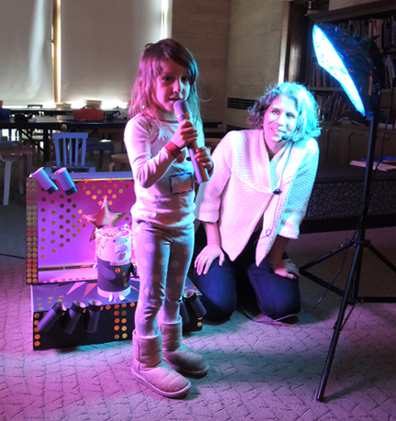 Facing inwards to the stage…
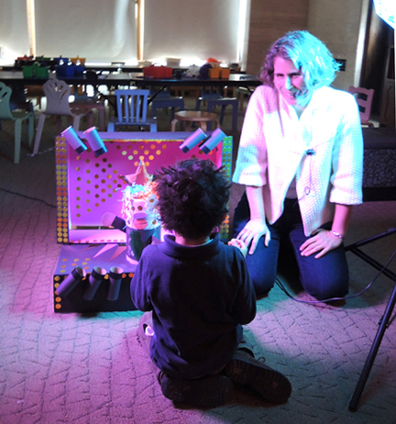 Facing inwards to the stage with backup singer…
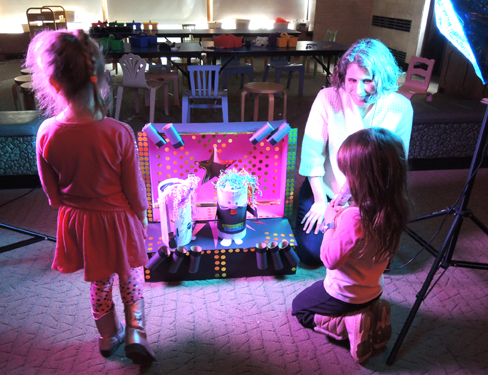 The power duet…
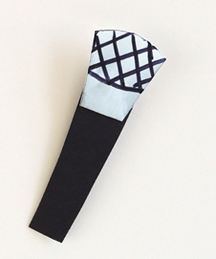
 You might notice the kids are using a real microphone! I use a wireless amp for my story time programs, so I busted out a hand-held microphone and let kids experience the power of amplification. A cheaper (and less noisy) option is to make a paper and tin foil microphone. You’ll find instructions for that right