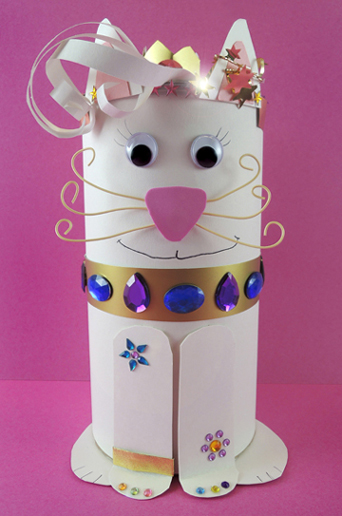
Bring on the bling! This glamorous feline is festooned with rhinestones, bangles, and brilliant bobbles. But that’s not all. She also has her own designer blanket, jewel-encrusted water dish, and solid gold mouse toy. Meow, indeed.
We read Glamourpuss, written by Sarah Weeks, and illustrated by David Small (Scholastic, 2015). Glamourpuss lives with Mr. and Mrs. Highhorsen. She has everything a cat could want – a diamond collar, attentive servants, a lavish private room, and total adulation from her owners. Then Mr. Highhorsen’s sister Eugenia visits with her pet chihuahua, Bluebelle. In addition to having a stunning array of outfits, Bluebelle can do tricks. Glamourpuss soon finds herself upstaged, and vows revenge. However, whilst stalking Bluebelle, Glamourpuss discovers that Bluebelle hates her outfits and tricks – she really dreams of simple elegance. Well. Glamourpuss can certainly help Bluebelle with that! They become close, and very glamorous, friends.
You’ll need:
- 1 large oatmeal container
- White construction paper
- White poster board
- A strip of gold poster board (approximately 1.5″ x 17″)
- 3 pieces of twisteez wire (approximately 7″ each)
- A small, rounded triangle of self-adhesive foam (approximately 1.25″ tall)
- A pair of wiggle eyes
- Cat jewelry & accessories (more on these later!)
- Scissors and tape for construction
- Markers for decorating
- Hot glue
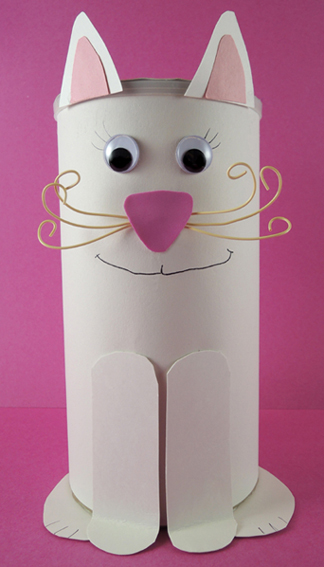
Wrap the oatmeal container with white construction paper. Use extra paper to make the ears. Attach wiggle eyes with hot glue, then use a marker to add a smile (and maybe some eyelashes!). To make the nose and whiskers, curl the ends of 3 pieces of Twisteez wire, then bunch them in the middle and tape them to the container.
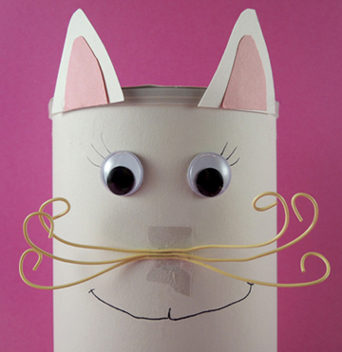 Peel and stick a triangle of self-adhesive foam over the tape.
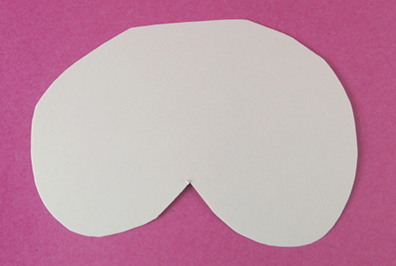
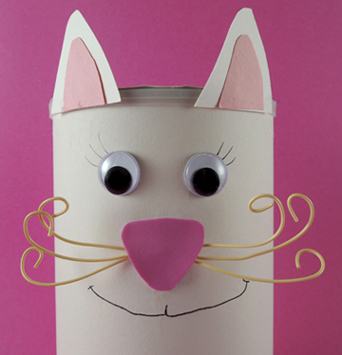 To make the cat’s hind legs, cut a 4.25″ x 6.25″ rectangle of white poster board into the shape you see below. Hot glue it to the bottom of the oatmeal container.
 The front legs are two, 1.75″ x 4.5″ rectangles of white poster board. Round the rectangles at both ends, then fold one end to create cat paws. Hot glue or tape the legs to the front of the container. And don’t forget to add a tail!
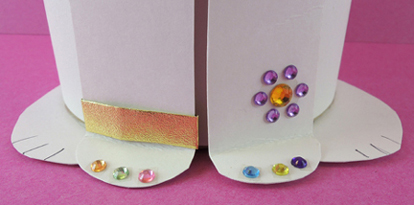
 Now to fancy things up! We crafted paper bangs, a little gold poster board crown, and a gold poster board collar embellished with large gemstones. We also offered small gemstones, gold embossed foil paper, and gold star stickers. The final touch were self-adhesive rhinestone stickers Katie found in a discount bin after Easter
In a stroke of crafting genius, Katie cut one of the rhinestone flowers into little bits and gave the cat a fancy feline pedicure.
 Your cat is finished, now for the accessories! The blanket is a 7″ x 11.5″ piece of fleece trimmed with gold tape. The water dish is a be-jeweled gold paper cup (cut down to 1.75″), with 2 blue cotton balls.
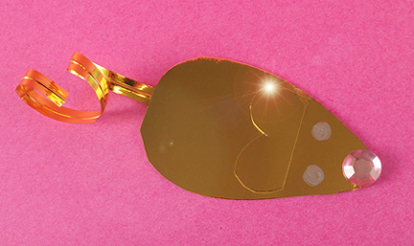
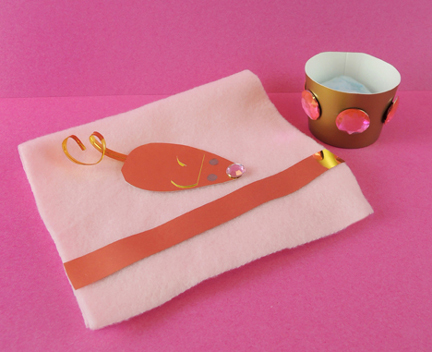 The gold mouse toy is a 2.25″ x 3.25″ rectangle of gold mirror board trimmed into a mouse shape. We added ears, a gold craft tie tail, a diamond nose, and finished with a pair of eyes drawn on with silver metallic Sharpie. Absolutely fah-bu-lous dahling!
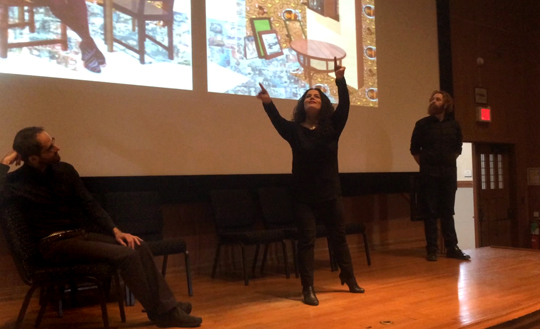 This year, our library hosted an amazing event I’d like to share – American Sign Language Poetry. It was inspired and coordinated by Princeton University freshman Serena Alagappan.
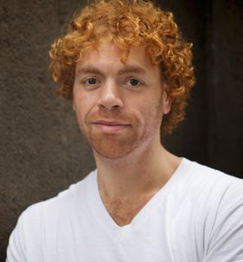 J.W. Guido has been teaching at the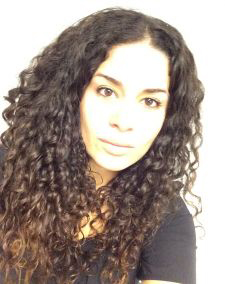
 Siena Rafter is a recent graduate of LaGuardia High School’s drama program in New York City, where she played various roles, her favorite being Sylvia in Sylvia. Ms. Rafter can be seen as Irena in the upcoming primarily-signed web series
  Emmanuel von Schack is the Coordinator of Access Programs at the National September 11 Memorial & Museum in New York. He works closely with, and provides guidance to, cross-departmental senior-level staff to ensure that the 9/11 Memorial Museum is an accessible, inclusive, and welcoming space for visitors and employees with disabilities and other underrepresented communities. In addition, Emmanuel is a consultant, professional development trainer, and contractual educator at various museums, including The Metropolitan Museum of Art, the Whitney Museum of American Art, and the Museum of Jewish Heritage. For his work, Emmanuel received the 2016
 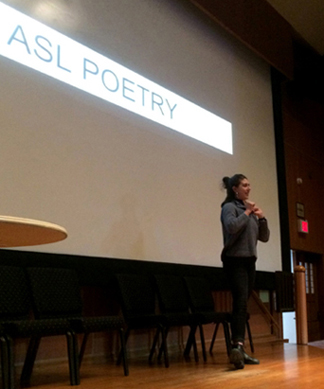 The ASL Poetry event was extraordinary.The artists performed pieces both alone and together. They presented skits, shared original pieces, translated existing poems, and took breaks in between to share their thoughts. At the conclusion of the event they answered questions from the audience, and then stayed afterward to sign one-on-one with people. Mara Eva, an extremely engaging and talented ASL interpreter, was present for the benefit of hearing audience members.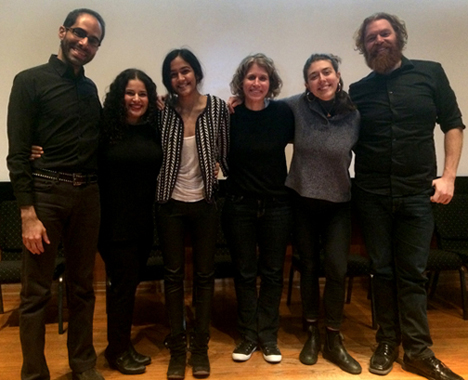
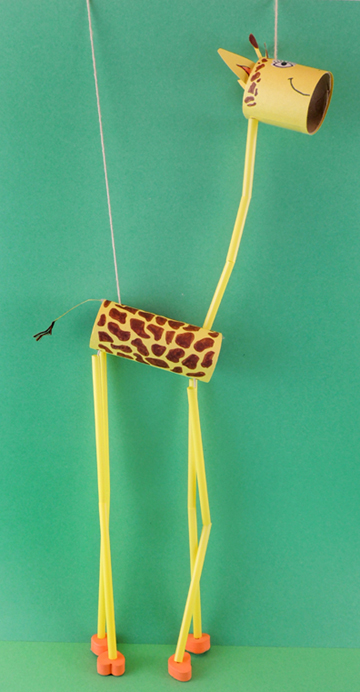 The giraffe has a toilet paper tube body, and a 2″ long toilet paper tube head. Both of the tubes are wrapped with yellow construction paper. We used extra yellow construction paper to create the ears, antlers, and tail. Then we used markers to add the giraffe’s spots, mouth, and nostrils. We used
 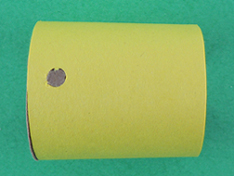 The second hole is positioned underneath the first, on the opposite side of the tube.
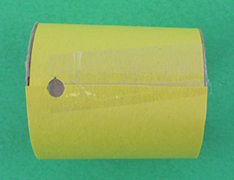 If my description seems a little confusing, this next image should clear things up. Here’s the finished marionette head with the string running through the 2 holes you punched in the head tube.
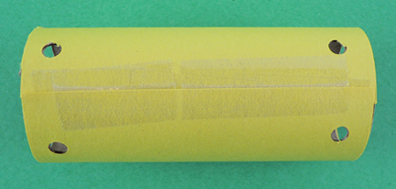
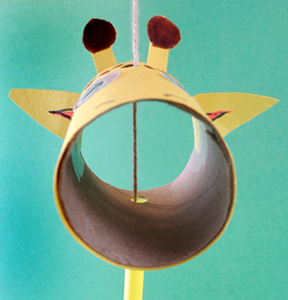 Next, punch a hole at each end of the top of the body tube:
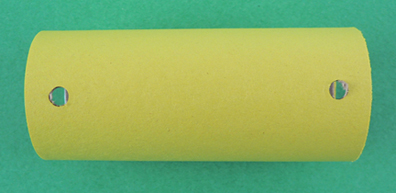 Then turn the tube over and punch 4 holes in the bottom. As you have probably guessed, these 4 holes are where the marionette’s legs attach in the next step.
 To make the giraffe’s legs, thread a piece of string through a foam bead. Secure the string to the bottom of the foam bead with tape. Cut a drinking straw in half, then slide the 2 pieces down the string towards the foam bead. Thread the loose end of the string into the leg hole you punched in the body tube. Secure the string inside the tube with tape. Repeat these steps with the 3 remaining legs.
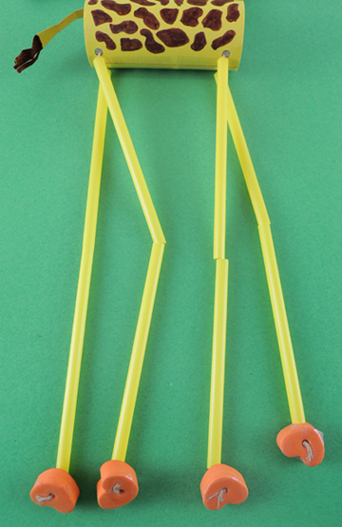 The lower part of the your puppet is done, now for the upper part! The puppet is attached to its drinking straw control stick by two strings. The first string runs from the control stick to the giraffe’s rear end, where it is secured inside the tube with tape. The second string runs through the head, the neck, and then attaches to the body tube with tape. The neck is a drinking straw cut into 3 pieces. We used black masking tape to secure the string to the control stick too.
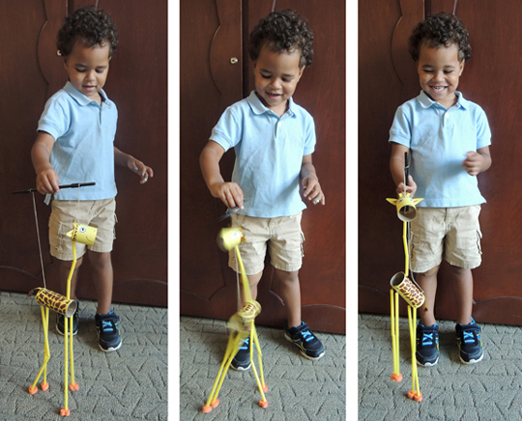
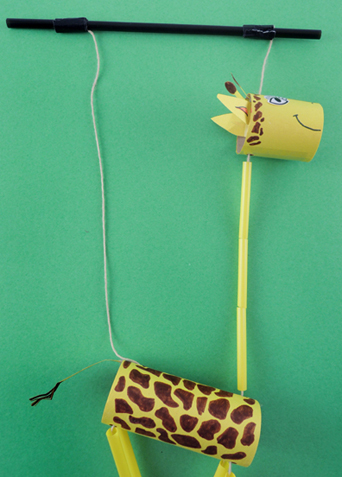 Your marionette is done! We put on some tunes and invited kids to dance their giraffe friends. This resulted in some bouncy, twisty, bendy, jumpy dance moves, as well as a few bars of an original song we’re calling “Dancing, Dancing, Dance-a-lee-Dance!”